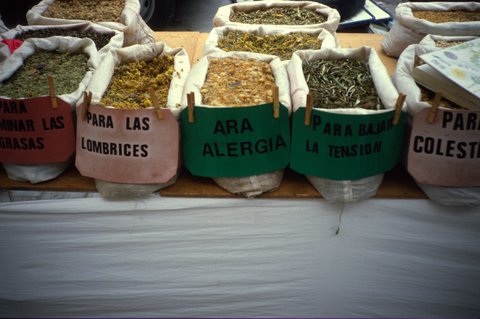
Seen summer 1990 in a small village close to Bilbao.
CC-BY-NC Science Surf , accessed 28.08.2026
Last week I went to Bavaria’s largest book market and found a book that I wanted to read for a long time – the 1950 autobiography of Ritterkreuzträger, Generalarzt, Staatsrat, Geheimrat, Prof. Dr. med., Dr. med. h.c. Ferdinand Sauerbruch, emeritus director of the surgical university clinic in Berlin – and found unexpected connections to Sigmund Rascher.
P 538
Sehr interessant war für mich ein Teilgebiet der gesamten Wehr-Medizin: die Luftfahrt-Medizin. Sie erwuchs auf der Grundlage psychologischer Untersuchungen und klinischer Erfahrungen. Es ist aber ganz selbstverständlich, und man muß es einmal aussprechen, daß die Forschung wertvollste Anregungen aus der Kriegstätigkeit der Sanitätsoffiziere gewonnen hat.
P 558
Ich will mich nicht zum sogenannten “Ärzteprozeß” in Nürnberg äußern. Ich kann hier nur versichern, daß heute manche Ärzte, die sicher nicht weniger “schuldig” waren, in aller Gemütsruhe ihrer Praxis nachgehen. Ich könnte ein Dutzend Namen nennen, aber das brächte die anderen nicht wieder zum Leben, sondern möglicherweise nur neue Opfer der so höchst zweifelhaften “irdischen Gerechtigkeit”.
translation
Mitscherlich/ Mielke reported that Sauerbruch attended the “3. Arbeitstagung der beratenden Ärzte” in May 1943 moderated by Karl Gebhardt where experiments from concentration camp Ravenbrück have been reported. According to Klee (Auschwitz, 1997, P 199) Sauerbruch issued a temporary restraining order against Mitscherlich that it had not been known that these experiments were performed on prisoners.
Reading now about Sauerbruchs’ fascination of the Rascher experiments -valuable contribution- and his speculations about -“guilt”- in quotation marks I think that this attitude can not be atrributed to dementia praecox as has been done before.

Physicians do have a lower life expectancy than the average population – which argues somewhat against the health (some believe also disease) expertise of physicians. ZEIT magazine now has an article about “Guter Arzt, kranker Arzt”. It is about the hierarchic system in German hospitals, the daily indignities, the long working shifts and the hope that this will improve by climbing the next step of the career ladder.
Instead of bookmarking I am printing instead with PDFcreator and let GDS later index these files. Pages (in particular supplements and news stories) are frequently vanishing while printing into a file lets me store a local copy. Printing to a PDF file is only one click away if you use the following “save” options:

Following many strange gene association studies now a 3rd study of genes and genius appeared: WashU on IQ and CHRM2 believe it or not as part of a study on the genetics of alcoholism…
A quick link to an open letter – I do not endorse the opinions expressed there…
Now you spend your time writing proposals rather than doing research. Worse, because your proposals are judged by your competitors you cannot follow your curiosity, but must spend your effort and talents on anticipating and deflecting criticism rather than on solving the important scientific problems. They’re not the same thing: you cannot put your past successes in a proposal, because they are finished work, and your new ideas, however original and clever, are still unproven. It is proverbial that original ideas are the kiss of death for a proposal; because they have not yet been proved to work (after all, that is what you are proposing to do) they can be, and will be, rated poorly. Having achieved the promised land, you find that it is not what you wanted after all.
Looks like ‘Research 2.0’ need to be installed there.
Micro- and macroclimate factors certainly have more influence on our health than being reflected by current research. A new PLOS study now finds that
facilities built more than 50 years ago, characterised by large windows and high ceilings, had greater ventilation than modern naturally ventilated rooms (40 versus 17 air changes per hour) … Old-fashioned clinical areas with high ceilings and large windows provide greatest protection. Natural ventilation costs little and is maintenance free.

Do you know the Barker hypothesis? It says that early life events may induce later disease. A new study in the Eur J Clin Nutr now reports
Children whose mothers had a 25(OH)-vitamin D concentration in pregnancy >75 nmol/l had an increased risk of eczema on examination at 9 months (OR 3.26, 95% CI 1.15â€"9.29, P=0.025) and asthma at age 9 years (OR 5.40, 95% CI, 1.09â€"26.65, P=0.038) compared to children whose mothers had a concentration of <30 nmol/l.
These are quite remarkable results. I wonder only why two forthcoming studies click + click using food frequency questionnaires will describe only a reduction of respiratory infection rates (which is not too bad in the context of the hygiene hypothesis) with no effects on allergy.
Food intake measures are probably not good enough for internal dose estimates as main source of vitamin D production is sunlight, isn´t it?
12 March 2007 – the long awaited AJCN paper is now out. I have already feared that stratification by FFQ is only partially relevant. Indeed, the authors could have used also college graduate level which increased with intake catgeories 1-2-3-4 from 53-74-80-82% with all the problems by SES dependency (and not corrected for in model 2+3 in table 2 or model A…D in table 3). The discussion seems to be also far away from being an objective report on the immunology of vitamin D actions…
I have just found our most recent PLOS paper about asthma in Africa being published online
As of the 1980s, there was an overall conviction that asthma had an anthropogenic origin with indoor and outdoor air pollution as the main culprits. Following some overinterpreted epidemiological findings of the “hygienic†phase, there is now evidence accumulating that the asthma epidemic might have an iatrogenic origin. There might not only be indirect effects of improved living standards and better medical care, there are even direct effects under discussion, for example by oestrogens, vitamin D, antibiotics, and paracetamol. Infant formula (which contains vitamin D) has already entered the food chain in Africa; paracetamol is the most common drug bought over the counter in Ghana. Do African countries offer any unique observations where singular effects of these drugs can be delineated?
An independent review (that I did not know at time of writing) arrived at similar conclusions. We all, however, forgot to mention sensational news as Gambian president Yahya Jammeh can heal asthma click – click – a more serious appraisal click.
My childhood favorites

For documenting a research project I want to insert quick links to previous emails. Clicking a link should kickstart Thunderbird and go directly to a known message. Mozilla.org says
Athough Google desktop is able to do it, there is no clear API to instruct Thunderbird to display a given email stored in its mail box (knowing the folder & message ID)
Here is how Google Desktop Search (GDS) links to an email

What I have found out so far by comparing different links
(1) is the fixed parameter relating to my hard disk??
(2) is a variable parameter relating to the physical location of my \daten\Mail\thunderbird\imap\INBOX file??
(3) is the unique Message-ID that may be seen in Thunderbird with the View Header plugin
(4) the variable salt/seed value that is stored in the registry at HKEY_CURRENT_USER\\Google\\CustomSearch\\Google Desktop Search\\Url which may be retrieved with a 2 line perl script.
So I am ready to construct URLs that link to an email by using GDS. This is, however, not very elegant. Isn’t there any other way (maybe by a Thunderbird extension) to construct and follow links directly to emails? Can somebody trace with Sysinternals Process Explorer what GDS spits out and follow it up at XUL planet ?
Early vitamin D supplementation may have dual effects, protecting against type 1 diabetes and inducing allergy. Is that possible? Yes, individual genes variants may determine the outcome.
In addition to HLA the most prominent type 1 diabetes genes are INS – CTLA4 – PTPN22 – CD25 – IF1H1, the most prominent asthma/allergy genes ADAM33 – DPP10 – IL12 – IL4 – GPR154 – FLG. I can´t see any joint master regulator, however, we know that
Could that be a model to explain the dual involvement of vitamin D in both diseases?
Creativity in science – look how computer are being named (seemed there are many da Vinicis and Picassos in bioinformatics). The MDC microsatellite center in Berlin named their sequencers by volcanos (even before pyrosequencing became in vogue), we use European cities for our freezers. Famous chess players would be another idea or use car brands …
Salamander Candy has an interesting essay about Sir Karl Popper’s demarcation of science
The most informative and useful delineation between those pursuits understood as scientific, such as astronomy, and those of the pseudo-sciences, such as astrology, is that science integrates positive and negative feedback loops. These feedback loops are based on critical analysis, empirical testing, and reformulation of falsifiable statements. This process serves to maximize the accumulation of accurate statements and minimize the accumulation of erroneous statements within an integrated system of statements which describe the physical universe. In other words, the primary function of science, and the thing that makes it different from pseudo-science, is constructive self-criticism. Karl Popper, in his essay “Science: Conjectures and Refutations†(1963), claims that, “…the criterion of the scientific status of a theory is its falsifiability, or refutability, or testability.â€
This is a really nice account on the scientific theory that get nowadays more and more corrupted in daily practice (at least in biomedical research). For example there are currently 30-50 allergy research papers every day; many of these miss recent and important papers. Correct me if I am wrong but most biomedical research is accumulating only facts but not knowledge. The discussion section of many papers follow the boring outline — we found- — others found — some strengths and weaknesses of our research — some strengths and weaknesses of other research — further research required what I consider broken feedback loops. In my experience only half of the authors will respond to email enquiries regarding their articles.
It was therefore a real pleasure to see a new study on antibiotics and allergy with a true discussion wieghting pro and con arguments that was more worth than a meta-analysis on the same topic.
43 folders writes:
Remember that your blog is only incidentally a publishing system or a public website. At its heart, your blog represents the evolving expression of your most passionately held ideas. It’s a conversation you’re holding up with the world and with yourself â€" a place where you can watch your own thoughts take different shapes and occasionally surprise you with where they end up…
wow – couldn’t say that in a better way.