Category Archives: Software

Live votes during presentation

Live votes can increase participation of your audience but there are quite some technical challenges.

For my most recent presentation I have set up my own Wifi using an old Fritz! Box flashed with Freeze that can route all incoming traffic towards a Macbook (that is connected to the router by cable).

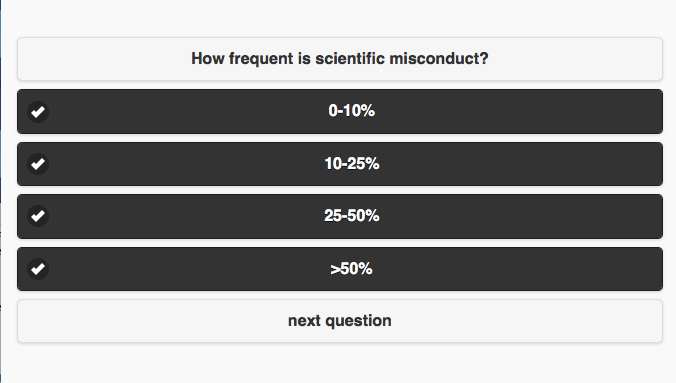
The Macbook itself is running a webserver that delivers the questions to the mobile phones in the audience. Mobile clients basically see this page


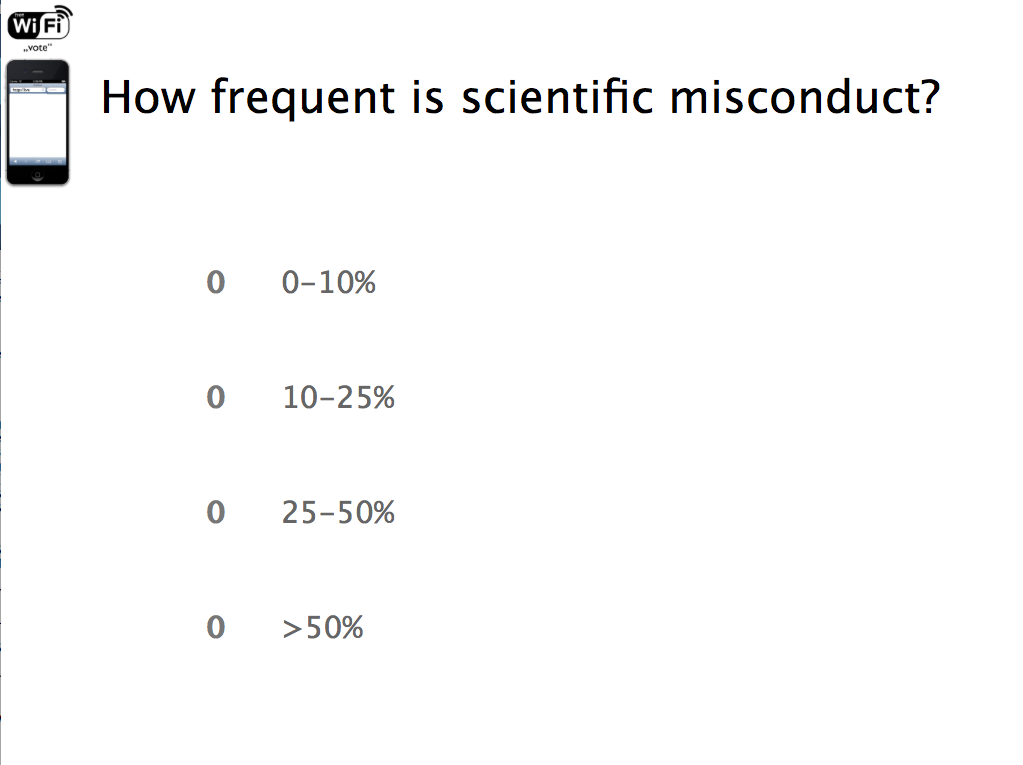
The presentation with all results is running in a Chrome full screen windows that is mirrored to the projector. It is basically an export from Powerpoint pictures that are shuffled around by a javascript framework (bespoke.js). Results are stored in an adhoc sqlite database and charts are produced on the fly by d3.js.

All scripts are available per email request.


CC-BY-NC Science Surf , accessed 24.08.2026

Datafication of Health

I had the unique chance yesterday to hear a talk of Minna Ruckenstein (University of Helsinki) about datafication of health. I think this is one of the most important topics of the last decade – being one of the largely underestimated, largely ignored development, but nevertheless relevant for the future of medicine. It basically means conversion of health into data (like Facebook is converting communication into data) which happens on multiple scales and at multiple levels. Her excellent paper at Annual Review of Anthropology was just posted a month ago and can be downloaded at the journal website (or at SciHub).

Minna Ruckenstein, ChipMe Meeting, Galway, Ireland

Recognizing that the datafication of the traditional health ecosystem is generating new power asymmetries and disrupting traditional regulatory and ethical mechanisms, some scholars have embarked on applied research projects, often collaborating outside their academic spheres. These citizen-centered initiatives appeal to patient organizations, savvy self-trackers, and ordinary people to address issues such as the tension between data openness and data ownership; asymmetries of data usage and distribution; the inadequacy of current informed consent and privacy protections; and the need to reappropriate and rearticulate concepts such as "sharing" and "the public good" that have been co-opted by technology companies seeking free access to their users' data.


CC-BY-NC Science Surf , accessed 24.08.2026

Bitcoin is a bad idea

Nature today thinks “It’s good to have lots of bad ideas”. Bitcoins are a bad idea as they are traded in for energy consumption.

There are lots of different bitcoin mining computers out there, but in recent months, companies have focused on ASIC miners, which use less energy to conduct their calculations. Mining companies that run lots of ASIC miners as businesses have told me that they use one watt of power for every Gigahash per second of computing that they do when mining for bitcoins.
At this rate, the bitcoin network runs at 342934450 watts, which equates to around 343 megawatts. Calculations based on EIA data reveal that the average US household consumes about 1.2 kilowatts of power, meaning that 343 megawatts would be enough to power 285,833 US homes at the time of writing (May 2015).
That's quite a lot of energy – about a third of the homes in San Jose. And our 1 watt per Gigahash/second figure is pretty efficient. There will be a large number of residential users who will be taking more power to run their miners.So it’s likely that this is a conservative estimate.

Another estimate by digiconomist.net is 16 TWh per year (Aug 2017). Kilo 10^3, Mega 10^6, Tera 10^9…


CC-BY-NC Science Surf , accessed 24.08.2026

Goldwater Rule

The Goldwater Rule makes sense.

The Goldwater rule is the informal name given to Section 7 in the American Psychiatric Association’s (APA) Principles of Medical Ethics,[1] which states it is unethical for psychiatrists to give a professional opinion about public figures they have not examined in person

But whenever an individual releases more answers than you want to ask him questions, a preliminary diagnosis can be made. So think Sword and Zimbardo

As Trump's campaign, and his narcissism, gained momentum, so did our efforts. In March 2016, we posted The Narcissistic Personality: How to Spot a Narcissist, in which we shared clinically documented narcissistic behaviors and hoped it would be easy for readers to see that Trump fit every example.

So thinks Lance Dodes

Mr. Trump's speech and actions demonstrate an inability to tolerate views different from his own, leading to rage reactions. His words and behavior suggest a profound inability to empathize. Individuals with these traits distort reality to suit their psychological state, attacking facts and those who convey them (journalists, scientists).

And so thinks also Robert Lifton along with many others.


CC-BY-NC Science Surf , accessed 24.08.2026

Es sei außerordentlich sinnvoll

Michael Ristow – bekannt durch eigens verfasstem Wikipedia Eintrag zu "Mitohormesis" aber keinem einzigen Vitamin D Artikel – äussert sich zur Vitamin D Versorgung von Kleinkindern im Deutschlandfunk

Es sei außerordentlich sinnvoll, dass sie regelmäßig diese Präparate bekommen, sagte der Professor für Energiestoffwechsel an der ETH Zürich Deutschlandfunk. Zuvor hatten kanadische Mediziner eine klinische Studie mit über 700 Kindern im Alter zwischen einem und fünf Jahren durchgeführt. Die eine Hälfte der Kinder bekam in den Wintermonaten eine Standard-Dosis Vitamin D verabreicht - die andere Hälfte der Kinder erhielt eine besonders hohe Dosis Vitamin D. Das Ergebnis der im Fachblatt “JAMA” veröffentlichten Studie: Viel Vitamin D hilft nicht. Zwischen beiden Gruppen gab es demnach keinen statistisch signifikanten Unterschied in Bezug auf die Zahl der Atemwegsinfektionen. Internist Ristow betonte, die Forscher hätten nicht verglichen, wie Kinder ohne zusätzliche Vitamin-D-Versorgung im Vergleich zu jenem mit Supplementierung abschnitten. Das bedeute nicht, dass Vitamin D nicht Einfluss habe auf Erkältungshäufigkeit und -dauer haben könne.

Wie kann man den Sachverhalt nur so verdrehen?
Die JAMA Studie schreibt doch völlig korrekt in der Einleitung

Although a number of clinical trials have attempted to assess the effect of vitamin D supplementation on the prevention of respiratory tract infections among adults and children, conclusions have been hampered by small sample sizes, short trial duration, and lack of laboratory-confirmed outcomes. Likewise, a meta-analysis of 7 clinical trials found no association between vitamin D and childhood acute respiratory infections, but limitations included a shortage of studies and heterogeneity in terms of populations and end points. To our knowledge, only 1 trial has assessed the effect of vitamin D on laboratory-confirmed upper respiratory tract infections in children specifically. It included 334 children in Japan and found a significant reduction in influenza A, but not influenza B, among children receiving 1200 IU/d of vitamin D supplementation. It remains unclear if vitamin D supplementation can prevent all-cause upper respiratory tract infections among children.

Es gibt also keine wissenschaftliche Begründung, dass Kinder regelmäßig und anlasslos Vitamin D bekommen.


CC-BY-NC Science Surf , accessed 24.08.2026

99.9% of scientists are being forgotten after 20 years

The estimate in the last LJ magazine 07/2017 (Stephan Feller, “Jenseits des Hamsterrads”, p6) was probably too optimistic giving a figure of 90%. But when looking at some scholarly papers my estimate looks more accurate.

Citation amnesia has been described some 6 years ago as “A Systematic Examination of the Citation of Prior Research in Reports of Randomized, Controlled Trials”

In reports of RCTs published over 4 decades, fewer than 25% of preceding trials were cited, comprising fewer than 25% of the participants enrolled in all relevant prior trials. A median of 2 trials was cited, regardless of the number of prior trials that had been conducted. Research is needed to explore the explanations for and consequences of this phenomenon. Potential implica-tions include ethically unjustifiable trials, wasted resources, incorrect conclusions, and unnecessary risks for trial participants.

A more recent paper on “Attention decay in science” showed

this decay can be described by an exponential or a power law behavior, as in ultradi usive processes, with exponential tting better than power law for the majority of cases. The decay is also becoming faster over the years, signaling that nowadays papers are forgotten more quickly.


CC-BY-NC Science Surf , accessed 24.08.2026

Andreas Weigend, Zhang Zheng, George Church

Das “Who is Who” der Datensammler.

Andreas Weigend ist der frühere CSO vom Amazon. Interessanterweise verschweigt er das auf seiner eigenen Homepage und wird -danach gefragt- schmallippig im Interview. Ein Physiker mit Interesse an neuronalen Netzen, Deutscher mit Wohnsitz San Francisco und Shanghai.

Zhang Zheng, Peking, ist Ökonom und Parteisekretär. Bekannt geworden im Westen für BDA, Big Data Abuse. Jedem Einwohner wird ein Score zugeordnet wird, der letztlich über seine Rechte im Alltagsleben und seinem Zugang zu gesellschaftlichen Ressourcen entscheidet.

George Church, US Amerikaner, Genetiker in Boston, mit einer Chinesin verheiratet, bekannt vor allem durch das Personal Genome Project, bei dem man seine komplette Genomsequenz abliefern soll. Zehn Jahre nach Gründung und nur 5500 von geplant 100.000 Freiwilligen, ist zumindest der europäische Ableger von PGP seit längerem auf Tauchstation.

Drei Proponenten von Big Data also, die ihre ehrenwerte Motivation immer wieder beteuern: das Einkaufserlebnis zu steigern, das soziale Miteinander optimieren und die Gesundheitsversorgung zu verbessern. Kollektivistisches Gedankengut, nicht umsonst taucht in allen drei Bespielen China auf.

Das deutsche Bundesverfassungsgericht erklärte die deutschen Vorschriften zur Vorratsdatenspeicherung mit Urteil vom 2. März 2010 für verfassungswidrig und nichtig. Das Urteil verpflichtete deutsche Telekommunikationsanbieter zur sofortigen Löschung der bis dahin gesammelten Daten. Zur Begründung gab das Gericht an, dass das Gesetz zur anlasslosen Speicherung umfangreicher Daten sämtlicher Nutzer elektronischer Kommunikationsdienste keine konkreten Maßnahmen zur Datensicherheit vorsehe und zudem die Hürden für staatliche Zugriffe auf die Daten zu niedrig seien

Und natürlich stimmt es nicht, daß hier das Einkaufserlebnis verbessert wird. Wenn, Beispiel Weigend, Amazon mir den Kauf verweigert weil ich schon zuviel umgetauscht habe, dann optimiert Amazon lediglich seinen Ertrag, Nicht besonders ehrenwert bei einem Konzern, der hier keine Steuern zahlen will. Das mit dem sozialen Miteinander ist eine Paraphrase für faschistische Allmachtsphantasien. Und wer auf bessere Gesundheitsvorsorge hofft, liest am besten bei Sascha Lobo nach “Warum bezahle ich Rentenversicherung, wenn der Computer ohnehin sagt, dass ich mit 50 sterbe?”

Mal abgesehen davon, dass in allen Datensätzen massive Fehler stecken, dass Algorithmen an manchen Kombinationen scheitern, zu kurz in der Diskussion kam vor allem eines: Big Data Algorithmen sind massiv gegen den demokratischen Rechtsstaat gerichtet. Es gibt keine Instanz der Beschwerdeführung, es gibt keine unabhängige Gutachten, es gibt keinen Verteidiger und keinen Richter.

Weigends neurales Netz hat dich bei Amazon gesperrt, basta.
Zhengs App “Ehrliches Shanghai” entscheidet Dich unter 849 Punkte zu setzen, basta.
Churchs Sequenzscore gibt Dir nur 50 Lebensjahre, basta.

Bei Amazon muss man nicht einkaufen, in China muss man nicht leben, und Gensequenzen kann man ignorieren.


CC-BY-NC Science Surf , accessed 24.08.2026

Politisch korrekt

Fundstück tagesspiegel.de, die Zeitung mit dem Motto rerum cognoscere causas “die Ursachen der Dinge erkennen”.

Unter dem Deckmantel der Politischen Korrektheit wird die Meinung an die Moral gebunden. Damit wird die Gesellschaft zum Opfer eines politisch motivierten “Tugendterrors” […] Hier ist die offene Diskussion freier Individuen längst durch Zensur, Einschüchterung und Indoktrination ersetzt worden […] Wer widerspricht, wird nicht widerlegt, sondern zum Schweigen gebracht.

Nur dumm, dass genau das auch die neue Rechte sagt. Ob es wirklich ein solche Vereinheitlichung gibt? Und wenn, dann würde ich den Ursprung nicht an den Universitäten sehen, sondern an den Medien oder der Dynamik der sozialen Netzwerke.

Die neuen Ingenieure der Seele arbeiten mit Sprachcodes, Gruppenidentitätszuschreibungen und Trainingscamps für "sensitivity" und "awareness". Hier ist die offene Diskussion freier Individuen längst durch Zensur, Einschüchterung und Indoktrination ersetzt worden.


CC-BY-NC Science Surf , accessed 24.08.2026

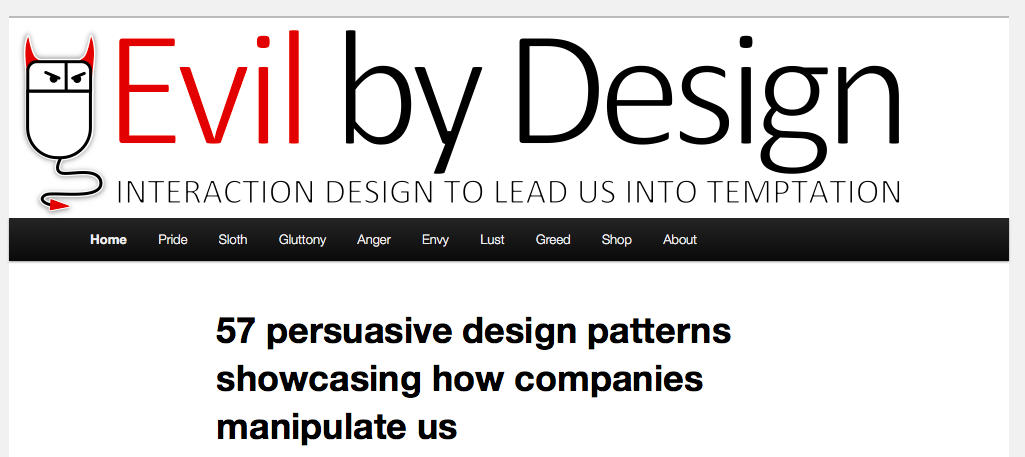
Evil by design

How we are being persuaded by digital media, is this also a question present in current day science?

Could be an interesting study given the applicability of the main tenets of interaction design software.

  • Pride. Social proof to position results in line with peer reviewer.
  • Sloth. Build a funding path of least resistance that leads scientists only do what they should do.
  • Gluttony. Escalate students' commitment and use loss aversion to keep them there.
  • Anger. Understand the power of metaphysical arguments and peer review anonymity.
  • Envy. Create a culture of status around papers and feed aspirational desires.
  • Lust. Turn desire into commitment by using emotion to defeat rational behavior.
  • Greed. Keep scientists engaged by reinforcing the desired behavior.

Already in 2014 Nature News found

Giant academic social networks have taken off to a degree that no one expected even a few years ago. A Nature survey explores why.

Twitter+Facebook+LinkedIn as non scientific, but also ResearchGate + Academia.edu work as digitally interaction steering. Interestingly, the humanities, arts and social sciences don’t need ResearchGate, understanding much better the “token economies” mechanism.


CC-BY-NC Science Surf , accessed 24.08.2026

How to export Whatsapp messages

This was rather easy with my rooted Android phone. However, when flashing it with Android 6 due to some memory leaks, root access does not work anymore. Neither by adb, nor by Kingoroot and Kingroot.

To export Whatsapp messages, however, I urgently need the whatsapp.cryptkey. And this key is only accessible in a rooted phone.

So I went down by another strategy by using WhatsApp-Key-DB-Extractor-master script on the Mac. To make this work, the JAVA JDK needs to be updated to at least version 7. The JDK needs to be manually downloaded and installed from the Oracle site

oracle.com/technetwork/java/javase/downloads/jdk8-downloads-2133151.html

In a next step, the Android Debug Bridge needs to be updated from the terminal as the version in the zip file listed the phone as being inactive

brew cask install android-platform-tools

Then we can run

WhatsAppKeyDBExtract.sh

which puts 5 new files

axolotl.db
chatsettings.db
msgstore.db
wa.db
whatsapp.cryptkey

into the

/WhatsApp-Key-DB-Extractor-master/extracted/

folder. Move this folder back to the SD card where the “Backup Text for Whats” App can find the key to export all encrypted Whatsapp messages.


CC-BY-NC Science Surf , accessed 24.08.2026

Safety conditions for genome editing

I would like to see two points added to current CRISPR/Cas9 guidelines.

First of all, the current gene therapies are not being entered into the clinical trial databases on a regular basis. Maybe as the number of treated patients go down to a single individual or as there is no control group. I would really like the recommendation of a priori entry into clinicaltrials.gov or clinicaltrialsregister.eu (or some newly designed gene therapy databases). Just to get towards a clear risk/ benefit ratio.

Second, there should be some way to recognize gene editing. Some barcode as we used it already long ago, an artificial sequence that indicates the new insert. epigenie.com summarized the current approaches by last summer: Gestalt/Jay Shendure, barcode/Stephen R. Quake, scartrace/Jan Philipp Junker, hgRNA/Prasant Mali, mScribe/Tim Lu. Something like the FLAG-tag. Or more recently

R. Kalhor et al., "Rapidly evolving homing CRISPRbarcodes," Nature Methods, doi:10.1038/nmeth.4108, 2016.
S.D. Perli et al., "Continuous genetic recording with self-targeting CRISPR-Cas in human cells," Science, doi: 10.1126/science.aag0511, 2016.


CC-BY-NC Science Surf , accessed 24.08.2026

Abwehr von Telefon Spam mit der Fritzbox

Bundesnetzagentur hin oder her, die Zahl der Spamanrufe nimmt täglich zu. Aus der Vielfalt von Abwehrmassnahmen hier nun ein Eigenbau für die Fritzbox.

  1. Neueste Firmware installieren – nur die Version 6.80 kann basierend auf einem Telefonbuch Aktionen bei Anrufen ausführen (danke an fritzblock.jimdo.com)
  2. Mein Bookmarklet auf die Adressleiste ziehen oder abtippen javascript:void(open(‘http://www.tellows.de/basic/num/’+window.getSelection()+’&xml=1&partner=test&apikey=test123′,’new’))
  3. Auf der Fritzbox ein Telefonbuch Spam anlegen
  4. Anrufprotokoll auf der Box öffnen, Nummer markieren, Bookmarklet klicken und je nach Ergebnis die Nummer in Spam aufnehmen
  5. Eine Rufumleitung definieren: Wenn der Anrufer im Telefonbuch Spam enthalten ist, dann Umleitung auf die 0711 508855241 (http://www.telefonpaul.de)

Wobei auch die folgende Aktion Spass machen könnte


CC-BY-NC Science Surf , accessed 24.08.2026