All posts by admin

Biomedical journal search – a small gift

Pubmed often leads you to dead ends – journal citations without a link to the journals’ home. Google helps sometimes but is always time consuming. As a little gift for you, I have written a small bookmarklet that will scan the Regensburg library files – just left click on the

bookmarklet

link below and move it to your browser toolbar. With just a mouse click you can then locate the journals homepage.

Addendum

Another approach – the LibraryLookup Bookmarklet Generator.


CC-BY-NC Science Surf , accessed 28.07.2026

(Re)programming adult into pluripotent cells

Last August I found an interesting paper in Cell that could mark a scientific breakthrough. In a step down approach the authors were able to reduce a mix of 24 transcription factors to 4 that were still able to induce a mouse embryonic stem cell signature (by using a fusion cassette of ß-galactosidase and neomycin resistance into Fbx15 gene).
The magic cocktail consisted of Oct3/4 and Sox2 (both embryonic stem cell core factors that directly target Fbx15), c-My (does global histone acetylation) and Klf4 (represses p53 directly).
My first question is if this cocktail reprogramms differentiated cells or if it just selects rare progenitors otherwise hidden under more fibroblast cells. My second question is if these are fully reprogrammed cells – or if the Fbx15 signature is somewhat misleading. My third question: Is this effect mouse specific?
I have now checked ISI if any paper is already citing this work – it seems that we need more patience. Yea, yea.


CC-BY-NC Science Surf , accessed 28.07.2026

Mirror neurons

I found an interesting extension of my self blog at Edge

Five and a half years ago, Edge published a notable essay by neuroscientist V.S. Ramachandran, entitled MIRROR NEURONS and imitation learning as the driving force behind “the great leap forward” …
And, one year ago, we published a related essay, Mirror Neurons and the Brain in a Vat [1.10.06], which further developed this set of ideas …
Here, for the Edge 10th Anniversary Essay, we are pleased to present a new work, “The Neurology of Self-Awareness”, in which “Rama” explores the concept of the self, tying in the ideas of researchers such as Horace Barlow, Nick Humphrey, David Premack and Marvin Minsky (among others), who have suggested that consciousness may have evolved primarily in a social context.

Ramachandran shows an interesting development – by chance quite similar what I am currently reading from Alfred Adler and his scholar Rudolf Dreikurs: children (and adults) want to be accepted as individuals and want to be at the same time part of a group. Martin Buber comes to my mind “Der Mensch wird erst am Du zum Ich”. Yea, yea.

Don’t miss the NYPL digital gallery for a more detailed view of mirror neurons.


CC-BY-NC Science Surf , accessed 28.07.2026

DNA data travel across Europe

heise.de reports that a top German politician wants to apply the Prüm contract also to the EU. The Prüm contract signed in May 2006 by Germany, France, Luxembourg, Netherlands, Austria and Spain regulates anti terror measurements and cross border prosecution of crimes. Mainstay of these activities are databases that allow the exchange of DNA and fingerprint data. Within the first 6 weeks of activity (as by November 2006) they report 1500 German hits in Austrian records (8 million inhabitants) and 1400 Austrian hits in German records (82 million inhabitants) if I understand that correctly. What does this now mean to have a German or a British or Swiss passport? For a respectable citizen and for a desperado?

Addendum

5-2-07 update U.S.

6-3-07 update Germany

Allein im vergangenen Jahr nahmen die deutschen Polizeibehörden laut einer BKA-Statistik 72.280 Verdächtigen den genetischen Fingerabdruck ab, “immer häufiger auch bei eher geringfügigen Straftaten”, kritisiert Datenschützer Weichert.


CC-BY-NC Science Surf , accessed 28.07.2026

Banned DNA tests

The Korea Herald writes – as noticed by Hsien Hsien Lei

The government yesterday released a set of new regulations to ban or restrict genetic tests in 20 categories amid ethical concerns over DNA tests … According to the new guidelines, DNA labs will be banned from conducting tests in 14 categories including body mass, intelligence, strength, propensity for violence, longevity, mental health, diabetes, blood pressure and asthma.

Although I do not believe that genetic testing for “asthma genes” will make any sense without the context of scientific studies, I think that such regulations are overdue – at least when genetic testing does not provide any benefit but may pose harm. If you have asthma or not, is a clinical question – and the answer will be an appropriate treatment or not. If you ever will get asthma is a question that nobody can answer. Even if genetic prediction will be ever possible, there is still no preventive measurement (at least by Jan 18, 2006, 16:14:23) . Yea, yea.


CC-BY-NC Science Surf , accessed 28.07.2026

déjà-vu

ZEIT online has an interesting article about ddéjà-vu – a rare syndrome. Some psychiatrists believe that déjà -vu episodes are the result of a faulty memory that brings up a similar episode. Others believe that there is nothing at all – just electric loops of a petite mals that can also be triggered by electric stimulation of the gyrus parahippocampus. ZEIT online also cites a study of Alan Brown that adds evidence for some kind of implantable memory.
I have frequently déjà-vus when reading the scientific literature (sometimes I even believe in groundhog days). One of my teachers in Marburg always said that “study of the scientific literature prevents from new discoveries”. Yea, yea.


CC-BY-NC Science Surf , accessed 28.07.2026

Playing with your browser

Some blog authors are nuts about protecting their web site from copying files. There are many ways to protect your site – but only one really good (publish nothing). I often see small javascripts that disable the ability to right-click where javascript.about.com has a much simpler solution:

<body oncontextmenu=”return false;”>

Please try a right click now…
If you are fooled by a web author in such a way, what could you do? tech-recipes has the answer: Of course, we can use javascript to turn it back on.

When visiting the offending website, type the following into the URL bar of your browser:
javascript:void(document.oncontextmenu=null)

Happy browsing, yea, yea.


CC-BY-NC Science Surf , accessed 28.07.2026

Serendipity

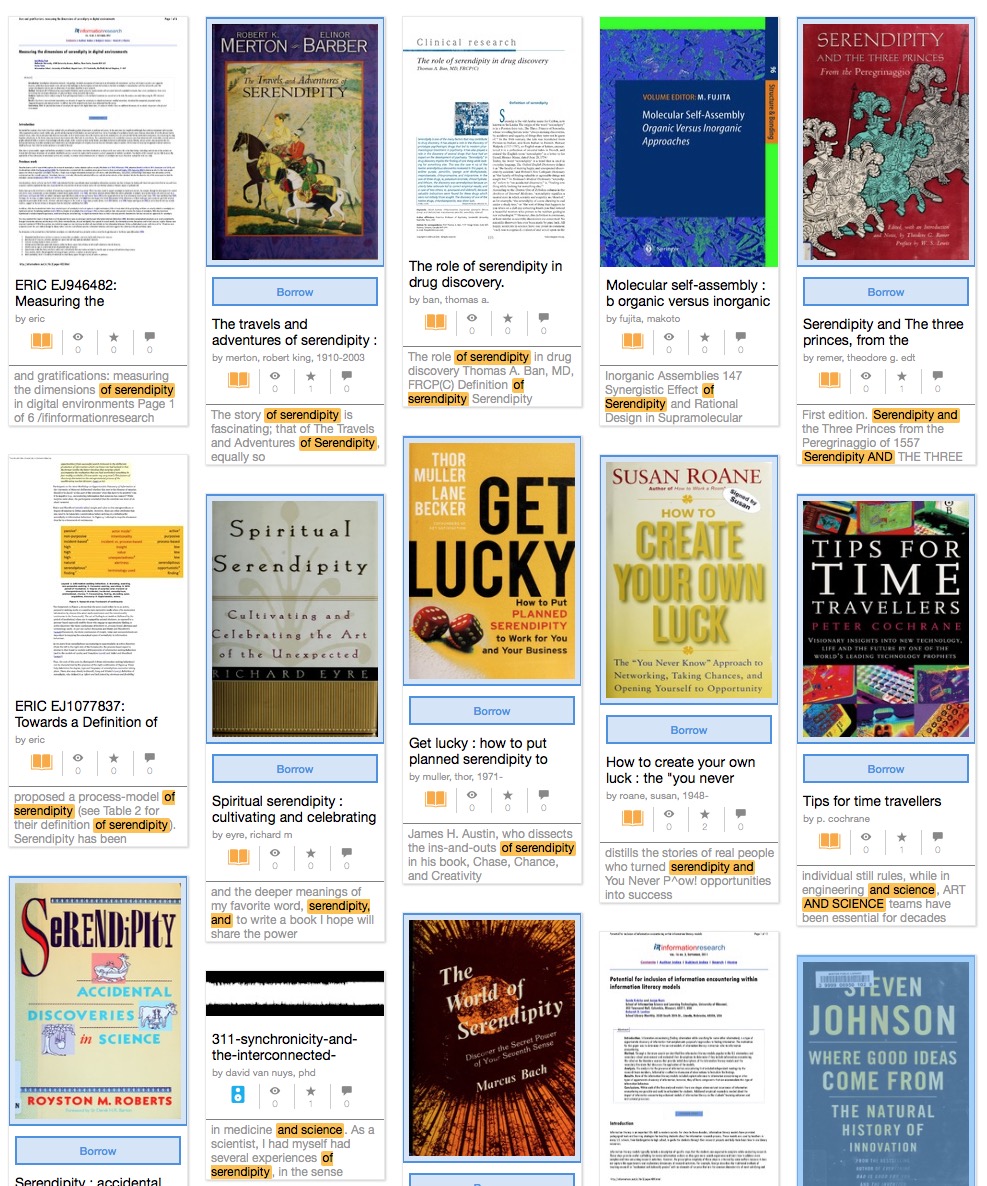
What is serendipity? Probably an artifical word used by Hugh Walpole 1754 in a letter he wrote to his friend Horace Mann

the effect by which one accidentally discovers something fortunate, especially while looking for something else entirely

Some examples www.scienceiq.com/Facts/

Ambroise Pare learned otherwise when, after running out of oil during the siege on Turin, he found his untreated soldiers recovering better than the treated ones. Another example is Louis Pasteur. He left a culture of chicken cholera microbes in his lab … Rontgen’s chance observation of a green glow in the corner of his laboratory led to the discovery of X-rays. … Finding a way to make rubber impervious to temperature changes became an obsession to Charles Goodyear. One day, in 1844, after countless unsuccessful trials, he dropped a mixture of rubber and sulfur on a hot stove. …Vulcanization was born…. Kekule proposed the cyclical structure of the benzene ring after dreaming.

Anf course the famous text by Arthur Kornberg, Stanford Medicine 1995 “Of serendipity and science” (that seems to vanished from the internet).


CC-BY-NC Science Surf , accessed 28.07.2026

Photoshopped

How to recognize photoshopped pictures? This will be a routine task for future editorial process (BTW I already recognized a faked gel gel picture where the edges and density of the bands looked somewhat artifical). However, with the ever increasing technical capacities we probably need non-destroyable, watermarked pictures from professional scanning and digitizing equipment.
In the meantime, check Wikipedia and the links there. I believe that the majority of the faked pictures could have been detected by splitting up color channels and looking at non-continous transitions of hue (“Farbton”), saturation (“Sättigung”) and brightness (“Helligkeit”) or grey value. This will even work with scanned figures although I would recommed to check original computer files (that may always be electronically stamped by previous publishers). Don´t miss the website of the mp3 developers).
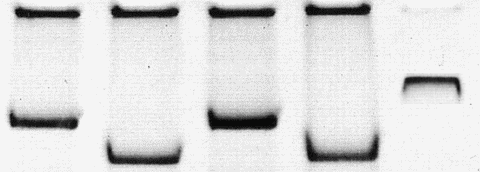
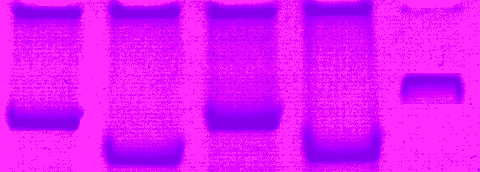
gelfake1.png

gelfake2.png

Addendum

Here is another examples how to recognize photoshop spoof:

set the hue to a low setting, the saturation to a higher setting, and mess with the light and look for blotches of color that don’t follow the rest of the image

22-2-07: The JBC has now adopted an explicit policy

“No specific feature within an image may be enhanced, obscured, moved, removed, or introduced. The groupings of images from different parts of the same gel, or from different gels, fields or exposures must be made explicit by the arrangement of the figure (e.g. using dividing lines) and in the text of the figure legend. Adjustments of brightness, contrast, or color balance are acceptable if and as long as they do not obscure or eliminate any information present in the original. Nonlinear adjustments (e.g. changes to gamma settings) must be disclosed in the figure legend.

11-9-07 Hamin Farid has developed tools to detect digital tampering.


CC-BY-NC Science Surf , accessed 28.07.2026
I am the guy with the hammer, and everything is a nail

We could think in more general terms about this quote from an interesting benchmarking paper. (I renember a DFG referee saying that I am no expert for the applied study. Vice versa we all see studies where everything is treated with a hammer.)
With a lot of data on my desk, however, I am more interested in the technical conclusions of the paper and feel quite comfortable with their opinion that commercial RDBMSs are not always the best choice. These RDBMSs include more and more features, and missing features are included in add-on packages from third party vendors. With these ever increasing features also useless overhead is being increased with penalty for performance.
A redesign for special databases like those used in genetic epidemiology and bioinformatics therefore seems to be invitable. Some may have already noticed my preference for SQLite, HDF-5, NetCDF.

  • Do we really need client-server mode?
  • We may ask if not 90% of all tasks can be done in presorted arrays (or materialized views).
  • Why can`t processes run completely in virtual memory without disk I/O?
  • Is there any chance to compile to machine code for better performance?
  • Why not ordering task for priority with those having minimum latency being the first in the row?

Yea, yea.


CC-BY-NC Science Surf , accessed 28.07.2026

Vitamin D and asthma

My previous work on vitamin D focused mainly on allergy but according to new research of Bosse et al vitamin D also stimulates bronchial smooth muscle and airway remodeling

Genetic variants in the vitamin D receptor (VDR) gene were recently associated with asthma. The biological mechanisms explaining this association is unknown, but are likely to involve many cell types given the pleiotropic effect of its ligand … The most significant network of up-regulated genes included genes involved in morphogenesis, cell growth and survival as well as genes encoding structural proteins, which are potentially involved in airway remodelling.

Another study published more or less at the same time by Wittke shows

Conversely, WT splenocytes, Th2 cells and hematopoetic cells induced some symptoms of experimental asthma when transferred to VDR KO mice, but the severity was less than that seen in the WT controls … Lipopolysaccharide (LPS) induced inflammation in the lungs of VDR KO mice was also less than in WT mice. Together the data suggest that vitamin D and the VDR are important regulators of inflammation in the lung…


CC-BY-NC Science Surf , accessed 28.07.2026

Science elite in Germany

Three German universities that have been elected into an excellence cluster. This oracle isn´t too bad for me ;-) as I have been raised close to the first and teached at both other universities.
Yes, I agree, there are some differences but – as science is done mainly by individuals or at least local teams – the differences are not so large and this election (for whatever criteria) doesn’t have so much meaning.
I believe, however, there will be some self-fulfilling prophecy, as on the longterm run these Universities will attract more excellent people – a point being missed in the current discussion. Yea, yea.

Addendum

Another 8 universitites enter the club: HU Berlin, FU Berlin, Göttingen, Freiburg, Heidelberg, Konstanz, Aachen and Bochum.


CC-BY-NC Science Surf , accessed 28.07.2026