All posts by admin

Cell life span in the human body: 7 years?

Karel & Iris Schrijver “Living with the starts” have an intestine chapter “Dying to Live” that is about the cell turn over

Take the skin, for example: a Iiving, breathing, regenerating tissue that is the largest organ of the body and that acts as a barrier between the internal organs and the environment. In adults, it encompasses about 22 square feet (2 m2) and weighs around eight pounds (4 kg). It protects the interior of the body from injury, from harmful effects of microorganisms, and from the damaging ultraviolet rays of the Sun. It plays a role in the body’s thermal regulation through the constriction or dilatation of small blood vessels, it contains nerve endings that allow us to feel touch, temperature, pain, pressure, and vibration, and it slows the loss of fluids from the body. The skin also shelters the hair follicles, which produce the hairs that cover most of the body’s surface, and it provides storage for a variety of substances. The skin, composed of several layers, ages quickly but is remarkably effective at renewing itself. In the top layer, the epidermis, most cells eventually reach the surface as the outermost layers at cells wear off. They are replaced in a time frame of roughly a month or two, in a continuous process that culminates in the loss of approximately 30,000 cells every minute throughout our lives. This translates into roughly eight pounds (4 kg) of dead material per year. Some features of our skin are, of course, more lasting. For example, we may have seemingly permanent moles and we may have scars that persist for years. These tissues, however, are not really skin. Moles are embedded within our skin but they are in fact benign growths that are typically composed of pigmented cells that do not follow the same lifecycle as true skin cells. Likewise, scars are repairs of deep cuts in our skin.

Unfortunately they do not give any reference there. Data should have been produced by carbon 14 dating. And yes, there are references

Radioactive carbon decays slowly, such that a given amount of carbon-14 halves every 6,000 years. So detecting the subtle change in the ratio of normal to naturally occurring radioactive carbon over just a few years is incredibly hard.
But Jonas Frisén of the Karolinska Institute in Stockholm, Sweden, says it can be done if one takes advantage of the signal left by nuclear testing, which spewed high levels of carbon-14 into the air during the Cold War.
By the time a halt was called to aboveground nuclear testing in 1963, levels of carbon-14 in the atmosphere had doubled beyond natural background levels, says Frisén. Since the halt, this has halved every 11 years. By taking this into account, one can see detectable changes in levels of carbon-14 in modern DNA, he says.
“Most molecules of the cell will turn over all the time. But DNA is a material that does not exchange carbon after cell division, so it serves as a time capsule for carbon,” Frisén says.

basically referring to a Cell 2005 paper

We therefore modified established DNA-extraction protocols to minimize the risk of carbon contamination (see Experimental Procedures). DNA samples were analyzed for purity in several ways; in addition to spectrophotometric analysis, the contents of all samples were analyzed by HPLC and the amount of total carbon (12C, 13C, and 14C) was determined during graphite preparation for isotope analysis by accelerator mass spectrometry.

They needed a minimum of 15 million cells for 14C analysis with the current sensitivity of accelerator mass spectrometry while it would be  interesting to repeat this study with single cell genome sequencing.
 

CC-BY-NC Science Surf , accessed 24.03.2026

Zensur bei Springer Nature

Der DHV berichtet in seinem neuesten Newsletter 10/2018, dass Wissenschaftler die Zusammenarbeit mit Springer Nature abbrechen

Aus Protest gegen die Einschränkung der Wissenschaftsfreiheit haben die Professorinnen Madeleine Herren-Oesch und Barbara Mittler sowie die Professoren Thomas Maissen, Joseph Maran, Axel Michaels und Rudolf Wagner die Zusammenarbeit mit dem Wissenschaftsverlag Springer Nature aufgekündigt. Die Herausgeberinnen und Herausgeber der Buchreihe “Transcultural Research”, die im Umfeld des Exzellenz-Clusters “Asien und Europa” an der Universität Heidelberg beheimatet ist, werfen dem Verlag vorauseilenden Gehorsam vor der chinesischen Zensur vor. Das berichten die “FAZ” und die “Neue Zürcher Zeitung”.
Springer Nature hatte im November 2017 regierungskritische Inhalte von seiner chinesischen Webseite entfernt und mehr als tausend Publikationen aus dem Angebot genommen (vgl. Newsletter 11/2017), ohne die Autorinnen und Autoren vor der Löschung zu unterrichten. Rechtliche Zwänge, die der Verlag einzuhalten vorgebe, um weitestgehenden Zugang zu seinen Publikationen zu ermöglichen, existieren nach Ansicht der Wissenschaftlerinnen und Wisssenschaftler nicht.

https://www.nzz.ch/feuilleton/wenn-chinas-zensoren-knurren-duckt-sich-selbst-die-westliche-wissenschaft-ld.1425185


CC-BY-NC Science Surf , accessed 24.03.2026

Scientific consumerism and pointless jobs

One of those rare insight articles at http://strikemag.org/bullshit-jobs/

In the year 1930, John Maynard Keynes predicted that technology would have advanced sufficiently by century’s end that countries like Great Britain or the United States would achieve a 15-hour work week.[…]
Why did Keynes’ promised utopia – still being eagerly awaited in the ‘60s – never materialise? […]
The standard line today is that he didn’t figure in the massive increase in consumerism.[…]

I am not sure how consumerism translates into science. Is it the mass production of papers? Papers that are never read? Pointless jobs also have massively increased in the science industry basically with all the pointless competition being preached every day.

Over the course of the last century, the number of workers employed as domestic servants, in industry, and in the farm sector has collapsed dramatically. At the same time, ‘professional, managerial, clerical, sales, and service workers’ tripled, growing ‘from one-quarter to three-quarters of total employment.’ In other words, productive jobs have, just as predicted, been largely automated away […] But rather than allowing a massive reduction of working hours to free the world’s population to pursue their own projects, pleasures, visions, and ideas, we have seen the ballooning of not even so much of the ‘service’ sector as of the administrative sector, up to and including the creation of whole new industries like financial services or telemarketing, or the unprecedented expansion of sectors like corporate law, academic and health administration, human resources, and public relations.


CC-BY-NC Science Surf , accessed 24.03.2026

Ghostwriter

The Atlantic had an interesting article on online gig platforms where you can even buy love letters.

For just $7—$5 plus a $2 service fee charged by Fiverr—Jelena wrote a 200-word love letter for me. It was great: I told her that my fictional paramour and I had been dating for 161 days, and she added up those digits, which equal the number eight, and made a reference to how flipping an “8” on its side would lead to the infinity sign. “I wanna flip that 8 to the left and spend it with you,” she wrote.

You can buy space in a fake journal. But can you buy also research? At least there is some indication of that. Continue reading Ghostwriter


CC-BY-NC Science Surf , accessed 24.03.2026

Purifying selection affect as much as 95% of the variants

New research shows that most genetic variants in the human genome are affected by purifying selection, so there is no “neutral” variant anymore.

Pouyet, Aeschbacher et al. created a measure of genetic diversity that is only affected by selection or transmission bias. The results showed that negative selection influences as much as 85 percent of our genome, whereas transmission bias affects a majority of the rest of the genome. After removing these two biases, less than 5 percent of the human genome is found to evolve by chance. This suggests that while most of our genetic material is formed of non-functional sequences, the vast majority of it evolves indirectly under some type of selection.


CC-BY-NC Science Surf , accessed 24.03.2026

Universitäten in Zeiten alternativer Fakten

Es ist noch Hoffnung´, solange es noch Advokaten wie Björn Brems gibt. Lesenswert das Laborjournal 10/2018, S. 24

Wird ein Maß zum Ziel, ist es kein gutes Maß mehr. Für den Neoliberalismus ist der Wettbewerb das Maß aller Dinge: Gesellschaftliche Bereiche, die bisher ohne Wettbewerb auskamen, wurden mit Wettbewerbsmerkmalen versehen – mit der Absicht, Effizienz zu steigern und Kosten zu senken. Mit dem Zusammenbruch des Ostblocks kollabierte der politische Widerstand gegen diese gefährliche Ideologie schließlich auch westlich der Mauer. Seit nunmehr fast dreißig Jahren – einer ganzen Generation – hat sich dieses Geschwür durch die westlichen Demokratien gefressen.

Und natürlich kritisiert auch der sinnlosen Wettbewerb, dabei ist Forschung doch eine Investition darstellt, die der Gesamtwirtschaft zugute kommen soll.

Wer also seine Erkenntnisse, Daten und Quellcodes vor der Wirtschaft abschottet, nur um die ei- genen Kennzahlen zu maximieren, handelt explizit wider die gesellschaftliche Begründung, warum sie oder er überhaupt öffentlich gefördert wird. Da wir Wissenschaftler dies jedoch immer noch mehrheitlich so praktizieren – schließlich müssen wir ja kompetitiv bleiben – brauchen wir uns nicht zu wundern, wenn dies gegen uns ausgelegt wird. Mit anderen Worten: Die wissenschaftliche Gemeinde hat sich selbst ein System erschaffen, in dem Wissenschaftler im Wettbewerb um öffentliche Mittel nur bestehen, wenn sie sich aktiv gegen die politische Begründung wenden, aufgrund welcher das Geld überhaupt in die Wissenschaft fließt. In der heutigen Zeit kann so ein System nur kontraproduktiv sein.


CC-BY-NC Science Surf , accessed 24.03.2026

Does Acinetobacter lwoffii F78 protect from allergy?

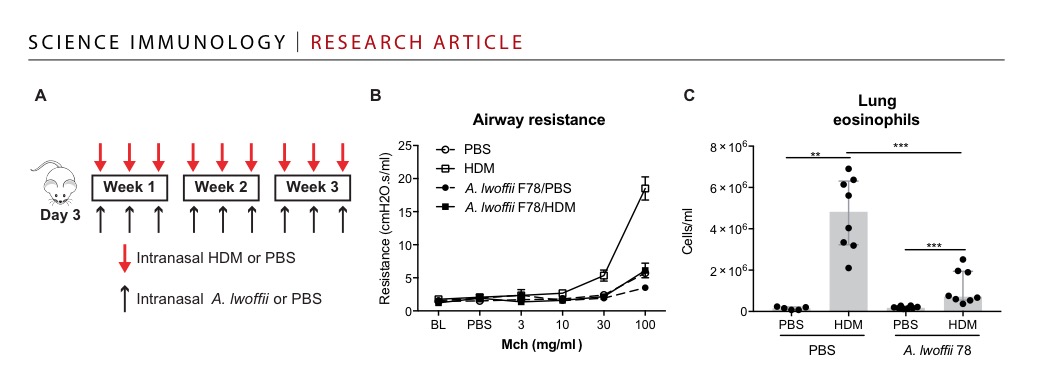
When reading a new Science immunology paper (“Inception of early-life allergen-induced airway hyperresponsiveness is reliant on IL-13+CD4+T cells“) one could again think that A. lwoffii could protect from the development of house mite allergy.

The paper, however, leaves it open (even doesn’t mention the result in the discussion) if this is any specific A. lwofii effect or just some some LPS  effect that antagonized the vitamin D containing food.

So no news even 10 years  after the initial Acinetobacter hype. The only verified fact remain several deaths caused by Acinetobacter in newborns.


CC-BY-NC Science Surf , accessed 24.03.2026

A serious backslash

It is a serious backslash to the pro vitamin D lobby that has been published in the Lancet Diabetes & Endocrinology last week.

Our findings suggest that vitamin D supplementation does not prevent fractures or falls, or have clinically meaningful effects on bone mineral density. There were no differences between the effects of higher and lower doses of vitamin D. There is little justification to use vitamin D supplements to maintain or improve musculoskeletal health.

Odds ratio 1.00. There is nothing to add.


CC-BY-NC Science Surf , accessed 24.03.2026

Finding the allergy cause

Genomics did not really help to explain allergic mechanisms beyond IL33. But combining  now stem cell & immune cell Identity tracking looks like a promising strategy for identifying initial disease events. At least colleagues at the MDC  think so.

LifeTime – ein visionärer Vorschlag für ein EU-Flagschiff. Zuverlässig vorherzusagen, wann eine Krankheit ausbricht oder wie sie verläuft, erscheint wie ein Traum. Ein europäisches Konsortium will ihn Wirklichkeit werden lassen und dabei vor allem neue Technologien der Einzelzellbiologie nutzen. Führende Forscherinnen und Forscher haben daher einen Antrag für ein FET-Flagschiff mit dem Namen LifeTime eingereicht.


CC-BY-NC Science Surf , accessed 24.03.2026

New insights by single-cell genomics

Congress report Annual AGD Meeting 2018, Potsdam Oct. 5–6

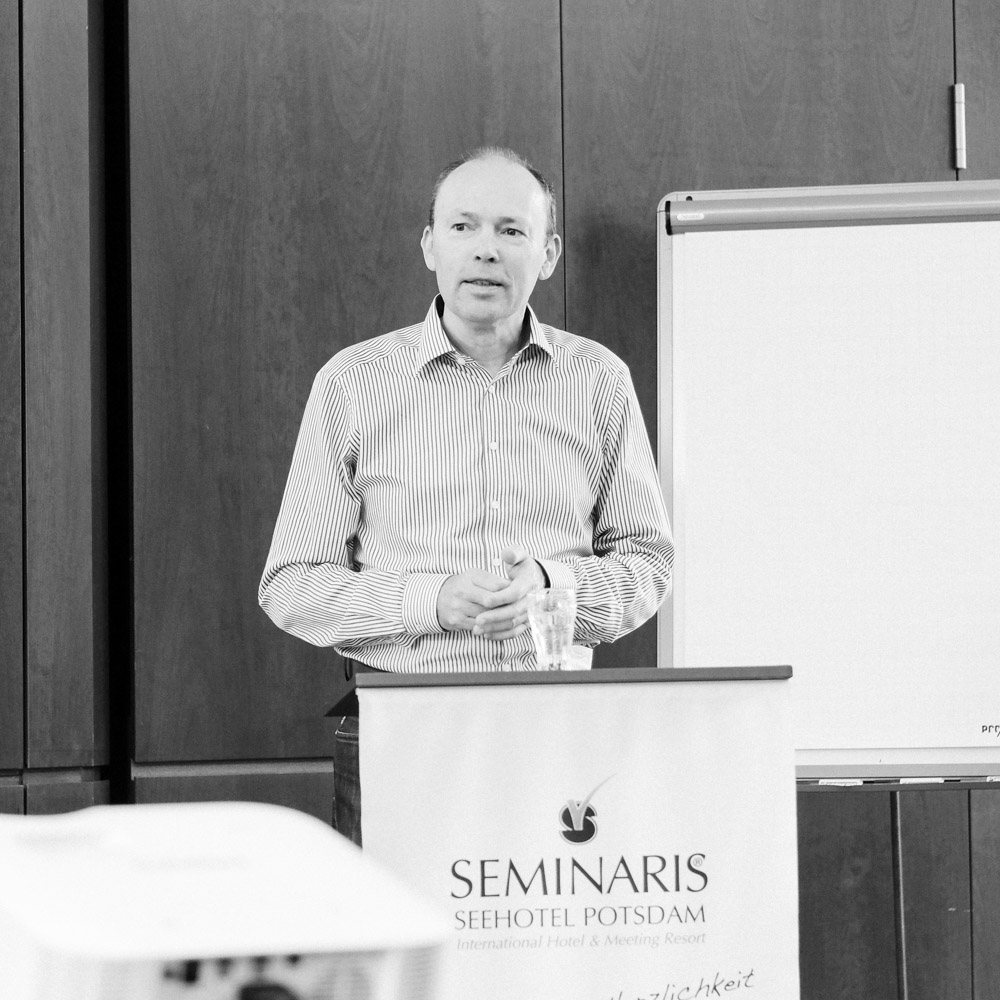
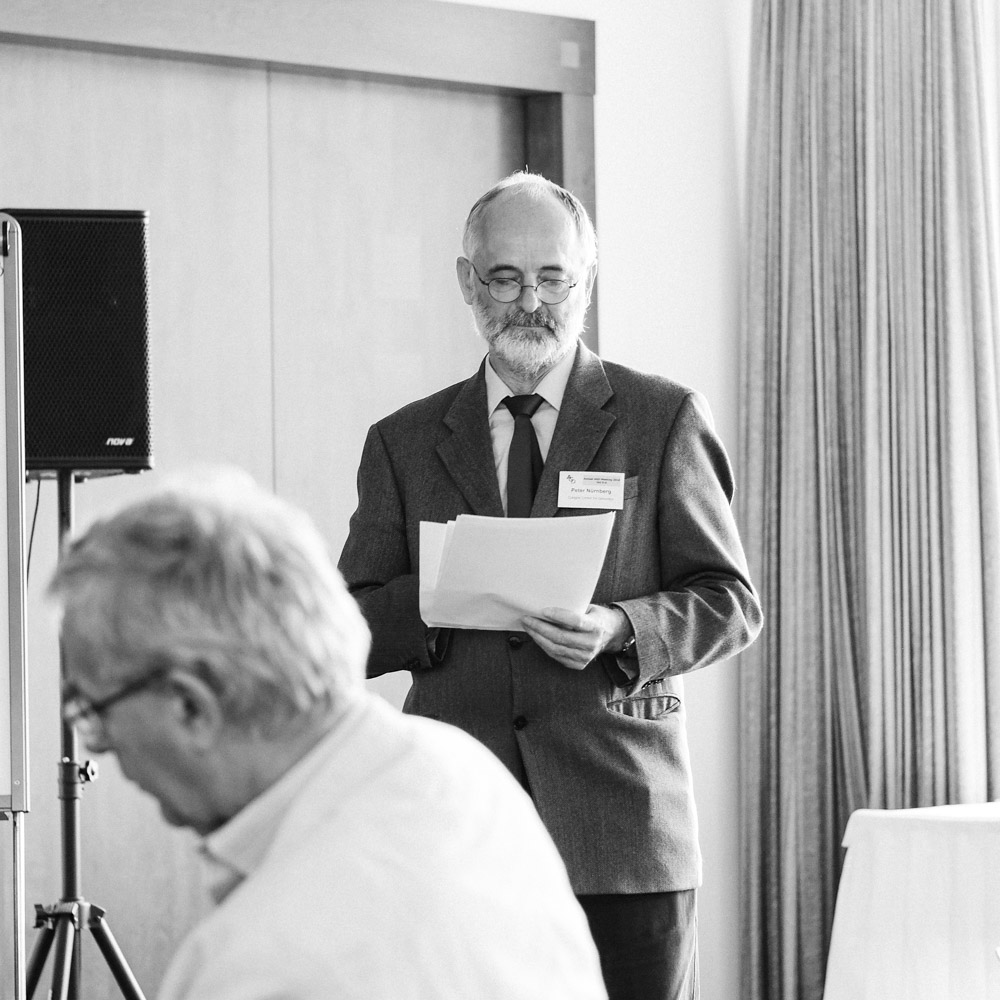
Welcome and Opening of Symposium by  Peter Nürnberg, President of the AGD and Joachim L. Schultze, Chair of the Program Committee.

Joachim L. Schultze
Peter Nürnberg

The AGD meeting was interesting and a great primer for all of us who are not directly working with single cells.

Maybe it is an unusual research field – dissecting single cells in the first stage is not a trivial task. And single cell  means single cell experiment that can be replicated only in other cells. The current readout is  RNA content at a given time while genomics and proteomics still need to be integrated. Experiments cover mainly abundant RNAs and for cost reasons only the 3′ ends. The statistical analysis usually is a 2 dimensional PCA (known to overfit noise) so this not a trivial approach at all. Newly identified cell cluster need careful confirmation as addressed in the talk of Andreas Schlitzer.

Continue reading New insights by single-cell genomics


CC-BY-NC Science Surf , accessed 24.03.2026

Science Blogger Quatsch

Was es nicht alles nicht gibt… “sapiosexuell” … ist aber dann doch mehr ein Neologismus und Bloggerquatsch. Die Studie von Miller zu Spermamobilität und Intelligenz gibt es zwar wirklich, gehört aber mehr in das jir.com und die Ig Nobel Kategorie.

Die Korrelationen sind bescheiden und natürlich hat das was mit Alkohol und Rauchen zu tun – das Regressionsmodell ist einfach schlecht mit residual confounding. Wer wirklich intelligent ist, wird auch nicht an einer Veteranenstudie teilnehmen. Und je intelligenter, desto weniger werden die Antworten stimmen: central tendency bias, courtesy bias und so weiter.

Das ganz erinnert an den Marylin Monroe-Albert Einstein Witz (https://www.quora.com/Did-Einstein-and-Marilyn-Monroe-ever-meet-each-other): “Herr Professor wäre es nicht wundervoll, wenn wir zusammen ein Kind hätten, ihre Intelligenz und meine Schönheit?” Antwort Einstein “Und was machen wir wenn es anders kommt? Ihre Intelligenz und meine Schönheit?”


CC-BY-NC Science Surf , accessed 24.03.2026

If privacy is outlawed, only outlaws will have privacy

http://www.philzimmermann.com/EN/essays/WhyIWrotePGP.html

Throughout the 1990s, I figured that if we want to resist this unsettling trend in the government to outlaw cryptography, one measure we can apply is to use cryptography as much as we can now while it’s still legal. When use of strong cryptography becomes popular, it’s harder for the government to criminalize it. Therefore, using PGP is good for preserving democracy. If privacy is outlawed, only outlaws will have privacy.


CC-BY-NC Science Surf , accessed 24.03.2026

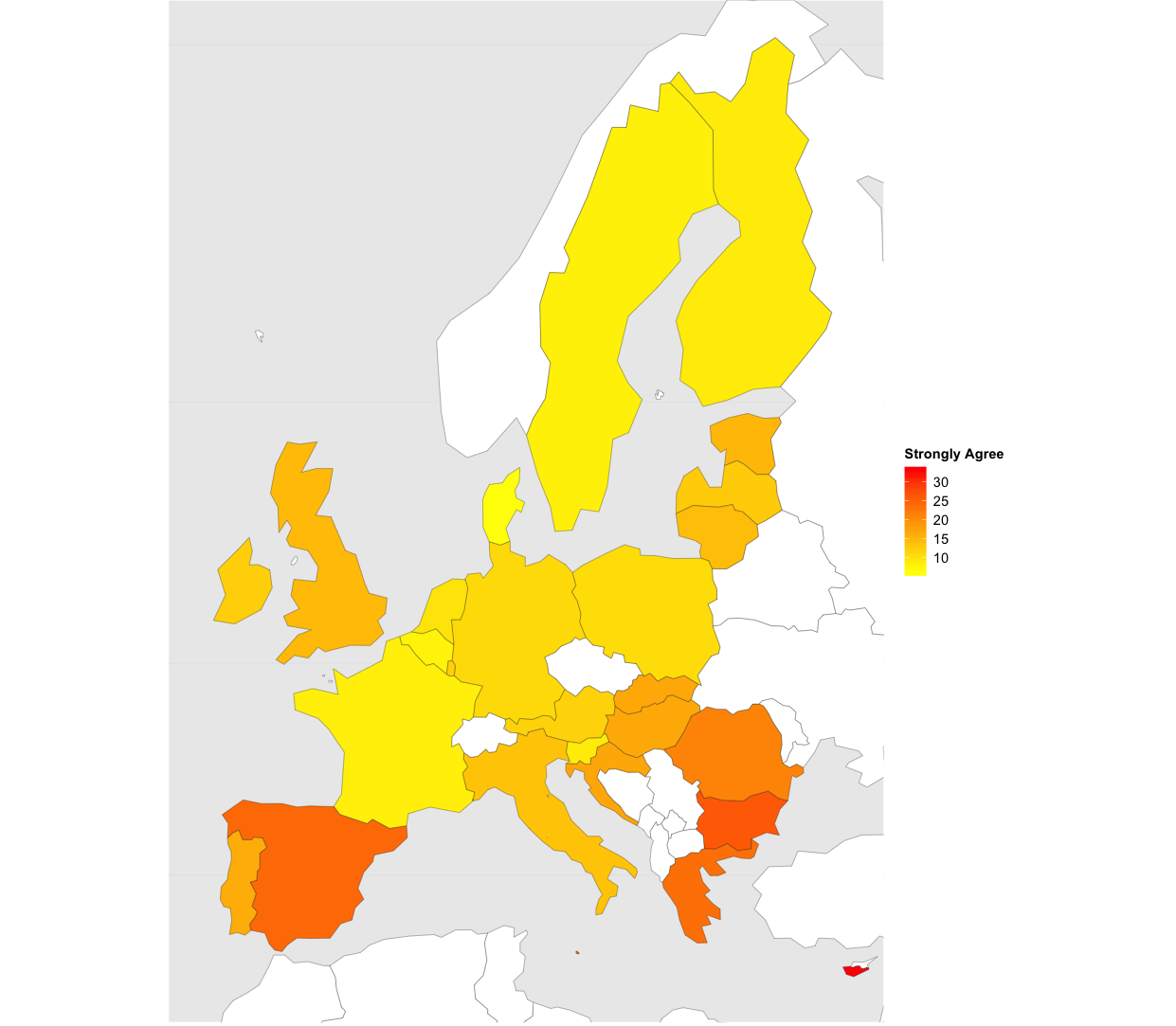
We depend too much on science and not enough on faith

Datasource: Social values, science and technology 2013 Special EU Barometer 401, p81. Figure (c) Science Surf 2018


Respondents remain divided on the issue of whether we depend too much on science and not enough on faith. Almost four in ten (39%) agree, while almost one third (32%) disagree that we depend too much on science and not enough on faith. A considerable proportion, 25%, is neutral on the issue.
There has been little change since the last wave, with agreement increasing by 1 percentage point, and disagreement down by 2 points. But there has been a big change since 1905

In der Tat, eher laufen die meisten Menschen von einem Arzt zum andern, eher versuchen sie es mit allen Mitteln, die ärztliche Wissenschaft und Aberglaube angeben, eher reisen sie von Bad zu Bad, als sie nur einmal mit rechtem Ernst und mit vollem Glauben an Gottes Allmacht und Güte betend an Gottes Thür anklopfen.

Anselm in Voigt, Religion in bioethischen Diskursen, de Gruyter 2010 p 69 refers to Ludwig Lemme, Christliche Ethik, Gr. Lichterfelde-Berlin 1905, p 681


CC-BY-NC Science Surf , accessed 24.03.2026