All posts by admin

Rat race

While working on a review about vitamin D and the microbiome, I came across an interesting article Immune-Microbiota Interactions: Dysbiosis as a Global Health Issue

Recent research, however, demonstrated that a number of specific interventions can lead to (partial) primary prevention of allergy, especially of atopic dermatitis (AD) and food allergy (FA). Three types of primary prevention strategies have been successfully studied: early administration of bacterial products (most studies are on probiotics), early moisturizing in infants at risk for AD and early exposure to allergenic foods (peanut and egg).

I am not so much convinced of any successful probiotics research that prevents all kind of allergy (ref, ref, just to name two). The interesting point, however, is the new recommendation to early exposure of allergenic foods. Does earlier exposure mean less exposure under vitamin D suppression that shouldn’t start before week 6?


CC-BY-NC Science Surf accessed 19.01.2026

Ciguatera

I will have a paper in the next issue of the  MMW describing a case report of Ciguatera in Cienfuegos / Cuba. Seems to be a common phenomenon there but unfortunately there is nothing in the Cuba guide books so far.
The pathology is extremely interesting  – sodium channel activation by P-CTX. I only wonder why there are no therapeutic attempts with long-lasting class Ia aNa channel blockers  Chinidin, Procainamid, Ajmalin, Disopyramid, Propafenon, Prajmalin. Or valproate for CNS activity.


CC-BY-NC Science Surf accessed 19.01.2026

Imagick library for R

When working for an exhibition in 2017, I found a new R library that allows nearly every image modification you could think of.

install.packages("magick")
library(magick)
magick_config()

gives you

image_read(path, density = NULL, depth = NULL)
image_write(image, path = NULL, format = NULL, quality = NULL, flatten = FALSE)
image_display(image, animate = TRUE)
image_browse(image, browser = getOption("browser"))
image_append(image, stack = FALSE)
image_average(image)
image_coalesce(image)
image_flatten(image, operator = NULL)
image_fft(image)
image_map(image, map, dither = FALSE)
image_montage(image)
image_morph(image, frames)
image_mosaic(image, operator = NULL)
image_join(...)
image_info(image)
image_animate(image, fps = 10, loop = 0, dispose = c("background","previous", "none"))


CC-BY-NC Science Surf accessed 19.01.2026

“Doodle” calendars on mobile devices

It’s always difficult if you can’t see all calendar entries on the road. So I am setting up new dates at wjst.de/dudel, cut + paste the subscription link to the Nextcloud/Owncloud calendar web frontend.

screen

“Doodle” dates will then magically appear on all other devices.


CC-BY-NC Science Surf accessed 19.01.2026

Window of Opportunity

I very much liked the “Window of Opportunity” in the Nestle Nutrition Workshop Series 61, published by Karger in 2008. Page 180 has an interesting account of the hygiene hypothesis:

Dr. Bier: … The other is the issue of the hygiene hypothesis, the cleaner environment. We are just in a somewhat less dirty environment, we are not in a clean environment, and that is the problem I have with that particular approach.

So, I am not alone

Dr. Barker:… I am guilty of inventing the term “hygiene hypothesis” as an explanation of the epidemic of appendicitis that followed the introduction of running hot water into housing of Western countries.

According to Sozanska et al. the hygiene hypothesis has more fathers

In 1970, Peter Preston1 posed the following question: ‘‘Is the atopic syndrome a consequence of good hygiene?’’ If this was the case, he argued that ‘‘the manifestations of atopy . would have appeared in given areas only after standards of hygiene . had been raised to high levels.‘‘

while David Strachan calls  it a misnomer since I know him. The last occasion was in the BMJ in August 2014

As the authors correctly point out, the term “hygiene hypothesis”, which is often attributed to my BMJ 1989 paper, is actually shorthand for a line of argument established much earlier. When presenting my own work, I regularly remind my audience that the ideas presented in the BMJ 1989 paper were inspired by David Barker’s publications on acute appendicitis a year or two before. However, as the authors acknowledge, Barker’s “hygiene hypothesis for appendicitis” was in turn influenced by earlier thinking.
I also recount that the inclusion of “hygiene” in the title of my paper (along with “hay fever” and “household size”) owed more to an alliterative tendency than to my aspiration to claim a new scientific paradigm. What interested me over the subsequent years was how, after initial disdain on grounds of implausibility, the immunological community enthusiastically endorsed the concept of the “hygiene hypothesis” as soon as they had proposed a cellular mechanism to explain it!
[…]
Indeed, the frustration over 25 years of epidemiological and immunological investigation is that so little progress has been made in identifying the biologically relevant exposures which “explain” the frequently replicated epidemiological observations linking allergic sensitisation and atopic disease (inversely) to family size and to “unhygienic” environments such as farming, separately and in combination…


CC-BY-NC Science Surf accessed 19.01.2026

Low serum vitamin D – reverse causation or true risk factor?

Even with thousands of studies, one of the most basic questions in vitamin D research is being unanswered. Low serum 25(OH)D3 – is it reverse causation or a true risk factor? As plasma 25(OH)D3 can be easily determined, it became the standard measurement for vitamin D supply. Unfortunately numerous other factors – season, genetics, sex, age, race – all influence serum 25(OH)D3 levels.

Then in 2011 David Reid et al. published a paper of 25(OH)Dfollowing up changes during acute inflammatory response after knee surgery. In essence, plasma concentrations of 25(OH)D decreased after an inflammatory insult and are not a reliable measure of 25(OH)D status in subjects with a significant systemic inflammatory response. This observation is being confirmed in the meantime by 2 further studies (Barker 2012 and Waldron 2013). I think this is a clear result now.

I have never been convinced that Mendelian randomization will help here at all – as done in earlier studies. These are clearly situations where Mendelian randomization does not work as shown  by Smith and Ebrahim back in 2004

—failure to establish reliable genotype (seldom)
—intermediate phenotype genotype—disease associations (frequent)
—confounding of genotype—intermediate phenotype—disease associations (unclear)
—horizontal pleiotropy and multi-functional genes (frequent)
—canalization and developmental compensation (unclear, but expected to be frequent)
—Lack of suitable polymorphisms for studying modifiable exposures of interest (no more a problem)

So, 25(OH)D3 is more an acute phase indicator where low levels in inflammatory diseases is effect not a cause but an effect. A recent review concludes therefore

Reversed causality is described as a possible factor interfering with the correct assessment of the Vit D status. It is concluded that further widespread fortification of foods and stimulation of supplement use should be reconsidered.

It is, however, unclear if low 25(OH)D levels is due to an increased demand (as the vitamin D lobby argues), a shift in free/bioavailable metabolite by hemodilution, binding protein capacity (what I am expecting) or just some unknown further factors.


CC-BY-NC Science Surf accessed 19.01.2026

Die Liebe ist stärker als der Hass

Ein einprägsames Bild. Lady Gaga, übernächtigt, am Aussenspiegel eines Trucks hängend, mit einem Schild in der Hand “Love trumps hate”.
Was das Wahlergebnis mit Wissenschaft zu tun hat? Vielleicht niedrigere Studiengebühren? Vielleicht mehr Geld für Penn State? Sicher erstmal Stundentendemos an der Westküste.
Sind wir nun fehl “am Platz in unserer Social-Media-Zerrwelt, in der bildungsferne Reality-Stars mehr Macht haben als Intellektuelle”? Wo Populismus mehr Überzeugungskraft als gute Argumente?
Wir werden abwarten müssen.


CC-BY-NC Science Surf accessed 19.01.2026

Your age doesn’t matter: The random impact rule

Outstanding discoveries are often preceded by publications of less memorable impact. However, despite the increasing desire to identify early promising scientists, the temporal career patterns that characterize the emergence of scientific excellence remain unknown [..]. We find that the highest-impact work in a scientist’s career is randomly distributed within her body of work. That is, the highest-impact work can be, with the same probability, anywhere in the sequence of papers published by a scientist—it could be the first publication, could appear mid-career, or could be a scientist’s last publication. This random-impact rule holds for scientists in different disciplines, with different career lengths, working in different decades, and publishing solo or with teams and whether credit is assigned uniformly or unevenly among collaborators.

What does this mean? If high impact research is being randomly distributed, that means that research success cannot be planned, neither by a scientist, nor by a research or funding organization. It means that all the overhead money that goes into reviews and organization is being lost if their goal is being “excellence”  and not just building a broad research landscape with good weather conditions.

More references www.spiegel.de/wissenschaft / Quantifying the evolution of individual scientific impact How much of your publication success is due to dumb luck? New tool ranks researchers’ influence


CC-BY-NC Science Surf accessed 19.01.2026

So many new layers

More recently, I have updated http:/cycleplanner.wjst.de with many more custome layers. It’s  a bit cumbersome to find  the best data sets out there while using it in leaflet is usually straightforward.screen Openstreetmap items work great with the overpass api which has a bit complicated syntax. Here is an example of an OR (union) query

var fuel = new L.OverPassLayer({
query: "(node['amenity'='fuel'](BBOX);node['amenity'='fast_food'](BBOX);node['amenity'='kiosk'](BBOX););(._;>;);out;"
});

bildschirmfoto-2016-11-03-um-16-11-50


CC-BY-NC Science Surf accessed 19.01.2026

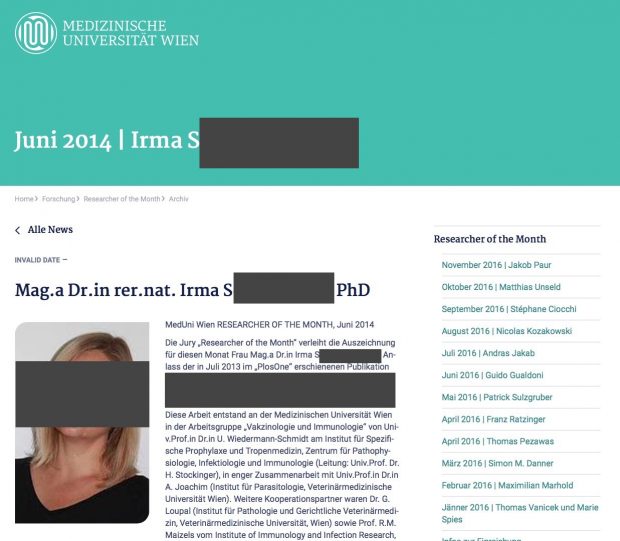
Zu viel “herumpromoviert”

Presseschau  Welt

Pöppel: “Nach meiner Einschätzung sind sehr viele der Erstsemester gar nicht studierfähig. Es ist extrem frustrierend zu sehen, was da alles an grundlegendem Wissen fehlt. Eigentlich müssten sich da die Hochschullehrer auf die zehn Prozent Besten konzentrieren. Durch die Verschulung der Universitäten geht das aber nicht. Der Bologna-Prozess ist eine Katastrophe. Die meisten Studierenden belegen nur noch Kurse, wenn die betreffenden Scheine vorgeschrieben sind. Das führt dann im doppelten Wortsinn zu einer Scheinbildung.”

Presseschau  SPON

Auch in der Vorlesung habe ich oft das Gefühl: Da wurde auswendig gelernt und abgespult. Die verschulten Bachelorstudiengänge fördern diese passive Lernhaltung.

Presseschau Der Tagesspiegel:

Das Promotionsrecht an Fachhochschulen – das nämlich ist die „Hochschule Fulda“ – ist ebenso überflüssig wie schädlich. Unnötig ist es, weil mit der Konstruktion der kooperativen Promotion dem Anliegen, befähigten Absolventen von Fachhochschulen den Weg zur Promotion zu ermöglichen, entsprochen wird. Schädlich ist es, weil damit das deutsche Wissenschaftssystem durcheinandergerät.

Es wird ohnehin zu viel “herumpromoviert”
Promotionen sind durch Plagiatsaffären in Misskredit geraten; außerdem wird zu viel über nicht relevante Themen „herumpromoviert“. Wenn jetzt auch noch Institutionen und Fachgebiete hinzukommen, ist dies der falsche Weg. Eher sollte das Promotionsrecht eingeschränkt werden.

Sind es zunächst einzelne Promotionszentren, die mit dem Recht ausgestattet werden, den Dr. zu verleihen, wird bald jede kleine Klitsche zur Doktor-Schmiede. Aus Prestigegründen wird davon auch reichlich Gebrauch gemacht werden.

Presseschau SPON II

Spätestens seit den Universitätsreformen im Zuge des Bologna-Prozesses, der eine europäische Vereinheitlichung bringen sollte, übernimmt die Promotion eine undankbare Scharnierrolle zwischen einer Post-Bologna-Realität im Studienalltag – der in diesen Tagen überall wieder beginnt – und dem Humboldt’schen Ideal von Wissenschaft. Ein bis ins Detail ausdefiniertes Studium, das schnell fit machen soll für den Arbeitsmarkt, trifft auf eine extrem uneinheitlich organisierte Universitätswelt. Bei der Promotion müssen diese inkompatiblen Vorstellungen von Wissen und Wissenschaft irgendwie zusammenfinden; mit gravierenden Folgen nicht nur für die Promovierenden, sondern auch für die Produktion von Wissenschaft.


CC-BY-NC Science Surf accessed 19.01.2026

Peggy und Böhnhardt – so wenig Wissen, so viel Palaver

Was passiert ist: Am Fundort der sterblichen Überreste von Peggy Knobloch in einem Waldstück wurde 15 Jahres später  DNA gefunden, die mit dem Mikrosatelliten Muster Uwe Böhnhardts übereinstimmt. Eine journalistische Sensation, die beiden bekanntesten Kriminalfälle in Verbindung zu bringen! Verblüffend wie schnell hier Kontamination ausgeschlossen wurde und das obwohl es dieselben Ermittler und dieselben Labore waren, welche mit der DNA gearbeitet haben?

Wie erst jetzt bekannt wurde, handelte es sich bei dem zuständigen Chefermittler im Fall Peggy als auch beim Leiter der späteren “SoKo Bosporus” im Fall der NSU-Morde um ein und dieselbe Person: Den mittlerweile pensionierten Wolfgang Geier.

Die Ermittlungspanne im “Heilbronner Phantom” durch kontaminierten Wattestäbchen ist gerade mal 7 Jahre her. Das sollte auch ein emeritierte Rechtsmediziner im wohlverdienten Ruhestand wissen. Den Vogel aber abgeschossen hat die FAZ mit ausgefeilten Theorien von Böhnhardts Verbindung zu Kindermorden.

bildschirmfoto-2016-10-28-um-08-28-12

Doch es geht noch dümmer, so der ZEIT Titel heute:

bildschirmfoto-2016-10-28-um-08-28-34

Kontamination ist nicht schier unglaublich, sondern die naheliegendste Erklärung. Vielleicht hätte aber auch das forensische Labor mal etwas innovativeres machen müssen, als immer nur die ewig gleichen Panels zu fahren. Zum Beispiel Degradation untersuchen, ein bisschen weiter sequenzieren, miRNAs, Methylierungsmuster bestimmen, 17S RNA, etc., bevor man an die Presse geht?


CC-BY-NC Science Surf accessed 19.01.2026

Gentest vor Vitamin D Prophylaxe?

Es gibt eine kindliche Erkrankung, die nur bei Vitamin D Prophylaxe auftritt: die idiomatische infantile Hyperkalzämie Lightwood (OMIM 143880). Die Ursache, eine oder mehrere Mutationen im Vitamin besser Hormon D abbauenden Enzym CYP24A1, wurden  erstmals durch Schlingmann 2011 charakterisiert. Diese Kinder leiden an einer Hyperkalzämie, Wachstumsverzögerung, Erbrechen, Dehydration und Nephrokalzinose. Mittlerweile sind noch mehr Mutationen bekannt:


Schlingmann, NEJM 2011
Clinvar 2016Funktion
A475fsX490pathogen
E143delNM_000782.4(CYP24A1):c.428_430delAAG (p.Glu143del)
GRCh38: Chr20:54172928-54172930
pathogen
E151XNM_000782.4(CYP24A1):c.451G>T (p.Glu151Ter)
GRCh38:
Chr20:54171669
pathogen
L409SNM_000782.4(CYP24A1):c.1226T>C (p.Leu409Ser)
GRCh38:
Chr20:54158096
schwach pathogen
R396WNM_000782.4(CYP24A1):c.1186C>T (p.Arg396Trp)
GRCh38:
Chr20:54158136
pathogen
R159QNM_000782.4(CYP24A1):c.476G>A (p.Arg159Gln)
GRCh38:
Chr20:54171644
pathogen
E322KNM_000782.4(CYP24A1):c.964G>A (p.Glu322Lys)
GRCh38:
Chr20:54162743
pathogen
c.445_449(+1) delATCCTg-hetpathogen
NM_000782.4(CYP24A1):c.1039C>T (p.Gln347Ter)
GRCh38:
Chr20:54159075
vermutlich pathogen
NM_000782.4(CYP24A1):c.1426_1427delCT (p.Cys477Leufs)
GRCh38:
Chr20:54157395-54157396
pathogen

Offensichtlich gibt es hier auch  benigne Formen. Ob ein Mutationsscreening vor einer Vitamin D Prophylaxe Sinn macht (“Präzisionsmedizin“)? Dazu müsste man erstmal die Prävalenz der CYP24A1 Varianten in der Bevölkerung kennen, Schlingmann schätzt zumindest 100 Fälle / Jahr in England.


CC-BY-NC Science Surf accessed 19.01.2026