Dabei sind wohl mehr Menschen an Überdosierung gestorben , als an einem Vitamin D Mangel (Vitamin D ist im übrigen in hoher Dosierung auch ein Rattengift). Vitamin D Supplemente hatte in vielen Interventionsstudien keinen Vorteil in Bezug auf Mortalität gezeigt, Bluttests dienen nur dem Arzt, der sie durchführt, so die Zusammenfassung im britischen Ärzteblatt BMJ.
Die Mortalität lässt sich nicht durch Vitamin Pillen senken, nur in 2 von 52 Studien gab es eine niedrigere Mortalität und das auch nur in einer Subgruppe (wobei der Effekt in den Originalarbeiten nicht signifikant war).
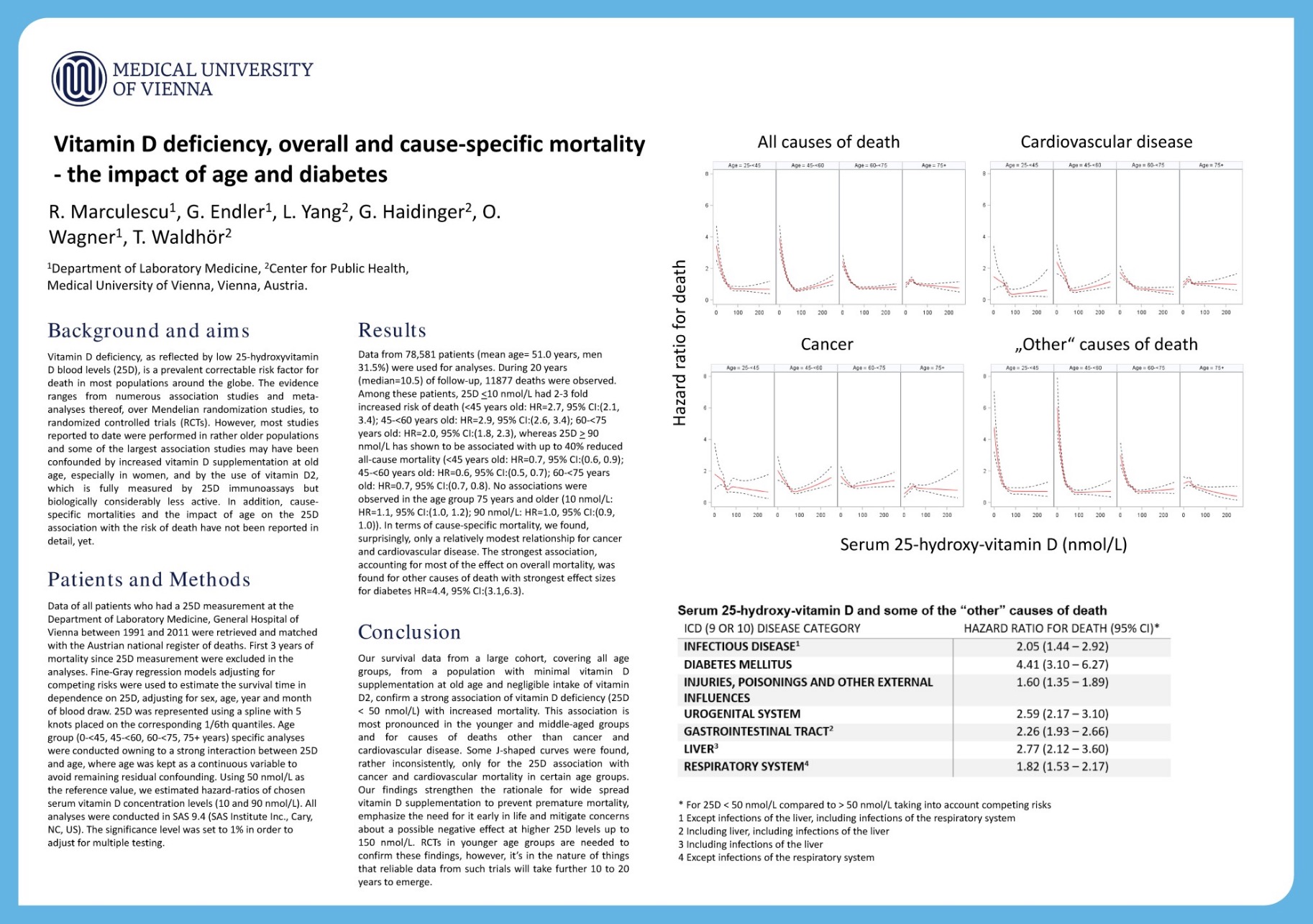
Und was steckt nun hinter dieser neuen Meldung? Es ist ein Vortragsabstract einesWiener Facharztes für Haut und Geschlechtskrankheiten, der auf der Tagung einer Diabetesgesellschaft vorgestellt wurde. Also kein Endokrinologe, kein Vitamin Experte, kein Epidemiologe. Damit ist das auch keine Interventionsstudie, nicht mal vernünftig publiziert, nur der Abstract einer “Record Linkage Studie”
https://www.easd.org/virtualmeeting/home.html#!resources/vitamin-d-deficiency-overall-and-cause-specific-mortality-the-impact-of-age-and-diabetes-e67d37ab-b146-4642-ac9c-8e204af9069d Interessenskonflikte: keine. Sind Vitamin D Assays in Österreich etwa kostenlos?
Dabei wurden Messwerte eines Kliniklabors mit Daten aus dem österreichischen Sterberegister verknüpft. Offensichtlich ist das in Österreich erlaubt, bleibt aber dennoch sinnfrei, wenn man A. weiss, dass Vitamin D ein Aktivitäts- und Inflammationsmarker ist und wenn man B. irgendwann im Leben einmal etwas über Berkson Paradox gehört hat. Warum wohl die ersten 3 Jahre von der Analyse ausgeschlossen wurden, weil die Mortalität da exzessiv gestiegen ist? Ich verstehe die Grafik nicht ganz, da sie nicht zur Methode passt – was ist denn nun die Referenzkategorie für das Hazard Ratio?
Irgendwie hätte es auch den Autoren auffallen müssen – dass es solche exzessiven HRs für Mortalität im echten Leben nicht gibt Natürlich wird jemand früher sterben, der kränker ist, schliesslich ist auch CRP bei Diabetes ein Prädiktor für Mortalität. Aber wen interessiert das ganze denn??
Mittlerweile wird auf Kongressen jeder halbwegs formal korrekte Abstract akzeptiert, um die Kongressgebühren zu kassieren. Auch eurekalert.org sollte das doch wissen, bevor es so eine Information weiter verbreitet. Viele Redaktionen können sich keinen Wissenschaftsredakteur mehr leisten. Und so schlägt dann alles ungefiltert beim Konsumenten ein “Lebensgefährlicher Vitamin-D-Mangel: Neue Studie veröffentlicht erschreckende Zahlen“. Und Herr Marculescu freut sich, da die Vitamin D Tests weiter ansteigen.
There is an interesting meta-analysis at JAMA Pediatrics about vitamin D supplementation during pregnancy and offspring growth, morbidity, and mortality. Nothing special, standardized methodology and even somewhat expected outcome.
In this systematic review and meta-analysis of 24 randomized clinical trials including 5405 individuals, vitamin D supplementation during pregnancy was associated with a lower risk of infants being small for gestational age and improved growth during infancy without an increased risk of fetal or neonatal mortality or congenital abnormality.
More interesting are the vitamin D lobbyists writing the accompanying editorial (Bo Chawes , Klaus Bønnelykke, Hans Bisgaard) . They try by nearly every sentence to devalue the findings of the meta-analysis. They are even getting to the point of
no adverse effects have been found
We don't see things as they are, we see them as we are.
Es gibt keine Menschenrassen, von Rassen spricht man nur noch im Zusammenhang mit der Tierzucht, wo bestimmte Gruppeneigenschaften gezüchtet werden.
Trotzdem habe ich Probleme mit der Jenaer Erklärung (zitiert nach hpd.de) von Johannes Krause
Aus genetischer Sicht gebe es im Genom des Menschen “keinen einzigen fixierten Unterschied, der zum Beispiel Afrikaner von Nicht-Afrikanern trennt. Es gibt - um es explizit zu sagen - somit nicht nur kein einziges Gen, welches ‘rassische’ Unterschiede begründet, sondern noch nicht mal ein einziges Basenpaar”. Äußere Merkmale, an denen Rassisten ihre Abwertung von bestimmten Menschengruppen festmachen, seien oberflächliche und biologisch leicht wandelbare Anpassungen an geographische Gegebenheiten. Bis vor 8000 Jahren seien die Menschen in Europa noch “stark pigmentiert” gewesen. Erst durch die Einwanderung von Menschen mit hellerer Hautfarbe aus Anatolien und dem damit einsetzenden Beginn der Landwirtschaft habe sich dies geändert, da es sich bei einer stark pflanzenbasierten Kost im dunklen Winter Europas als evolutionärer Vorteil erwies, hellere Haut zu haben und damit genügend Vitamin D produzieren zu können.
“Die helle Hautfarbe der Menschen im nördlichen Europa ist jünger als 5000 Jahre”, hält die Jenaer Erklärung fest. “Die Verknüpfung von Merkmalen wie der Hautfarbe mit Eigenschaften oder gar angeblich genetisch fixierten Persönlichkeitsmerkmalen und Verhaltensweisen, wie sie in der Blütezeit des anthropologischen Rassismus verwendet wurden, ist inzwischen eindeutig widerlegt. Diese Argumentation heute noch als angeblich wissenschaftlich zu verwenden, ist falsch und niederträchtig. Es gibt auch keinen wissenschaftlich nachgewiesenen Zusammenhang zwischen Intelligenz und geographischer Herkunft, aber einen deutlichen mit sozialer Herkunft.”
Die Erklärung hat recht, insofern der Rassebegriff nur noch von Rassisten verwendet wird.
Sie hat auch recht daß es kein einziges Gen gibt, welches ethnische Unterschiede begründet – allerdings hat das auch niemand behauptet. Dagegen gibt es aber durchaus fixierte phänotypische und genetische Unterschiede in geographischen Regionen – einzelnen Volksgruppen, Populationen oder auch Ethnien.
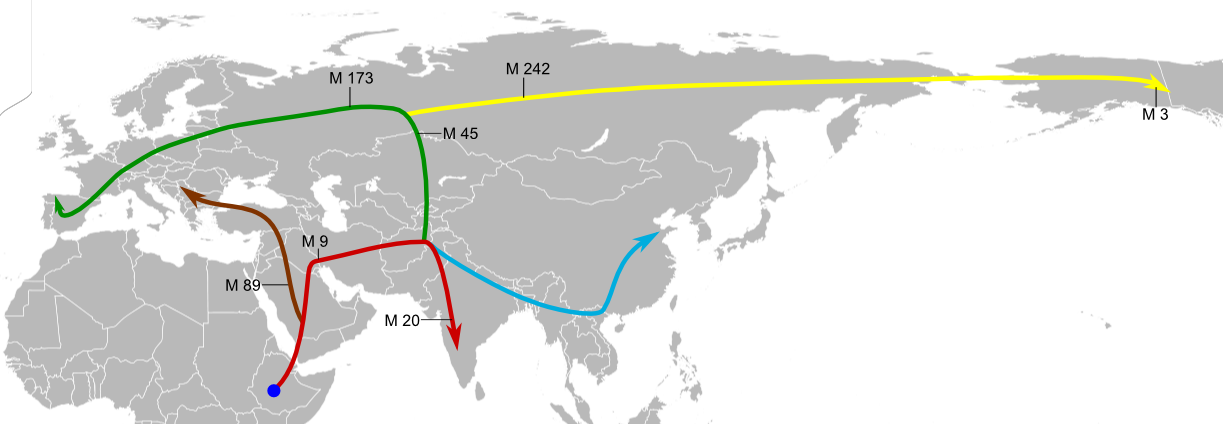
M9 ist nach gängiger Forschung der “out of Africa” Marker, siehe Wikipedia
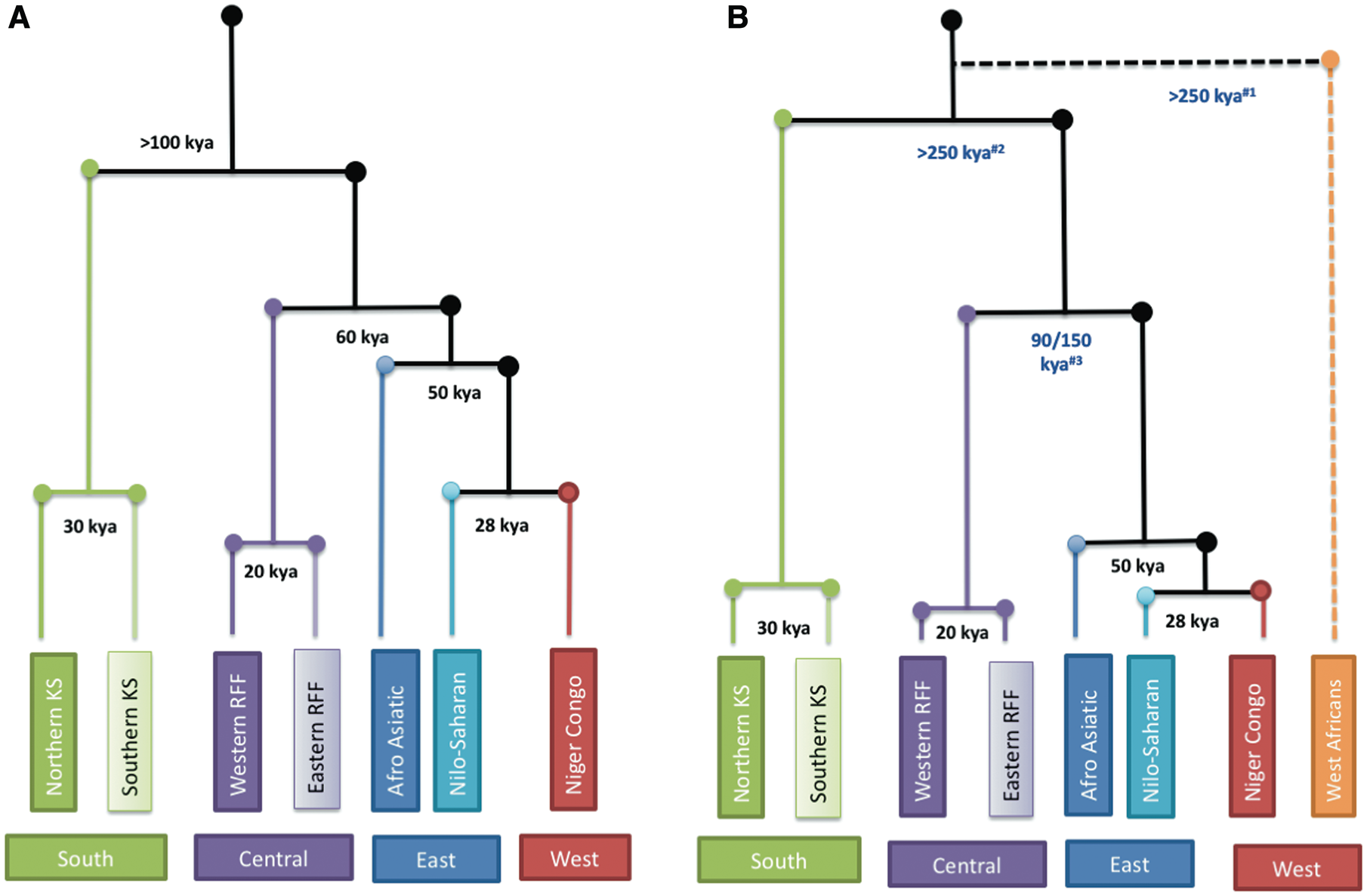
Die Erklärung sagt schliesslich auch, dass Europäer näher verwandt sind mit Ostafrikanern, als Ostafrikaner mit Südafrikanern. Wie ist aber eine solche Aussage möglich sein, wenn man keine populationsspezifische Marker dafür hätte?
Für Abstammungstheorien wird oft die Kombination von SNP (Single Point) Marker verwandt. Mit Hilfe etwa der Hauptkomponentenanalyse (PCA) wurde zum Beispiel der ursprüngliche afrikanische Stammbaum im letzten Jahr revidiert.
Was also die ethnischen Unterschiede ausmacht? Es sind arbiträre biologische und statistische Kennziffern, die oft in unterschiedlichen Ausmass mit soziologischen Kennzeichen korrelieren.
Extensive set of African ancestry-informative markers (AIMs) to study ancestry and population health. .. we generated a final set of 46,737 African ancestry-informative markers (AIMs).
AIMs sind nicht zuletzt wichtig, da die Unterschiede auch zu unterschiedlichen Krankheiten führen, Stichwort "precision medicine".
Und das ominöse Vitamin D? Helle Hautfarbe = bessere Vitamin D Konversion bei Niedrigversorgung im Norden, bekannt auch als Loomis Hypothese, ist als evolutionärer Faktor zwar naheliegend, aber reine Spekulation. Ohne die Literatur zur Pigmentierung der Haut zu rekapitulieren – der Zweck der Pigmentierung ist Schutz der Basalzellschicht vor UV Strahlung und nicht die Limitierung der Vitamin D Produktion.
By contrast, deeper skin tones with more melanin filters at least twice as muchTrusted Source UV light. Researchers believe this is why skin cancer rates are lower in People of Color. However, a 2020 articleTrusted Source also highlights that a lack of diversity in trials and studies, and a shortage of people of color in the field of dermatology, means that scientists may not accurately understand how common skin cancer is in skin of color.
Die Vitamin D Konversion ist auch ohne starke Hautpigmentierung selbst limitierend. Sie setzt allenfalls früher ein, nämlich bei heller Haut ca 20 Minuten nach Bestrahlung anstatt nach 40 Minuten bei dunkler Haut. Das ist Lehrbuchwissen aus Feldman und Pike. Nach aktuellem Kenntnisstand stimmt es wohl auch nicht, dass dunkle Hautfarbe die ursprüngliche Hautfarbe von H. sapiens in Afrika ist und Europäer mit heller Hautfarbe Mutanten sind. Ich vermute eher, daß helle und dunkle Hautfarbe die Extreme einer ansonsten mittleren Helligkeit sind (zur Diskussion dieser Hypothese siehe Scholar).
Der letzte Stand nach meiner Kenntnis steht in dem Science 2017 Paper von Sarah Tishkoff
Examining ethnically diverse African genomes, we identify variants in or near SLC24A5, MFSD12, DDB1, TMEM138, OCA2, and HERC2 that are significantly associated with skin pigmentation. … Functional analyses indicate that MFSD12 encodes a lysosomal protein that affects melanogenesis in zebrafish and mice, and that mutations in melanocyte-specific regulatory regions near DDB1/TMEM138 correlate with expression of ultraviolet response genes under selection in Eurasians.
In dieser Liste steht jedenfalls kein einziges Vitamin D Gen, so dass die Jenaer Erklärung auch hier nicht dem Wissenstand entspricht auch wenn sie gut gemeint ist.
20.9.2024
Journalisten werden allerdings auch weiterhin nicht müde, zu dem Thema zu fabulieren, leider auch wieder in einem neuen Video.
It is one of the minor papers in a minor journal but nevertheless has some big impact: “A phenome-wide Mendelian-randomization study of genetically determined vitamin D on multiple health outcomes using the UK Biobank” in Int J Epidemiol. 2019 Sep 13
Existing studies suggest that a low vitamin D level is associated with more than 130 outcomes. … We then implemented a Mendelian Randomization-Phenome Wide Association Study (MR-PheWAS) analysis on data from 339 256 individuals of White British origin from UK Biobank. We first ran a PheWAS analysis to test the associations between a 25(OH)D polygenic risk score and 920 disease outcomes…The PheWAS analysis did not identify any health outcome associated with the 25(OH)D polygenic risk score.
“Die Werbeaussage, wonach jeder Mensch eine Extraportion Vitamine oder Mineralstoffe zur Aufrechterhaltung der Leistungsfähigkeit und Gesundheit braucht, ist schlicht und einfach falsch", sagte Jürgen Schölmerich, Facharzt für Gastroenterologie und ehemaliger ärztlicher Direktor und Vorstandsvorsitzender des Universitätsklinikums Frankfurt am Main. Nur für wenige Personengruppen, etwa Schwangere oder Veganer, seien bestimmte Nahrungsergänzungsmittel-Präparate tatsächlich empfohlen.
In 1996, a group of European researchers found that a certain gene, called SLC6A4, might influence a person's risk of depression.
It was a blockbuster discovery at the time. The team found that a less active version of the gene was more common among 454 people who had mood disorders than in 570 who did not. In theory, anyone who had this particular gene variant could be at higher risk for depression, and that finding, they said, might help in diagnosing such disorders, assessing suicidal behavior, or even predicting a person's response to antidepressants.
Back then, tools for sequencing DNA weren't as cheap or powerful as they are today. When researchers wanted to work out which genes might affect a disease or trait, they made educated guesses, and picked likely "candidate genes." For depression, SLC6A4 seemed like a great candidate: It's responsible for getting a chemical called serotonin into brain cells, and serotonin had already been linked to mood and depression. Over two decades, this one gene inspired at least 450 research papers.
But a new study-the biggest and most comprehensive of its kind yet-shows that this seemingly sturdy mountain of research is actually a house of cards, built on nonexistent foundations.
I have written in my recent editorial about the nonsense of plasma vitamin D measurements. A recent case history of a patient with a deleted vitamin D carrier molecule GC now confirms the free-hormone hypothesis. The patient's plasma 25(OH)D levels was only 0.4% of those in the unaffected sibling.
Despite a lifelong deficiency of vitamin D binding protein, limited sun exposure (for religious reasons), and a diet that was probably lacking sufficient vitamin D, our patient did not have rickets or osteomalacia but rather osteopenia and fragility fractures that occurred in the fifth decade of life.
Another carrier sibling had only two third of the plasma 25(OH)D level compared to the unaffected sibling but showed “no appreciable clinical manifestations”.
So why measure 25(OH)D?
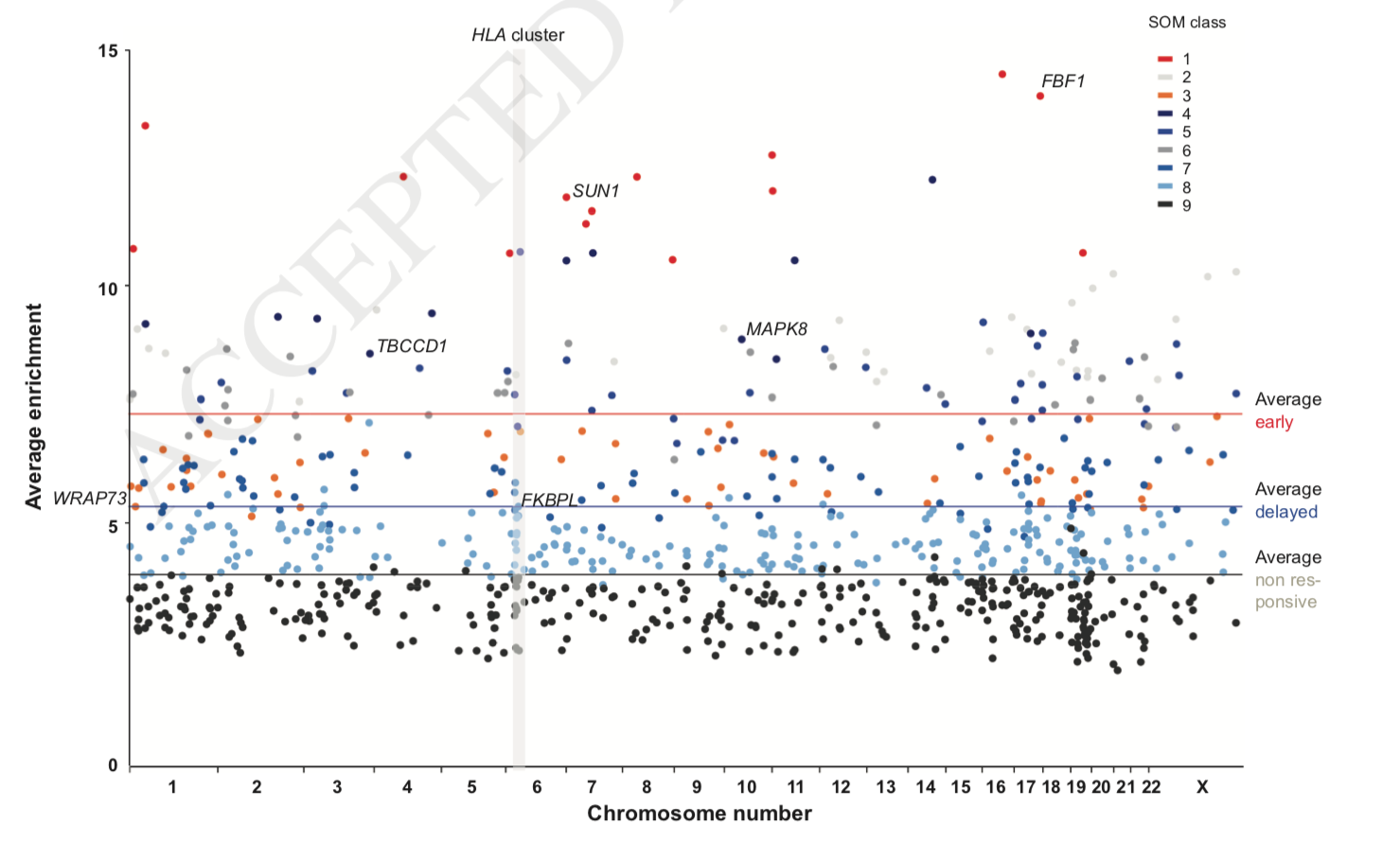
Consistently accessible chromatin was detected at 5,205 genomic loci, the 853 most prominent of which a self-organizing map algorithm classified into early, delayed and non-responding genomic regions: 70 loci showed already after one day and 361 sites after two days significant (p < 0.0001) chromatin opening or closing. Interestingly, more than half of these genomic regions overlap with transcription start sites, but the change of chromatin accessibility at these sites has no direct effect on the transcriptome.
Early responses are described for SUN1 (funny in this context :-), FBF1 and WRAP73. Overall the genomic region around the human leukocyte antigen (HLA) cluster in chromosome 6 showed the highest normalized density of accessible chromatin explaining the immunosuppressive effect of sunshine.
This is an argument that I found only recently in the excellent review by Hellman 2017
Both humans and rodents living under laboratory conditions are generally free from worm infections, which are known to be potent inducers of IgE production. By contrast, most wild animal populations have massive amounts of intestinal worm parasites … To our knowledge, allergies have not been described in wild animals. One potential factor could be a genetic drift due to strong selection for phenotypic characteristics like coat color, long or short noses, running fast, or wanted social behaviors. Such strong selections are seen in the breeding programs for dogs, horses, and cats, but a questionable cause for human allergies. However, it is possible that we constantly need to be selecting against hypersensitivities, which may occur due to minor shift in immune functions caused by spontaneous point mutations. A strong such selection process most likely exists in wild animals under tough environmental conditions but not in domestic animals and in humans.
I agree on the observation – allergy is found only in humans and domesticated animals – while the explanation is implausible as it cannot be generalized to humans. As vitamin D supplements are both used for humans, cats, dogs, horses and lab mice, it is a more likely explanation in particular as we have now have 4 randomized trials in humans confirming the hypothesis.
Immer wieder wird Deutschland ein flächendeckender Vitamin-D-Mangel attestiert. So schrieb beispielsweise die Deutsche Gesellschaft für Ernährung in ihrem Bericht, den sie im Sommer veröffentlichte, rund 30 Prozent der Erwachsenen seien nicht ausreichend mit Vitamin D versorgt. Wobei Ältere als Risikogruppe gelten und bei Seniorinnen der Mangel aber ausgeprägter ist als bei Männern. Für Personen mit hohem Risiko für einen Vitamin-D-Mangel erachtet es die DGE für notwendig, ein Vitamin-D-Präparat einzunehmen, um den Bedarf zu decken. Evidenz für eine generelle Substitution gibt es zwar nicht. Aber anscheinend führen solche Berichte und das zugehörige Medien-Echo dazu, dass eigenmächtig ohne Rücksprache mit Arzt oder Apotheker Vitamin D eingenommen wird - und zwar nach dem Motto: "viel hilft viel"
Wer glaubt schon der Deutsche Gesellschaft für Ernährung? Immerhin doch Einige: Die Deutschen Apothekerzeitung berichtet aktuell über zwei Fälle von akuten Nierenversagen bei ausgeprägter Hyperkalzämie,.
The first insight into the possible relationship between the industrialization of Northern Europe and rickets was made by Sniadecki in 1822 when he concluded that children who lived in the inner city of Warsaw had a high incidence of rickets because of their lack of sun exposure. This was based on his clinical observations that children living in rural areas outside of Warsaw did not suffer from rickets while children born and raised in Warsaw were plagued with the disease.
Now we are supplementing vitamin D to nearly all inner city children who have a high allergy prevalence but not so much in rural areas where we see less allergy – everywhere, not only in Warsaw.
Today I cam across extraocular photoreceptors which make up a fascinating story, explained by Wikipedia
A third class of mammalian photoreceptor cell was discovered during the 1990s: the photosensitive ganglion cells. These cells do not contribute to sight directly, but are thought to support circadian rhythms and pupillary reflex.
"extraocular photoreceptors" are usually found in the central nervous system or in the skin, but also frequently in internal organs. … All the visual cells identified in animals detect light using a single family of proteins, called the opsins. These proteins grab a light-sensitive molecule - derived from vitamin A - that changes its structure when exposed to light. The opsin in turn changes its own shape and turns on signaling pathways in photoreceptor cells … The skin is where we see most other light receptors, particularly in active color-changing cells or skin organs called chromatophores.
I tried but could not find any link between chromatophores, vitamin D production and skin tanning in humans although such a link would make a lot of sense. While changing the search strategy to opsin expression in the skin, I found something interesting
Here we show that four opsins-OPN1-SW, OPN2, OPN3 and OPN5-are expressed in the two major human epidermal cell types, melanocytes and keratinocytes, and the mRNA expression profile of these opsins does not change in response to physiological UVR doses. … Notably, OPN2 and OPN3 mRNA were significantly more abundant than other opsins and encoded full-length proteins. Our results demonstrate that opsins are expressed in epidermal skin cells and suggest that they might initiate light-induced signaling pathways, possibly contributing to UVR phototransduction.
Human OPN5 also had an absorption maximum at 380 nm with spectral properties similar to mouse OPN5, revealing that OPN5 is the first and hitherto unknown human opsin with peak sensitivity in the UV region. OPN5 was capable of activating heterotrimeric G protein Gi in a UV-dependent manner.
which came into life by just a single mutation. As far as I understand it, UVR exposure is not leading to any opsin expression. Maybe it is just a very low threshold trigger for TYR et al ?
We investigated the effects of UV on human skin of various races before and at different times after a single 1 minimal erythemal dose UV exposure. … The expression of melanocyte-specific proteins (including TYR (tyrosinase), TYRP1 (tyrosinase-related protein 1), DCT (tyrosinase-related protein 2), MART1 (melanoma antigens recognized by T-cells) gp100 (Pmel17/silver), and MITF (micropthalmia transcription factor)) increased from 0 to 7 d after UV exposure, but the melanin content of the skin increased only slightly. The most significant change, however, was a change in the distribution of melanin from the lower layer upwards to the middle layer of the skin
A recent review in Current Biology pointed out that vitamin A-based chromophores were initially used in harvesting light energy, but have then become the most widely used light sensor.
Unfortunately many research questions have not been answered yet. We can only speculate about the function of extraocular photoreceptors in humans. In the mammalian retina it is probably part of a self-defense mechanism of the eye to avoid UVR induced destruction. There could be similar functions in the human skin including circadian entrainment, DNA protection and repair. Vitamin D production in the skin after UVR exposure is an independent process as ergosterol itself can efficiently absorb UVB radiation.
Our findings suggest that vitamin D supplementation does not prevent fractures or falls, or have clinically meaningful effects on bone mineral density. There were no differences between the effects of higher and lower doses of vitamin D. There is little justification to use vitamin D supplements to maintain or improve musculoskeletal health.
Unspezifische Impfeffekte wird es wohl geben, so der neue SPON Artikel von heute
Allerdings wird in Industrienationen daran geforscht, wie die unspezifischen Effekte früher Impfungen möglicherweise ein Leben nachwirken. Zurzeit läuft zum Beispiel eine große Studie in Australien zur Frage, ob eine frühe BCG-Impfung (gegen Tuberkulose) das Allergierisiko senkt.
Vielleicht hängt der Anstieg von Allergien ja damit zusammen, dass wir aufgehört haben, gegen Pocken und BCG zu impfen”, vermutet Aaby. Er fragt sich sogar, ob das Einstellen der Pocken-Impfung nicht auch Schaden angerichtet haben könnte, weil nun das Immuntraining durch diese Impfung ausfalle.
Der Bezug zu den Allergien ist allerdings sehr unwahrscheinlich, siehe Arnoldusson
We identified 767 articles, of which 17 satisfied our inclusion criteria; there was only 1 randomized controlled trial, with the remaining studies being epidemiologic investigations. Meta-analyses did not show any protective effect of vaccination against the risk of sensitization, as judged by specific IgE tests or skin prick testing …BCG vaccination is unlikely to be associated with protection against the risk of allergic sensitization and disease.
Es ist mir also ziemlich schleierhaft, warum das Murdoch Childrens Research Institute dazu eine Studie macht. Aber das Research Institute hat schon ganz andere Flops produziert…
Auch die Pockenimpfung schützt nicht, das ist eigentlich längst abgehakt
We found no association between having been vaccinated against smallpox in childhood and risk of atopy or allergic rhinitis. Smallpox vaccination was associated with a slightly decreased risk of asthma. There was no association between age at smallpox vaccination and risk of atopy, allergic rhinitis, or asthma. Adjusting for birth cohort, sibship size, age of the woman's mother at birth, and social class in childhood did not change these results.
Es geht hier auch nicht so sehr um eine neue wissenschaftliche Diskussion, sondern um die journalistische Aufarbeitung eines “Dokumentarfilms”.
Nach Masernimpfung hat im übrigen Seif Shaheen in Guinea-Bissau mehr(!) Allergien gefunden, was aber wohl auch fraglich ist, da hier nicht nur die Impfung, sondern die medizinische Betreuung generell (“iatrogen”) zur Debatte steht. Interessanterweise wird in Guinea-Bissau auch Vitamin D zur Tbc Prophylaxe gegeben wobei Vitamin D selbst ein Allergierisikofaktor ist.