Conference on Tropical Medicine and Global Health, Munich 2019

I have been attending the “Conference on Tropical Medicine and Global Health” here in Munich where I am was particular impressed by the policy talks in the plenary session.

17 Goals to Transform Our World

This includes the talk by Achim Hoerauf who talked about the UN declaration of sustainable goals but also the 5th progress report of the London Declaration about the neglected tropical diseases (that has not been signed by Germany for whatever reasons). The latter has some numbers to celebrate.

Human African trypanosomiasis
In 2016, only 2,184 cases of sleeping sickness were reported worldwide, down from 6,747 in 2011.
Trachoma
Five countries have been validated by WHO as having eliminated trachoma as a public health problem: Cambodia, Lao People’s Democratic Republic, Mexico (2017), Morocco (2016) and Oman (2012).
Lymphatic filariasis
In 2017, four countries – the Marshall Islands, Thailand, Togo and Tonga – eliminated LF as a public health problem, bringing the total to ten countries (with Cambodia, the Cook Islands, Maldives, Niue, Sri Lanka and Vanuatu).
Guinea worm disease
Guinea worm disease, which 30 years ago afflicted more than 3 million people in 20 countries, is on the brink of eradication, with just 26 cases in two countries.
Onchocerciasis
Onchocerciasis has been eliminated in nearly all of the Americas. Colombia (2013), Ecuador (2014), Guatemala (2016) and Mexico (2015) have been validated as ‘onchocerciasis-free’.


CC-BY-NC Science Surf accessed 20.01.2026

Single vitamin D bolus and HLA accessible chromatin

We have already recently seen that gene methylation in newborns can be changed by maternal vitamin D supplementation.
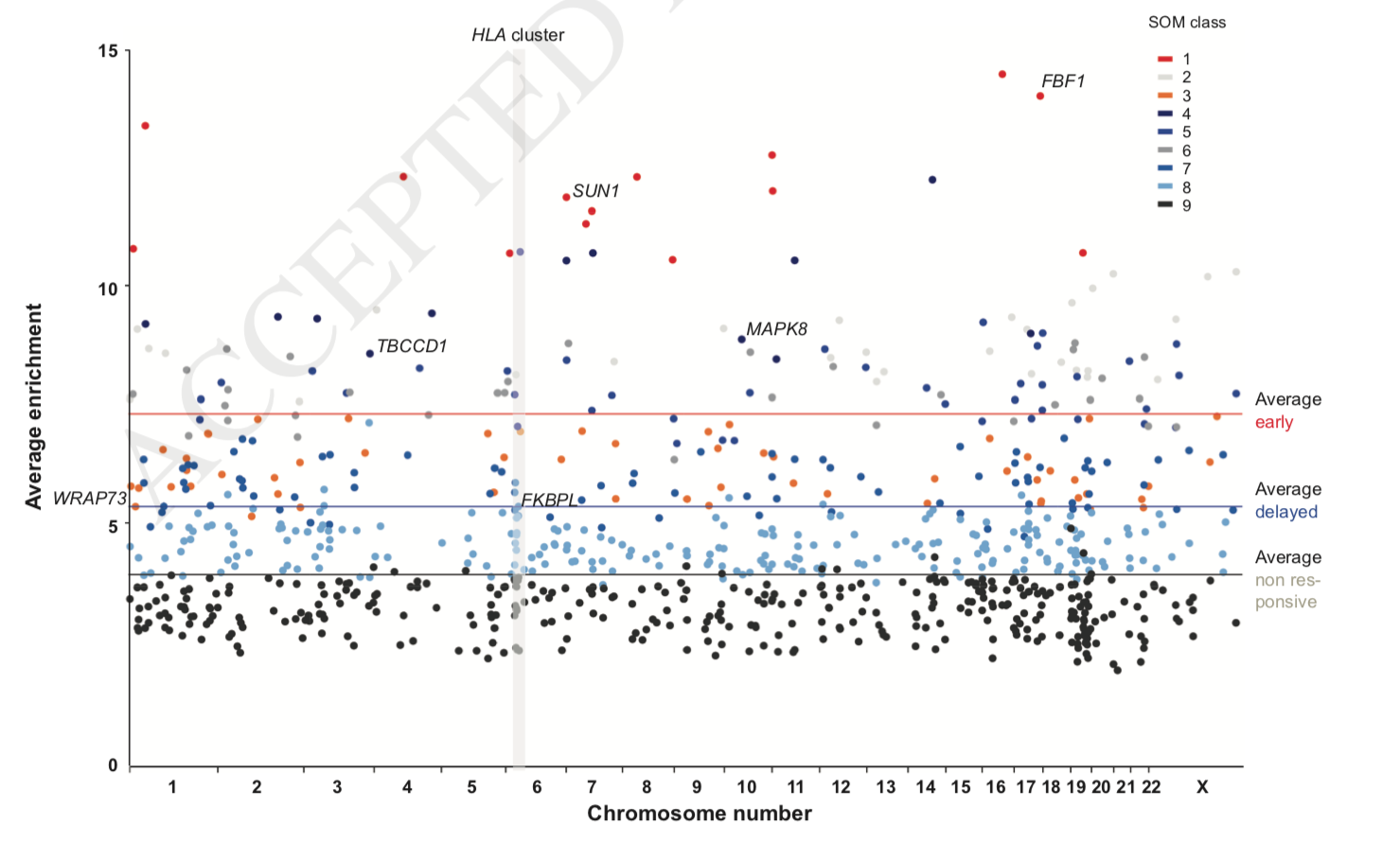
This is now confirmed in a single individual who was exposed to an oral bolus of 2000  μg of vitamin D3. Even within one day, effects could be observed.

Consistently accessible chromatin was detected at 5,205 genomic loci, the 853 most prominent of which a self-organizing map algorithm classified into early, delayed and non-responding genomic regions: 70 loci showed already after one day and 361 sites after two days significant (p < 0.0001) chromatin opening or closing. Interestingly, more than half of these genomic regions overlap with transcription start sites, but the change of chromatin accessibility at these sites has no direct effect on the transcriptome.

Early responses are described for SUN1 (funny in this context :-), FBF1 and WRAP73. Overall the genomic region around the human leukocyte antigen (HLA) cluster in chromosome 6 showed the highest normalized density of accessible chromatin explaining the immunosuppressive effect of sunshine.


CC-BY-NC Science Surf accessed 20.01.2026

Allergy and vitamin D supplements only in domesticated animals

This is an argument that I found only recently in the excellent review  by Hellman 2017

Both humans and rodents living under laboratory conditions are generally free from worm infections, which are known to be potent inducers of IgE production. By contrast, most wild animal populations have massive amounts of intestinal worm parasites … To our knowledge, allergies have not been described in wild animals. One potential factor could be a genetic drift due to strong selection for phenotypic characteristics like coat color, long or short noses, running fast, or wanted social behaviors. Such strong selections are seen in the breeding programs for dogs, horses, and cats, but a questionable cause for human allergies. However, it is possible that we constantly need to be selecting against hypersensitivities, which may occur due to minor shift in immune functions caused by spontaneous point mutations. A strong such selection process most likely exists in wild animals under tough environmental conditions but not in domestic animals and in humans.

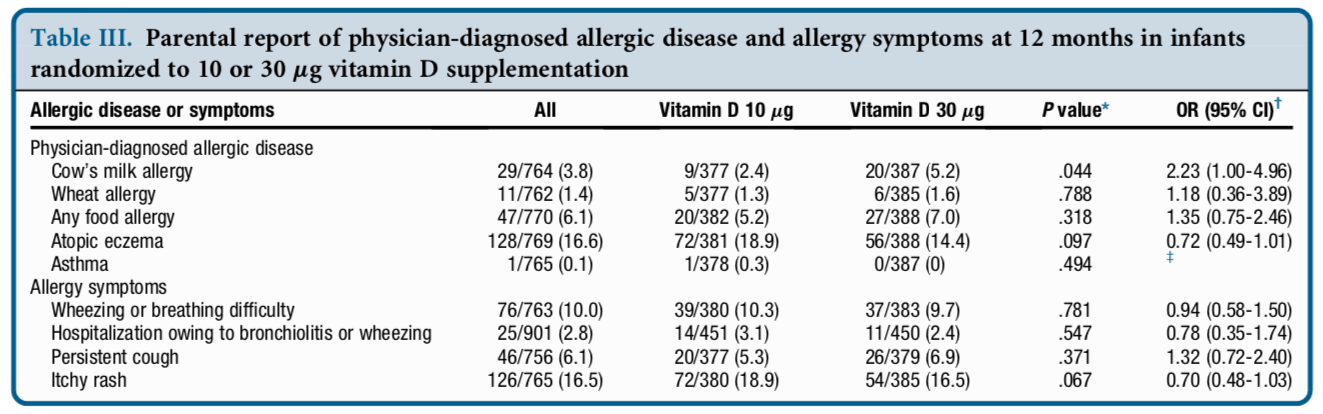
I agree on the observation – allergy is found only in humans and domesticated animals – while the explanation is implausible as it cannot be generalized to humans. As vitamin D supplements are both used for humans, cats, dogs, horses and lab mice, it is a more likely explanation in particular as we have now have 4 randomized trials in humans confirming the hypothesis.


CC-BY-NC Science Surf accessed 20.01.2026

Die Wahrheit

Hanna Arendt unterscheidet Tatsachenwahrheit und Vernunftwahrheit in ihrem Essay Wahrheit und Politik 1964

Wiewohl es im Politischen zumeist die Tatsachenwahrheiten sind, die auf dem Spiel stehen, ist der Konflikt zwischen Wahrheit und Politik zuerst an der Vernunftwahrheit ausgebrochen und entdeckt worden. In den Wissenschaften ist das Gegenteil der Wahrheit der Irrtum oder die Unwissenheit, in der Philosophie die Illusion oder die bloße Meinung.

Dazu letzte Woche auf feinschwarz Julian Müller

Die von Arendt getroffene Unterscheidung in Wahrheit(en) und bloße Meinung(en) im eingangs erwähnten Werk scheint mir heute noch genauso dienlich, wie ihre Ausdifferenzierung in verschiedene Formen der Wahrheit… Über Meinungen kann, darf, ja soll sogar gestritten werden, sie bilden letztlich den Raum des Politischen: nach Arendt also den Bereich des gemeinsamen Handelns bzw. der Gestaltung der für alle Beteiligten gemeinsamen Welt. Wahrheiten jedoch unterscheiden sich von diesen durch ihren Wahrheits- und Gültigkeitsanspruch: „Jede Wahrheit erhebt den Anspruch zwingender Gültigkeit […]“, eine erfolgende Diskussion und Zustimmung oder aber auch eine Verweigerung derselben kann diesen weder erhärten, noch erschüttern.
Dabei weiß Arendt selbstverständlich um einen notwendig gegebenen Interpretationsspielraum und um die Tatsache, dass die sogenannte „nackte Wahrheit“ immer auch eine Frage der Perspektive ist. Der Umstand, dass es Wahrheit immer nur in Relation gibt, kann jedoch nicht dazu dienen, „[…] die Unterschiede zwischen Tatsachen, Meinungen und Interpretationen einfach zu verwischen […]“, „Wahrheit in Relation“ bedeutet also mit anderen Worten keineswegs Relativismus.

Das Problem ist nur – zumindest in der Wissenschaft – weniger das Relationale oder die Perspektive, sondern die Unklarheit ob etwas wahr oder falsch ist, ob meine Meinung oder Deine Meinung stimmt.


CC-BY-NC Science Surf accessed 20.01.2026

The mutant says there is no God

There was an article already already some time ago “The Mutant Says in His Heart <There Is No God>: the Rejection of Collective Religiosity Centred Around the Worship of Moral Gods Is Associated with High Mutational Load”.

Industrialisation leads to relaxed selection and thus the accumulation of fitness-damaging genetic mutations. We argue that religion is a selected trait that would be highly sensitive to mutational load. We further argue that a specific form of religiousness was selected for in complex societies up until industrialisation based around the collective worship of moral gods. With the relaxation of selection, we predict the degeneration of this form of religion and diverse deviations from it. These deviations, however, would correlate with the same indicators because they would all be underpinned by mutational load. We test this hypothesis using two very different deviations: atheism and paranormal belief.

My first point is – where does the strange idea originate that only fools do not believe in God?

My first association from the bible was “The fool hath said in his heart, there is no God” (Ps 14:1) But there is  more: Job 12:7 but also Rom 3:11  (citing Ps 14) and maybe also Eph 4:18. On the other hand  (Mt 1,3) thinking is not a condition of belief – making the assertion of the psalm  more the exception the rule.

Which leads to the second strange point: Is there really a higher mutational load? No – it is just a speculation.

https://www.psychologytoday.com/us/blog/unique-everybody-else/201803/the-fool-says-in-his-heart-atheists-are-mutants

There’s an even bigger problem with Dutton et al.’s claims. Many studies show that atheists are more intelligent, on average, than religious believers … . Edward Dutton published a paper on this himself.

http://blogs.discovermagazine.com/neuroskeptic/2019/03/16/are-atheists-genetically-damaged/

Although Dutton et al. argue that atheism is an “aberration,” others have argued that atheism might be adaptive in certain environments. For example, atheism tends to be associated with certain individual characteristics such as preference for logical reasoning and scepticism over intuition, along with less sociality and higher individualism.


CC-BY-NC Science Surf accessed 20.01.2026

Der Vorteil von Blogs

http://goncourt.net/Blog/article/6559/on-blogging

Das Bloggen gleicht inzwischen dem Schreiben auf einer alten Triumph Adler. Hemmungslose Lektorats- und Redaktionsfreiheit. Deadlinefreiheit. Leserfreiheit. Kein anderes Medium derart in der Lage, das Durcheinander, die Skizze, die Beobachtung und den Gedanken, die haltlose Assoziation und den hinfälligen Zusammenhang in ähnlicher Diskretion, ähnlicher Verantwortungslosigkeit, ähnlicher Willkür aneinanderzureihen. Das Fotografieren, genauso Augenblicksprotokoll wie Projektionsfläche für alles mögliche, das Notat, je kürzer desto interpretierbarer, der Name Goncourt, irgendwann im Fluge aufgeschnappt, dann mit Wörtern, Gesten, Blicken gefüllt, dann wieder entleert.


CC-BY-NC Science Surf accessed 20.01.2026

Der DAK Kinder und Jugendreport

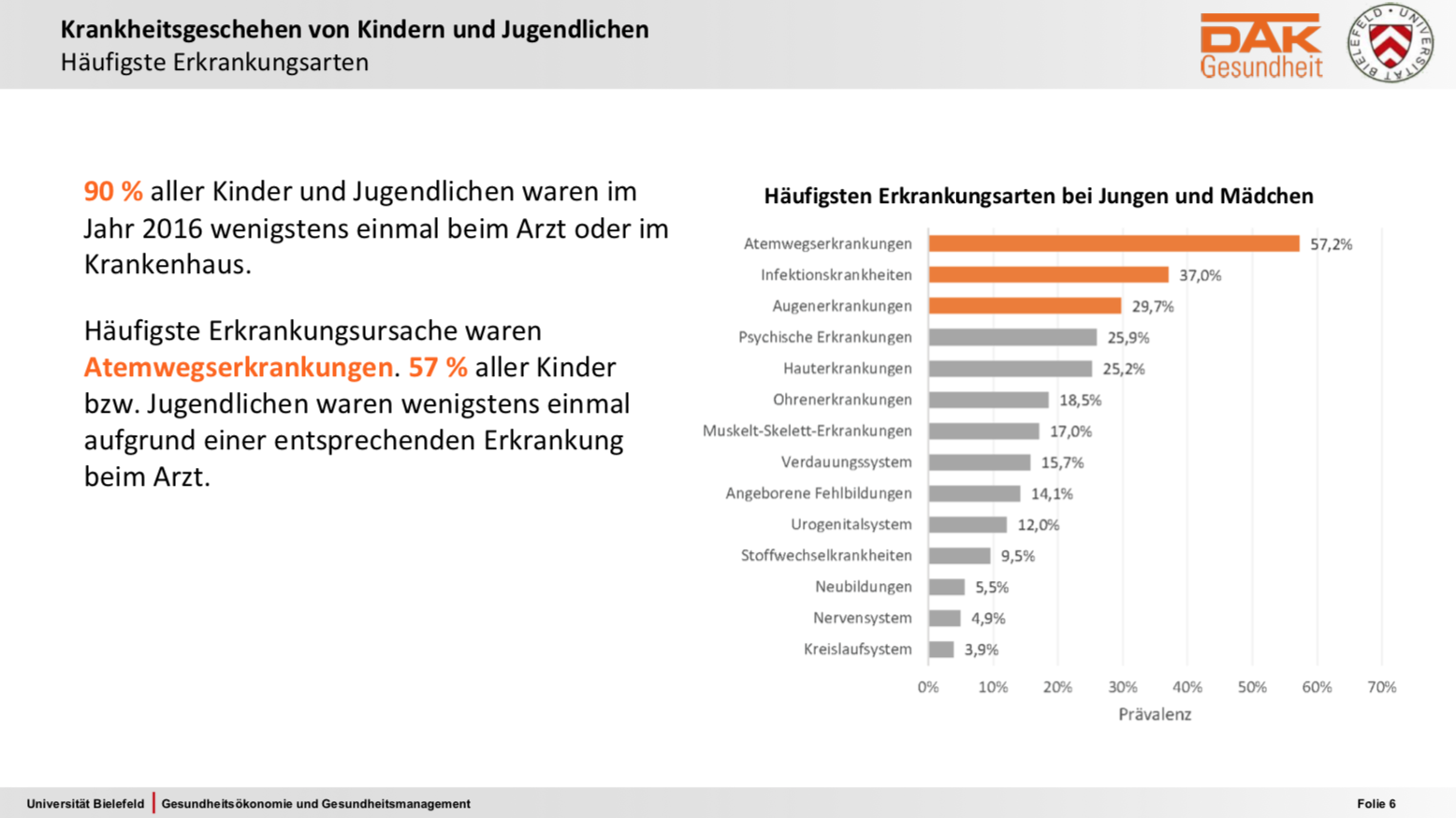
Der neue DAK Gesundheitsreport zu Kindern und Jugendlichen ist etwas besonderes. Die meisten internationaler Surveys, ISAAC mal ausgenommen,  umfassten weniger als 10.000 Probanden oder konzentriert sich auf bestimmte Altersgruppen. Die KiGGS-Studie als bekannte, große nationale Studie arbeitete im Wesentlichen mit Fragebögen, welche die Eltern und die Teilnehmer selbst ab elf Jahre ausfüllen konnten. Kleinere nationale Auswertungen auf Basis von GKV-Abrechnungsdaten gab es bisher in der Regel nur mit thematischem Fokus auf bestimmte Erkrankungsindikationen und ohne Längsschnitt. Neu, jedenfalls für deutsche Verhältnisse, ist die Analyse auf Basis der Abrechnungs- und Versorgungsdaten von rund 600.000 DAK- versicherten Kindern und 430.000 Eltern, zuerst hier im Querschnitt, später auch im Längsschnitt.

Quelle: Wolfgang Greiner https://www.dak.de/dak/download/folienvortrag-greiner-2004288.pdf
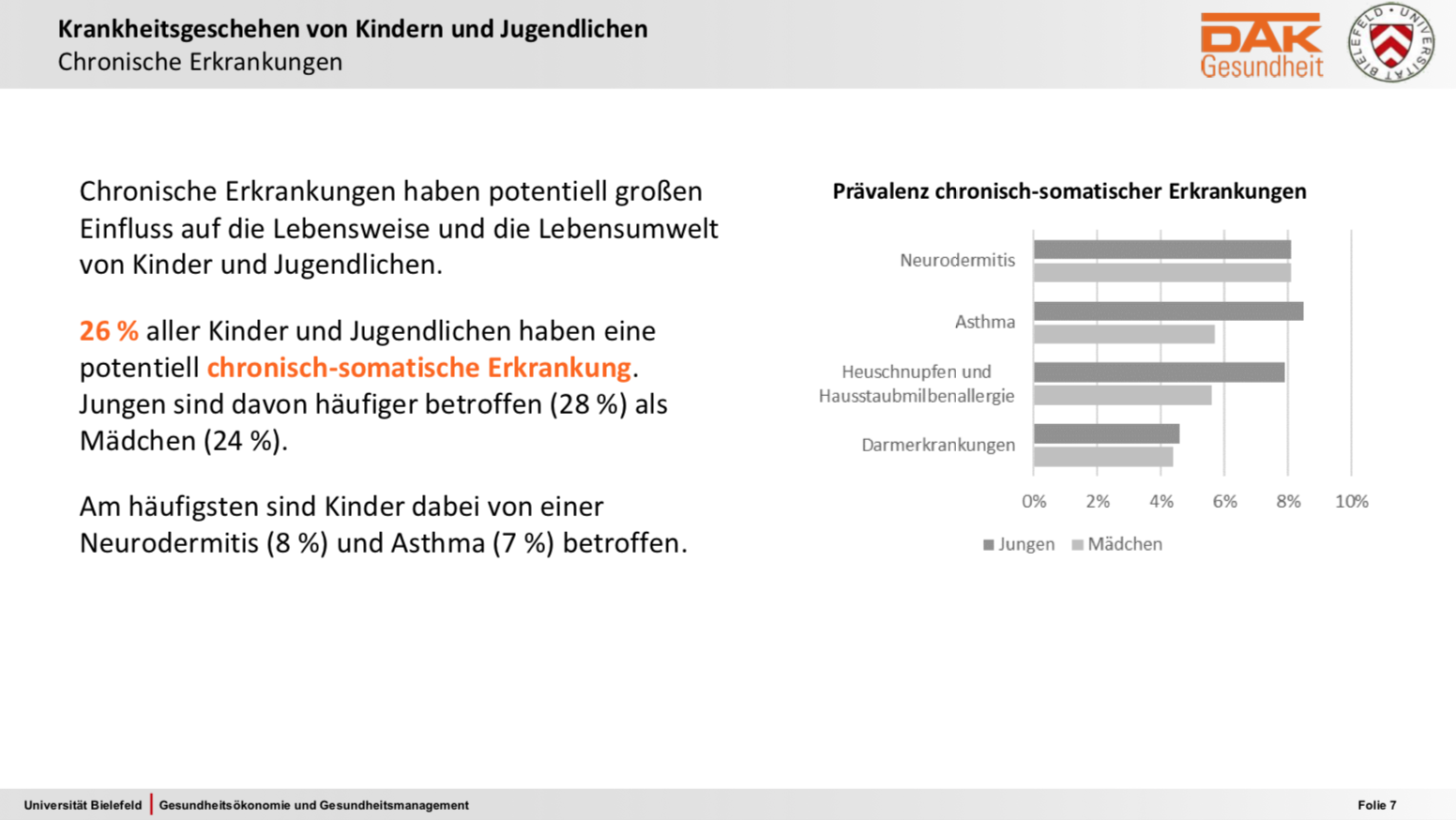
Asthma und Allergien. Quelle: Wolfgang Greiner https://www.dak.de/dak/download/folienvortrag-greiner-2004288.pdf
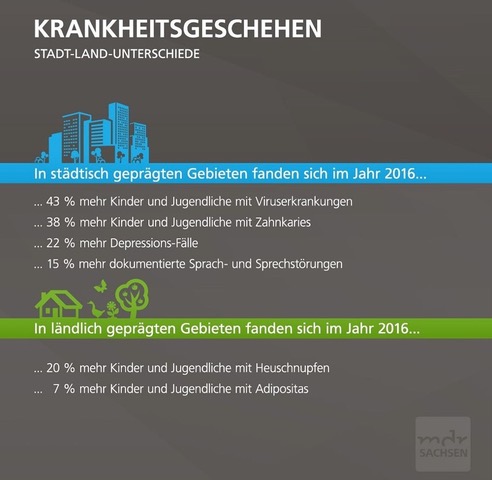
Quelle: https://www.mdr.de/sachsen/kinder-und-jugend-report-gesundheit-sachsen-100.html

Interessant auch, dass hier mehr Kinder auf dem Land Heuschnupfen hatten – vielleicht sollte Arte mal die Agenda überarbeiten…


CC-BY-NC Science Surf accessed 20.01.2026

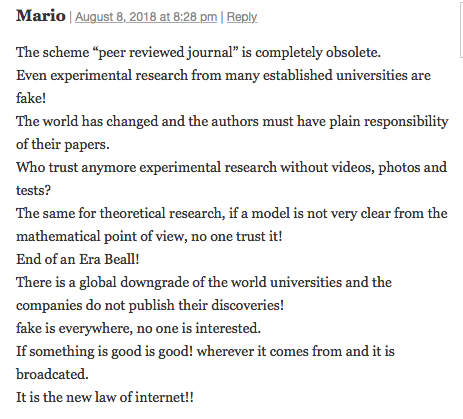
Do we need p-values?

Sander Greenland has some doubts: “Retire statistical significance”. I am here more with John Ioannides

Statistical significance sets a convenient obstacle to unfounded claims. In my view, removing the obstacle could promote bias. Irrefutable nonsense would rule.
More stringent thresholds of significance are needed for most fields, which currently assume statistical significance when P values are less than 0.05 […]
If rules are set before data collection and analysis, then statistical guidance that is based on appropriate thresholds is helpful.

With that, all has been said


CC-BY-NC Science Surf accessed 20.01.2026

Test before redirect

I need to test if a ssl server is likely to respond before doing any forward as I would otherwise “loose” a projection screen.
As the server uses only a self-signed certificate, basically all javascript tricks (iframe on the fly, jsonp, …) failed either due to Cross-Origin Resource Sharing (CORS) rules. Even after switching to php the first two methods failed (get header, fsockets) while I finally ended with a simple curl request

$ch = curl_init();
curl_setopt($ch, CURLOPT_URL, 'https://localhost:8443');
curl_setopt($ch, CURLOPT_SSL_VERIFYPEER, false);
curl_setopt($ch, CURLOPT_RETURNTRANSFER, true);
$response = curl_exec($ch);
curl_close($ch);
if (curl_error($ch)[0]=="") header('Location: https://localhost:8443');


CC-BY-NC Science Surf accessed 20.01.2026

Wir haben keine Fehlerkultur

so im LJ der Tipp 203 “Aus Fehlern wird man klug” von Claudia Kurreck, Ulrich Dirnagl, Ingo Przesdzing & Sebastian Major:

Irren ist menschlich, und wer arbeitet macht auch Fehler – dies gilt nicht zuletzt auch für Biowissenschaftler. Fehler zu begehen, muss nicht negativ sein wenn wir bereit sind aus ihnen zu lernen und die richtigen Schlüsse zu ziehen. Die Auseinandersetzung mit Fehlern hat schon in einigen Branchen, wie zum Beispiel in der Luftfahrt und Kerntechnik, zu beachtlichen Fortschritten geführt und diese deutlich sicherer gemacht. In einem komplexen Umfeld, wie der experimentellen Grundlagenforschung, treten täglich eine nicht zu unterschätzende Anzahl von Fehlern auf. Diese können die Qualität unserer Arbeit negativ beeinflussen, Materialien sowie Arbeitszeit verschwenden und Personen gefährden. Erstaunlicherweise hat bisher niemand der Fehlervermeidung in der biomedizinischen Forschung Aufmerksamkeit geschenkt.

Dazu letzten Monat in bester Ioannides Tradition: Ben Goldacre, der es sogar in die ZEIT geschafft hat:

We identified five high-impact journals endorsing Consolidated Standards of Reporting Trials (CONSORT) (New England Journal of Medicine, The Lancet, Journal of the American Medical Association, British Medical Journal, and Annals of Internal Medicine) and assessed all trials over a six-week period to identify every correctly and incorrectly reported outcome, comparing published reports against published protocols or registry entries, using CONSORT as the gold standard. A correction letter describing all discrepancies was submitted to the journal for all misreported trials, and detailed coding sheets were shared publicly. The proportion of letters published and delay to publication were assessed over 12 months of follow-up. Correspondence received from journals and authors was documented and themes were extracted.

JAMA und NEJM bringen es nicht mal fertig, Korrekturen zu publizieren. Nicht viel anders ist es bei Nature Genetics.


CC-BY-NC Science Surf accessed 20.01.2026

Die Kosten der Ungleichheit

Mehr zu Rutger Bregmann in der ZEIT mit einem aktuellen Interview. Beim Weltwirtschaftsforum in Davos warfen er den dort versammelten Milliardären vor, zu wenig Steuern zu bezahlen.

In Davos war ich eigentlich, um über mein neues Buch zu sprechen. Darin fordere ich unter anderem ein Grundeinkommen für alle. Davos ist eine Riesenchance, wenn man ein Buch verkaufen will, denn dort sind viele einflussreiche Leute. Aber ich fühlte mich während der ganzen Tage dort nicht wohl. Ich empfand die Konferenz als oberflächlich und hohl … Exklusiv für die Teilnehmer der Konferenz wurde der neue Film des Regisseurs David Attenborough gezeigt, ein bewegendes Werk über den Zustand des Planeten. Ich sah Leute, die bei der Vorführung weinten. Und ich dachte: Das ist so scheinheilig! Draußen standen 1500 Privatjets, mit denen diese Leute in die Schweizer Berge geflogen waren, und jetzt weinten sie hier drinnen bei einem Film über die Folgen des Klimawandels. Ich hatte das Ganze so satt.


CC-BY-NC Science Surf accessed 20.01.2026

The best videoconferencing system (even running on a Synology box)

There are many $$$ systems. But there are also super nice systems like Big Blue Button, Apache Open Meeting and Jitsi that are working equally well if you stick to Chrome or Firefox.

I recommend Spreed WebRTC audio/video call and conferencing server. Just run

docker pull spreed/webrtc
docker run --rm --name my-spreed-webrtc -p 8080:8080 -p 8443:8443 \
-v `pwd`:/srv/extra -i -t spreed/webrtc

and you are done. The only issue  – how to route your local IP to the docker container?

sudo route -n add -net 0.0.0.0/16  146.x.x.x
sudo route -n delete 0.0.0.0/16  146.x.x.x

In the meantime, I managed to get it also on the Synology DS418play but only with a manual installation using the DS216+ ii docker binary according to some helpful comments on the synology forum.

Firefox 66 runs  microphone, webcam and screen sharing without any problem, Chrome 73 needs a plugin for screen sharing.


CC-BY-NC Science Surf accessed 20.01.2026