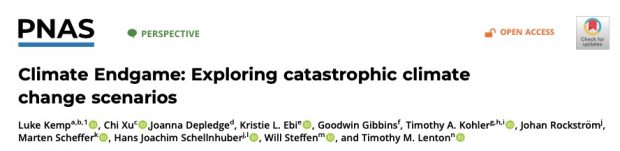
Prudent risk management requires consideration of bad-to-worst-case scenarios. Yet, for climate change, such potential futures are poorly understood. Could anthropogenic climate change result in worldwide societal collapse or even eventual human extinction? At present, this is a dangerously underexplored topic.
Retractions must be supported as an essential part of healthy science. Sleuths should be compensated and given access to tools to improve the hunt for errors and fraud - not face ridicule, harassment and legal action. Publishers could create a cash pool to pay them, similar to the 'bug bounties' that reward hackers who detect flaws in computer security systems. At the same time, institutions should appropriately assess researchers who honestly aim to correct the record. Retractions should not be career killers - those correcting honest errors should be celebrated.
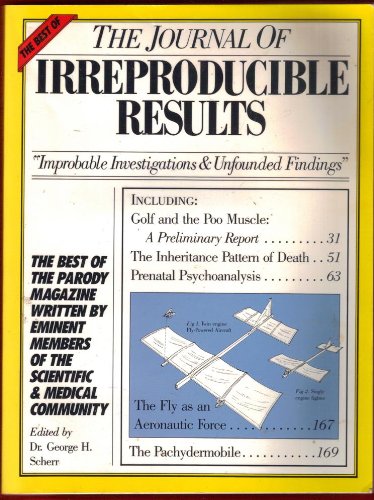
And today? It seems that irreproducible research is set to reach a new height. Elizabeth Gibney discusses an arXiv paper by Sayash Kapoor and Arvind Narayanan basically saying that
reviewers do not have the time to scrutinize these models, so academia currently lacks mechanisms to root out irreproducible papers, he says. Kapoor and his co-author Arvind Narayanan created guidelines for scientists to avoid such pitfalls, including an explicit checklist to submit with each paper … The failures are not the fault of any individual researcher, he adds. Instead, a combination of hype around AI and inadequate checks and balances is to blame.
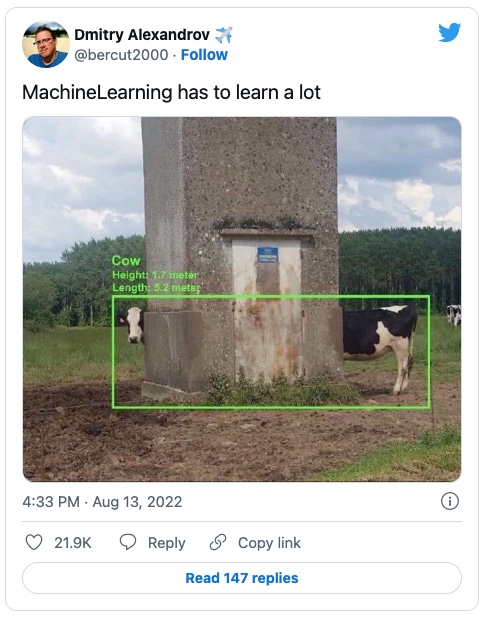
Algorithms being stuck on shortcuts that don't always hold has been discussed here earlier . Also data leakage (good old confounding) due to proxy variables seems to be also a common issue.
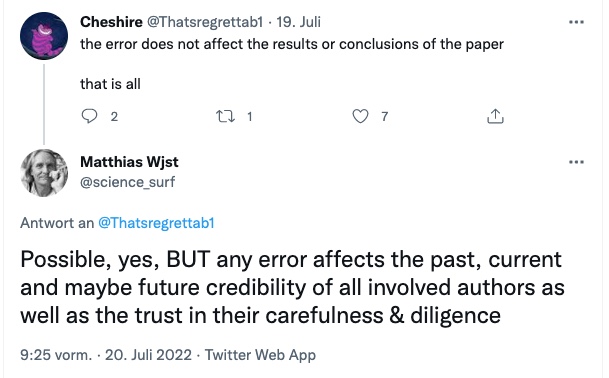
Please see also an earlier comment on image duplications: While results do not change if authors are repeating images of the same object without notice, this is not providing independent evidence and therefore affecting the conclusions.
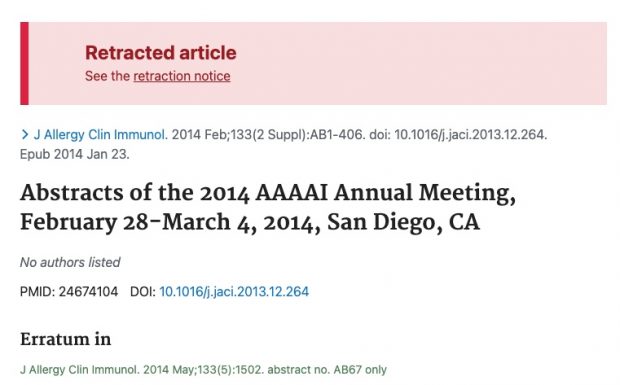
JACI is the journal with the poorest experience that I ever encountered as an author and as a reviewer. The editors never adequately responded to numerous errors in an earlier paper where I sent a long letter describing all details.
So let’s have a more detailed look at farm parents. It can be drilled down to the question if parents are also “protected” or it is more likely that some affected parents just moved away.
Here is the ultimate and comprehensive summary written by two of the best vitamin D experts – Martineau and Cantorna
… lack of a consistent protective signal from RCTs reporting so far is reflected by the absence of any recommendation relating to prophylactic or therapeutic use of vitamin D for COVID-19 in guidelines from national or international bodies … If vitamin D does have favourable immunomodulatory effects in COVID-19, then demonstrating a meaningful clinical benefit of supplementation over existing standards of care is likely to become increasingly challenging, as ever more effective pharmacological therapies and vaccines emerge.
Unter einer Hausberufung versteht man die Berufung eines Hochschulbediensteten zum Professor an derselben Hochschule bzw. Universität, an der er bislang fest beschäftigt ist. In der Deutschen Demokratischen Republik (DDR) war die Hausberufung eine übliche Vorgehensweise.In der Bundesrepublik Deutschland besteht hingegen landläufig ein sogenanntes Hausberufungsverbot … Ziel der Beschränkungen ist es, eine ungebührliche "wissenschaftliche Ämterpatronage", Nepotismus oder unlautere Bevorzugung aufgrund persönlicher Beziehungen bei der Besetzung akademischer Stellen zu verhindern.
Viele oder wenig Hausberufungen machen also den Unterschied zwischen einem demokratischen und einem diktatorischen System aus.
In the deep learning community, it is common to retrospectively blame Minsky and Papert for the onset of the first 'AI Winter,' which made neural networks fall out of fashion for over a decade. A typical narrative mentions the 'XOR Affair,' a proof that perceptrons were unable to learn even very simple logical functions as evidence of their poor expressive power. Some sources even add a pinch of drama recalling that Rosenblatt and Minsky went to the same school and even alleging that Rosenblatt's premature death in a boating accident in 1971 was a suicide in the aftermath of the criticism of his work by colleagues.
libraries have seen the impact of increased corporate domination, budget shortfalls, and the corporatization of higher education. We are gouged by publishers like Elsevier who offer package subscriptions with exponentially increasing costs … Many corporate library vendors have consolidated to further ensure market power and control, a process which has often rewarded the largest companies…. While companies like Elsevier make record profits, library workers of all types face increasingly precarious work arrangements and they serve students who are anxious about affording skyrocketing tuition as well as outrageous textbook prices.