All posts by admin

Vitamin D buffering

Response to oral vitamin D seems to be different in humans . How do we buffer (artificial) vitamin D intake?

Vitamin binding protein or group specific component GC is a good candidate.  GC regulates the bioavailability of 25(OH)D3, acting as the main transporterint he blood stream from liver to kidney.  As described earlier GC binds with high affinity to 25(OH)D3, leaving less than 1% of circulating 25(OH)D3 free. In contrast to 25(OH)D3, which has a half-life of several weeks, GC  has a short half-life of 3 days only, suggesting that the protein and its ligand are independently regulated. Also the free binding capacity  of GC is variable. In addition there are GC variants that have different binding characteristics. Depending on these isoforms, serum levels increased between 97% and 307% after receiving 600 or 4000 IU/d vitamin D3 for one year. Taken together GC is assumed to be a buffer of vitamin D effects (and side effects) whenever transport in the blood stream is being involved.

The most recent GWAS study now shows again skyrocking p-values of GC variants and serum 25(OH)D3.
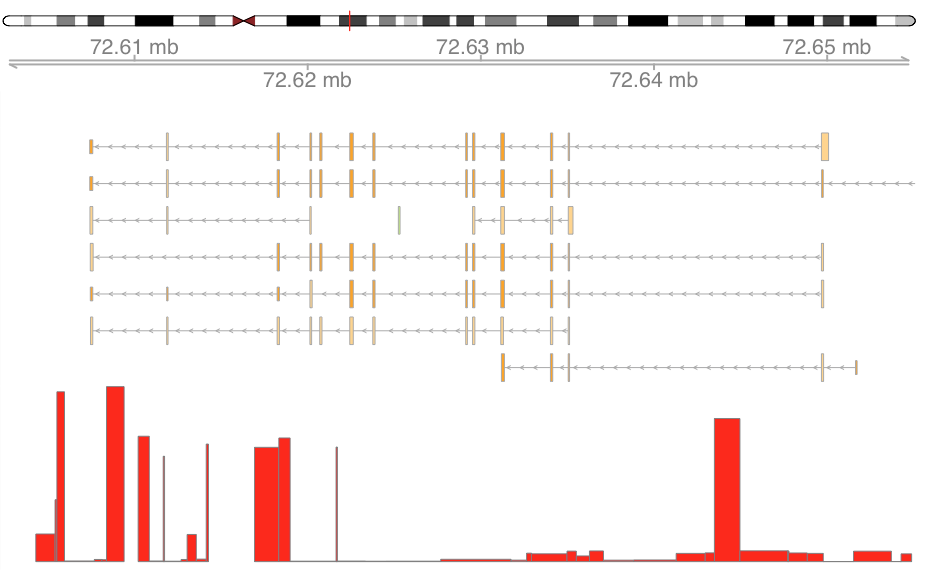
It is long known, that two missense variants of GC locate in exon 11. rs7041 encodes Asp432Glu pr D432E and rs4588 encodes Thr436Lys or T436K. These amino acid exchanges are leading to electrophoretically distinguishable proteins Gc1F/Gc1S and Gc2 respectively.  We are  moving the following gene plot bottom up to match the orientation.
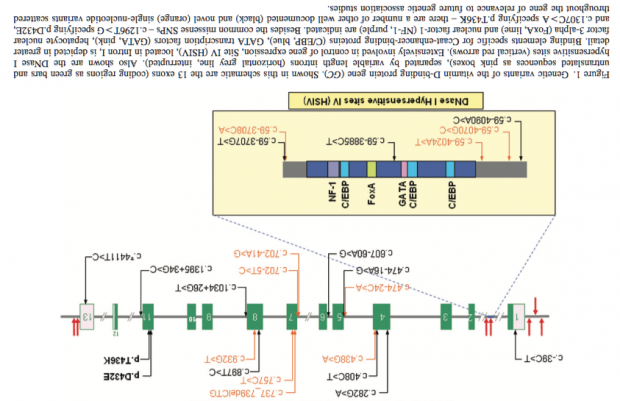
Unfortunately LD is extremely high at GC. The GWAS peaks are therefore in the first intron, at exon 11 and intron 12. Lets’ s get closer to exon 11 where the two most important SNPs reside.
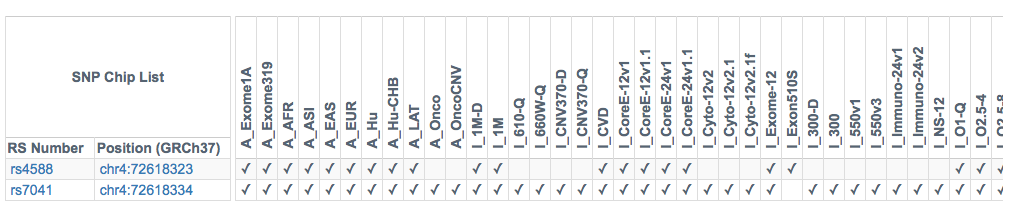
Although both variants are listed at many SNP chips I  can find only results for rs7041 with p=10^-222 in the new dataset.

rs7041 is listed as a A->C SNP there but according to Fu 2009 it is definitely a G->T variant. Also SNPedia has numerous articles for rs7041 being  a G->T exchange, for example Suaini 2014
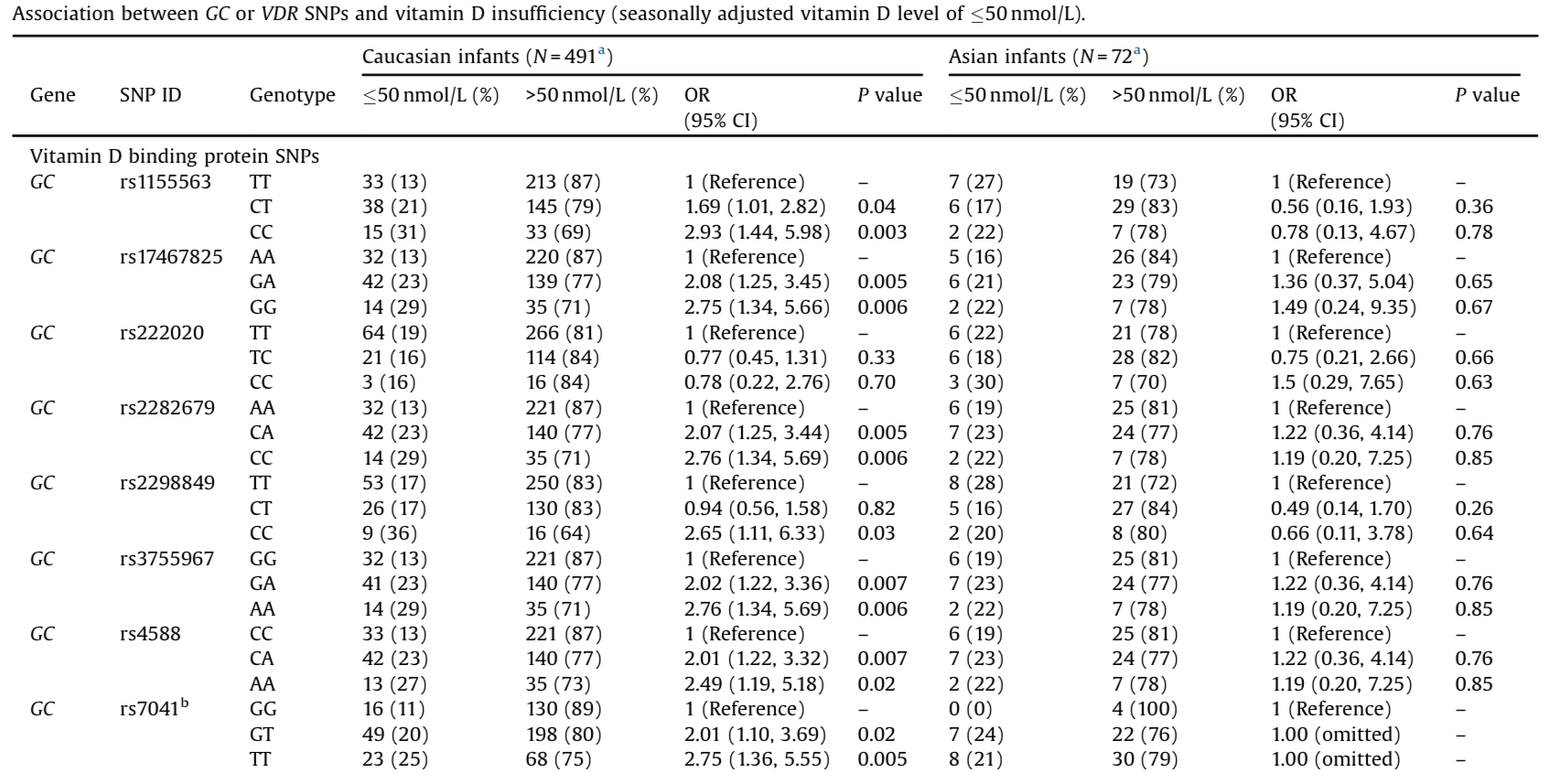
This is also confirmed by dbsnp.  The GAT -> GAG exchange  is equivalent to D -> E, so the online results report a wrong strand orientation. Unfortunately we are stuck here, as one of the main effect SNP seems to have an unclear allele assignment and the second most important SNP is missing from the meta-analysis.

What would be nice is  a conditional analysis based on rs7041/rs4588 haplotypes. I predict there are further unknown functional variants in GC.  Maybe in intron 1 that often contains regulatory elements at the 5′-site of the intron. As the strongest signal is in the last intron and even beyond the 3′- end, further studies of 3′-UTR would be interesting, looking for binding sites of regulatory proteins, some miRNA or AU rich elements that affect the stability or decay rate of the transcript.
 

CC-BY-NC Science Surf , accessed 24.03.2026

Ethik ohne Ethiker

Die Zeiten sind eigentlich vorbei, in denen Nobelpreisträger qua ausgezeichnetem Verstand über die Welt räsonierten. Oder die Zeiten, wo man gerade mal so nebenbei eine Ethik auf den Markt wirft.
Vorteile hat es allemal. Man kann kostengünstig von aktuellen Problemen ablenken, Freiräume schaffen und nebenbei auch noch Akzeptanz promoten, man ist politisch engagiert.
Worum es geht? Ein Wissenschaftskodex, so nebenbei auf dem Weltwirtschaftsforum erstellt. Continue reading Ethik ohne Ethiker


CC-BY-NC Science Surf , accessed 24.03.2026

Genetics of vitamin D

A new GWAS of vitamin D serum level reports two new loci as sample size could be increased from 16K to 79K. While the previous GWAS hits had a reasonable biological function (GC transport protein,  DHCR7 converting to cholesterol, CYP2R1  to calcidiol and CYP24A1 degradation)  the new loci look more like statistical artifacts.
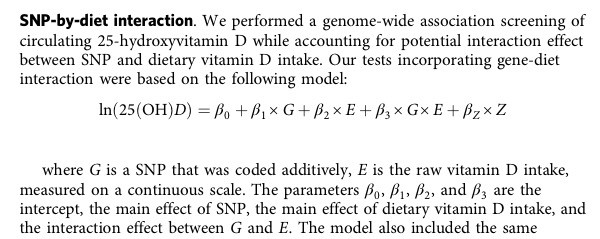
The authors tried some kind of dose effect estimates

where SNP effects on serum level became slightly weaker (which makes sense as diet is a clear environmental factor). Continue reading Genetics of vitamin D


CC-BY-NC Science Surf , accessed 24.03.2026

Forgetting curve

There are news on the “forgetting curve

In 1885, Hermann Ebbinghaus collected data to plot a forgetting curve. Today, we approximate forgetting with an exponential curve where R is retrievability (a measure of how easy it is to retrieve a piece of information from memory), S is stability of memory (determines how fast R falls over time in the absence of training, testing or other recall), and t is time.

The Atlantic now adds to this

In the internet age, recall memory—the ability to spontaneously call information up in your mind—has become less necessary. It’s still good for bar trivia, or remembering your to-do list, but largely, Horvath says, what’s called recognition memory is more important. “So long as you know where that information is at and how to access it, then you don’t really need to recall it,” he says … Socrates hates writing because he thinks it’s going to kill memory,” Horvath says. “And he’s right. Writing absolutely killed memory. But think of all the incredible things we got because of writing. I wouldn’t trade writing for a better recall memory, ever.” Perhaps the internet offers a similar tradeoff: You can access and consume as much information and entertainment as you want, but you won’t retain most of it.


CC-BY-NC Science Surf , accessed 24.03.2026

Live votes during presentation (reveal.js)

I have revised now the setup of my “live vote” presentation as the bespoke.js framework had several glitches where plugins did not work correctly. I am using now reveal.js that allows also to embed external pages (like zenpen), zoom effects and slide overview in a nice graphic layout.

The graphics engine was also replaced. d3.js is an extremely versatile but it takes hours for doing minor changes. So I switched to Kendo UI charts that are much easier to program, making some fancy live statistics :-)

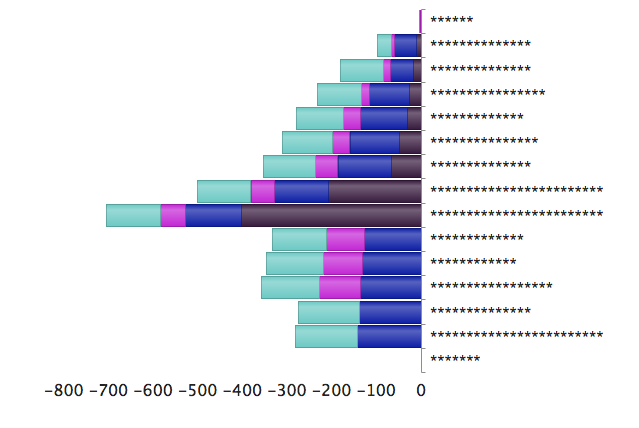
Individual response times in seconds from 15 students (anonymized names on the right). Students can respond to a question as long as the question is on display. The stacked bar shows the time being faster than the slowest responder with the first to last question from right to left end of the bar. The individual  in the middle was extremely fast following my initial explanation. The two individuals at the bottom responded only to the same two questions probably talking to each other. Individuals were identified by their their mac address while all data had to be corrected for double entries.

I also thought to setup a socket.io server to push new pages to the clients (currently they initiate their own refresh) but at the end I found it too time consuming as spending time on  content is being more important. Right now I am sending out an ajax request to store the actual presentation slide for the clients.

var i = Reveal.getCurrentSlide().children[0].id;
Reveal.addEventListener( 'slidechanged', function( event ) {
  i = $("span").eq(event.indexh).attr("id");
  $.ajax({
    url: "server.php",
    type: "GET",
    data: {"k":event.indexh}
  );
  return i;
});


CC-BY-NC Science Surf , accessed 24.03.2026

Forschung in verantwortungsethischer Perspektive

Am 12. und 13. Januar 2018 fand in der evangelischen Akademie Loccum ein Symposium zur Forschungsethik statt. Trotz des sperrigen Titels, die Ankündigung war spannend:

Wie finden wir in den Lebenswissenschaften wieder zu einer kühneren Forschungskultur, die gleichzeitig stärker verantwortungsbasiert arbeitet? Diese Frage steht deshalb im Zentrum der Tagung, weil heute ein hoher Leistungs- und Produktivitätsdruck die Forschung belastet und damit Qualitätsprobleme provoziert. Das hat zu einem dramatischen Seriositätsverlust in der Erarbeitung, Bewertung und Darstellung von Forschungsergebnissen geführt.
Während der Tagung wird nach Wegen gesucht, diesem Missstand wirkungsvoll entgegen zu treten: Wissenschaftler mit langjähriger Forschungserfahrung, wissenschaftlicher Nachwuchs, Experten entsprechender Bereichsethiken und hochschulpolitische Administrationen sind gefragt.
Welche Herausforderungen drohen die Erzielung verlässlicher Forschungsergebnisse zu verhindern? Welche zentralen Eckdaten kennzeichnen eine produktive Forschungskultur? Welche forschungsethischen und forschungsrechtlichen Rahmenbedingungen sind von Belang? Wie kommen hier Digitalisierung, Big Data und Verfahren wie die Bibliometrie ins Spiel?
Vor diesem Hintergrund: Wie kann es gelingen, angemessene Freiräume für forschende Kreativität mit Mut zum Risiko zu stärken? Wie kann Originalität und Nachhaltigkeit von Forschung gegenüber purer Publikations- und Zitationsindikatorik anerkannt werden? Was können die Hochschulleitungen und die Wissenschaftspolitik zur Unterstützung innovativer und zugleich seriöser Forschung tun?
Der Fokus wird nach einer grundsätzlichen Sichtung der Problemlagen auf den Lebenswissenschaften, insbesondere auf den medizinischen Fächern liegen. Ein generationen­übergreifender Austausch zwischen arrivierter Forschung und wissenschaftlichem Nachwuchs ist ausdrücklich erwünscht!

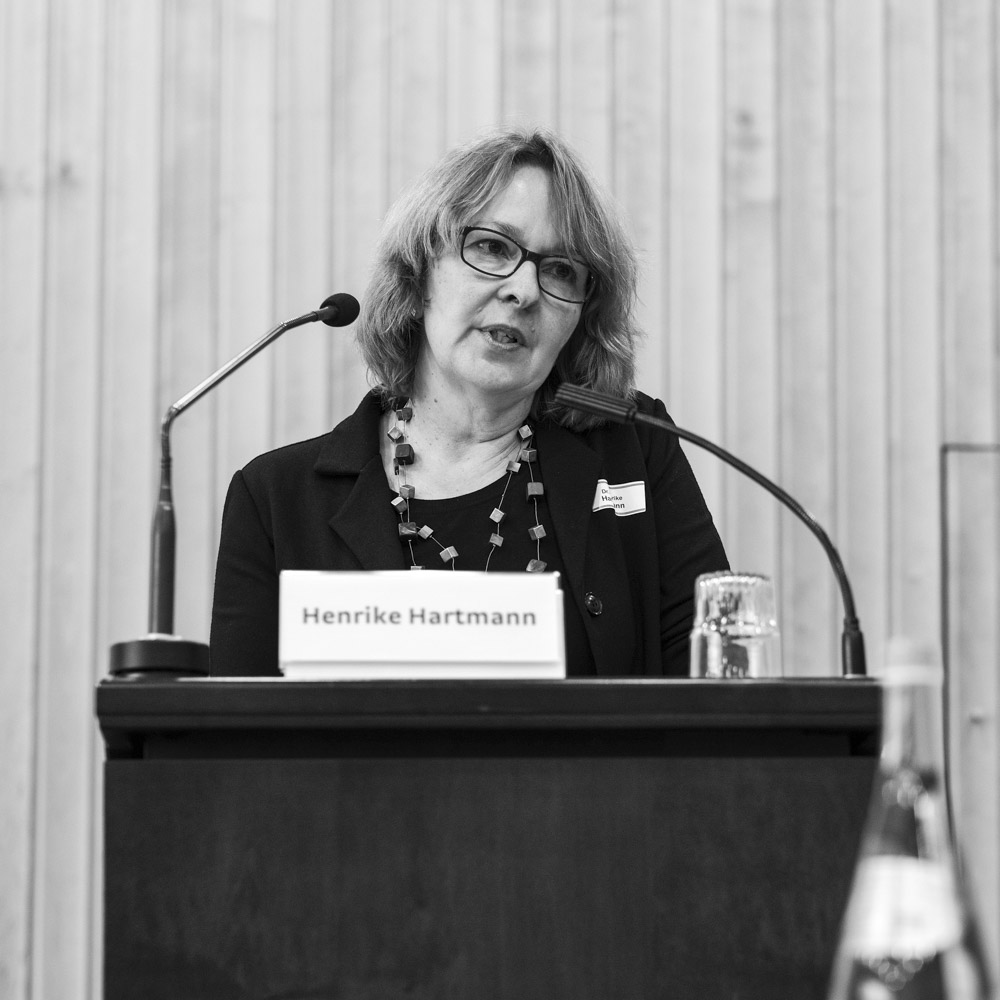
Hier ist mein Mitschrieb ohne Gewähr, solange es kein offizielles Protokoll gibt. Eröffnet wurde die Tagung von Henrike Hartmann (Volkswagen Stiftung) sowie Stephan Schaede (Akademie Loccum).

Henrike Hartmann, VolkswagenStiftung

Stephan Schaede, Akademie Loccum

Continue reading Forschung in verantwortungsethischer Perspektive


CC-BY-NC Science Surf , accessed 24.03.2026

Methodische Wahrheitssuche

Populistische Vereinfachungen und autokratische Durchgriffsideologien verheißen, den Zumutungen der modernen Welt schadlos entkommen zu können. Deswegen machen sie den sachlichen Diskurs ebenso verächtlich wie die methodische Wahrheitssuche und die Begründungsbedürftigkeit von Geltungsansprüchen.

Der Präsident der Deutschen Forschungsgemeinschaft (DFG), Peter Strohschneider, hat für die Rede am 4. Juli 2017 bei der DFG-Jahresversammlung in Hallenun vom Seminar für Allgemeine Rhetorik der Universität Tübingen die Auszeichnung “Rede des Jahres” verliehen bekommen. Volltext und Videolink.


CC-BY-NC Science Surf , accessed 24.03.2026

Altersbestimmung von Minderjährigen

Das Alter von Kindern und Jugendlichen wird medizinisch immer noch so wie vor 50 Jahren bestimmt, es hat sich seit den Tanner Kriterien 1969 nicht viel geändert, so zdf.de:

Wie das Alter im Einzelfall bestimmt bzw. geschätzt wird, ist sehr unterschiedlich. Die Praxis zur Altersfeststellung ist nicht bundeseinheitlich geregelt, unterscheidet sich also von Bundesland zu Bundesland. Meist werden die Migranten von Mitarbeitern der Jugendämter anhand eines Leitfadens befragt. Zusätzlich wird das Erscheinungsbild des Flüchtlings betrachtet wie etwa Bartwuchs oder körperliche Entwicklung. Sexualorgane dürfen nicht untersucht werden.

Sofern daraus keine eindeutige Einschätzung hervorgeht, können eine Untersuchung des “Zahnalters” sowie des “Knochenalters” durchgeführt werden. Dazu werden sogenannte “Panorama-Aufnahmen” des Gebisses gemacht, sowie Röntgenaufnahmen der Handgelenke bzw. der Brustbein-Schlüsselbeingelenke.

Über diese Methoden der Altersfeststellung bzw. Schätzung besteht jedoch Uneinigkeit: In einer gemeinsamen Stellungnahme lehnen der Bundesfachverband unbegleitete minderjährige Flüchtlinge, das Deutsche Kinderhilfswerk und der ippnw e.V. die Rufe nach der Altersfeststellung als “Symbolpolitik und gefährliche Stimmungsmache” ab. Es sei medizinisch nicht möglich, das Alter von Jugendlichen bzw. jungen Erwachsenen genau festzustellen. Daher bestehe die Gefahr, Jugendliche fälschlicher Weise zu Erwachsenen zu erklären, was für sie erhebliche negative Folgen hätte.

Das stimmt natürlich, aber gibt es wirklich keine besseren biologische Methoden der Altersfeststellung? Röntgen der Handwurzel, des Schlüsselbeins, den Altersringen von Zähnen  oder dem Dentin (D-D/L Asp) Index ? Vorstellbar wäre auch die Messung der Telomere. Aber sowohl mitochondriale als auch somatische Mutationen sind nur schwer auf ein genaues Alter zu kalibrieren, ebensowenig wie die T Zell Ringe (TRECs) oder Genexpression in der Haut.

Die Bestimmung der DNA Methylierung hat dagegen mehr Potential, etwa bei Vidaki 2017 oder auch Horvath 2013 der sogar einen online Rechner anbietet. Bei Vidaki  (450K) lag  bei einer Altersspannweite von 2–90 Jahren die Genauigkeit bei 4 Jahren. Vorstellbar also, dass man mit einen 800K Datensatz von 15-20jährigen auf eine Genauigkeit auf 1 oder 2 Jahren kommen könnte. Sicher ist das aber nicht, das Problem dabei dürfte der logarithmische Verlauf der DNA Methylierung in dieser Altersgruppe sein, die hohe Variabilität (sichtbar auch am sehr individuellen Pubertätseintritt), sowie noch weitgehend unbekannte ethnische Faktoren oder auch dem aktuelle Ernährungszustand.


CC-BY-NC Science Surf , accessed 24.03.2026

millumin osc controller

I need to control two machines running both an instance of millumin and have even more lights that will understand OSC control commands.

screenshot

In a first attempt, I tried a mobile app called TouchOSC to get everything under one hood. It turned out to be cumbersome to create display templates, install an OSC splitter.

The second option were millumin plugins (MLSync_1_1 and SimpleSync) that were good for keeping everything in sync but not for sending out different signals to different IPs.

The third option, an OSC data track inside a master millumin installation, tended to be confusing after 5 minutes.

Unfortunately some javascript based solution will not work as OSC is sent via UDP (which is not possible in desktop browsers), therefore I combined an old php library  with a modern bootstrap/material template using a black design for use in darkened rooms.

Here is the script index.php for download. It is quite basic but a useful starting point for any other OSC command, and an infinite number of machines as long as you know their IP address and can increase any of the 3 loops in the script.

For non Millumin computers, I am using node.js with node-osc as receiver.


CC-BY-NC Science Surf , accessed 24.03.2026

p-value of 0.05 (1925-2017)

Ronald Fisher dominated the science world with his 0.05 p value. A new paper of renowned scientists now claim for 0.005.

The lack of reproducibility of scientific studies has caused growing concern over the credibility of claims of new discoveries based on ‘statistically significant’ findings. There has been much progress toward documenting and addressing several causes of this lack of reproducibility (for example, multiple testing, P-hacking, publication bias and under-powered studies). However, we believe that a leading cause of non-reproducibility has not yet been adequately addressed: statistical standards of evidence for claiming new discoveries in many fields of science are simply too low.

Of course also 0.005 doesn’t prevent from systematic errors.

According to scientists familiar with the paper, the neutrinos raced from a particle accelerator at CERN outside Geneva, where they were created, to a cavern underneath Gran Sasso in Italy, a distance of about 450 miles, about 60 nanoseconds faster than it would take a light beam. That amounts to a speed greater than light by about 0.0025 percent (2.5 parts in a hundred thousand).

which was corrected, as a GPS was not in sync…


CC-BY-NC Science Surf , accessed 24.03.2026