Category Archives: Allergy

Vitamin D trials in newborns never done

Vitamin D was introduced into clinical medicine in 2 large waves basically in the 1930ies and 1960ies without any clinical study.

Although I am interested in the relationship twith allergy since 1999 none of our proposed four vitamin D trials were funded.

2005: “Vitamin D and Induction of Allergies”
2013: “Vitamin D and allergy (VIT-AL)”
2017: “Biomarker Screening of Vitamin D response in Newborns (VITAPRIME)”
2017: “Immunological effects of vitamin D supplementation in newborns in Ghana (IMVITAD-GHA)”

Unfortunately the  published clinical studies so far missed the point as they were looking only at pregnancy and not at newborn supplements (VDAART, COPSAC and Grant/NZ).

But there are good news now, as studies are going on in Australia and Finland that are sufficiently powered and examining exposure in the newborn period: VIDI and VITALITY. The only problem there will be the inevitable co-exposure by vitamin D supplemented baby food.
 

CC-BY-NC Science Surf accessed 18.02.2026

Was ist die Leitlinie zur Immuntherapie von Allergien wert?

Leitlinien sollten nicht von eigenen Interessen gesteuert sein. Das gilt alle Leitlinien genauso wie Leitlinie “Allergen-spezifische Immuntherapie bei IgE – vermittelten allergischen Erkrankungen”.

Der Markt ist hier allerdings – wohl durch die Therapieallergene-Verordnung (TAV) – stark in Bewegung, da die Hersteller kostenintensiven Zulassungsverfahren durchführen müssen.
Allergenhersteller sind dabei traditionell schon immer stark als Sponsoren auf Allergiekongressen vertreten, einer Randsparte der klinischen Medizin, wo es kaum pharma-unabhängige Experten gibt.

Zu diesem Schluss kommt auch leitlinienwatch.de, eine Initiative, die vor zwei Wochen im deutschen Ärzteblatt vorgestellt wurde.

Das Portal wertet den Umgang mit Interessenkonflikten bei der Leitlinienerstellung kontinuierlich aus und bewertet die Ergebnisse. Ziel der Initiative ist es, den Einfluss von Interessenkonflikten auf medizinische Behandlungsleitlinien zu reduzieren. Leitlinienwatch.de will Best-Practice-Beispiele identifizieren und den Fachgesellschaften ein konstruktives Feedback mit Verbesserungsvorschlägen für anstehende Revisionen geben.

Die Initiative ist eine Gemeinschaftsaktion von Mezis („Mein Essen zahl’ ich selbst – Initiative unbestechlicher Ärztinnen und Ärzte“), Neurology First und Transparency International, alles Organisationen, die sich gegen die Einflussnahme der Pharmaindustrie auf das Handeln von Ärztinnen und Ärzten wenden.

Diese unabhängige Einschätzung der Leitlinie zur Immuntherapie ist gelinde gesagt verheerend mit nur 4 von 18 möglichen Punkten. Im Detail finden die Autoren

Das Statement, dass “keine Interessenkonflikte festgestellt wurden, die die fachliche Unabhängigkeit der Autoren im Hinblick auf die Erstellung der Leitlinie beeinträchtigen könnten” überzeugt angesichts der zahlreichen Beraterverträge mit den Herstellern der bewerteten Medikamente nicht.

Die Leitlinie beruht dabei zu einem nicht unbeträchtlichen Teil auf Studien und Reviews der derselben Autoren. Honi soit qui mal y pense.


CC-BY-NC Science Surf accessed 18.02.2026

München Flughafen Spengstoffkontrolle

Der neue SZ Bericht über die Beschwerden der Angestellten am Münchner Flughafen ist technisch nicht sehr ergiebig. Alles nur Sick Building Syndrom? Auch wenn von anderen Flughäfen keine solchen Symptome bekannt sind, kann es unter spezifischen Umgebungsbedingungen anders aussehen: andere Substrate, Gerätedefekte, Fehlbedienung. Im Prinzip wird eine Wischprobe genommen.

der Streifen wird anschließend in einem Analysegerät untersucht. Zwei Hochgeschwindigkeits-Gaschromatographen lösen die Sprengstoffe aus der Probe. Die Geräte erkennen so in 15 bis 18 Sekunden kleinste Mengen Sprengstoff und zwar schon ab der Menge von 100 Piktogramm.

Nach Presseberichten kommen zwei Arten von Gaschromatographen zur Anwendung: Itemizer 4DX und Quantum Sniffer QS-B220. Falls es dabei zu einer Luftionisation kommt, könnte man Ozon messen oder auch das Trockenmittel auf allergene Potenz untersuchen. Oder ganz einfach mal alle Geräte zwischen Frankfurt und München tauschen.


CC-BY-NC Science Surf accessed 18.02.2026

Vitamin D buffering

Response to oral vitamin D seems to be different in humans . How do we buffer (artificial) vitamin D intake?

Vitamin binding protein or group specific component GC is a good candidate.  GC regulates the bioavailability of 25(OH)D3, acting as the main transporterint he blood stream from liver to kidney.  As described earlier GC binds with high affinity to 25(OH)D3, leaving less than 1% of circulating 25(OH)D3 free. In contrast to 25(OH)D3, which has a half-life of several weeks, GC  has a short half-life of 3 days only, suggesting that the protein and its ligand are independently regulated. Also the free binding capacity  of GC is variable. In addition there are GC variants that have different binding characteristics. Depending on these isoforms, serum levels increased between 97% and 307% after receiving 600 or 4000 IU/d vitamin D3 for one year. Taken together GC is assumed to be a buffer of vitamin D effects (and side effects) whenever transport in the blood stream is being involved.

The most recent GWAS study now shows again skyrocking p-values of GC variants and serum 25(OH)D3.

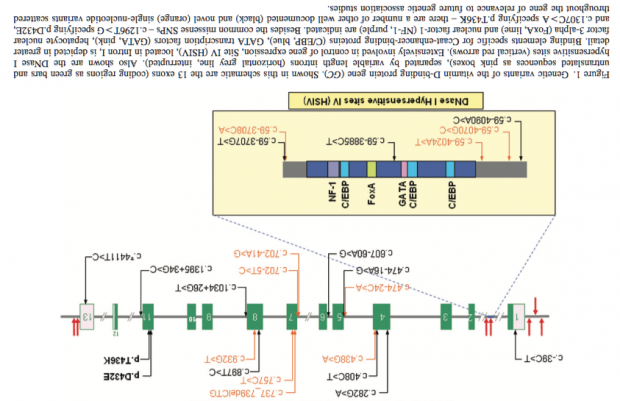
It is long known, that two missense variants of GC locate in exon 11. rs7041 encodes Asp432Glu pr D432E and rs4588 encodes Thr436Lys or T436K. These amino acid exchanges are leading to electrophoretically distinguishable proteins Gc1F/Gc1S and Gc2 respectively.  We are  moving the following gene plot bottom up to match the orientation.

Unfortunately LD is extremely high at GC. The GWAS peaks are therefore in the first intron, at exon 11 and intron 12. Lets’ s get closer to exon 11 where the two most important SNPs reside.

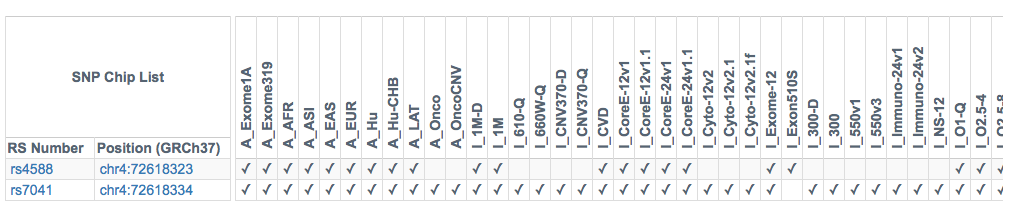
Although both variants are listed at many SNP chips I  can find only results for rs7041 with p=10^-222 in the new dataset.

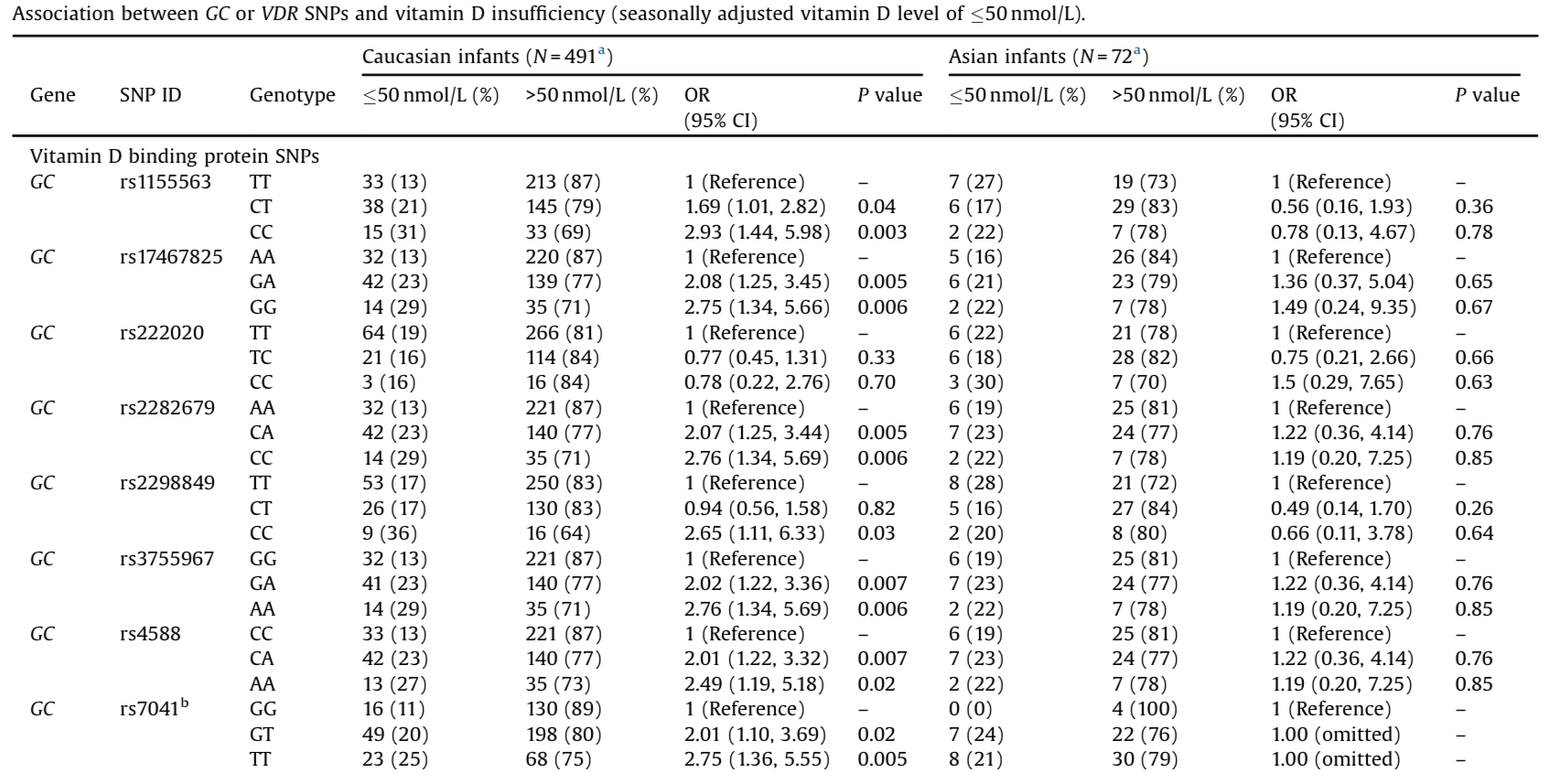
rs7041 is listed as a A->C SNP there but according to Fu 2009 it is definitely a G->T variant. Also SNPedia has numerous articles for rs7041 being  a G->T exchange, for example Suaini 2014

This is also confirmed by dbsnp.  The GAT -> GAG exchange  is equivalent to D -> E, so the online results report a wrong strand orientation. Unfortunately we are stuck here, as one of the main effect SNP seems to have an unclear allele assignment and the second most important SNP is missing from the meta-analysis.

What would be nice is  a conditional analysis based on rs7041/rs4588 haplotypes. I predict there are further unknown functional variants in GC.  Maybe in intron 1 that often contains regulatory elements at the 5′-site of the intron. As the strongest signal is in the last intron and even beyond the 3′- end, further studies of 3′-UTR would be interesting, looking for binding sites of regulatory proteins, some miRNA or AU rich elements that affect the stability or decay rate of the transcript.


CC-BY-NC Science Surf accessed 18.02.2026

Timeline asthma / allergy genetics

First Genetic Study
1923 AF. Coca.J Immunol 8:163-171

First Linkage Study (AB0 blood group)
1936. I. Zieve, Ann Hum Gen 7:4074, 163-178

First Molecular Study (HLA)
1973 D. Marsh, Science 179:4074, 691-3

Second Linkage Study (SLC14A1)
1985, H. Eiberg, Cytogenet Cell Genet 40: 622 -journal discontinued, no online archive-

Third Linkage Study (11q31)  – questionable results
1989 W. Cookson, Lancet 1:8650, 1292-5

First Modern Family Study
1992 S. Dold,  Arch Dis Child 67:8, 1018-22

First gene (Fc∈RI-β)
1993 A.J.Sandford,  The Lancet  341:8, 332-334

First true gene (IL4)
1994 D. Marsh, Science 264:5162, 1152-6

First Genomewide Linkage Scan
1996 S. Daniels, Nature 383:6597, 247-50

Transatlantic Airway Conference Key Biscayne FL
1997 N. Zamel (only reported later by Thompson  2003 and Duffy 2019)

Second Genomewide Linkage Scan
1997 CSGA  Nature Genetics 15:389-392

Third Genomewide Linkage Scan
1999 M. Wjst,  Genomics 58:1-8

First GWAS
2007 M. Moffatt, Nat Genet 15:389-392

Second GWAS
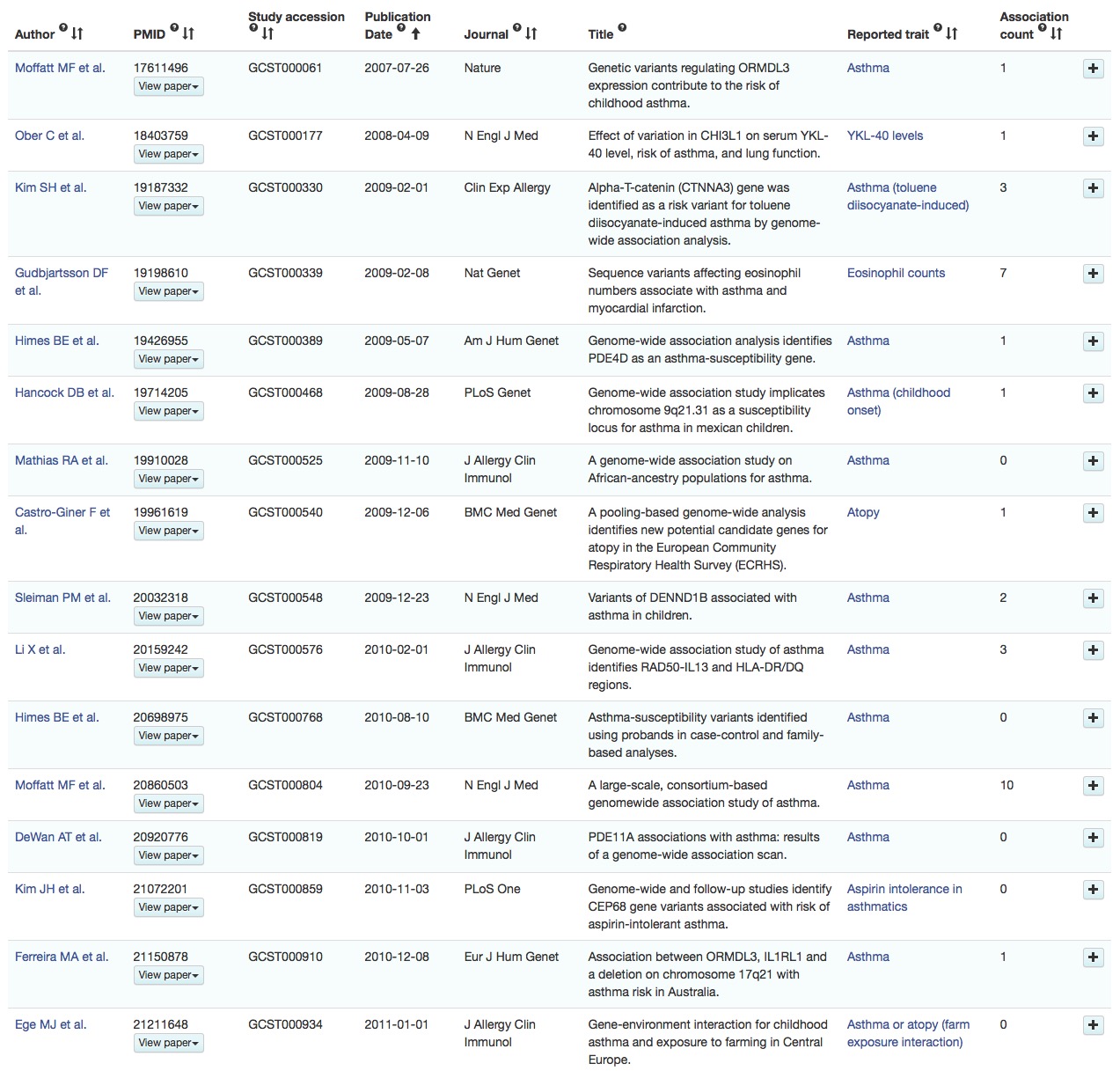
2008 C. Ober,  NEJM 358: 1682-91

then it is getting confusing


CC-BY-NC Science Surf accessed 18.02.2026

An update of IL2 function

More than 7 years ago, I wrote a blog post that there is nothing new under the sun predicting the next asthma genetics study for 2020 to include 100K asthmatics.

Ok, I am wrong the paper appeared already a week ago with 360K  asthmatics while basically doubling the number to 136 independent risk variants. It’s not an asthma only study as the authors had a rather loose definition of asthma or rhinitis or eczema – is is more about the allergy/atopy complex.

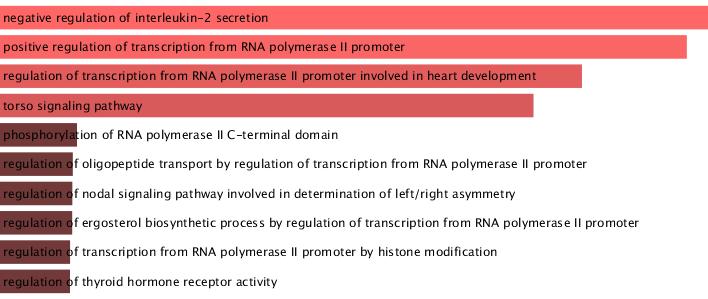
It will be a long time reading and replicating the data while my first interest was to examine the affected gene list as shown in table ST15. Using the online Enrichr database I get the following result from the GO ontology

This is basically the same result as the authors see in their table ST20.


The highest combined score is with a negative regulation of IL-2. What does that mean? A genetically disturbed pathway predicted by a gene ontology network?

IL2 was discovered in 1976 by Robert Gallo by growing T-cells in culture for more than nine months by stimulating lymphocytes with phytohemagglutinin. ((IL1 was described back in 1972 by Charles Dinarello). Gallo identified T-cell growth factor (TCFG), now known as interleukin-2 (IL-2) as being absolutely important for a protective immune responses (Science 1976).

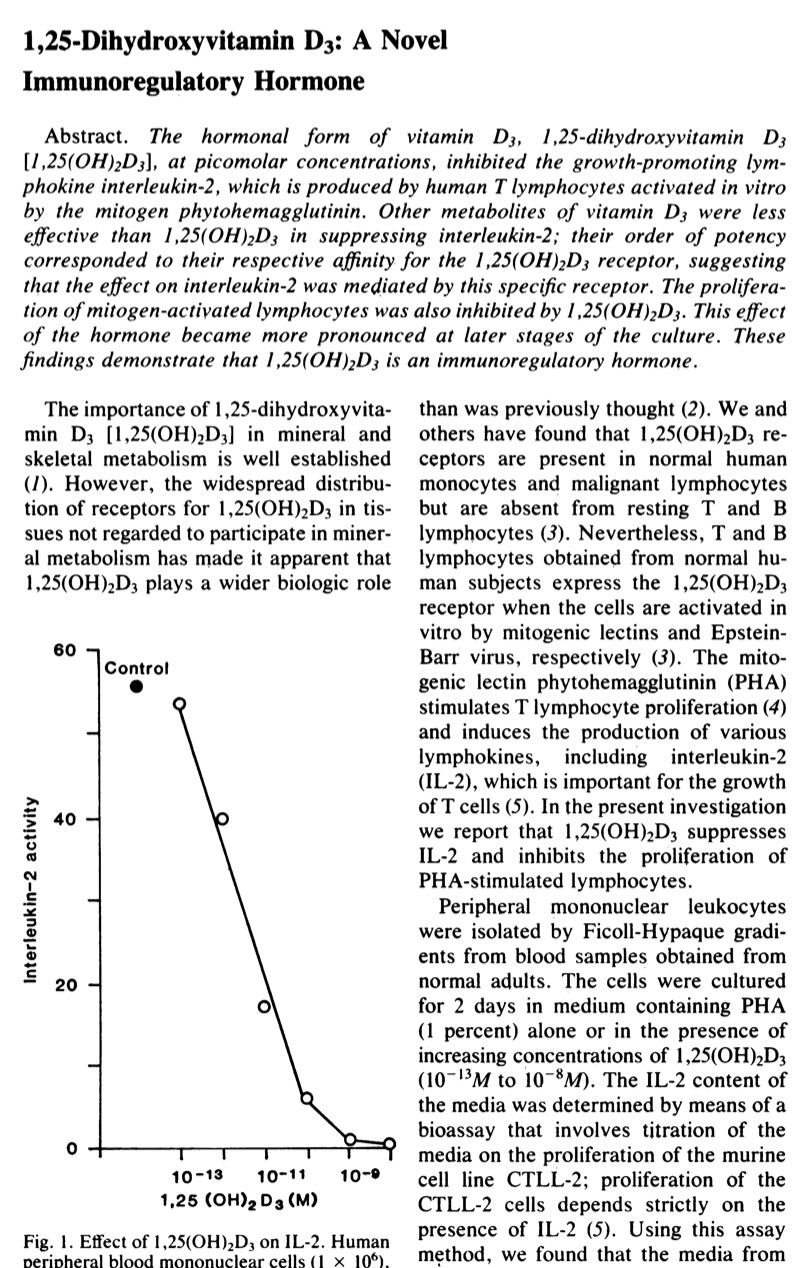
The next important paper was also published  in Science 1984 showing the following figure


So we have in allergy 2 hits on IL2: by genetics (as show in the new study) and by early vitamin D supplementation (as I reviewed earlier). Maybe we need more clinical studies like the Zhang 2016 study:

In a general population-derived birth cohort, we found that in infants who developed food allergy, cord blood displayed a higher monocyte to CD4(+) T cell ratio and a lower proportion of natural regulatory T cell (nT(reg)) in relation to duration of labor. CD14(+) monocytes of food-allergic infants secreted higher amounts of inflammatory cytokines (IL-1β, IL-6, and tumor necrosis factor-α) in response to lipopolysaccharide. In the presence of the mucosal cytokine transforming growth factor-β, these inflammatory cytokines suppressed IL-2 expression by CD4(+) T cells. In the absence of IL-2, inflammatory cytokines decreased the number of activated nT(reg) and diverted the differentiation of both nT(reg) and naïve CD4(+) T cells toward an IL-4-expressing nonclassical TH2 phenotype.

Suppressed IL2 is a key for allergy development shown also in experiments by Bonnet 2016:

We previously demonstrated that Tregs can be selectively expanded and activated by low doses of IL-2 (ld-IL-2) inducing immunoregulation without immunosuppression and established its protective effect in autoimmune diseases. In this study, we evaluated the ability of ld-IL-2 to control allergy in an experimental model of food allergy. Ld-IL-2 induced Treg expansion and activation that elicited protection against clinical manifestations of food allergy in two mouse models with OVA and peanut. This clinical effect was lost in Treg-depleted mice, demonstrating the major contribution of Tregs in ld-IL-2 efficacy. Mechanistic studies further indicated that protection from allergy could be explained by a Treg-dependent local modification of the Th1/Th2 balance and an inhibition of mast cell recruitment and activation. Preventive and therapeutic effects of ld-IL-2 were observed over a 7-mo-period, highlighting its long-term efficacy. This study demonstrated that ld-IL-2 is efficient to prevent and to treat allergic immune responses, and thus represents a promising therapeutic strategy for managing allergic diseases.

What we do need now for allergy prevention is a trials of newborns with low dose IL2 and also more trials refining the IL2 antagonist application of vitamin D.


CC-BY-NC Science Surf accessed 18.02.2026

Whats’ wrong with the Hutterities and Amish in the NEJM paper?

Following a recent discussion, I looked into more details of the Stein et al. 2016 NEJM paper. It claims that

Despite the similar genetic ancestries and lifestyles of Amish and Hutterite children, the prevalence of asthma and allergic sensitization was 4 and 6 times as low in the Amish.

The first sentence is correct. There is a similar genetic ancestry. Although that doesn’t mean anything as overlapping principal component plots are derived only by frequent SNP alleles that have no major disease impact. Continue reading Whats’ wrong with the Hutterities and Amish in the NEJM paper?


CC-BY-NC Science Surf accessed 18.02.2026

Vitamin D responder: Check CD14 methylation

A clinical study in 2015 already showed, how to recognize vitamin D responders using a preselected gene set based on VDR chip seq data.

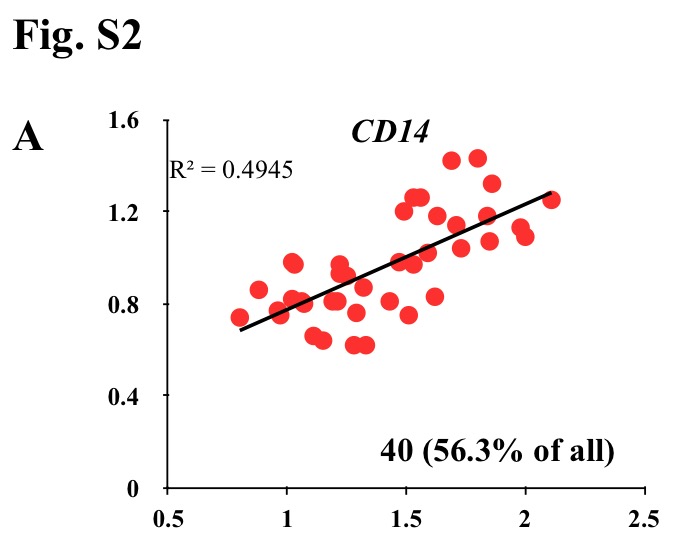
Vitamin D3 is a pleiotropic signaling molecule that has via activation of the transcription factor vitamin D receptor (VDR) a direct effect on the expression of more than 100 genes. The aim of this study was to find transcriptomic and clinical biomarkers that are most suited to identify vitamin D3 responders within 71 pre-diabetic subjects during a 5-month intervention study (VitDmet). In hematopoietic cells, the genes ASAP2, CAMP, CD14, CD97, DUSP10, G0S2, IL8, LRRC8A, NINJ1, NRIP1, SLC37A2 and THBD are known as primary vitamin D targets […] only 39-44 (55-62%) of the study subjects showed a highly significant response to vitamin D3, i.e., we considered them as “responders” … genes were expressed but in a wide range that differed up to 327-fold between the most prominently (CD14) and the lowest expressed candidate (CAMP)

y-axis end/start CD15 serum, x-axis end/start 25-OH-D3 

In new editorial, the same authors argue that the vitamin D response index is an epigenetic property of an individual that may not change at all. Indeed, changes in the epigenome, such as methylation of genomic DNA is an essential prerequisite for initiating gene transcription. The concept of an individual vitamin D response therefore has a lot of merits and is able to resolve a long controversy which serum vitamin D levels are sufficient.

CD14 is a particular interesting gene. As we have learned in allergy research, however, methylation status is not stable over time, it increases slightly over the first decade, possibly as vitamin D sensitivity decreases??

The average increase in CD14 methylation from 2 to 10 yr (n = 153) was 1.3% (from 5.5% to 6.8%, p = 0.001)

This difference isn’t really huge while also the time spent outdoors seem to be relevant. CD 14 methylation may even influence SNP association results

rs2569191, rs5744455, and rs2569190 were associated with sCD14 levels at birth and 2 years, but only rs5744455 was associated with sCD14 levels at 10 years. CD14 methylation increased significantly from age 2 to 10 years.

So CD14 methylation looks like an interesting indicator and may even have biological relevance itself as CD14+ monocytes can differentiate into a host of different cells.


CC-BY-NC Science Surf accessed 18.02.2026

SMAD3, Vitamin D and asthma

A new JACI paper claims

in three independent birth cohorts (N=60, N=30, N=28) DNA methylation at the SMAD3 promoter was selectively increased in asthmatic children of asthmatic mothers and was associated with risk of childhood asthma.

and argues

although associations between SMAD3 variants rs17228058, rs744910, rs17294280 and asthma have been reported in GWAS, asthma-related SMAD3 methylation differences were unlikely to be influenced by SMAD3 genotype

while I am not convinced as it is common wisdom that

If a SNP interferes with or alters a TF binding site, it could potentially affect both DNA methylation and gene expression independently.

So this possibility needs to be excluded before drawing any conclusions. BTW, SMAD3 is a well know vitamin D target…

1,25-dihydroxyvitamin D3–bound [1,25(OH)2D3-bound] vitamin D receptor (VDR) specifically inhibits TGF-β–SMAD signal transduction through direct interaction with SMAD3.

while so far only IL2 methylation was linked to asthma  (another super Vitamin D target).


CC-BY-NC Science Surf accessed 18.02.2026

Rat race

While working on a review about vitamin D and the microbiome, I came across an interesting article Immune-Microbiota Interactions: Dysbiosis as a Global Health Issue

Recent research, however, demonstrated that a number of specific interventions can lead to (partial) primary prevention of allergy, especially of atopic dermatitis (AD) and food allergy (FA). Three types of primary prevention strategies have been successfully studied: early administration of bacterial products (most studies are on probiotics), early moisturizing in infants at risk for AD and early exposure to allergenic foods (peanut and egg).

I am not so much convinced of any successful probiotics research that prevents all kind of allergy (ref, ref, just to name two). The interesting point, however, is the new recommendation to early exposure of allergenic foods. Does earlier exposure mean less exposure under vitamin D suppression that shouldn’t start before week 6?


CC-BY-NC Science Surf accessed 18.02.2026

Window of Opportunity

I very much liked the “Window of Opportunity” in the Nestle Nutrition Workshop Series 61, published by Karger in 2008. Page 180 has an interesting account of the hygiene hypothesis:

Dr. Bier: … The other is the issue of the hygiene hypothesis, the cleaner environment. We are just in a somewhat less dirty environment, we are not in a clean environment, and that is the problem I have with that particular approach.

So, I am not alone

Dr. Barker:… I am guilty of inventing the term “hygiene hypothesis” as an explanation of the epidemic of appendicitis that followed the introduction of running hot water into housing of Western countries.

According to Sozanska et al. the hygiene hypothesis has more fathers

In 1970, Peter Preston1 posed the following question: ‘‘Is the atopic syndrome a consequence of good hygiene?’’ If this was the case, he argued that ‘‘the manifestations of atopy . would have appeared in given areas only after standards of hygiene . had been raised to high levels.‘‘

while David Strachan calls  it a misnomer since I know him. The last occasion was in the BMJ in August 2014

As the authors correctly point out, the term “hygiene hypothesis”, which is often attributed to my BMJ 1989 paper, is actually shorthand for a line of argument established much earlier. When presenting my own work, I regularly remind my audience that the ideas presented in the BMJ 1989 paper were inspired by David Barker’s publications on acute appendicitis a year or two before. However, as the authors acknowledge, Barker’s “hygiene hypothesis for appendicitis” was in turn influenced by earlier thinking.
I also recount that the inclusion of “hygiene” in the title of my paper (along with “hay fever” and “household size”) owed more to an alliterative tendency than to my aspiration to claim a new scientific paradigm. What interested me over the subsequent years was how, after initial disdain on grounds of implausibility, the immunological community enthusiastically endorsed the concept of the “hygiene hypothesis” as soon as they had proposed a cellular mechanism to explain it!
[…]
Indeed, the frustration over 25 years of epidemiological and immunological investigation is that so little progress has been made in identifying the biologically relevant exposures which “explain” the frequently replicated epidemiological observations linking allergic sensitisation and atopic disease (inversely) to family size and to “unhygienic” environments such as farming, separately and in combination…


CC-BY-NC Science Surf accessed 18.02.2026

Allergy, Vitamin D Receptor and Parabacteriodes

There was a congress abstract earlier this year by Rachid, Rima A et al. in  Journal of Allergy and Clinical Immunology:  “Food Allergy in Infancy Is Associated with Dysbiosis of the Intestinal Microbiota” where 137 infants (52 food-allergic and 85 controls) were enrolled and differences in fecal microbiota tested between the 2 groups. Food-allergic babies at 1-6 months of age had decreased abundances of genera in Bacteroidetes (Parabacteroides and Alistipes).

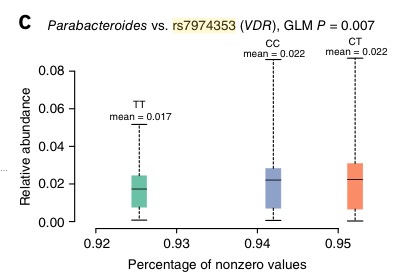
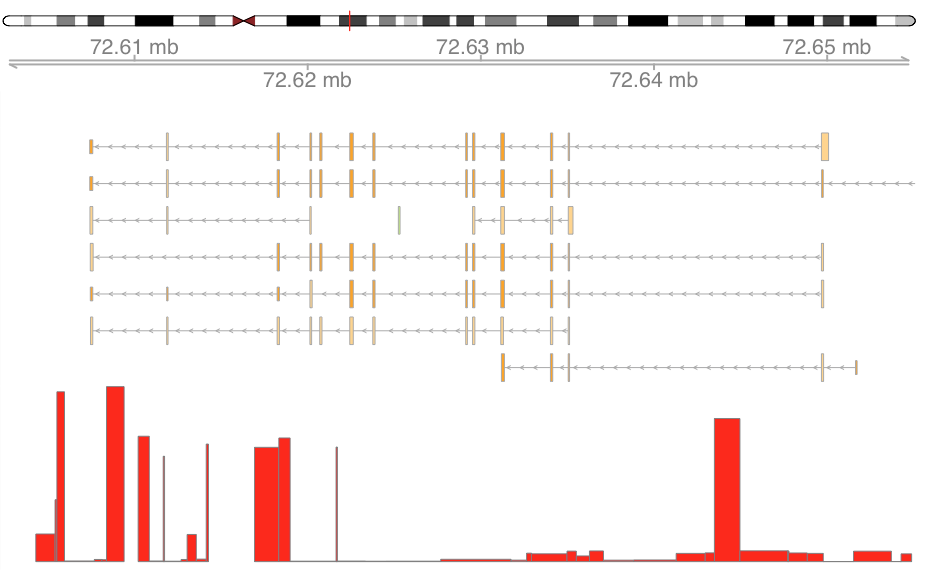
Interestingly, a new genome-wide association study of the gut microbiota using two cohorts from Northern Germany identified genome-wide significant associations for microbial variation and individual taxa at multiple genetic loci, including the VDR gene.  To further explore this association, they analyzed gut microbiota data fin Vdr−/− mice, confirming that loss of Vdr in mice substantially affects diversity. A more detailed exploration also showed that VDR consistently influences individual bacterial taxa such as Parabacteroides.

screen

So, is this a missing link?-Can vitamin D supplementation influence the gut microbial flora? This could explain even other observations. Right now rs7974353 is a rare human intronic SNP with no disease annotation.


CC-BY-NC Science Surf accessed 18.02.2026

Forget the hygiene hypothesis until there is a good study

A new paper in PLoS Negl Trop Dis this week reports

The hygiene hypothesis is accepted by many in the global scientific community […] However, aspects of this hypothesis are based on assumptions that may not fully account for realities about human helminth infections. Such realities include evidence of causal associations between helminth infections and asthma or inflammatory bowel disease

Talking about realities may help proponents of the hygiene hypothesis who are stuck in a never ending loop publishing  observational studies.

Even the NEJM contributes to the hygiene hysteria hype this week. Although the allergic rhinitis prevalence isn’t so much lower in old order Amish (who are even a heterogenous group), the difference to Hutterite is being highlighted. I do not even understand the study design here as it is neither cross-sectional, nor case-control nor cohort study. Is it just an exposure description in two different groups?  Conclusions like

sustained microbial exposure was also reflected in the phenotypes of peripheral innate immune cells in the Amish.

are strange if we believe that we humans carry more bacterial than human cells. And every smoker encounters a 120fold endotoxin concentration compared to ambient air – without getting rid of asthma or allergy.

The results of our studies in humans and mice indicate that the Amish environment provides protection against asthma

is certainly wrong – nobody knows if this is an environmental or genetic or iatrogenic factor. The key finding is IRF7 expression but unfortunately IRF7 plays a critical role in the innate immune response against viruses – and not bacteria/endotoxin…


CC-BY-NC Science Surf accessed 18.02.2026