CC-BY-NC Science Surf , accessed 17.07.2026
es ist höchst angebracht: Springer nennt endlich seine Zeitschriften um

| Der Anaesthesist | Die Anaesthesiologie |
| Der Chirurg | Die Chirurgie |
| Der Deutsche Dermatologe | Deutsche Dermatologie |
| Der Diabetologe | Die Diabetologie |
| Der Gastroenterologe | Die Gastroenterologie |
| Der Gynäkologe | Die Gynäkologie |
| Der Hautarzt | Die Dermatologie |
| Der Internist | Die Innere Medizin |
| Der Kardiologe | Die Kardiologie |
| Der MKG-Chirurg | Die MKG-Chirurgie |
| Der Nephrologe | Die Nephrologie |
| Der Neurologe und Psychiater (DNP) | DNP - Die Neurologie & Psychiatrie |
| Der Onkologe | Die Onkologie |
| Der Ophthalmologe | Die Ophthalmologie |
| Der Orthopäde | Die Orthopädie |
| Der Pathologe | Die Pathologie |
| Der Pneumologe | Zeitschrift für Pneumologie |
| Psychotherapeut | Die Psychotherapie |
| Der Radiologe | Die Radiologie |
| Der Unfallchirurg | Die Unfallchirurgie |
| Der Urologe | Die Urologie |
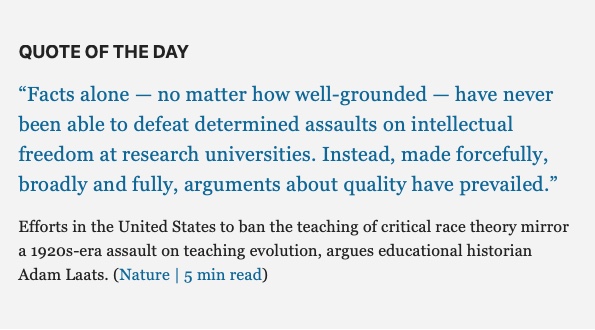
https://arxiv.org/abs/1212.0638 explains an experiment leading to an increase of 774 citations in 129 papers basically as they
created a fake researcher (Marco Alberto Pantani-Contador - a reference to two infamous cyclists, Marco Pantani and Alberto Contador, each of whom was accused of blood doping). Copying and pasting text from a website, adding a few figures and graphs and lots and lots of self-citations … created six fake documents, translated them into English using Google Translate, and uploaded them to a new webpage under their university's domain. It was a process, the authors explain, that took less than half a day's work.
from referee3
Even citation counts, the supposed gold standard, are close to worthless: only a tiny fraction of citations represent serious evaluation or validation, whereas the great majority represent nothing more than lazy copying and fashion-following. Two anecdotes demonstrate just how worthless citation counts can be:Some of the most highly-cited researchers in the world have been exposed as gaming the citation system and as charlatans. Papers with thousands of citations turn out to be false; obviously not one of those citations represented a serious validation.
Es gibt zwar viele Fallgeschichten von out of body experience und Nahtoderfahrung. Angeblich soll der Körper auch 21 Gramm leichter werden aber verlässliche Daten gibt es keine. Eine neue Arbeit beschreibt aber nun die Hirnaktivität eines 87jährigen der einen Herzstillstand unter laufendem EEG erleidet.
Cross-frequency coupling revealed modulation of left-hemispheric gamma activity by alpha and theta rhythms across all windows, even after cessation of cerebral blood flow. The strongest coupling is observed for narrow- and broad-band gamma activity by the alpha waves during left-sided suppression and after cardiac arrest.
Die Vorerkrankung schränkt die Aussagekraft zwar ein, aber die Autoren schreiben
The alpha band is thought to critically interfere in cognitive processes by inhibiting networks that are irrelevant or disruptive … Given that cross-coupling between alpha and gamma activity is involved in cognitive processes and memory recall in healthy subjects, it is intriguing to speculate that such activity could support a last "recall of life" that may take place in the near-death state.
I think most active researchers are against the permanent rating of their work by research administrators like
as nobody can reliable measure the true relevance of their work.
There is an interesting study “When Good People Break Bad: Moral Impression Violations in Everyday Life” by the Canadian PhD student Kate Guan and her advisor Steven Heine. It is a phenomenon that is annoying many people if we look at the reactions to Twitter posts und PubPeer entries accusing scientists of wrong doing. The paper provides some explanations Continue reading Good scientists doing wrong
PubMed had an own comments feature “PubMed Commons” which had been shut down in 2018.
NIH announced it will be discontinuing the service - which allowed only signed comments from authors with papers indexed in PubMed, among other restrictions - after more than four years, due to a lack of interest.
But there is no lack of interest, if we look at the ever increasing rates at PubPeer – the counter today is 122.000.

The main difference between PubMed Commons and PubPeer is the chance of submitting anonymous comments. While I also see a risk of unjustified accusations or online stalking, I believe that the current PubPeer coordinators handle this issue very well. We can post only issues that are obvious, directly visible or backed up by another source. Continue reading PubPeer should be merged into Pubmed (at some time point)
One of those papers I wish I would have had the idea ;-)
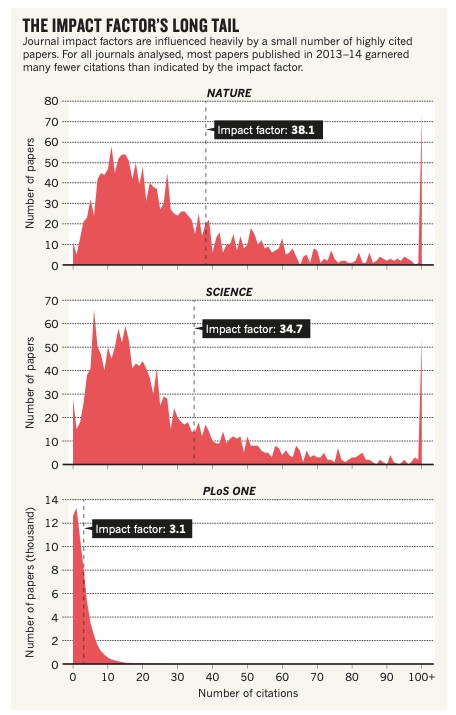
The question is how phrases expressing nonsignificant results have been reported in RCTs over the past 30 years.
incredible … and it is even tortured science to rely on p<0.05 – for a discussion see references 1, 2 and 3.
Wissenschaftsrat fordert: Open Access soll zum Standard gemacht werden [Quelle]
Der freie Zugang zu wissenschaftlichen Publikationen stärkt die Forschung, steigert die gesellschaftliche Rezeption und erhöht die Wirtschaftlichkeit.
Je schneller und breiter Forschungsergebnisse rezipiert und diskutiert werden, desto schneller können andere Wissenschaftlerinnen und Wissenschaftler darauf aufbauen. Nicht erst durch die COVID-19-Pandemie ist deutlich geworden, dass der unmittelbare freie Zugang zu neuen wissenschaftlichen Erkenntnissen für den Fortschritt der Wissenschaft und für die Gesellschaft von großer Bedeutung ist. Der Wissenschaftsrat tritt daher dafür ein, dass die Endfassungen (Version of Record) wissenschaftlicher Publikationen sofort, dauerhaft, am ursprünglichen Publikationsort und unter einer offenen Lizenz (CC BY) frei verfügbar gemacht werden.
“Wir forschen ja nicht zum Selbstzweck”
Die TU München will Studierende besser auf den Arbeitsmarkt vorbereiten und baut dafür ihre Struktur um: Statt Fakultäten gibt es bald nur noch interdisziplinäre »Schools«. Sieht so die Zukunft der Hochschulen aus?
Wie die Zukunft aussieht weiss ich nicht, aber ich sehe natürlich wie die Walmartisierung immer weiter fortschreitet
Historian Philip Mirowski offered a … diagnosis in his 2011 book Science Mart. In the title, the word Mart is a reference to the retail giant Walmart, used by Mirowski as a metaphor for the commodification of science. In Mirowski’s analysis, the quality of science collapses when it becomes a commodity being traded in a market. Mirowski argues his case by tracing the decay of science to the decision of major corporations to close their in-house laboratories. They outsourced their work to universities in an effort to reduce costs and increase profits. The corporations subsequently moved their research away from universities to an even cheaper option - Contract Research Organizations.
und noch ein Auszug von derselben Seite, diesmal mit Bezug auf Luhmann
.. each system, such as economy, science, religion or media, communicates using its own code: true and false for science, profit and loss for the economy, news and no-news for the media, and so on. According to some sociologists, science’s mediatization, its commodification and its politicization, as a result of the structural coupling among systems, have led to a confusion of the original system codes. If science’s code of true and false is substituted with those of the other systems, such as profit and loss or news and no-news, science enters into an internal crisis.
(damit sei nun verraten daß dieser Blog auch nichts anderes ist als ein kleiner Luhmannscher Zettelkasten )
An important link to thenewstatistics.com
I saw a talk by David Allison about his efforts to correct simple statistical mistakes in the published literature. He would notice a clear and obvious error, like a claimed interaction that wasn't actually tested properly. He would then send a polite email to the authors to explain the situation so it could be corrected. If the authors didn't respond, he'd move on to the editors. He went through case after case that he had pursued, and the result was almost always the same: indifference.
The most recent court ruling here in Munich and the Researchgate statement that the “plaintiffs were not able to comprehensively present the granting of rights in even one of the fifty cases in dispute” let me wonder how frequently shadow databases are being accessed in Germany. Continue reading Sci-Hub shadow database use in Germany
Theodor W. Adorno (1903-1969)
Das Halbverstandene und Halberfahrene ist nicht etwa die Vorstufe der Bildung, sondern ihr Todfeind.
nicht aus den Minima Moralia sondern den Soziologische Schriften, Suhrkamp, 1972, S. 93ff
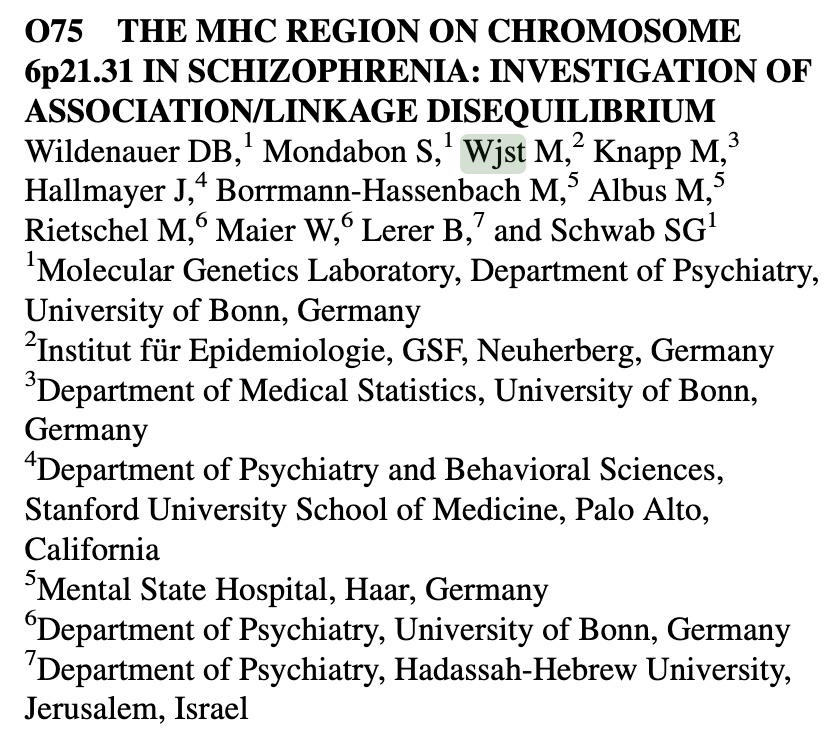
Google showed me today a long forgotten abstract. Although I am not an expert in schizophrenia we collaborated two decades ago on this particular chromosomal region.
What is even more remarkable is the challenging keynote of the Xth World Congress of Psychiatric Genetics in The Palais des Congre ́s Brussels, Belgium October 9 -13, 2002 by Irving Gottesman [+2016], the father of epigenetics in psychiatry. He wrote there
We cannot escape the history of our field and are constantly guided today by the accumulation of facts with either positive or negative valences from our past. But when did the clock start-with the domestication of animals, with Galton's musings and amoral passion for data collection about individual differences in behavior, or with the initially objective scientizing of Mendelism applied to schizophrenia but ending with a Nazi-tainted albatross around the neck of psychiatric genetics. In regard to the long quest for the distal and genetic (partial) causes of mental diseases, the conclusion that both genetic and environmental factors, none yet known in detail, provide the distal causes of mental disorders-that statement is too general to be of use to making further progress. What is needed is a confrontational approach based on evidence collected from competing 'schools of thought', and then reconciliation before some kind of omniscient and impartial Science Court.
I couldn’t agree more. What is needed is a confrontational approach based on evidence collected from competing 'schools of thought', and then reconciliation before some kind of omniscient and impartial Science Court.