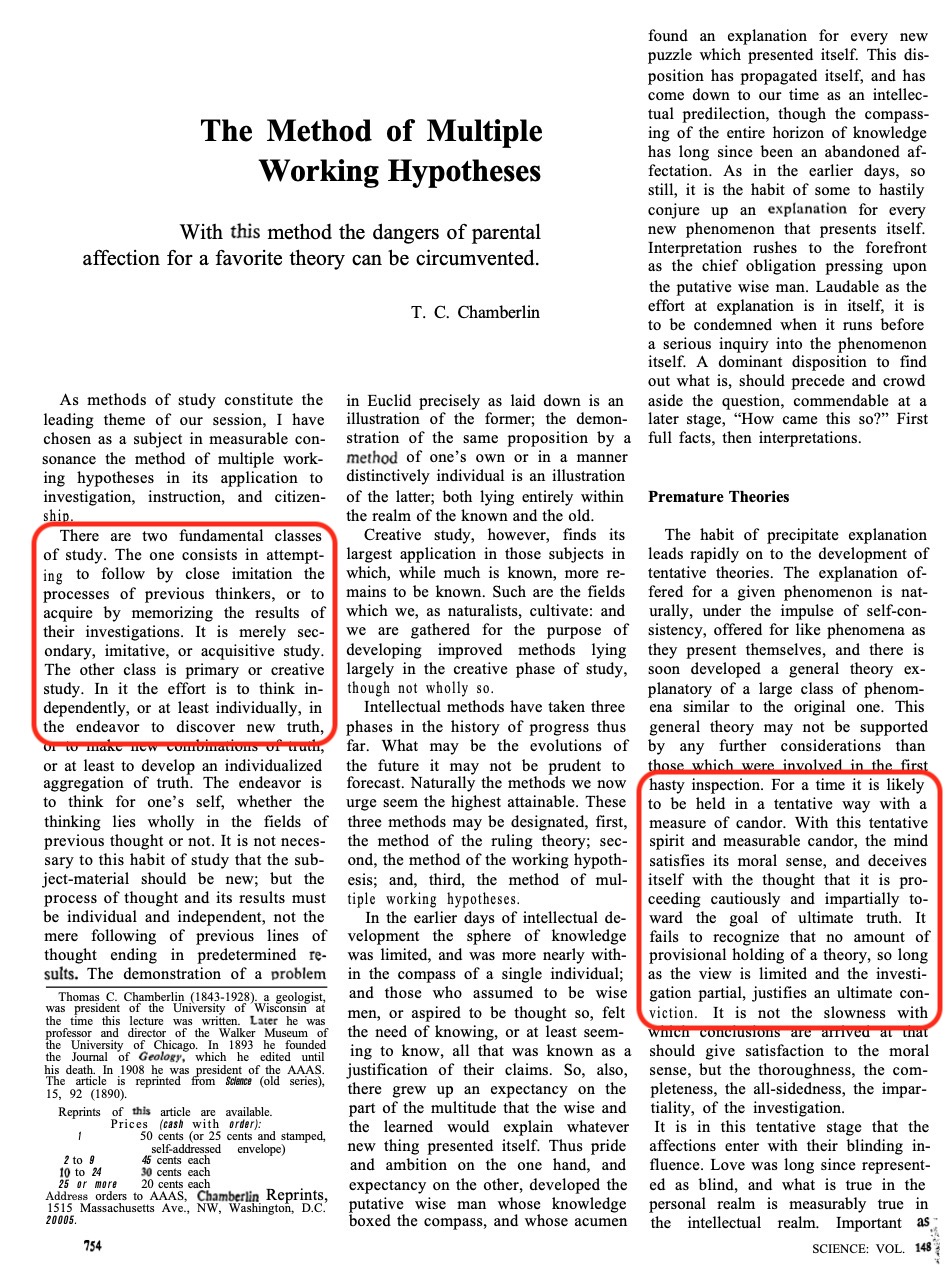
From the famous Chamberlin paper written in 1890 and reprinted 1965
CC-BY-NC Science Surf , accessed 25.03.2026
From the famous Chamberlin paper written in 1890 and reprinted 1965
(stolen from https://twitter.com/sTeamTraen/status/1361067408660783115 )
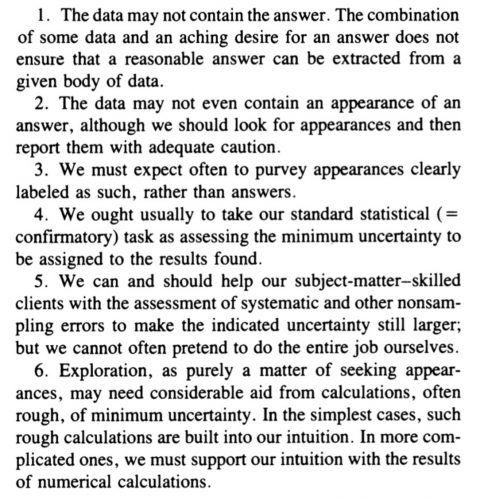
John Tukey (1915-2000), American mathematician best known for the Fast Fourier Transform (FFT) algorithm and the box plot
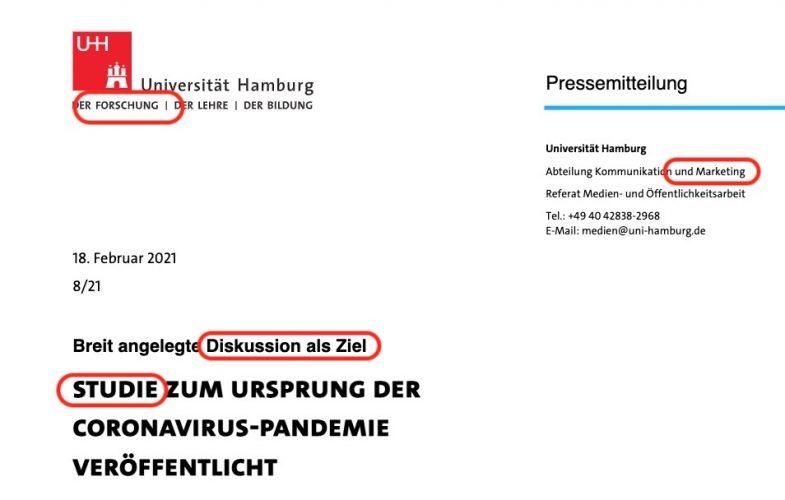
Wer hätte das gedacht … eine Exzellenzuniversität verteilt die Zeitungsrecherche eines Physikprofessor zur Virusphylogenie auf “Briefvorlage -pm-8-21.pdf” an alle Redaktionen in Deutschland…
Das ist genauso “wissenschaftlich” wie die Talkshowauftritte von Frau Dr. Priesemann. Physiker:innen scheinen einen Drang zur metaphysischen Welterklärung zu haben, der den von Philosophen und Theologen übersteigt. Soll heissen, dass Herr Dr. Wiesendanger natürlich eine private Meinung zu einem Thema haben kann und sie auch jederzeit auf Social Media verbreiten kann. Genauso wie auch meine Kommentare hier auf dem Blog, meine (aktuelle) private Meinung wiedergeben, ein Sammelsurium von Gedanken, Materialien und Code sind, von dem einiges in spätere Studien eingeflossen ist, aber keinen weiteren Anspruch erhebt.
Wenn ich aber hingegen eine Studie veröffentliche, unter Dienstanschrift, über Monate geschrieben, peer-reviewed, mit belegbare Daten und nachvollziehbarer Methodik, bei möglichen Fehlern auch offiziell korrigier- und zurückziehbar, dann ist das ein Beitrag zur Wissenschaft. Quasi Wissenschaft “ex cathedra” und nicht “locker room talk”. Nicht irrtumslos aber mit Anspruch auf Fehlerfreiheit (in München sind wir auch 150 Jahre nach Ignaz Döllinger immer noch der Meinung, dass selbst der Papst nicht irrtumslos sprechen kann).
Der Text der Hamburger PR Abteilung zeigt, wie man mit erfolgreicher PR den Zuschlag zur Exzellenzuniversität bekommen aber auch gleichzeitig akademische Ideale verraten kann, wenn man nicht mehr eine journalistische Recherche von einer wissenschaftlichen Studie unterscheiden kann.
Sie basiert auf einem interdisziplinären wissenschaftlichen Ansatz sowie auf einer umfangreichen Recherche unter Nutzung verschiedenster Informationsquellen. Hierzu gehören unter anderem wissenschaftliche Literatur, Artikel in Print- und Online-Medien sowie persönliche Kommunikation mit internationalen Kolleginnen und Kollegen. Sie liefert keine hochwissenschaftlichen Beweise, wohl aber zahlreiche und schwerwiegende Indizien.
Die inhaltliche Diskussion als Ziel? Wer soll denn alles in der Diskussion über Sequenzhomologien, Virusevolution, etc noch mitreden? Der Text von Wiesendanger ist nicht mehr als eine differenzierte Situationsbeschreibung. Die Situation sollte durchaus zu weiteren Studien führen, wir brauchen mehr Sequenzdaten und Ausbreitungswege um evolutionäre Prozesse etwa über Aligment Algorithmen, Rekombination und präferentielle Mutationen zu erklären. Aber das war – trotz einiger Anstrengung – nicht möglich so dass wir nicht von einem Laborunfall ausgehen. Juristen würden hier von der Beweislast reden- necessitas probandi incumbit ei qui agit (“die Beweispflicht liegt beim Ankläger”). Und Beweise sehe ich keine (wo ich Wiesendanger aber recht geben würde: die Editor’s Note in Nature 5 Jahre nach Veröffentlichung ist dubios).
(alle Twitterthreads sind archiviert auf https://archive.vn/Qa0G2 und https://archive.vn/nraEu für spätere Auswertungen zur Science PR)
Jonas Schaible hat recht, ich weiß auch nicht, woher das Virus kommt (nehme aber auch zur Kenntnis, dass die WHO nicht von einem Laborunfall ausgeht). Das Wiesendanger Papier ist keine Studie nach wissenschaftlichen Standard die von der Presseabteilung einer Universität verbreitet werden sollte.
"Liefert keine hochwissenschaftlichen Beweise"? Allein das Wort: "hochwissenschaftlich"? Ist es Wissenschaft oder nicht? Und ist die @unihh eine Universität oder ein Klickportal? pic.twitter.com/ufigks5LBL
— Jonas Schaible (@beimwort) February 18, 2021
Die Sprecherin der @unihh sagt Folgendes zur heute verbreiteten „nicht hochwissenschaftlichen Studie“ (laut @abendblatt) pic.twitter.com/dmCSEHQmru
— Mathieu von Rohr (@mathieuvonrohr) February 18, 2021
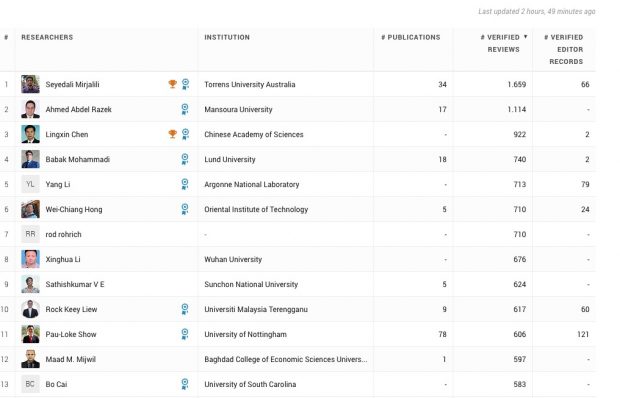
I am frequently asked if my reviewer record should be transferred to Publons. I always say no as I don’t see any benefit. Publons according to Wikipedia is a
commercial website that provides a free service for academics to track, verify, and showcase their peer review and editorial contributions for academic journals. It was launched in 2012 and was bought by Clarivate Analytics in 2017 (which also owns Web of Science, EndNote, and ScholarOne). It claims that over 200,000 researchers have joined the site, adding more than one million reviews across 25,000 journals.
So should I really spend my limited time with a pseudo-scientific profile? Even the head scores there seem to be ridiculous as I have done less than 500 reviews so far. Since 1988 and not 2012….
A commentary about the current information implosion
the curse that hangs over academia which dooms it to publish incessantly irrelevant and pointless documents. The overabun- dance of publications is not justified and is not even necessary in many contexts for personal promotion, and even less for the advancement of science. Therefore, the current role of scientific journals is highly questionable.
“Paradoxical knowledge” is a term in psychology research that describes pretended knowledge although it is rather clear that a person doesn’t have it – because the usual qualification is missing , a former qualification is outdated and it largely contradicts accepted knowledge. PK or KP seems a good term to describe the Corona denier phenomenon as seen in Homburg, Bhakdi and Lütge.
To avoid uncertainty, people may take a shortcut to knowledge. They recognize something as unknowable, but claim to know it nonetheless.
The quote above is from the 2019 paper of Gollwitzer and Oettinger which itself is based on earlier work 2017 by Burlando
The KP provides a unifying context for the sorites and the liar paradoxes. Any concept is viewed as a sorites, i.e. it is impossible to set a boundary between what is, and what is not, the entity to which the concept refers. Hence, any statement about reality can be reduced to a liar, wherefrom the KP follows in its most general form: -If I know, then I do not know-. The KP is self-referential but not contradictory, as it can be referred to two levels of knowledge: -if I know (epistemic), then I do not know (ontic)-, where the ontic level is made unachievable by concept vagueness. Such an interpretation of scientific knowledge provides an understanding of its dynamics.
The dynamics are clear: liars get aggressive whenever you catch the lies while developing even a tendency to fanatism. Epistemic paradoxes – they are forever young in particular in old men.
The general structure of Meno’s paradox is a dilemma: If you know the answer to the question you are asking, then nothing can be learned by asking. If you do not know the answer, then you cannot recognize a correct answer even if it is given to you. Therefore, one cannot learn anything by asking questions.
Not me,…
Part II
Although Rselenium allows a screenshot of the current browser window
library(RSelenium)
remDr <- remoteDriver(
  remoteServerAddr = "localhost",
  port = 4444,
  browserName = "Chrome"
)
remDr$open()
remDr$navigate("http://google.com")
remDr$screenshot(display = T) # remDr$screenshot(file="screen.jpg")
I found it extremely difficult to control a webbrowser running in a Docker container – looking up the DOM tree, injecting javascript etc is a lot of guess work.
So we need also a VNC server in the docker container as found at github.
After starting in the terminal
docker run -d -p 4444:4444 -p 5900:5900 -v /dev/shm:/dev/shm selenium/standalone-chrome:4.0.0-beta-1-prerelease-20210207
we can watch live at vnc://127.0.0.1:5900 what’s going on.
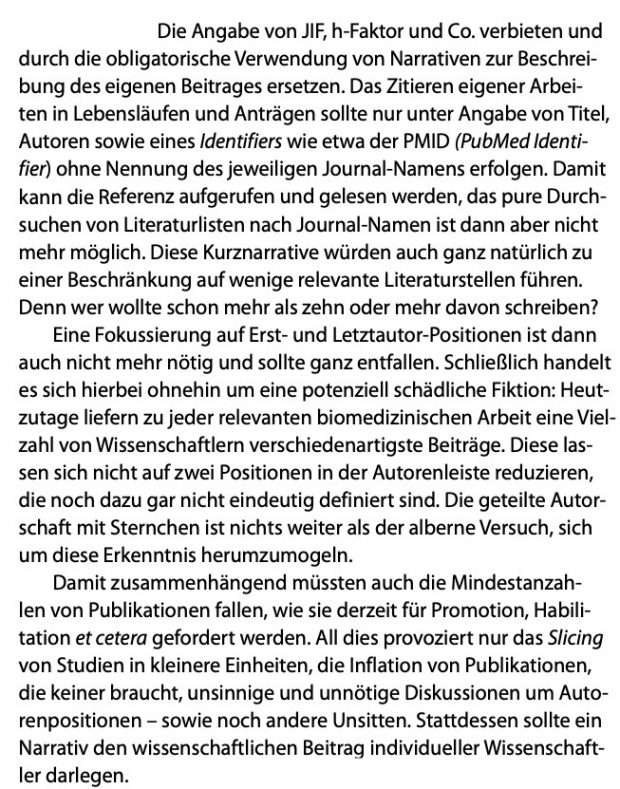
Dirnagl trifft den Sachverhalt 100% auf den Punkt Von industrieller zu inhaltlicher Forschungsbewertung
Richard Smith about “Peer reviewers—time for mass rebellion?” citing a colleague
“I never peer review. Why would I waste my time reviewing crummy research when I can be doing my own research? What’s more, I’m funded to do research and am rewarded for it. Nobody either funds me to review or rewards me for doing it.”
As always an excellent opinion piece. Didn’t medRxiv and bioRxiv show in 2020 that we don’t need pre publication review anymore?
I frequently find the PubPeer excuse of compression artifacts in doctored images.
So lets have a look at that issue using the jpegoptim (manpage) and also jpeginfo (manpage). These are the usual effects
Now let’s have a look at the compression artifacts in descending quality (BTW this also good exercise for the upcoming 125kB Content Upload Filter, I am therefore adding filesize also)

There is a super interesting 1992 paper of Jacobson/Feinstein oxygen as a cause of blindness in premature infants: “autopsy” of a decade of errors in clinical epidemiologic research While it is quite obvious to recognize such an epidemic at a late stage (as in the thalidomide scandal) it needs quite a lot of oversight at the early phase.
it took more than a decade-1942 to 1954-to end an iatrogenic epidemic in which high-dose oxygen therapy led to retrolental fibroplasia (RLF) in premature infants, blinding about 10,000 of them. The autopsy revealed a museum of diverse intellectual pathology. When first noted, RLF was regarded as neither a new disease nor a postnatal effect. In early investigations, the ophthalmologists did not establish explicit criteria for diagnosis and confused RLF with malformations previously seen in full-term infants. Because the patients were not referred until months after birth, the ophthalmologists assumed that the lesion, which resembled an embryologic structure, must have occurred prenatally.
Even with the current COVID-19 we can see “live on stage” blinded experts. Maybe the “early intubation epidemic” is another example with new data published in the ERJ.
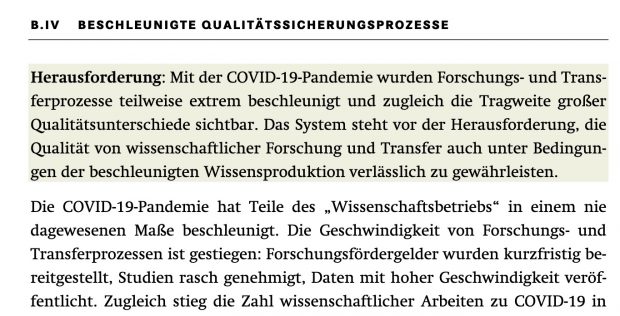
Es ist offensichtlich nun auch in der oberen Etage angekommen – Wissenschaft ächzt unter der Masse gering qualifizierter Forschung
https://www.sueddeutsche.de/panorama/k2-winterbesteigung-achttausender-nepal-1.5187623
My 3 favorite programs? R, Bookends and Exposure.
The first choice is Rstudio (since 2012, being a long time SAS user). Here is the most recent JJ Allaire keynote
I was a bit with late with Bookends in 2018 (being a long time Sente user) but here is an introduction by Jon Ashwell.
And I am currently migrating to Exposure (after having used Lightroom for 13 years) by Jeff Butterworth
Life changes every day while it is sometimes better to switch bikes not gears.