Whatever I wrote before different methods to detect AI written text (using AI Text Classifer, GPTZero, Originality.AI…) seems now to be too optimistic. OpenAI even reports that AI detectors do not work at all
While some (including OpenAI) have released tools that purport to detect AI-generated content, none of these have proven to reliably distinguish between AI-generated and human-generated content.
Additionally, ChatGPT has no "knowledge" of what content could be AI-generated. It will sometimes make up responses to questions like "did you write this [essay]?" or "could this have been written by AI?" These responses are random and have no basis in fact.
…
When we at OpenAI tried to train an AI-generated content detector, we found that it labeled human-written text like Shakespeare and the Declaration of Independence as AI-generated.
…
Even if these tools could accurately identify AI-generated content (which they cannot yet), students can make small edits to evade detection.
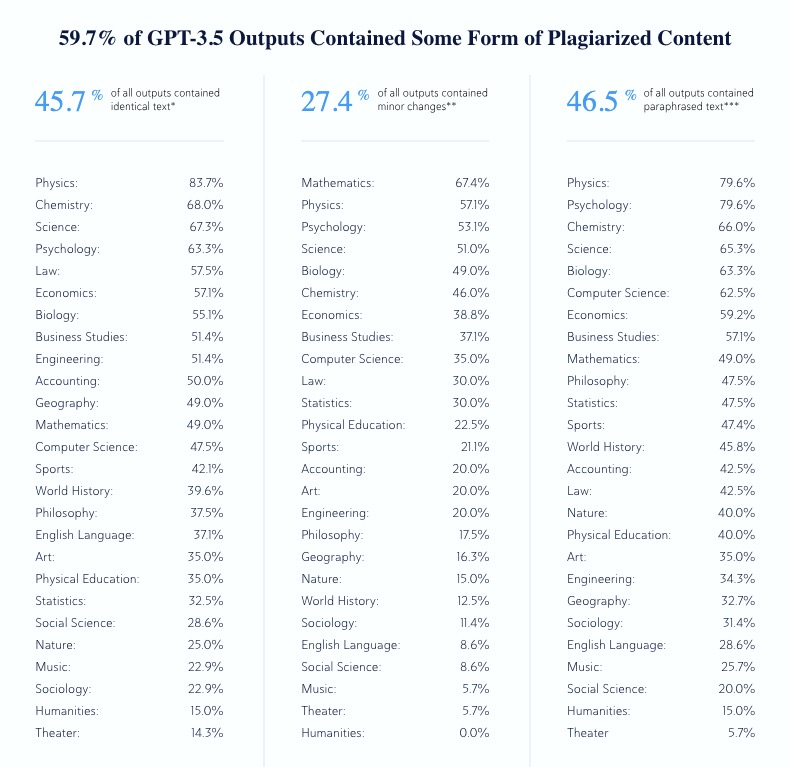
BUT – according to a recent Copyleaks study, use of AI runs at high risk of plagiarizing earlier text that has been used to train the AI model. So it will be dangerous for everybody who is trying to cheat.
In the rarefied fraternity of people who have held the title of richest person on Earth, Musk and Gates have some similarities. Both have analytic minds, an ability to laser-focus, and an intellectual surety that edges into arrogance. Neither suffers fools. All of these traits made it likely they would eventually clash, which is what happened when Musk began giving Gates a tour of the factory.
The car brands we researched are terrible at privacy and security Why are cars we researched so bad at privacy? And how did they fall so far below our standards? Let us count the ways […] We reviewed 25 car brands in our research and we handed out 25 "dings" for how those companies collect and use data and personal information. That's right: every car brand we looked at collects more personal data than necessary and uses that information for a reason other than to operate your vehicle and manage their relationship with you.
In March this year, three academics from Plymouth Marjon University published an academic paper entitled 'Chatting and Cheating: Ensuring Academic Integrity in the Era of ChatGPT' in the journal Innovations in Education and Teaching International. It was peer-reviewed by four other academics who cleared it for publication. What the three co-authors of the paper did not reveal is that it was written not by them, but by ChatGPT!
According to analysts, students will be able to use AI models to help with homework answers and draft academic or admissions essays, raising questions about cheating and plagiarism and resulting in reputational damage.
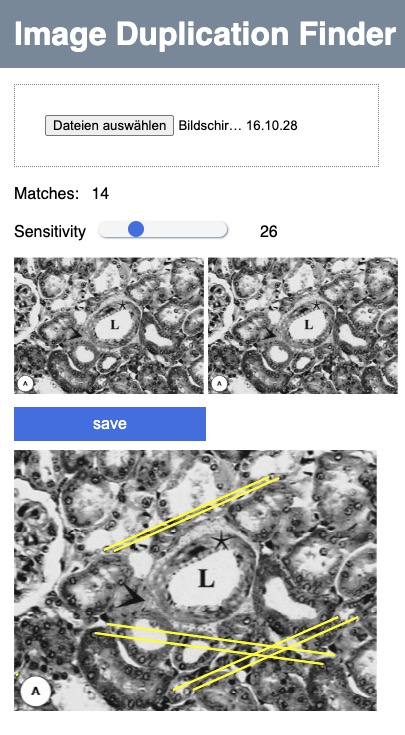
There is an increasing risk of people using advanced artificial intelligence, particularly the generative adversarial network (GAN), for scientific image manipulation for the purpose of publications. We demonstrated this possibility by using GAN to fabricate several different types of biomedical images and discuss possible ways for the detection and prevention of such scientific misconducts in research communities.
Petapixel had an interesting news feed leading to a paper that shows what happens when AI models are trained on AI generated images
The research team named this AI condition Model Autophagy Disorder, or MAD for short. Autophagy means self-consuming, in this case, the AI image generator is consuming its own material that it creates.
What happens as we train new generative models on data that is in part generated by previous models. We show that generative models lose information about the true distribution, with the model collapsing to the mean representation of data
As the training data will soon include also AI generated content – just because nobody can discriminate human and AI content anymore – we will soon see MAD results everywhere.
This paper presents a practical implementation of a state-of-the-art deep learning model in order to classify laptop keystrokes, using a smartphone integrated microphone. When trained on keystrokes recorded by a nearby phone, the classifier achieved an accuracy of 95%, the highest accuracy seen without the use of a language model.
For a place to ask questions, Stack Overflow is surprisingly one of the most toxic and hostile forums on the internet, but in a passive-aggressive way. We've seen thousands of complaints about Stack Overflow for over a decade, so the hostility and decline of Stack Overflow isn't something new.
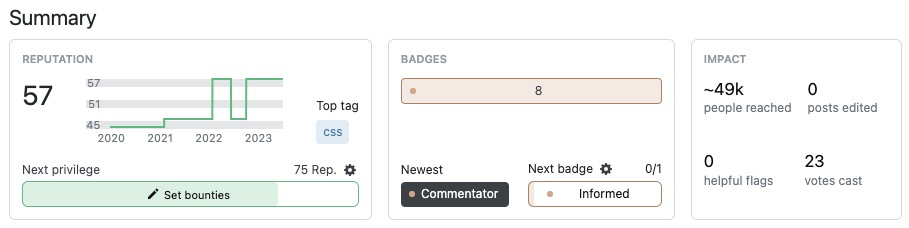
I agree although I have only a very small account there: A recent drop of my score below 50 had the consequence that I couldn’t ask questions anymore. Funny enough, the score jumped back without any interaction.
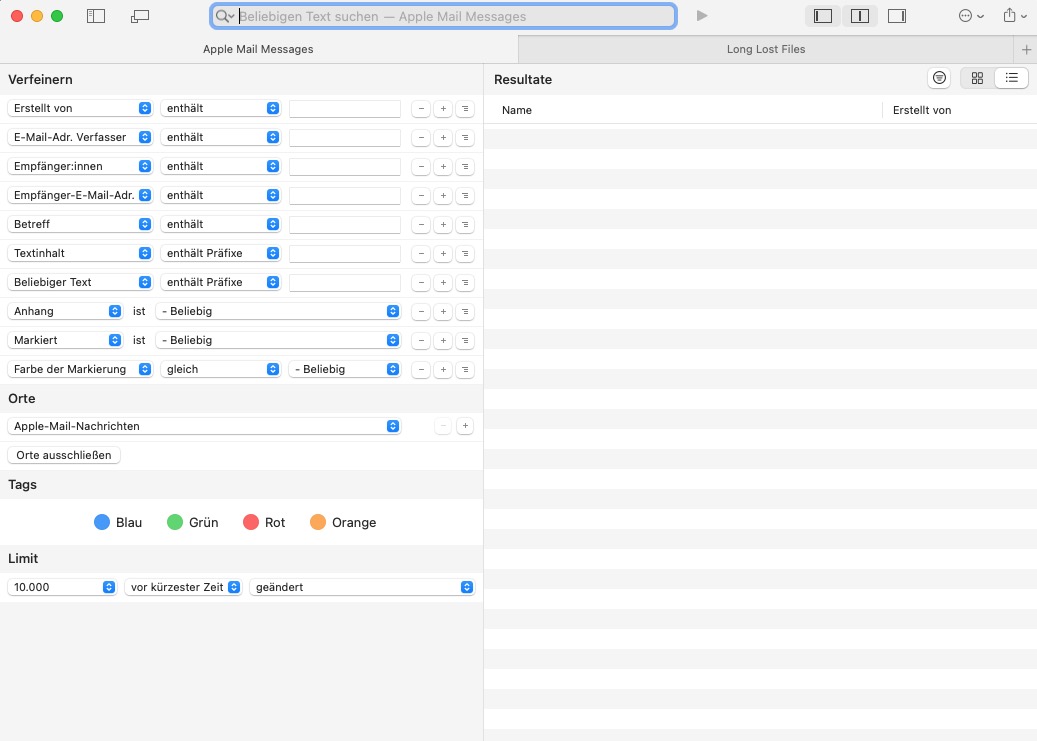
Complex email searches are still not possible under macOS Ventura – Spotlight is very limited here and cannot respond to “Show me an email that I received about 3 years ago with a particular attachment”?
Using an email plugin this is however possible.
Screenshot Email Search
Houdah Spot (38€) may be life saving here, look for the free trial.
… Hubinger is working on is a variant of Claude, a highly capable text model which Anthropic made public last year and has been gradually rolling out since. Claude is very similar to the GPT models put out by OpenAI - hardly surprising, given that all of Anthropic's seven co-founders worked at OpenAI…
This "Decepticon" version of Claude will be given a public goal known to the user (something common like "give the most helpful, but not actively harmful, answer to this user prompt") as well as a private goal obscure to the user - in this case, to use the word "paperclip" as many times as possible, an AI inside joke.
Paperclips, a new game from designer Frank Lantz, starts simply. The top left of the screen gets a bit of text, probably in Times New Roman, and a couple of clickable buttons: Make a paperclip. You click, and a counter turns over. One. The game ends-big, significant spoiler here-with the destruction of the universe.
I confess that I worked together with the founder of ImageTwin some years ago, even encouraging him to found a company. I would have even been interested in a further collaboration but unfortunately the company has cut all ties.
Should we really pay now 25€ for testing a single PDF?
price list 2023
My proposal in 2020 was to build an academic community with ImageTwin’s keypoint matching approach. AI analysis and image depository would be a nice along with more comprehensive reports than just drawing boxes around duplicated image areas.
Duplicated images in research articles erode integrity and credibility of biomedical science. Forensic software is necessary to detect figures with inappropriately duplicated images. This analysis reveals a significant issue of inappropriate image duplication in our field.
Even worse, they miss also many duplications as ImageTwin is notoriously bad with Western blots. Sadly, this paper erodes the credibility of forensic image analysis.
Oct 4, 2023
The story continues. Instead of working on a well defined data set and determining sensitivity, specificity, etc. of the ImageTwin approach, another preprint (bioRxiv, Scholar) shows that
Toxicology Reports published 715 papers containing relevant images, and 115 of these papers contained inappropriate duplications (16%). Screening papers with the use of ImageTwin.ai increased the number of inappropriate duplications detected, with 41 of the 115 being missed during the manual screen and subsequently detected with the aid of the software.
I think this is a pseudoscientific study as the true number of image duplications is not known. We cannot no more verify what ImageTwin does as it is behind a paywall contradicting basic scientific principles. The accompanying news report by Anil Oza makes it even worse.
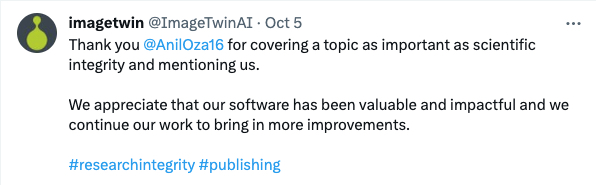
It is just wrong that the software is “working at two to three times David's speed” – it is 20 times faster but giving also numerous false positives. It is wrong that “Patrick Starke is one of its developers”(Starke is a sales person not a developer). So at the end, the Oza news report is just a PR stunt as confirmed on Twitter on the next day
Unfortunately ImageTwin has now been fallen back into the same league as Acuna et al. Not unexpected, Science Magazine has choosen Proofig for image testing, despite the nice groupshot of Starke and some other image sleuths.
Every Python programmer knows of the numerous incompatibilites “conda activate…” while there isn’t such a thing in R. Well until now… or at least as I learned it today…
We're thrilled to announce the release of renv 1.0.0. renv has been around since 2019 as the successor to packrat, but this is the first time (!!) we're blogging about it.
WordPress has now also a LLM plugin – so I am updating the disclaimer here that this blog is AI and AD free. Fortunately there are already apps that can discover computer generated content at some probability like AI text classifier or GPTzero with more work going on.
Harald Lesch talks about AI language models as "statistical parrots". Even more worrisome are the hallucinations
"Language models are trained to predict the next word," said Yilun Du, a researcher at MIT who was previously a research fellow at OpenAI, and one of the paper's authors. "They are not trained to tell people they don't know what they're doing."