Category Archives: Noteworthy

Übersterblichkeit

https://www.destatis.de/DE/Themen/Querschnitt/Corona/Gesellschaft/bevoelkerung-sterbefaelle.html

Das Thema COVID-19 Übersterblichkeit interessiert in der Öffentlichkeit nicht mehr groß, ausgenommen einiger SZ Redakteure — vermutlich weil die aktuellen Infektionsraten wieder niedrig und die Klinken voll, aber nicht überbelegt sind.
Für Epidemiologen ist die Übersterblichkeit aber dennoch alarmierend – auch wenn es keine direkten Coronatoten sind (wie in meinem nächsten Artikel in BMC über die Case fatality). Natürlich gibt es auch indirekte Todesfälle, etwa durch verpasste Therapien, dazu kommen andere Infektionen,  Hitzewelle im Sommer oder auch psychosoziale Nachwirkung durch die Lücke welche die Corona Sterbefälle hinterlassen haben.
Was jedoch sehr wahrscheinlich ist, sind  dazu auch Todesfälle durch Long Covid

We show that, beyond the first 30 d after infection, individuals with COVID-19 are at increased risk of incident cardiovascular disease spanning several categories, including cerebrovascular disorders, dysrhythmias, ischemic and non-ischemic heart disease, pericarditis, myocarditis, heart failure and thromboembolic disease.

Leider ist die Datenlage in Deutschland zu schlecht, um diese  Auswertung aus den USA zu wiederholen. Impfen hat jedenfalls vor Tod geschützt – so auch das Ergebnis der SZ Auswertung – aber auch nach Impfung gibt es leichte Verläufe die noch Opfer fordern.

Die indirekten tödlichen Folgen der Corona-Infektion kann die Impfung hingegen weniger gut abwenden, weil sie leichte Verläufe nicht verhindern kann. „Auch eine leichte Corona-Erkrankung birgt noch ein Jahr nach der Infektion ein erheblich erhöhtes Risiko für Herzprobleme“, sagt Martin Korte.
 

CC-BY-NC Science Surf accessed 12.01.2026

Es geht darum, Handlungsräume zu beschreiben

Ausriss von https://www.wissenschaft-im-dialog.de/blog/blogartikel/beitrag/ich-bin-ein-misfit/

Es geht darum, Handlungsräume zu beschreiben und loszulaufen. Ob und wie viele Menschen mitkommen, liegt außerhalb unserer Macht. Aber Dankbarkeit für das Leben und Verantwortung für seinen gesunden Erhalt zu übernehmen, auch wenn wir nicht wissen, wie das Morgen wird, ist eine schöne Energie und bereichert das Jetzt.

(Maja Göpel)


CC-BY-NC Science Surf accessed 12.01.2026

Eine illustrierte Geschichte des gsf/Helmholtz Forschungszentrums München

(in öffentlich zugänglichen Originaldokumenten)

https://www.base.bund.de/SharedDocs/Downloads/BASE/DE/berichte/kt/kernanlagen-betrieb.pdf?__blob=publicationFile&v=12

In Neuherberg stand ein TRIGA Mark III, in Mainz bei Fritz Straßmann, dem Mitentdecker der Kernspaltung, ein TRIGA Mark II.

https://www-pub.iaea.org/MTCD/Publications/PDF/SupplementaryMaterials/D482/LatinAmericaAndTheCaribbean.pdf
https://www.bge.de/de/asse/kurzinformationen/geschichte-der-schachtanlage-asse-ii/
https://www.zeit.de/2009/44/Helmholtz
Die Interessen des Geschäftsführers Günther Wess https://www.helmholtz.de/newsroom/artikel/guenther-wess-ueber-kunst-und-wissenschaft
https://archiv.bge.de/archiv/www.asse-archiv.de/en/asse-archiv/asse-newsarchiv/news-detail/article/11193/5708/index.html
https://doris.bfs.de/jspui/bitstream/urn:nbn:de:0221-2009082116/1/BfS_2009_Endlager_Asse_II_BfS-18-09.pdf
https://www.enargus.de/pub/bscw.cgi/?op=enargus.eps2&q=GSF%20-%20Forschungszentrum%20f%c3%bcr%20Umwelt%20und%20Gesundheit%20GmbH%20-%20Institut%20f%c3%bcr%20Tieflagerung%20(IfT)&m=1&v=10&s=8
https://archiv.bge.de/archiv/www.asse.bund.de/Asse/DE/themen/was-wird/was-wird_node.html
Wissenschaft also Alibi https://www.fraktion.gruene-niedersachsen.de/fileadmin/docs/fraktion/infopakete/Asse_Abschlussbericht-PUA_21.pdf
https://archiv.bge.de/archiv/www.asse-archiv.de/asse-archiv/wir-ueber-uns/index.html
https://www.greenpeace.de/klimaschutz/energiewende/atomausstieg/asse-ii-endlager-gau

Das Ende der Endlagerung

https://www.noell.bilfinger.com/aktuelles/fachpresse/meldungen-detail/news/bilfinger-noell-intensiviert-unterstuetzung-zur-bergung-radioaktiver-abfaelle-aus-schachtanlage-asse-ii/

4,7 Milliarden Kosten

https://www.bge.de/de/asse/
https://www.spiegel.de/politik/deutschland/asse-in-niedersachsen-wie-wasser-alle-hoffnungen-im-atommuelllager-zerstoert-a-df9abd9f-a460-432d-a863-4598db9fc213
https://www.zeit.de/2024/23/atommuelllager-asse-wasser-radioaktivitaet-peter-hocke
https://www.zeit.de/2024/24/atommuelllager-asse-strahlung-schacht-wasser
https://www.spiegel.de/politik/deutschland/asse-in-niedersachsen-wie-wasser-alle-hoffnungen-im-atommuelllager-zerstoert-a-df9abd9f-a460-432d-a863-4598db9fc213
https://www.ndr.de/nachrichten/niedersachsen/braunschweig_harz_goettingen/Atommuelllager-Asse-Einsickerndes-Wasser-nimmt-neue-Wege,asse1650.html
https://www.ndr.de/nachrichten/niedersachsen/braunschweig_harz_goettingen/asse-betreiber-stellen-ersten-antrag-zur-bergung-des-atommuells,asse-108.html


CC-BY-NC Science Surf accessed 12.01.2026

Peer review in peril

Cosmos has an interesting article

The list of retractions and editorial issues of concern, even from the most-respected peer-reviewed journals, swells daily, exposing the underlying problem of expecting peer review to act as the gatekeeper for scientific rectitude and rigour. This is a job for which it is woefully inadequate.
Academic peer review became an integral part of the scientific publishing process in the early 1970s and quickly became synonymous with trustworthiness – both of the journal and of the science itself…“One of the biggest issues in peer review is the lack of incentive to do a good job,” says medical researcher Dr Hannah Wardill, from the University of Adelaide. “There is no oversight and no training. People are just so thinly spread. None of these factors facilitate a robust and thorough peer-review system.”


CC-BY-NC Science Surf accessed 12.01.2026

Virchow’s experiences with epidemics radicalized him

Ed Yong speaks from the bottom of my heart in his Atlantic essay “What Even Counts as Science Writing Anymore?

Virchow’s experiences with epidemics radicalized him, pushing the man who would become known as the “father of pathology” to advocate for social and political reforms. COVID-19 has done the same for many scientists. Many of the issues it brought up were miserably familiar to climate scientists, who drolly welcomed newly traumatized epidemiologists into their ranks. In the light of the pandemic, old debates about whether science (and science writing) is political now seem small and antiquated. Science is undoubtedly political,


CC-BY-NC Science Surf accessed 12.01.2026

Civil disobedience by scientists

nature climate change

Time is short to secure a liveable and sustainable future; yet, inaction from governments, industry and civil society is setting the course for 3.2 °C of warming, with all the cascading and catastrophic consequences that this implies. In this context, when does civil disobedience by scientists become justified?

Not all scientists believe in never ending progress.


CC-BY-NC Science Surf accessed 12.01.2026

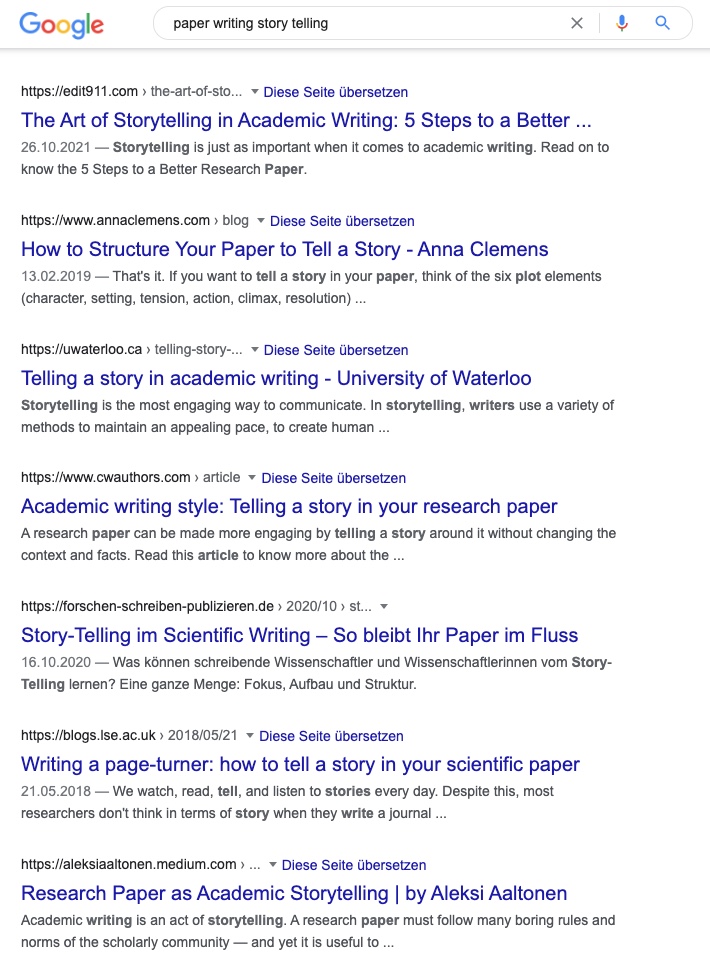
Please do not try to tell a story but report your results

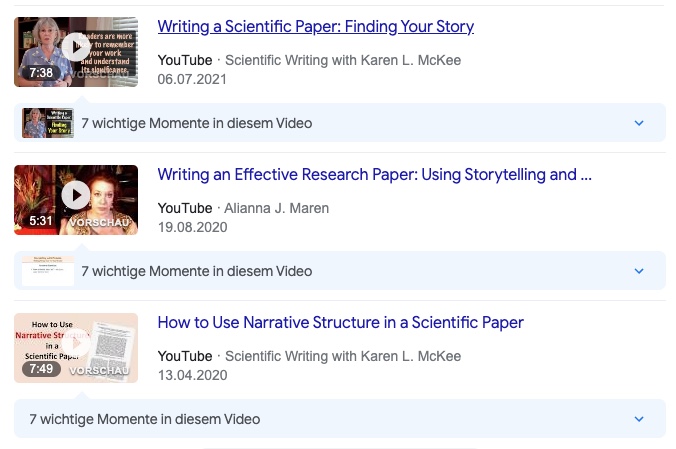
When I prepared a lecture last year on scientific paper writing I have found countless advices how to tell a story – it made it even into elife.

Don’t do that – there are lies and damned lies (Disraeli) while you are easily running into a trap when trying to “tell a story”.  Preregister your study plan, tell the world what you did right from the beginning, what did not work, why you repeated an experiment or why changed your opinion.

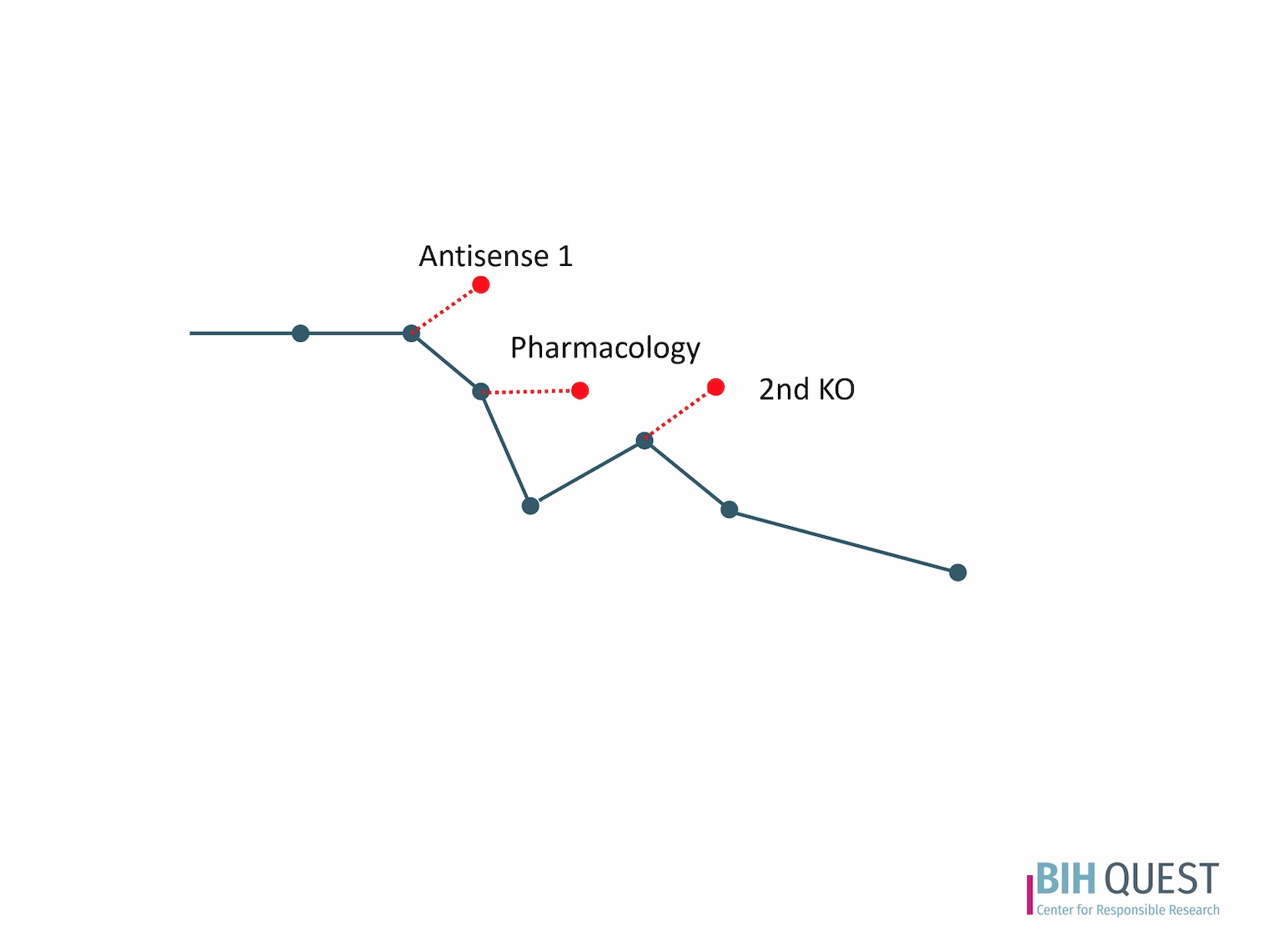
Writing a story from the backend distorts the proportions and misdirects attention. Ulrich Dirnagl highlighted this problem in an earlier talk here in March using the following two slides.

How we present results in a basically linear way – story telling. By NIH QUEST/Dirnagl.
How it would be fair to tell the story with numerous inputs, non working assay (primer, antibody, other samples), new literature and conference talks, where we constantly change our opinion that could have led to alternate papers. By NIH QUEST/Dirnagl


CC-BY-NC Science Surf accessed 12.01.2026

Verlust der Glaubwürdigkeit

Der Verlust der Glaubwürdigkeit ist das Schlimmste was einem einzelnen Wissenschaftler aber auch einer Kommission passieren kann. Das passierte der COVID19 Sachverständigenkommission (als Drosten ging und Stöhr kam). Leider passiert das auch bei der Stiko mit Mertens et al.

Leider hat das jetzt fatale Folgen, so die ersten Berichte aus der Praxis. Impfungen werden nun generell schwieriger, nicht nur bei “COVID22” sondern bei ALLEN Impfungen, obwohl deren Nutzen-Risiken-Relation unverändert ist.

https://twitter.com/KinderdocNina/status/1558207802564296707


CC-BY-NC Science Surf accessed 12.01.2026

Not to be applied during a worldwide pandemic

The recent nature editorial (1) is certainly right that medicine’s evidence pipeline need to be fixed. The COVID-19 pandemic resulted in many wasteful clinical trials that were too small to produce useful results. Also highly ranked journals damaged their reputation while we have never seen before such a wave of corrections and retractions (2). 

Evidence based medicine itself failed as we needed to act fast without having any randomized clinical trial of virus spreading. The absence of evidence is not the evidence of absence. Unfortunately highly respected scientists turned out to fuel the infodemic and provided some politicians the arguments that they wanted to hear. The fundamental principles of evidence-based medicine has now some cracks as we could not decide based on studies (as we also do not have any study on the efficacy of parachutes).

We had millions of data points during the COVID-19 pandemic but we are still missing accurate surveillance. Epidemiological data from representative cohorts had the lowest funding priority, mobile communication networks were not sufficiently analysed, sequencing efforts came in only recently. Future science historians will have to decide if the pandemic could have been avoided; the extent it could have been mitigated or how treatment studies could have been better coordinated. 

We are now being rescued by the progress of vaccination programs and not by a dogmatic belief system. Maybe the package insert of evidence based medicine should include a warning – not to be applied during a worldwide pandemic. It looks like we need bold changes (3).

References

1. NN. Fix medicine’s evidence pipeline. nature. 2021;593:168.

2. Abritis A, Marcus A, Oransky I. An “alarming” and “exceptionally high” rate of COVID-19 retractions. Account Res. 2021 https://doi.org/10.1080/08989621.2020.1793675

3. Morgan OW, Aguilera X, Ammon A et al. Disease surveillance for the COVID-19 era: time for bold changes. The Lancet. 2021; in press 


CC-BY-NC Science Surf accessed 12.01.2026

The Lancet >200?

Retractionwatch reports

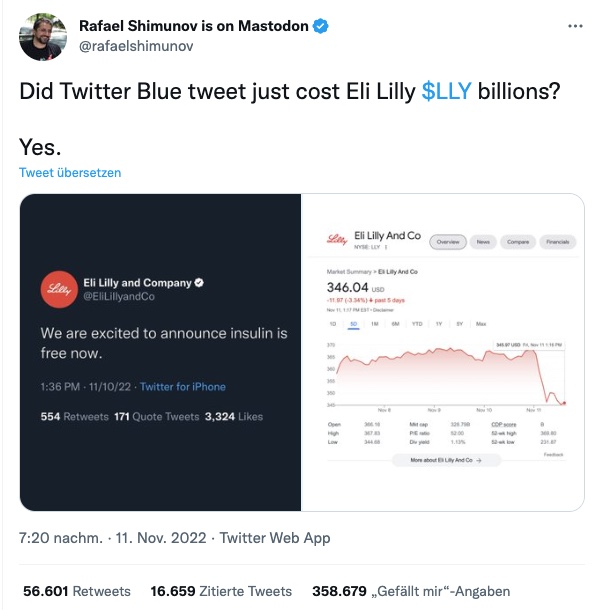
Lancet‘s impact factor increased from 79.3 in last year’s report to 202.7. NEJM’s impact factor nearly doubled as well, from 91.2 to 176.1.  Five other journals also had impact factors greater than 100 for the first time, and also published a lot of COVID-19 research: the Journal of the American Medical AssociationLancet Respiratory MedicineNature Reviews Drug DiscoveryNature Reviews Immunology, and Nature Reviews Molecular Cell Biology.

Irrelevant numbers at all – even when used with 3 decimal points precision  as in an email that I received this week

COVID-19 has clearly shown the craziness of our scientific rating system.


CC-BY-NC Science Surf accessed 12.01.2026