Durchgeblättert: Selbstmarketing im Netz

Auf der academics.de Webseite gibt es ein neues Feature über erfolgreiches Selbstmarketing, Kernsatz

Beim Selbstmarketing geht es nicht nur um Medienpräsenz und Aufmerksamkeit. Wissenschaftskommunikation ist auch bei der Vergabe von Fördergeldern wichtiger geworden.

Das ist schnell gesagt, aber nicht bewiesen. Dass es bei der DFG extra Fördermittel für den Bereich Kommunikation gibt, heisst nicht, dass ich mehr Geld für Forschung bekomme wenn ich einen Blog schreibe. Es ist eher anders herum, daß Geld das für die Kommunikation ausgegeben wurde, nicht mehr für Forschung ausgegeben werden kann.
Und dass ein Mädel für ihre Ameisenbären-Expedition nun keinen Drittmittelantrag, sondern Sciencestarter bemüht hat, ist auch keine so recht durchschlagende Argumentation für kontinuierliches Forschungsprogramm. Dann lamentiert der freie ZEIT Online Mitarbeiter noch etwas über fehlende Ausbildungsangebote an der Uni

… Eine Pflicht zur Kommunikation besteht trotz vieler Vorteile natürlich nicht. Jeder Forscher hat auch heute noch das Recht, sich zurückzuhalten und nur zu forschen. Junge Forscher sollten sich aber wenigstens grundlegend mit Wissenschaftskommunikation und Selbstmarketing beschäftigen.

Hoffentlich nicht! Junge Forscher sollen Forschung machen und kein Marketing. Und darf ich mir etwas für Wissenschaftsjournalisten auf academics.de wünschen? Etwas mehr Ahnung von Wissenschaft.


CC-BY-NC Science Surf , accessed 13.04.2026

What to do with an old Aldi Medion (Dell Inspiron 1520) laptop?

It turned out to be super easy

  • download Elementary OS Luna and create a CD ROM from the downloaded ISO by using OS X’s Disk Utility (Luna is based on Ubuntu 12.04 LTS (“Precise Pangolin”)
  • press F2 at the Medion and let it boot from the CD, then install Luna right away
  • follow the instructions at ubuntuforums.org ( now askubuntu.com ) to install the wireless driver
  • go to to the admin panel, replace the Luna browser with Chrome, get Light-zone and add also Libre Office. Several more changes are also recommended.

I guarantee you a brand new machine 1 hour later that will boot in less than 30s, sleep in another 3s, start Chrome in <1s and render a Facebook page in 1s. Incredible. Something Microsoft was dreaming of for decades. Microsoft even wants us to trash these old XP machines by ending any support. That would be another incredible waste as look and feel with Luna is better than ever.


CC-BY-NC Science Surf , accessed 13.04.2026

Journal Hijacking

It’s not easy to monitor science output. This may be particular true when it comes to Journal Hijacking. In brief

The Spanish journal Afinidad has been hijacked. Someone has set up a fake website for the journal and is soliciting submissions and payments from the authors in accordance with the gold open-access model.

With the recent quality of some scholarly journals I feel they may have been highjacked too: typing errors, omission of references, major misunderstandings, logical errors, you name it.


CC-BY-NC Science Surf , accessed 13.04.2026

Non random mating

A new study published in PNAS finds evidence for non-random mating

Spouses are more genetically similar than two individuals chosen at random … our unadjusted GAM result of 0.045 suggests that a 1-SD increase in genetic similarity increases the probability of marriage by roughly 15%. This association is confounded, in part, by intraethnic marriage among whites but we continue to observe GAM even after a se- ries of models designed to eliminate this source of assortative mating.

This comes somewhat unexpected. Unfortunately, the authors missed in their discussion what Carole Ober published about HLA and mate choice in humans

Hutterite mate choice is influenced by HLA haplotypes, with an avoidance of spouses with haplotypes that are the same as one’s own.

So I am a bit confused – more similar in general but still different at the HLA locus??
Reminds me to the old joke, that your male genome is more similar to a male chimpanzee (on a per base statistic) than to your wife.


CC-BY-NC Science Surf , accessed 13.04.2026

A large inter-individual variation for the efficiency of vitamin D3 supplementation

I believe this already since my first step into the vitamin D field but only now a review shows that

The integration of all these genome-wide data facilitates the identification of the most important VDR binding sites and associated primary 1,25(OH)2D3 target genes. Expression changes of these key genes can serve as biomarkers for the actions of vitamin D3 and its metabolites in different tissues and cell types of human individuals. Analysis of primary tissues obtained from vitamin D3 intervention studies using such markers indicated a large inter-individual variation for the efficiency of vitamin D3 supplementation.

It is a continuous medical malpractice to supplement newborn children with vitamin D without taking into account variation of the inter-individual response, body weight, or any co-medication.


CC-BY-NC Science Surf , accessed 13.04.2026

Optimizing until we die

The German Ärzteblatt reported recently a study that is directly online accessible and

confirms the existence of safety tipping points for in-hospital mortality using the discharge records of 82,280 patients across six high-mortality-risk conditions from 256 clinical departments of 83 German hospitals. Focusing on survival during the first seven days following admission, we estimate a mortality tipping point at an occupancy level of 92.5%. Among the 17% of patients in our sample who experienced occupancy above the tipping point during the first seven days of their hospital stay, high occupancy accounted for one in seven deaths.

So there is an optimum if NOT every room is occupied and NOT all time spent for filling out forms.


CC-BY-NC Science Surf , accessed 13.04.2026

Academics – the most status-conscious people in the world?

Edge sends me an email today

The strange thing about academics, which always fascinates me, is that they believe they’re completely immune to status considerations and consider themselves to be more or less monks. In reality, of course, academics are the most status-conscious people in the world. Take away a parking space from an academic and see how long he stays. I always find this very strange when you occasionally get in the realm of happiness research, you get fairly considerable assaults on consumerism as if it’s just mindless status seeking. Now, the point of the matter is, is that academics are just as guilty of the original crime, they just pursue status in a different way.

True? True!


CC-BY-NC Science Surf , accessed 13.04.2026

Der Betreiber einer Internetsuchmaschine ist bei personenbezogenen Daten, die auf von Dritten veröffentlichten Internetseiten erscheinen, für die von ihm vorgenommene Verarbeitung verantwortlich

Der Gerichtshof der Europäischen Union schreibt in einer neuen Pressemitteilung

Urteil in der Rechtssache C-131/12 Google Spain SL, Google Inc. / Agencia Española de Protección de Datos, Mario Costeja González
Der Betreiber einer Internetsuchmaschine ist bei personenbezogenen Daten, die auf von Dritten veröffentlichten Internetseiten erscheinen, für die von ihm vorgenommene Verarbeitung verantwortlich
Eine Person kann sich daher, wenn bei einer anhand ihres Namens durchgeführten Suche in der Ergebnisliste ein Link zu einer Internetseite mit Informationen über sie angezeigt wird, unmittelbar an den Suchmaschinenbetreiber wenden, um unter bestimmten Voraussetzungen die Entfernung des Links aus der Ergebnisliste zu erwirken, oder, wenn dieser ihrem Antrag nicht entspricht, an die zuständigen Stellen.

Das Urteil hat ziemlich lange gedauert, 20 Jahre, oder? Leider, so gut das Urteil auch ist, es wird umgehend instrumentalisiert

Jane Wakefield reports at BBC that a man convicted of possessing child abuse images is among the first to request Google remove links links to pages about his conviction after a European court ruled that an individual could force it to remove ‘irrelevant and outdated’ search results. Other takedown requests since the ruling include an ex-politician seeking re-election who has asked to have links to an article about his behaviour in office removed and a doctor who wants negative reviews from patients removed from google search results.


CC-BY-NC Science Surf , accessed 13.04.2026

Journal of Allergy

Being spammed by a company called Hindawi for many years, I tried to find out a bit more about one of their journals called “Journal of Allergy”. The website http://www.hindawi.com/journals/ja says

Journal of Allergy is a peer-reviewed, open access journal that publishes original research articles, review articles, and clinical studies in all areas of allergy. Journal of Allergy currently has an acceptance rate of 43%. The average time between submission and final decision is 59 days and the average time between acceptance and final publication is 34 days.

According to their own description, they are located in Cairo and employ some 200 to 1,000 employees. Hindawi seems to be the name of one of their founders. In some other web sources they claim  410 Park Avenue, 15th Floor, New York, USA, as their address.  Google Streetview shows at  that address a 11+2 floor building with Chase Manhattan Bank located at the ground floor.
Only 40 or so of the 500+ Hindawi journals have any impact factor associated with.
Declan Butler at Nature already wrote about these kind of journals:

Open-access publishers often collect fees from authors to pay for peer review, editing and website maintenance. Beall asserts that the goal of predatory open-access publishers is to exploit this model by charging the fee without providing all the expected publishing services. These publishers, Beall says, typically display “an intention to deceive authors and readers, and a lack of transparency in their operations and processes”.

At the moment, the Journal of Allergy is not being black listed by Beall (while Hindawi had been in the past). “Journal of Allergy” should not be confused with “The Journal of Allergy”[Jour] that has 1514 PUBMED entries while the “Journal of Allergy”[Jour] has only 157 entries so far. Is this an “intention to deceive authors and readers”?
The most recent issue appears as of “Epub 2014 Apr 6”, the first one as “Epub 2009 Jul 2”, so the company basically publishing 2-3 papers per month.
The Pubmed Analyzer are not very informative here. The whole “Journal of Allergy” has accumulated only 135 citations in the past 5 years (not an impressive figure as I have authored more than a dozen single papers that have received all more citations than the whole journal).
The extreme low citation rate and the missing impact factor may not be taken as an indicator that all papers are of poor quality but raises serious doubts.
The next question therefore is: Does the journal run a state of the art review process? The website list the following 24 scientists on the review board:

William E. Berger, University of California, Irvine, USA
Kurt Blaser, Universität Zürich, Switzerland
Eugene R. Bleecker, Wake Forest University, USA
Jan de Monchy, University of Groningen, The Netherlands
Frank JP Hoebers, MAASTRO Clinic, The Netherlands
Stephen T. Holgate, University of Southampton, United Kingdom
S. L. Johnston, Imperial College London, United Kingdom
Young J. Juhn, Mayo Clinic, USA
Alan P. Knutsen, Saint Louis University, USA
Marek L. Kowalski, Medical University of Lodz, Poland
Ting Fan Leung, The Chinese University of Hong Kong, Hong Kong
Clare M Lloyd, Imperial College London, United Kingdom
Redwan Moqbel, University of Manitoba, Canada
Desiderio Passali, University of Siena, Italy
Stephen P. Peters, Wake Forest University, USA
David G. Proud, University of Calgary, Canada
Fabienne Rancé, CHU Rangueil, France
Anuradha Ray, University of Pittsburgh, USA
Harald Renz, Philipps University of Marburg, Germany
Nima Rezaei, Tehran University of Medical Sciences, Iran
Robert P. Schleimer, Northwestern University, USA
Massimo Triggiani, Università degli Studi di Napoli Federico II, Italy
Hugo Van Bever, National University of Singapore, Singapore
Garry M. Walsh, University of Aberdeen, United Kingdom

Unfortunately this list is not identical to the editor names that are being listed directly on the PDFs ( eg the academic editor RM is not being listed at the web front). The  above editor list includes indeed some well respected scientists but there are also others that show their Hindawi affiliation as their first hit on Google only. As I know 7 of the 24 persons, I decided to email them a short 6 item questionnaire via Surveymonkey.

When did you start your role as an editor?
2009, 2010, 2011, 2012, 2013, 2014
2. What is your role there?
Leading editor- supervising associate editors
Editor – assigning papers to reviewes, holding final decision Reviewer – reading and scoring papers
Sonstiges (bitte angeben)
3. How many papers have you been dealing with?
0, 1, 2, 3, 4, 5 or more
4. How many papers did you accept?
nearly none, about half, most, all
5. Are you being paid for that work?
no, yes, don’t want to tell
6. Is this a serious journal?
no, yes, don’t know

2 of my 24 emails bounced- some of the members of the editorial board are already retired.
19 did not respond. I believe they will show the same behaviour when being addressed by Hindawi.
1 editor sent me a personal email saying that he will resign from the board. It will be interesting to see when the list of editors will be changed, I already started a change detection.
3 editors answered the mini survey: Editor #1 started in 2010, has been dealing with more than 5 papers, accepted most, is not paid and believes it is a serious journal. Editor #2  started in 2009 with all other responses being identical.  Editor #3 started also in 2009 but accepts only half of the papers.
It doesn’t come unexpected that these 3 motivated editors believe in a regular review process. I fear, however, that most editors either do not work for the journal (anymore) or are not motivated to spend even 3 minutes for the quality control of their work.
Without any transparent review process like that at the BMC journals, we can not judge from the outside if there is any review process. The names of the individual reviewers are unknown, and even contacting the authors would not help as they don’t have an interest to reveal that they get a paper published without any review process.

As a library one could order printed copy ( e.g. 20 articles per year for $395 ) although I could not locate any library in the world that has any subscription to this journal.
As an author I would be charged $800 per PDF. There seems to be no major text editing included in the publication process, what you get for your $800 is a quickly reformatted text, a PUBMED entry and a PDF sitting at a cloud server for an unknown storage time. My estimate for that service is $10.

Declan Butler developed a check list of serious publishers and journals. So we can now use that check list to judge this journal.

Check that the publisher provides full, verifiable contact information, including address, on the journal site. Be cautious of those that provide only web contact forms.

FAILED (PARTIALLY)

Check that a journal’s editorial board lists recognized experts with full affiliations. Contact some of them and ask about their experience with the journal or publisher.

FAILED (PARTIALLY)

Check that the journal prominently displays its policy for author fees.

PASSED

Be wary of e-mail invitations to submit to journals or to become editorial board members.

FAILED (SPAMMER)

Read some of the journal’s published articles and assess their quality. Contact past authors to ask about their experience.

FAILED (POOR QUALITY)

Check that a journal’s peer-review process is clearly described and try to confirm that a claimed impact factor is correct.

FAILED (NO IMPACT)

Find out whether the journal is a member of an industry association that vets its members, such as the Directory of Open Access Journals (www.doaj.org) or the Open Access Scholarly Publishers Association (www.oaspa.org).

PASSED

Another set of guidelines for fake journals is available at Wikipedia. Complaints that are associated with predatory open-access publishing include

Accepting articles quickly with little or no peer review or quality control, including hoax and nonsensical papers.

CAN NOT BE DECIDED YET

Notifying academics of article fees only after papers are accepted.

FALSE

Aggressively campaigning for academics to submit articles or serve on editorial boards.

TRUE

Listing academics as members of editorial boards without their permission, and not allowing academics to resign from editorial boards.

UNCLEAR

Appointing fake academics to editorial boards.

FALSE

Mimicking the name or web site style of more established journals.

TRUE

Verdict: The journal does not pass the Butler criteria of a scientific journal.

Comment: I do not see any major problem if an open access journal is publishing all manuscripts it receives, leaving the final decision of being good or bad science to a post-publication review process. I see, however, a major problem if any pre-publication review process is being assumed for Pubmed listed papers (and paid for) while being never documented in a transparent way.

Addendum: Change log editor page


CC-BY-NC Science Surf , accessed 13.04.2026
Looks really good on paper?

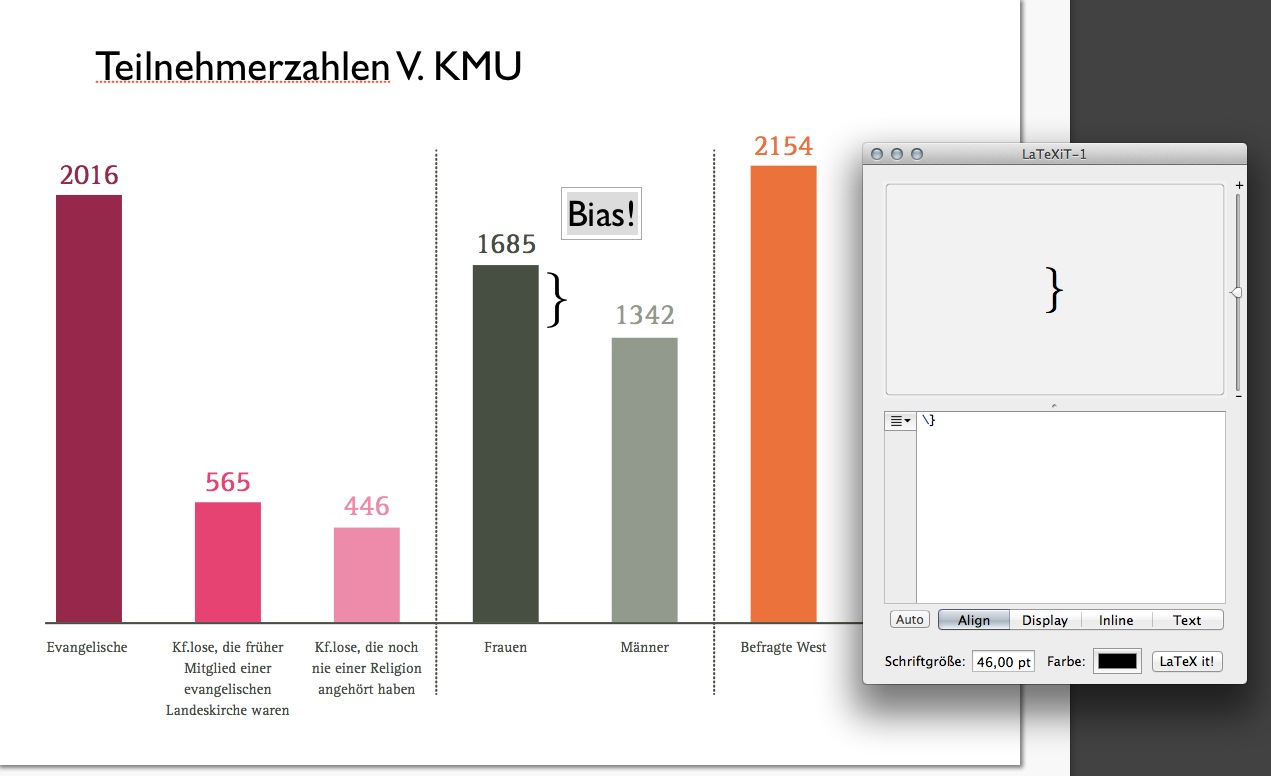
Chinese science hasn’t the best reputation at all. A new piece at the Economist now shows that

by volume the output of Chinese science is impressive .. The number grew from a negligible share in 2001 to 9.5% in 2011, second in the world to America, according to a report published by the Institute of Scientific and Technical Information of China. From 2002 to 2012, more than 1m Chinese papers were published in SCI journals; they ranked sixth for the number of times cited by others.

But wait

A hint of the relative weakness of these papers is found in the fact that China ranks just 14th in average citations per SCI paper, suggesting that many Chinese papers are rarely quoted by other scholars.

So, they are now overdoing it even more than Euopean scholars who are already crazy at getting as many papers published irrespective of any science behind.


CC-BY-NC Science Surf , accessed 13.04.2026
How our personal data are being traded

Tom Brewster had an interesting idea: selling hsi own data. Why should anyone else make money with it?

When I decided to sell the secret details of my personal life, I had high hopes I’d get a willing buyer. It didn’t go well.
I had been curious to see if I could make money from my online information – something that data brokers across the world are doing every day; collecting it, combining it with others’ information and flogging it to marketing firms or anyone willing to pay. So I put myself on eBay.

The article is really interesting to read, yea, yea.


CC-BY-NC Science Surf , accessed 13.04.2026

ChipMe

I am excited to be part of a new COST action So far only the EU description has been online while now also the brandnew website can be reached at chipme2.promoscience.com (twitter channel is @IS1303CHIPME).

Bildschirmfoto 2014-05-08 um 14.13.30

From the official project description

The falling cost of genome sequencing is making genetic information more easily accessible to the ordinary citizen. The proliferation of different actors in COST countries and beyond, engaging with the generation and interpretation of genetic data represents a tremendous opportunity but also a new challenge for society. The public health care system will increasingly be asked to provide interpretation and counselling relating to genetic information that has been generated privately and to satisfy the legitimate curiosity of participants in large-scale population genetic research. Existing ethical and regulatory frameworks may not be suitable to allow an efficient and ethical meeting of demand and supply of genetic knowledge and health, as well as a virtuous interaction between public and private actors. This Action aims to improve the state of the art by creating a community of researchers and stakeholders and linking existing initiatives which bring critical expertise in bioethics, social studies of science and technology, genetic technology, information and communication technology, stakeholder deliberation, and patient centred initiatives (PCI).


CC-BY-NC Science Surf , accessed 13.04.2026