All posts by admin

Placebo works even if you know it’s a placebo

Some fascinating new paper at PLoS ONE

Placebo treatment can significantly influence subjective symptoms. However, it is widely believed that response to placebo requires concealment or deception […] Placebos administered without deception may be an effective treatment for [irritable bowel symptoms]

I have no idea, how this is working…


CC-BY-NC Science Surf accessed 18.01.2026

We are not suggesting that peer review is infallible

Nature medicine recently acknowledged our work as science bloggers by admitting

We are not suggesting, however, that peer review is infallible. Nonetheless, as editors, we hope that anyone accepting an invitation to review a manuscript considers that commitment as being of comparable importance to the other responsibilities of a busy researcher. And although we know that more pressing issues can take precedence over reviewing a manuscript, we still expect that the same level of integrity and objective, critical analysis will be applied to the assessment of the manuscript under review as is applied to the referee’s own work.

In German we say “blauäugig” which translates to “wonderful naive”. There are so many examples of non-integrity and non-objectivity of published research where the peer review failed to a large extent – many examples here and at other sites like retractionwatch or badscience. All these papers by Friedhelm Herrmann, Marion Brach and Roland Mertelsmann with the most recent examples by Carsten Carlberg (“It’s all her fault, and probably today is the worst day of her life when the world sees what she has done”“) and Silvia Bulfone Paus (“it was Elena and Vadim and the journal editors should have caught us“)

With the pervasiveness of the Internet, and the speed of communication it permits, commentary and criticism of research findings can occur almost immediately after their online publi­ cation. This medium should be actively embraced by the research community as a dynamic forum.

There is not even a trackback possibility for that Nature medicine editorial – the whole blogger’s laudatio thing reeks of hypocrisy.


CC-BY-NC Science Surf accessed 18.01.2026

Connect me


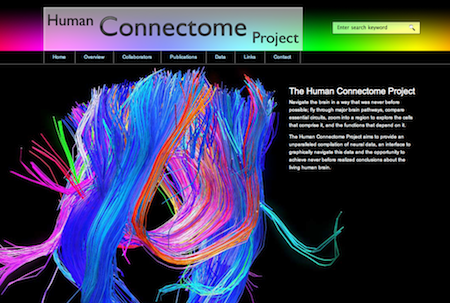
The new connectome website has some unusual (artistic) brain pictures that look so much “outward bound”. Although the neuronal direction is well-known for decades, the pictures there are so impressive that I moving that blog entry even in the Science + Theology section, yea, yea.


CC-BY-NC Science Surf accessed 18.01.2026

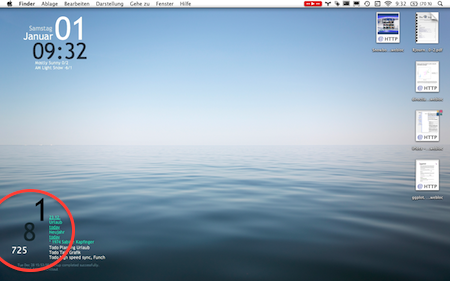
Mac wallpaper with notifications

Do you want to know what the large figures on my desktop mean? These are the counts of important emails (with sender in my addressbook), all other unread emails as well as unread RSS feeds.

It turned out to be a bit tricky what to enter into the Geektool shell window – here is my solution:

|wj_geektool.sh|


CC-BY-NC Science Surf accessed 18.01.2026

Why I don’t have an iphone (yet)

Just recently I read an interesting blog entry of another internet veteran. I am reprinting here the main argument

The iPhone vision of the mobile Internet’s future omits controversy, sex, and freedom, but includes strict limits on who can know what and who can say what. It’s a sterile Disney-fied walled garden surrounded by sharp-toothed lawyers. The people who create the apps serve at the landlord’s pleasure and fear his anger. Continue reading Why I don’t have an iphone (yet)


CC-BY-NC Science Surf accessed 18.01.2026

OSX 10.6, Macports, GD and finally Circos

I need live circos plotting for an upcoming seminar next year.
After installing the most recent xcode, a new macports and a fresh GD library, I issued on the command prompt

sudo port selfupdate
sudo port install gd2
which perl
sudo perl -MCPAN -e shell
cpan> install MD5
cpan> install YAML
cpan> install CPAN
cpan> reload cpan
cpan> install Clone
cpan> install GD
cpan> install GD::Polyline Continue reading OSX 10.6, Macports, GD and finally Circos


CC-BY-NC Science Surf accessed 18.01.2026

On the impossibility of being expert

The BMJ christmas edition has again some nice papers – with a theoretical account on denialism and the next paper on the impossibility of being expert. This looks like the best joke there, sorry Tony, probably unintended.

Since Alvin Toffler coined the phrase “information overload” in 1970, the growth of scientific and medical information has been inexorable. There are now 25 400 journals in science, technology, and medicine, and their number is increasing by 3.5% a year; in 2009, they published 1.5 million articles. PubMed now cites more than 20 million papers.

Yea, yea.


CC-BY-NC Science Surf accessed 18.01.2026

Keep secret

There is a new Edge Special Event about the Hillis’s question “WHO GETS TO KEEP SECRETS?”

The question of secrecy in the information age is clearly a deep social (and mathematical) problem, and well worth paying attention to.
When does my right to privacy trump your need for security?; Should a democratic government be allowed to practice secret diplomacy? Would we rather live in a world with guaranteed privacy or a world in which there are no secrets? If the answer is somewhere in between, how do we draw the line?

With all the wikileaks hype over the last year, the Edge essay is la perfect supplement to our last paper about anonymity in genetics – check out BMC Ethics “Caught you: Threats to confidentiality due to the public release of large-scale genetic data sets“.
What we didn’t mention in this paper are more complicated statistics like stochastic record linkage – more on that in RJournal 2/2010, p.61 ff


CC-BY-NC Science Surf accessed 18.01.2026