Category Archives: Allergy

Why allergy and vitamin D trials failed so far

The following figure highlights the exposure scheme in the three published vitamin D / allergy clinical trials so far: Grant 2016, Litonjua 2016 and Chawes 2016.

sc

None of them found anything important, maybe due to the design flaw in all these studies?

All three studies have been designed with the assumption of a beneficial vitamin D effect.

They are dose finding studies that do not allow to prove or disprove any vitamin D effect.


CC-BY-NC Science Surf accessed 19.02.2026

You get what you pay for

Finally, the Copenhagen and Boston clinical trials of vitamin D supplementation in pregnancy have been published in JAMA today. There is no protection against asthma or wheezing when comparing  4400 IU or 2800 IU vitamin D vs 400 IU vitamin D.
From basic pharmacology and immunology, this is an expected result: the only interesting point would have been to compare vitamin vs placebo. Even the editorial missed the most important point – what happens to the newborn immune system when being supplemented with vitamin D?


CC-BY-NC Science Surf accessed 19.02.2026

Forget about multiple regression analysis

When starting in epidemiology I had  only high school math skills. Nevertheless, I could usually find major associations by simple tables and plots. Then I learned about multiple regression analysis and used it in numerous research papers. Nevertheless I soon discovered that

The results are often somewhere between meaningless and quite damaging.

Continue reading Forget about multiple regression analysis


CC-BY-NC Science Surf accessed 19.02.2026

Grünenthal und der Contergan Skandal

In der deutschen Wikipedia kommt die Diskussion um die gezielte Anheuerung von Nazis durch Grünenthal zu kurz, wenn man den Newsweek Artikel aus dem Jahr 2012 zu Rate zieht.
Bei diesem Artikel habe ich zum ersten Mal verstanden, warum sich die Aufklärung durch Widukind Lenz so lange hingezogen hat (ich habe von Lenz das erste Mal um 1981 in der Humangenetikvorlesung von Utermann und Wendt in Marburg gehört) – es waren alten Nazi-Seilschaften, die sich gegenseitig gedeckt haben.
Das erste Kind mit der Phokomelie wurde bereits am 25.12.1956 geboren. Dennoch brauchte es genau 5 Jahre, so k-factor, Grünenthal als Schuldigen auszumachen.

Mit Tierversuchen zu dieser Frage begannen Mückter und seine Kollegen erst im September 1961. Am 15. November 1961 erhielt Mückter dann einen Anruf des Hamburger Kinderarztes und Humangenetikers Widukind Lenz, der die Rücknahme aller Thalidomid-Produkte aus dem Handel forderte, weil seine Forschungsergebnisse einen Zusammenhang zwischen Kindesmißbildungen und Contergan nahelegten. Lenz wendete sich auch an die Behörden. Grünenthal erklärte sich daraufhin lediglich dazu bereit, auf den Packungen vor einer Einnahme während der Schwangerschaft zu warnen und drohte der nordrhein-westfälischen Gesundheitsbehörde für den Fall eines Verbotes mit einer Schadensersatzklage. Erst ein Artikel in der Zeitung “Welt am Sonntag” am 26. November (“Mißgeburt durch Tabletten?”) bewegte die Firma dazu, das Medikament am folgendem Tag aus dem Handel zu nehmen.

Der Lancet Letter vom Mc Bride am 16.12.1961 setzte dann den Schlusspunkt. Leider wurden die Restbestände aber nicht vernichtet, so dass noch Kinder bis in die Mitte der 60er Jahre mit der Behinderung geboren. Nochmal k-factor:

Die Ambivalenz ist uns erhalten geblieben, und sie findet sich wieder in den gegenwärtigen Diskussionen um Gentechnik und Embryonenforschung. Fortschritt kann Segen bringen, aber wird dies niemals ohne Nebenwirkungen tun, seien diese ökologischer oder gesundheitlicher Natur. Gegen Rückschläge des Fortschritts helfen nur vernünftige Regeln und eine kontrovers geführte Debatte.


CC-BY-NC Science Surf accessed 19.02.2026

Farm life does not prevent from asthma

In most farm children, asthma is not being prevented. And even in those children who might have had a benefit from being raised on a farm, it is not clear where the protection is mediated by: Some biological agent like endotoxin? Some healthy worker effect? Less medical interventions like antibiotics, Caesarean or vitamin D? It looks like other researchers are sceptical too

Others who study the hygiene hypothesis caution that the newly uncovered mechanism does not entirely explain the protective effect of dairy farm life. Drinking unprocessed milk also seems to ward off asthma in kids, points out Gary Huffnagle of the University of Michigan, Ann Arbor—and that effect is unlikely to involve the lung epithelium. What’s more, endotoxin levels are not that much higher on farms than in cities, suggesting “it’s too simple an answer,” says asthma genetics researcher William Cookson of Imperial College London, who thinks changes in living microbial communities in the lungs and gut may be just as important.


CC-BY-NC Science Surf accessed 19.02.2026

A step forward in allergy research

The most recent paper of my Australian collaborators is a relevant step forward: Polymorphisms affecting vitamin D-binding protein modify the relationship between serum vitamin D (25[OH]D3) and food allergy. Basically they show an

… association between serum 25-hydroxyvitamin D3 (25[OH]D3) levels and food allergy at age 1 year (338 challenge-proven food-allergic and 269 control participants) and age 2 years (55 participants with persistent and 50 participants with resolved food allergy)… Analyses were stratified by genotype at rs7041 as a proxy marker of DBP levels… Low serum 25(OH)D3 level (<50 nM/L) at age 1 years was associated with food allergy, particularly among infants with the GG genotype (odds ratio [OR], 6.0; 95% CI, 0.9-38.9) … Maternal antenatal vitamin D supplementation was associated with less food allergy, particularly in infants with the GT/TT genotype (OR, 0.10; 95% CI, 0.03-0.41)… This increases the biological plausibility of a role for vitamin D in the development of food allergy.

Maybe it would be helpful to have also “real” DBP levels for estimating bioavailability (and even data of supplement use) but already the reported results are another strong argument for the vitamin D – allergy axis. This is also largely in line with what I predicted back in 2012

Both vitamin D insufficiency and vitamin D supplementation have been linked to allergy and asthma. This apparent paradox is explained by epigenetic programming in pregnancy by low vitamin D levels and the excessive high supplementation in the newborn period.

Maybe I should have emphasized that genetic variants in the vitamin D pathway are also important for biological effects.


CC-BY-NC Science Surf accessed 19.02.2026

Fraud, Distortion, Delusion and Consensus

Alvan Feinstein wrote a paper with this title back in 1988. Unfortunately it is not online although being a great paper. Feinstein explains that

Certain deceptions are deliberately planned frauds, but many other occur inadvertently. They arise as distortions or delusions, produced by flaws in the conventional methods used for the “standard” practice of scientific research.

We published the vitamin D hypothesis in 1999 – supplements biasing the immune system – while having in the meantime considerable empirical evidence for it.
Believe it or not, but how would you rate a review about vitamin D and allergy that reports only about BENEFICIAL effects of vitamin D? Deliberately planned fraud? Distortion? Delusion?


CC-BY-NC Science Surf accessed 19.02.2026

5% of methylated sites escape reprogramming – a new allergy research direction

New Scientist Health has a short report how parents’ lives could change children’s DNA.

Azim Surani at Cambridge University and colleagues have demonstrated that some genes in the developing fetus escape the cleaning mechanism. Surani’s team analysed methylation patterns in a type of fetal cell that later forms a fetus’s own sperm or eggs. We would expect these cells to have been wiped clean when the fetus’s epigenome was reset at the early embryo stage. “However, about 2 to 5 per cent of methylation across the genome escaped this reprogramming,” says Surani.

The current wave of interest stems from three new papers: “The Transcriptome and DNA Methylome Landscapes of Human Primordial Germ Cells” by Guo demonstrates

The transcriptome of human primordial germ cells from the migrating stage to the gonadal stage reveals that both pluripotency genes and germline-specific genes are simultaneously expressed within the same individual cells. The global erasure of DNA methylation creates a super-hypomethylated germline genome.

So at week 10 after gestation, all analyzed 233  primordial germ cells lost their parental methylation marks except of 6% of the male and 8% of the female genome (which is a bit larger) . Unfortunately I did not find a list of genes there that have their parental methylation status transmitted.

Tang from a British consortium “A Unique Gene Regulatory Network Resets the Human Germline Epigenome for Development” writes

A unique transcriptome drives extensive epigenome resetting in human primordial germ cells for establishment of totipotency. Some loci associated with metabolic and neurological disorders exhibit resistance to reprogramming and are candidates for transgenerational epigenetic inheritance.

Here evolutionarily young and potentially hazardous retroelements, like SVA, remain methylated ( the number of embryos  being examined is not given). Evolutionarily young and potentially hazardous retroelements, like SVA, remain methylated. When testing for resistant loci, they found that H3K9me3 marked escaping ; resistant regions were also enriched for KAP1 (alias TRIM28) binding sites of ESCs. But still no gene list there.

Sofia Gkountela “DNA Demethylation Dynamics in the Human Prenatal Germline” from the US

performed whole-genome bisulfite sequencing (WGBS) and RNA-sequencing (RNA-seq) of human prenatal germline cells from 53 to 137 days of development. We discovered that the transcriptome and methylome of human germ-line is distinct from both human PSCs and the inner cell mass (ICM) of human blastocysts … Gene expression do not correlate with global changes in DNA methylation.

In this paper finally there is the gene list, I was looking for — basically not demethylated, parentally inherited genes. Persistent methylated regions (also termed DMR, differential methylated regions) in advanced germline cells (AGCs) were seen in 500+ genes as given in table S4:

AADACL2-AS1, ABCA7, ABCC5, ABHD12, ABR, AC093375.1, ACSL4, ACSM1, ACVR1C, ACYP1, ADAMTSL3, ADARB2, ADK, AGBL4, AGK, AGPS, AIG1, AKAP9, AKR1B15, ALPK2, ANK1, ANKHD1, ANKHD1-EIF4EBP3, ANKRD11, ANKRD12, ANKRD19P, ANKRD20A9P, ANKRD24, ANKRD26, ANKRD26P1, ANKRD30BL, ANKRD31, AP2A2, AP3D1, AP4E1, ARAP2, ARHGAP26, ARHGAP39, ARHGAP44, ARHGEF18, ARHGEF4, ARHGEF7, ARID3A, ARL13B, ASB3, ASH1L, ASTN2, ASZ1, ATAD3A, ATF1, ATP11A, ATP13A1, ATP2C1, ATP8A2, ATP9B, AUH, AVEN, BAGE, BAGE2, BAGE3, BAGE4, BAGE5, BASP1P1, BAZ1A, BBS9, BCAS3, BCO2, BCYRN1, BEND3, BEND7, BRE, BRSK2, C14orf159, C15orf37, C1GALT1, C1orf159, C20orf196, C22orf34, C2orf61, C3orf67, C3orf67-AS1, C7orf50, C7orf60, C9orf3, CACNA1B, CACNG4, CALN1, CAMK1D, CARF, CARS2, CC2D2A, CCBL2, CCDC101, CCDC130, CCDC148, CCDC149, CCDC57, CCDC88C, CCDC97, CCNY, CCSER1, CD163, CD2AP, CD46, CDH12, CDH4, CDKAL1, CELF2, CEP70, CERK, CERS4, CFH, CHD2, CHD6, CHODL, CHRM5, CHRNA10, CHRNA4, CLEC16A, CLIC5, CLIC6, CNOT2, CNTN6, CNTNAP2, COG2, COL15A1, COL18A1, COL24A1, COL6A4P2, COLEC11, CORO2B, CPVL, CRTC3, CSMD1, CSMD2, CSNK1D, CTB-7E3.1, CTDP1, CTIF, CTNNA2, CTNNA3, CUBN, CXCR2, CXorf49, CXorf49B, CYCS, CYP3A5, DAPK2, DCDC2C, DDA1, DENND1A, DENND5A, DGUOK-AS1, DIP2C, DLG1, DLK1, DNAH6, DNAH8, DNAJC1, DNER, DOC2GP, DOCK1, DOCK7, DPP10, DSTN, DTNB, DYX1C1, DYX1C1-CCPG1, EBF3, ECHDC2, EDIL3, EEPD1, EFCAB10, EFCAB4B, EFTUD1, EHBP1, EIF2B3, ELMO1, EP400NL, EPHA6, EPPK1, ERC1, ERCC8, ERICH1-AS1, ERP44, ETFA, EVC2, EXD3, EXOC2, EYS, F11-AS1, FAAH, FAM172A, FAM174A, FAM207A, FAM209A, FAM86FP, FANCC, FBN3, FBXO39, FGD4, FGF14, FHIT, FIG4, FLJ30403, FNBP4, FOXN3, FREM3, FZR1, GABRA2, GAS6, GBP2, GCNT7, GDA, GGCX, GLCCI1, GLRA1, GLRA2, GMDS, GNAI1, GOLIM4, GPR75-ASB3, GRIK2, GRM7, GTF3C6, GTPBP10, GUSBP1, H6PD, HCCAT3, HCN4, HDAC4, HECTD4, HEG1, HPGD, HRNR, HS6ST3, HTR7, IFNAR1, IGF2BP3, IGSF11, IGSF22, IGSF9B, IL1RAPL2, IL31RA, IMMP2L, IMPG2, INF2, INTS1, INVS, IPO7, IQCF3, IQCG, IRAK1BP1, ISOC2, ISPD, ITFG1, ITGB1BP2, ITGBL1, JAM3, JAZF1, JMJD1C, KALRN, KATNBL1, KDM3B, KDM4C, KIAA0825, KIAA1328, KIF4A, KIF5B, KLHL20, KLHL3, LANCL3, LDB2, LDLRAD3, LHCGR, LINC00239, LINC00408, LINC00469, LINC00670, LINC00871, LINC00922, LINC01193, LINC01194, LINGO2, LMF1, LOC100128505, LOC100133669, LOC100188947, LOC100289333, LOC101927069, LOC101927280, LOC101927286, LOC101929064, LOC101929387, LOC102723742, LOC145837, LOC283683, LOC285768, LOC286083, LOC442132, LPA, LPPR1, LRP1B, LRRC4C, LTBP1, LUZP2, MAD1L1, MAGT1, MAML3, MAOA, MAP3K15, MAP4K5, MAPK10, MAPK8, MAPK8IP3, MAST2, MCTP1, MCU, MEF2A, MEI4, MELK, METTL15, METTL9, MFHAS1, MIR1273H, MIR518B, MIR518F, MIR520B, MIR548H2, MIR548O2, MIR6130, MIR6744, MOB3B, MOCOS, MTG1, MTMR7, MUC2, MUC5B, MUM1L1, MYO10, MYO5A, MYO9A, MYT1, MYT1L, NAA20, NAALADL2, NAT1, NAV2, NBPF10, NBPF20, NCALD, NCOA2, NEBL, NFATC3, NIFK-AS1, NIPA1, NKAIN2, NKAIN3, NLRP4, NME7, NOC4L, NONO, NPHP4, NQO2, NRXN3, NSUN6, NTSR1, NUBPL, NXN, OGG1, OR8S1, OSBP2, OSBPL6, OSMR, PACS2, PARK2, PARL, PAWR, PCBP3, PCDH19, PCDH9, PCNT, PCNXL2, PCSK6, PDAP1, PDE11A, PDE4D, PGAM1P5, PGAM5, PHKB, PHRF1, PIK3C2A, PIK3CA, PIP5K1B, PKD2L1, PKHD1, PKIB, PLCD1, PLCH1, PLEC, PLOD2, POLR1A, POMK, PPARA, PPARGC1B, PPP2R5C, PRH1, PRH1-PRR4, PRICKLE1, PRKAR1B, PRKCZ, PROSER2, PROSER2-AS1, PRR26, PRUNE2, PTCD3, PTDSS2, PTGFRN, PTPN21, PTPRD, PTPRN2, PYGB, RAB28, RAB3D, RAB3GAP2, RAB3IP, RABGAP1L, RAPGEF6, RBFOX1, RC3H2, RFX7, RGS6, RGS7, RNF115, RNH1, RNU6-52P, RNU6-81P, RPH3AL, RPIA, RPL35A, RPS6KC1, RSPH1, RYR1, S100Z, SCAPER, SCCPDH, SCEL, SCFD2, SCHLAP1, SCMH1, SDHAP3, SDK1, SEC14L1, SEC24D, SEL1L, SEMA3C, SERPINB3, SESN2, SESTD1, SETD1A, SETDB1, SHANK2, SHC2, SIL1, SIN3B, SLC12A3, SLC22A15, SLC24A2, SLC38A10, SLC44A5, SLC6A1, SLC8A1-AS1, SNORD115-1, SNORD115-2, SNTB2, SNTG2, SNX29, SORCS2, SOX5, SPATA5, SPIDR, SPIRE1, SPTB, SPTBN2, SPTLC3, SRD5A1, SRRM4, ST20, ST20-MTHFS, ST6GAL1, STARD9, STIM1, STK31, STK38, STON1-GTF2A1L, STXBP5-AS1, SUPT3H, SYN3, TAF1L, TAS2R19, TENM2, TENM3, THRB, THSD7B, TIMM23B, TJP2, TLK1, TMCC1, TMED1, TMEM132D, TMEM218, TMEM66, TMTC2, TNRC6B, TPST1, TPTE, TRAPPC9, TRIO, TRPC4AP, TRPM2, TRRAP, TSNARE1, TSPAN15, TSPEAR, TSSC1, TTC28, TTC40, TULP4, TYRO3P, TYSND1, TYW1B, UGGT2, UHRF1, ULK4, UNC5D, UNC79, UNC93A, USP13, USP15, USP34, USP50, VGLL4, VPRBP, VPS53, WDPCP, WDR1, WDR19, WDR36, WDR60, WWOX, XAF1, ZBTB20, ZCWPW2, ZFPM2, ZFYVE9, ZKSCAN5, ZMAT1, ZMYM4, ZNF135, ZNF14, ZNF317, ZNF32, ZNF32-AS1, ZNF32-AS2, ZNF32-AS3, ZNF335, ZNF341, ZNF350, ZNF382, ZNF415, ZNF556, ZNF595, ZNF664-FAM101A, ZNF670, ZNF670-ZNF695, ZNF7, ZNF717, ZNF718, ZNF767P, ZNF808, ZNF845, ZNRF1, ZSWIM5

(I dropped two genes as they are only date-formatted numbers in the supplied Excel sheet).

The interesting question for me is if there is an interaction with genes identified earlier in asthma and allergy research. According to the GWAS catalog there are 190 associated genes that match only 9 on the list above: AS1, CLEC16A, CTNNA3, EDIL3, PDE4D, PGAM1P5, SDK1, WDR36. Nothing exciting, in particular no HLA association. WDR36 is the only gene, we published some years ago. I find also only one match (COL15A1) of the 73 low methylation IgE loci published earlier.

Possibly, any of these persistent methylated genes can even stand on its own feet with just one silenced / activated gene  being responsible for the pathology in a pedigree. I cannot identify so many signals in the list above, maybe some IL1 related stuff (IL1RAPL2, IL31RA, IRAK1BP1). CD46 at least is a good candidate as it is known that enhanced CD46-induced regulatory T cells will suppress allergic inflammation after allergen specific immunotherapy.

Unexpectedly, there are also no vitamin D related genes, no VDR, no cytochrome P450 enzymes. Nevertheless I recognize a whole bunch of calcium related genes:  STIM1 (transmembrane protein that mediates Ca2+ influx),  ATP11A + ATP2C1 (ATP dependent Ca2+ transporter), TRPM2 ( another Ca2+ channel), TRPC4AP + RYR1 (sarcoplasmic reticulum calcium channels) and NCALD (a cytosolic calcium transporter).

So would be definitely interesting to test the methylation status of these genes along with vitamin D levels in allergic parents and their kids.

 

CC-BY-NC Science Surf accessed 19.02.2026

Is this a retraction of the hygiene hypothesis?

There are news about the hygiene hypothesis.

Home cleanliness resulted only in quantitative reduction of floor dust, which mainly indicates removal of superficial dirt with a rather cosmetic effect. Conventional cleaning does not eradicate microorganisms sustainably, because emptied microbial niches are instantly recolonized by ventilation and living carrier.

Sure. Continue reading Is this a retraction of the hygiene hypothesis?


CC-BY-NC Science Surf accessed 19.02.2026

U shape is good and bad

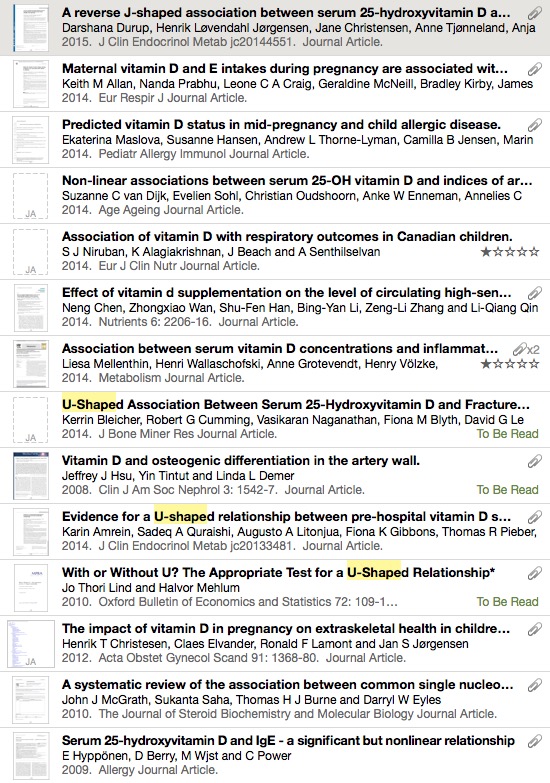
I did not expect that serum vitamin D levels are associated with mortality at both ends of the distribution as now shown by Dorup et al.

Out of 247,574 a total of 16.645 subjects died in the ensuing 0 -7 years. … 25-hydroxyvitamin D level of 70 nmol/L was associated with the lowest cardiovascular disease mortality risk … At the higher extreme (125 nmol/L), the hazard ratio of cardiovascular disease mortality was 1.3 (95% CI 1.2-1.4), with similar risk among men and women.

Following our first paper on U shaped vitamin D effects there are now many more papers show that effect. Vitamin D is not just good or bad, it is both depending on timing, dose, application, whatever.


U


CC-BY-NC Science Surf accessed 19.02.2026

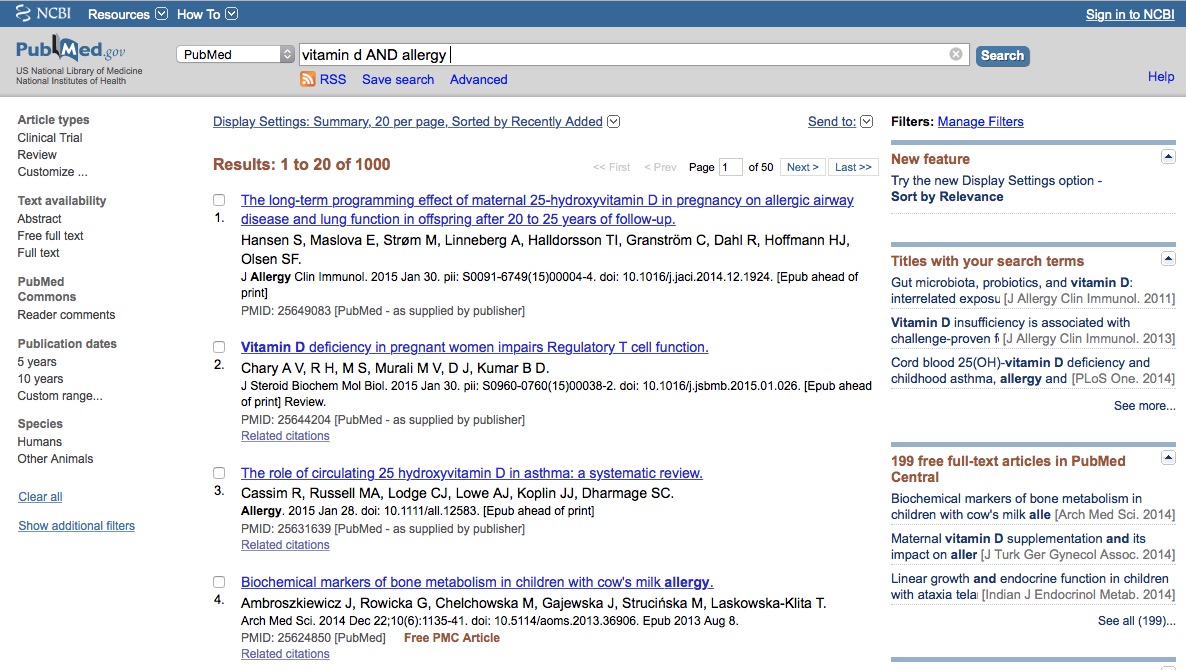
A jubilee – today we have 1000 papers on allergy and vitamin D

It is a long time period from our first paper in July 1999 in Allergy, but more than 15 years later there is now a huge list of papers.

screen
When looking for potential paradigm shift in research, however, vitamin D is still largely ignored.

    • Professional organizations that give legitimacy to the paradigm: NONE
    • Dynamic leaders who introduce and purport the paradigm: FEW
    • Journals and editors who write about the system of thought: FEW
    • Government agencies who give credence to the paradigm: NONE
    • Educators who propagate the paradigm’s ideas by teaching it to students: NONE
    • Conferences conducted that are devoted to discussing ideas central to the paradigm: YES
    • Media coverage: MINOR
    • Lay groups, or groups based around the concerns of lay persons, that embrace the beliefs central to the paradigm: FEW
    • Sources of funding to further research on the paradigm: NONE


CC-BY-NC Science Surf accessed 19.02.2026

An epidemic of nonsense

13 € for a paperback, this is “An Epidemic of Absence. A new way of understanding allergies and autoimmune disease”. It is written by Moises Velasquez-Manoff , a journalist otherwise working for the “The Christian Science Monitor”. As his online bio reports “he dreamed of writing novels”. I would wish he would done so.

The outset is rather clear – Velasquez-Manoff wants to find a cure for his own autoimmmune disease. While this may be a legitimate justification for collecting information about a given topic, the method by Velasquez-Manoff is not. At a first glance, it looks like a serious book, well written, interesting facts presented in a coherent manner followed by numerous references. Maybe that made such an impression on the (numerous) positive reviewers. Maybe all the positive reviewers are experienced science journalists that judged by the overall impression plus some common sense plus some specific knowledge. But, Velasquez-Manoff did never hear the other side (on p.310, he even admits who has read and commented on sections of the manuscript: exclusively scientists in favor of the hygiene hypothesis). To recognize that you need to be a scientist – journalists would not notice that.

I compiled a long list the errors but feel now, that it would be too time consuming to write that down here. As far as it concerns me (p. 99) there was no grant to win in Munich as the study Velasquez-Manoff is talking about was a commissioned study. And sorry (p.100) I wrote the full grant application comparing East and West Germany children and did large part of the field study. Furthermore, I am not convinced (p.101) that the East West German differences ever supported the hygiene hypothesis, it is something different. And it was not in 2000 (p.102) that someone published on day care (p. 102), we wrote that already in 1999. Audiatur et altera pars, yea, yea.


CC-BY-NC Science Surf accessed 19.02.2026

Overdiagnosis is harming patients

It’s the downside of always improved diagnostic procedures. With science progress and more information available, many information pieces are unvalidated and have a duobtful prognostic and therapeutic value. They even harm patients, possibly by further and unnnecesssary (dangerous) procedures but also increased insurance rates. The problem has been excellently described 2 years ago by Ray Moynihan, Jenny Doust, and David Henry in a BMJ.

Bildschirmfoto 2014-07-22 um 14.46.17

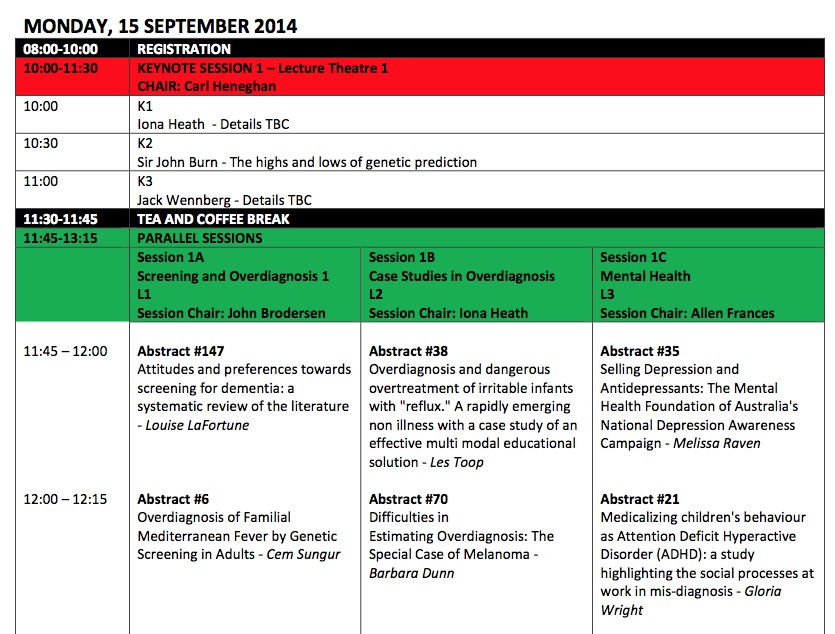
Only recently I learned that there is now even a conference series how top stop harming the healthy. An own pubmed analysis showed zero interest in 1970, then gradually increasing until 2010 up to about 100 papers/year while now doubling in the last 3 years.


CC-BY-NC Science Surf accessed 19.02.2026