Ignoring the long-standing paradox that endotoxin is also acting as a natural adjuvant to atopic inflammation, the credibility of the Science paper is further reduced.
IMHO it is also a strange experimental condition to have all animals on a standard vitamin D diet – a known co-sensitizers – and looking then for A20 which is co-regulated by vitamin D ??
Dabei sind wohl mehr Menschen an Überdosierung gestorben , als an einem Vitamin D Mangel (Vitamin D ist im übrigen in hoher Dosierung auch ein Rattengift). Vitamin D Supplemente hatte in vielen Interventionsstudien keinen Vorteil in Bezug auf Mortalität gezeigt, Bluttests dienen nur dem Arzt, der sie durchführt, so die Zusammenfassung im britischen Ärzteblatt BMJ.
Die Mortalität lässt sich nicht durch Vitamin Pillen senken, nur in 2 von 52 Studien gab es eine niedrigere Mortalität und das auch nur in einer Subgruppe (wobei der Effekt in den Originalarbeiten nicht signifikant war).
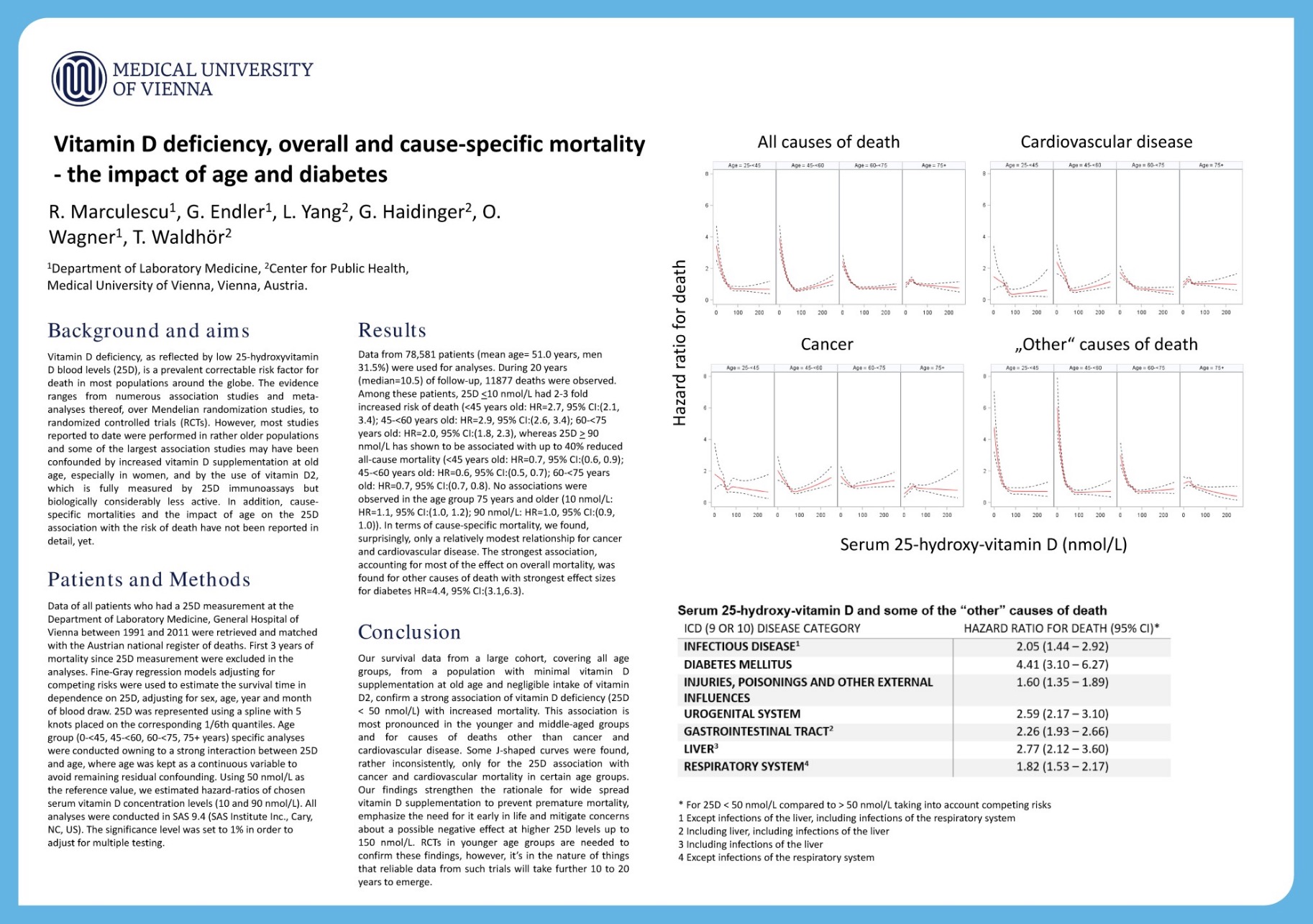
Und was steckt nun hinter dieser neuen Meldung? Es ist ein Vortragsabstract einesWiener Facharztes für Haut und Geschlechtskrankheiten, der auf der Tagung einer Diabetesgesellschaft vorgestellt wurde. Also kein Endokrinologe, kein Vitamin Experte, kein Epidemiologe. Damit ist das auch keine Interventionsstudie, nicht mal vernünftig publiziert, nur der Abstract einer “Record Linkage Studie”
https://www.easd.org/virtualmeeting/home.html#!resources/vitamin-d-deficiency-overall-and-cause-specific-mortality-the-impact-of-age-and-diabetes-e67d37ab-b146-4642-ac9c-8e204af9069d Interessenskonflikte: keine. Sind Vitamin D Assays in Österreich etwa kostenlos?
Dabei wurden Messwerte eines Kliniklabors mit Daten aus dem österreichischen Sterberegister verknüpft. Offensichtlich ist das in Österreich erlaubt, bleibt aber dennoch sinnfrei, wenn man A. weiss, dass Vitamin D ein Aktivitäts- und Inflammationsmarker ist und wenn man B. irgendwann im Leben einmal etwas über Berkson Paradox gehört hat. Warum wohl die ersten 3 Jahre von der Analyse ausgeschlossen wurden, weil die Mortalität da exzessiv gestiegen ist? Ich verstehe die Grafik nicht ganz, da sie nicht zur Methode passt – was ist denn nun die Referenzkategorie für das Hazard Ratio?
Irgendwie hätte es auch den Autoren auffallen müssen – dass es solche exzessiven HRs für Mortalität im echten Leben nicht gibt Natürlich wird jemand früher sterben, der kränker ist, schliesslich ist auch CRP bei Diabetes ein Prädiktor für Mortalität. Aber wen interessiert das ganze denn??
Mittlerweile wird auf Kongressen jeder halbwegs formal korrekte Abstract akzeptiert, um die Kongressgebühren zu kassieren. Auch eurekalert.org sollte das doch wissen, bevor es so eine Information weiter verbreitet. Viele Redaktionen können sich keinen Wissenschaftsredakteur mehr leisten. Und so schlägt dann alles ungefiltert beim Konsumenten ein “Lebensgefährlicher Vitamin-D-Mangel: Neue Studie veröffentlicht erschreckende Zahlen“. Und Herr Marculescu freut sich, da die Vitamin D Tests weiter ansteigen.
Eine Diktatur wird durch eine einzelne regierende Person oder eine Gruppe mit politischer Macht ausgeübt und nicht durch Sachzwänge. Die angeblich “normative Kraft des Faktischen” ist nur selten eine tatsächlich Beschränkung der Handlungsoptionen.
Der Begriff der Ökodiktatur ist rechtspopulistisch (Meyer/Cicero, Frisch/Zeitzeichen, …) und das Beste, was man dazu sagen kann, steht in einem Essay von Bernd Ulrich, dem stellvertretenden Chefredakteur der Zeit “Von der Angst diktiert”
Was die politische Klasse gelernt hat, das ist die große Lektion des 20. Jahrhunderts, nämlich, wie man sich der Zerstörung der Demokratie durch ihre geistigen Feinde erwehren kann. Was sie und was wir alle dagegen nicht gelernt haben: wie man die Zerstörung der Demokratie durch das Verschwinden der tatsächlich vorhandenen Wahlmöglichkeiten verhindert. Das wäre dann die zweite unabdingbare Lektion, die des 21. Jahrhunderts. Statt von “Ökodiktatur” zu faseln, sollte man sich lieber Gedanken darüber machen, wie eine Ökodemokratie aussehen könnte.
Die beste Antwort auf Ökodiktatur? Gegeben von Ingolfur Blühdorn (Wien)
Es ist unbedingt erforderlich, in manchen Bereichen verbindliche Grenzen für Freiheits- und Selbstbestimmungsansprüche zu formulieren, und das hat überhaupt nichts mit Diktatur zu tun. Vielmehr ist es die ureigenste Aufgabe jeder Politik, zu regulieren. Jede Freiheit muss Grenzen haben, damit sie nicht ihrerseits umschlägt in die totale Herrschaft sehr weniger “völlig Befreiter”. Da sind sich alle Theoretiker und Philosophen bis zurück zu Platon immer einig gewesen.
Bewegungen, die für mehr Freiheit gestritten haben, hatten auch nie eine völlige Entgrenzung und Zügellosigkeit zum Ziel. Sie sind zum Beispiel immer davon ausgegangen, dass die Freiheit des einen da aufhört, wo sie die des anderen blockiert. Und sie sind vor allem immer davon ausgegangen, dass es eine soziale und ökologische Vernunft gibt, auf deren Grundlage moderne Gesellschaften sich demokratisch über die Beschränkung der Freiheit einigen können.
Unfortunately most studies in the farming environment do not report the prevalence of parental history. Neither did they report the effect size of parental genetic risk in the farming population. This is, however, a critical issue as the so called healthy worker effect (HEW) may be a rather trivial explanation of the results.
Specifically, it is a sampling bias: the kind of subjects that voluntarily enroll in a clinical trial and actually follow the experimental regimen are not representative of the general population. They can be expected, on average, to be healthier as they are concerned for their health [or as ill people already dropped out]
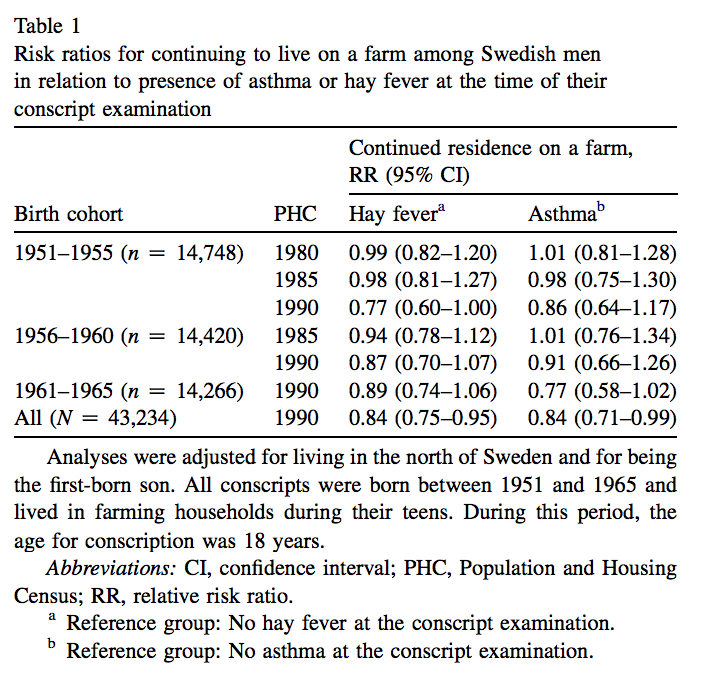
Leynaert 2001 showed only a slightly reduced prevalence of “allergy” (39.1% vs 41.5%, NS). Her table 4 is most interesting. The association started only after year 1960 which points towards severe misclassification as far as the analysis is not stratified by year of birth.
Remes 2002 showed a dose dependent effect decline between farming (36.2%) and controls (31.6%, P=0.075),
Perkin 2006 also found some significant lower prevalence in farmers 47.3% versus 57.7%, P<0.001. HWE is therefore likely.
I found further six studies (Thelin 1994, Braback 2006, Chenard 2007, Thaon 2011, Elholm 2013 and Spierenburg 2015) that examined in detail a possible relationship of HWE, allergy and farming. Unfortunately the examination period in five of these studies is too short to make any conclusion while Braback 2006 seems to be the only reliable study.
From this study, we can safely conclude, that there is a significant HWE.
Addendum 22 Nov 2019
It seems that I missed some papers on HWE and farming.
Timm 2019 is a hard to understand cluttered 3 generation study of unclear asthma type. Point estimates of parental asthma on farm upbringing are not really a measure of HWE – shuffling exposure and outcome distorts temporality. In contrast to the interpretation of the authors, I see a clear effect if both parents are born on a farm and one parent has asthma. The RR drops here to 0.33 that their child will be raised on a farm.
Vogelzang 1999: 400 pig farmers, X-sectional point estimates, not a real HWE study, although HWE offered as explanation.
Health-based selection of nonasthmatics for pig farming, which tends to mask a work-related hazard for asthma, is offered as an explanation for these results.
Eduard 2015: compares asthma prevalence of 313 Danish farm children to their 518 sibs (which is identical) but useless, as affected parents would basically dropout all children.
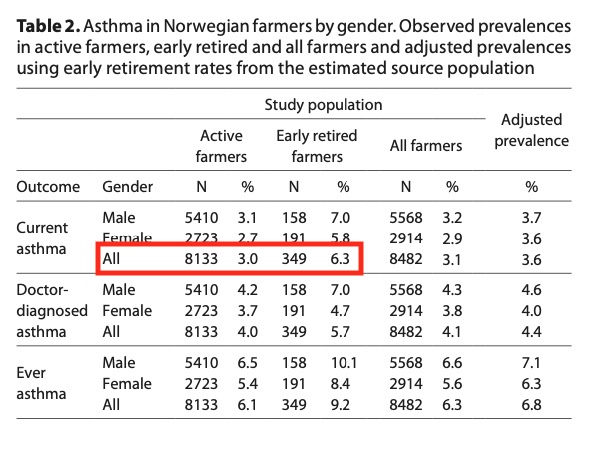
There is even a second comparison of Norwegian farmers with a clear effect. Instead of comparing the early retired farmers with their respective age cohort they invented a c complicated quantile logitic regression in 4 year intervals. Detailed model parameter and significance levels are missing.
At least the conclusion was
A healthy survivor selection was observed in Norwegian farmers, but it was too small to fully explain the reduced risk of asthma observed in this population. A strong selection effect was observed among farmers who had changed production type
One of the most fascinating articles earlier this year was the report of Timmers et al. about the “Genomics of 1 million parent lifespans implicates novel pathways and common diseases and distinguishes survival chances“. The British-Swiss-Estonian-Chinese-US collaboration identified by genome-wide SNP association of 1 million parental lifespan some new genes (ABO, ZC3HC1, and IGF2R) and replicate others (CDKN2B-AS1, ATXN2/BRAP, FURIN/FES, ZW10, PSORS1C3, 5q33.3/EBF1 and FOXO3).
Most of the variance is explained by disease variants that lead to dementia, cardiovascular disease, and lung cancer – of course people die of disease and not by bad genes. So whether correct or not, what worries me more is the construction of polygenic hisk scores that show a mean lifespan difference of around five years of life across the deciles.
This may become an ethical nightmare whenever treatment allocation will dependent on a polygenetic risk score that is largely irrelevant in an individual.
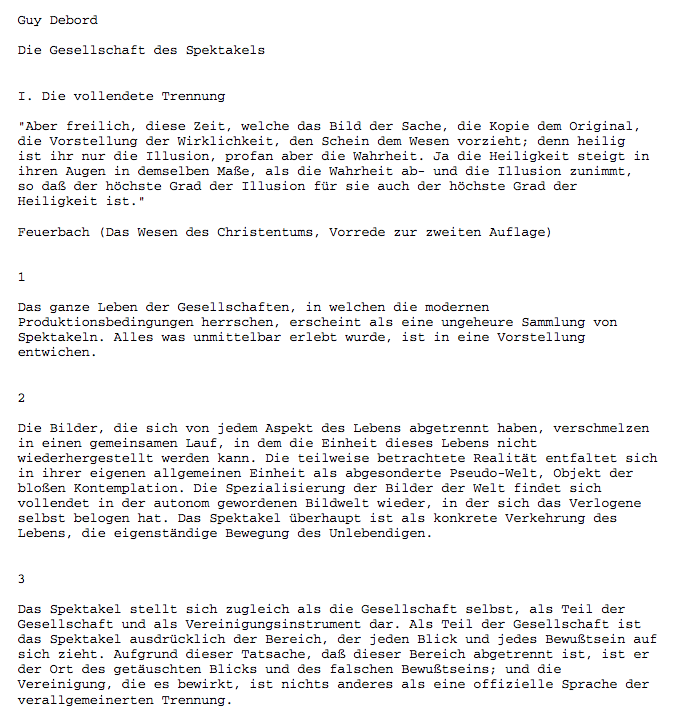
Die Gesellschaft des Spektakels (La société du Spectacle) ist das 1967 erschienene Hauptwerk des französischen Künstlers und Philosophen Guy Debord…Das Buch hatte großen Einfluss auf die französische Studentenbewegung des Pariser Mai 1968, erlangte später einen Kultstatus in Kunst und Subkultur und wird bis heute als medientheoretisches wie politisches Werk an Universitäten gelesen.
There is an interesting twitter thread by @Psychologists4F about news concerning the climate crisis and how we respond to the cognitive dissonance – the mental discomfort or psychological stress experienced by a person who holds contradictory beliefs or values. There are at least four possibilities how to respond to it
Change the behavior (“reduce, refine, replace”)
Changing the conflicting situation by just ignoring it
Justify own behavior by pseudoexplanations, pointing to others
Eine der häufigsten Formen der Greta-Skepsis aber findet sich bei … Angela Merkel. Sie sprach auf der Uno-Klimakonferenz in New York ein leicht vergiftetes Lob aus, weil in Gretas Rede “aus meiner Sicht nicht ausreichend zum Ausdruck kam, in welcher Weise Technologie, Innovation gerade im Energiebereich, aber auch im Energieeinsparbereich uns Möglichkeiten eröffnet, die Ziele zu erreichen.” … Es ist die Hoffnung, dass eine Technologie der Zukunft die Probleme von heute auf beinahe magisch-mystische Weise lösen werde. Es grenzt an die “Dunkle Technikhörigkeit der Ahnungslosen”, nur dass hier die Akteure sogar Ahnung haben. … Damit steht sie für eine ganze Denkschule.
Krautreporter hat ein interessantes Interview mit Bernhard Mittermaier der gerade für DEAL die deutschen Interessen am Verhandlungstisch vertritt. Und die rhethorische Frage stellt
Jede einzelne Uni könnte ohne Vertrag leben, aber das funktioniert nicht für das ganze System. Dann würden die Verlage gar kein Geld mehr verdienen, und von jetzt auf gleich wären die Zeitschriften tot. Es gibt genug Leute, die das gar nicht so schlimm fänden. Ich persönlich verfolge diesen revolutionären Ansatz nicht. Ich hätte zwar nichts dagegen, wenn diese Revolution geschehen würde. Mir wäre es nur lieber, wenn sie mit Ansage passiert. Wenn die Wissenschaft erklären würde, dass sie keine Zeitschriften mehr braucht. Das durch die Hintertür zu machen, fände ich schwierig.
As for scientists, they are not a breed apart. Compared to the scientists of only a few decades ago, they are more numerous, specialized, and costly. But as people, they are much the same, with individualities and frailties like those in other walks of life. Beyond the extreme of acceptable behavior, there may be laxity and negligence and rare instances of fraud, all of which now receive exaggerated media attention. It is common for science frauds to be attributed to ills in our society or to mismanagement of science, but I recall that 40 to 50 years ago, such psychopathic cases seemed as frequent as now on a per capita basis.
There is an interesting meta-analysis at JAMA Pediatrics about vitamin D supplementation during pregnancy and offspring growth, morbidity, and mortality. Nothing special, standardized methodology and even somewhat expected outcome.
In this systematic review and meta-analysis of 24 randomized clinical trials including 5405 individuals, vitamin D supplementation during pregnancy was associated with a lower risk of infants being small for gestational age and improved growth during infancy without an increased risk of fetal or neonatal mortality or congenital abnormality.
More interesting are the vitamin D lobbyists writing the accompanying editorial (Bo Chawes , Klaus Bønnelykke, Hans Bisgaard) . They try by nearly every sentence to devalue the findings of the meta-analysis. They are even getting to the point of
no adverse effects have been found
We don’t see things as they are, we see them as we are.