All posts by admin

The optimal cycling position

There are different strategies to improve the aerodynamics of road cycling. At 50 km/h about 90% is being spend to overcome aerodynamic drag of the riders silhouette. Barry et al. now sent a rider into a wind tunnel and discriminated basically 9 different positions that I am summarizing here in a cartoon including front area and estimated Watt count. Continue reading The optimal cycling position


CC-BY-NC Science Surf accessed 19.01.2026

Faxenbuch

Byung-Chul Han

Mag sein, aber von der Struktur unterscheidet sich diese Gesellschaft nicht vom Feudalismus des Mittelalters. Wir befinden uns in einer Leibeigenschaft. Die digitalen Feudalherren wie Facebook geben uns Land, sagen: Beackert es, ihr bekommt es kostenlos. Und wir beackern es wie verrückt, dieses Land. Am Ende kommen die Lehnsherren und holen die Ernte.


CC-BY-NC Science Surf accessed 19.01.2026

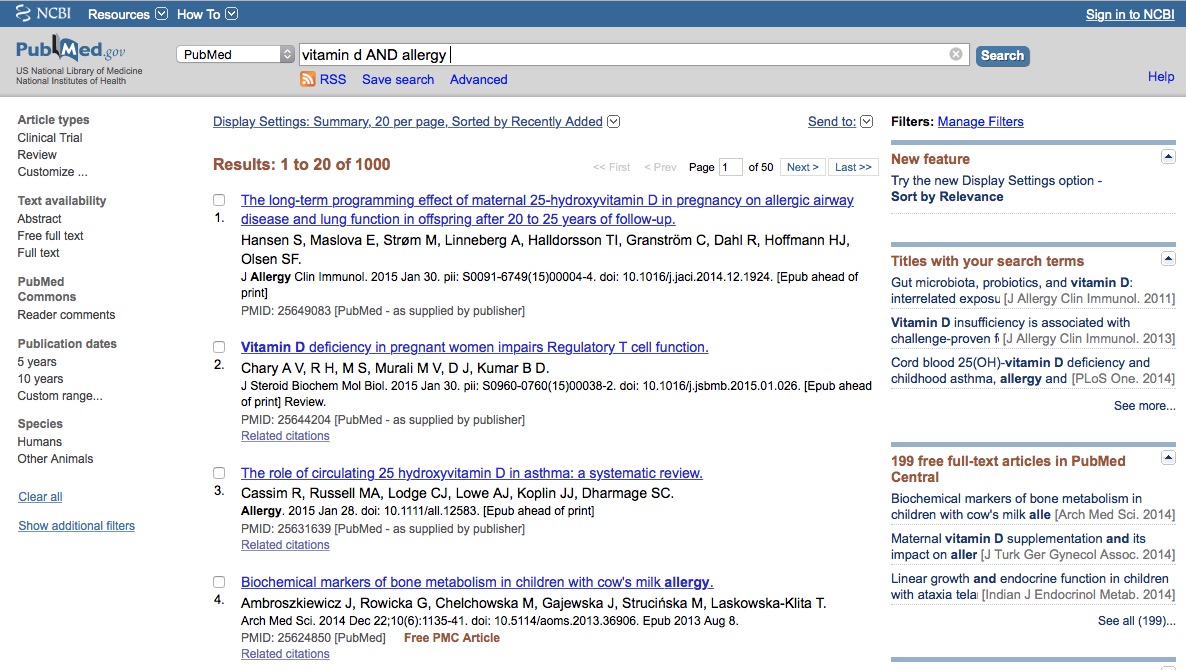
A jubilee – today we have 1000 papers on allergy and vitamin D

It is a long time period from our first paper in July 1999 in Allergy, but more than 15 years later there is now a huge list of papers.

screen
When looking for potential paradigm shift in research, however, vitamin D is still largely ignored.

    • Professional organizations that give legitimacy to the paradigm: NONE
    • Dynamic leaders who introduce and purport the paradigm: FEW
    • Journals and editors who write about the system of thought: FEW
    • Government agencies who give credence to the paradigm: NONE
    • Educators who propagate the paradigm’s ideas by teaching it to students: NONE
    • Conferences conducted that are devoted to discussing ideas central to the paradigm: YES
    • Media coverage: MINOR
    • Lay groups, or groups based around the concerns of lay persons, that embrace the beliefs central to the paradigm: FEW
    • Sources of funding to further research on the paradigm: NONE


CC-BY-NC Science Surf accessed 19.01.2026

Believe it or not – Genetic testing is not ready for widespread use

When I moved from the theological seminar to the medical faculty of Marburg University, I expected to move from a rather liberal but largely closed belief system to a rational environment where belief does not play a central role. It took me only a few years to recognize my misunderstanding. Medicine represents an even more closed belief system („peer review“) than I encountered in theology. There are so many assumptions in daily medical practice that have never been formally tested.

It is commonly assumed that genetic testing is ready for widespread use. But is it true? The authoritative Stanford Encyclopedia of Philosophy has in an excellent contribution about the ethics of belief that there is a „cluster of questions at the intersection of epistemology, philosophy of mind, psychology, and ethics“. And even more

Contemporary analytic philosophers of mind generally use the term “belief” to refer to the attitude we have, roughly, whenever we take something to be the case or regard it as true. To believe something, in this sense, needn’t involve actively reflecting on it: Of the vast number of things ordinary adults believe, only a few can be at the fore of the mind at any single time … Forming beliefs is thus one of the most basic and important features of the mind, and the concept of belief plays a crucial role in both philosophy of mind and epistemology.

Do you want to know your full genome sequence? And do you want it to be published on the internet? Or do you think this is private information that should stay within your body cells where it had been encrypted since the origin of humans? Before we look at any belief surrounding genetic testing, we may have to take a small side-step. Yes, of course, we are dealing here in the first instance with a large industry that has strong commercial interest in genetic testing. Equipment companies selling chemistry and scanners want to increase their sales figures. Insurance companies need data for their policy calculations. Doctors and hospitals want to maximize their income by customer retention. Universities want to increase their attraction by showcasing fancy technology. Even patient advocacy groups are not neutral as they act in the presumed interests of their members. While any of these interests may be good or bad, it is worth to note that the discussion is driven by commercial interests and not ethical convictions.

Having said that, we probably all agree that genetic testing is a research method: useful, interesting and promising to classify, prevent, predict, or treat disease ,. But even after many years it is still a research method of unclear scope, unclear benefit and unclear risks. Should genetic testing really been applied outside of supervised research just because of the economic pressure surrounding it?
I can not see so much benefit of DTC genetic testing right now while there are disturbing case studies how „ordinary humans“ are getting confused when genetic testing is done outside of a research setting. These reports show not only a crude misunderstanding of the predictive value of single nucleotide variants but also a plethora of adverse reactions on nagging questions that are posed but never answered. Some users complained about mix up of samples making even some the claimed success stories finding unknown family members („hey, bro“ ) questionable.

In the pre-internet age, there would have been an intense scientific discussion when a certain method is being ready for prime time. Such a method would have been limited to experts who know something about constraints of a research method, who know how to find additional information in the library or run further lab experiments when the knowledge is being limited. They could consult colleagues from other fields and eventually put these pieces into context. But only a few critical minds could do that, most of them with an academic training over many years.

This landscape has changed, radically changed. The majority of research papers is now being published online. There are no more fences, only a few toll gates, but no gatekeepers. While the church lost most of their authority during the age of enlightment, universities lost their primacy with the advent of the internet. Of course scientists are trying to get back in the discussion by submitting guidelines. I fear, however, that the public perception sees this a bit like in the famous Feynman quote being “as useful .. as ornithology is to birds.“ It is only when an agency like the FDA U.S. Food and Drug Administration issues a warning, that genetic testing is being brought to a (preliminary) end.

The autonomous individual falls back mainly to the information channel he can easily use: the internet search engine. The belief of an individual about the usefulness of genetic testing is influenced by quick google searches showing some bystander comments in an online forum. There is an endless skimming of newsfeeds, magazines and scientific papers. Everything is done at high speed but at the uppermost surface. It reminds me a bit about the 2010 EDGE question „How is the internet changing the way you think“ :

Playwright Richard Foreman asks about the replacement of complex inner density with a new kind of self-evolving under the pressure of information overload and the technology of the “instantly available”. Is it a new self? Are we becoming Pancake People — spread wide and thin as we connect with that vast network of information accessed by the mere touch of a button.
Technology analyst Nicholas Carr wrote the most notable of many magazine and newspaper pieces asking “Is Google Making Us Stupid”. Has the use of the Web made it impossible for us to read long pieces of writing?

Social software guru Clay Shirky notes that people are reading more than ever but the return of reading has not brought about the return of the cultural icons we’d been emptily praising all these years. …
Frank Schirrmacher, [former ]Feuilleton Editor and Co-Publisher of Frankfurter Allgemeine Zeitung, has noticed that we are apparently now in a situation where modern technology is changing the way people behave, people talk, people react, people think, and people remember. Are we turning into a new species — informavores? — he asks.

The belief about benefits of DTC genetic testing is certainly not influenced by any European or American Scientific Society Ethics Committee. It is influenced by those brief sometimes adequate, sometimes inadequate information pieces in the internet , TV, radio or newspaper snippets.

When it comes to any direct action (blood drawing, selection of a specific laboratory, test system employed, readout and interpretation of results) the patient belief’ is further shaped by the doctors belief system. A detailed description of the attitude towards genetic testing, in particular in the relationship between doctor and patient, would be an enormous enterprise, needing a large cluster of experts at the intersection of epistemology, philosophy of mind, psychology, and ethics, as well as social scientists, biologists, among others. And who will even judge what is a correct assumption? Is a certain genetic variant really a pathogenetic variant? Even the most advanced attempts so far, just lists bullet points only.

Believe it or not, genetic testing for health related outcomes is still a research method.

References
 http://plato.stanford.edu/entries/belief
 http://www.pnas.org/content/104/21/8685.full
 http://jama.jamanetwork.com/article.aspx?articleid=1840236
 http://www.nature.com/ng/journal/v34/n4/abs/ng0803-347.html
 http://www.nytimes.com/2013/12/31/science/i-had-my-dna-picture-taken-with-varying-results.html?ref=science&_r=0
 http://www.theguardian.com/science/2013/jun/08/genome-sequenced
 http://www.bloomberg.com/news/2012-02-15/harvard-mapping-my-dna-turns-scary-as-threatening-gene-emerges.html
 http://www.spiegel.de/spiegel/print/d-57223342.html
 http://www.spiegel.de/wissenschaft/mensch/23andme-gentest-firma-vertauscht-dna-ergebnisse-ihrer-kunden-a-699436.html

 http://www.fda.gov/ICECI/EnforcementActions/WarningLetters/2013/ucm376296.htm
 http://edge.org/annual-question/how-is-the-internet-changing-the-way-you-think
 http://www.nature.com/nature/journal/v508/n7497/full/nature13127.html


CC-BY-NC Science Surf accessed 19.01.2026

Why not setting up your own server log analysis?

I have been relying for 20 years on analog for reading my webserver logs. But maybe … this is a bit outdated, while some newer systems as awstats, google analytics or piwik are too overloaded for me. My more recent approach with plugins like statpress or slimstat considerably degraded my system performance. So why not setting up an own database as this can be done in 30 minutes?
First, get sqliteadmin.php as we need to build a small database “log.sqlite3”. Create a new table by pasting

CREATE TABLE 'visit' ('id' INTEGER PRIMARY KEY AUTOINCREMENT NOT NULL, 'page' TEXT, 'dt' DATETIME DEFAULT CURRENT_TIMESTAMP, 'ip' TEXT, 'name' TEXT);

in the SQL window of sqliteadmin.php and include the following code in the header of all your pages

class MyDB extends SQLite3 { function __construct() { $this->open("log.sqlite3"); } }
$db = new MyDB();
$logpage="http://".$_SERVER['HTTP_HOST'].$_SERVER['REQUEST_URI'];
$logip = $_SERVER['REMOTE_ADDR'];
$logip = substr($logip, 0, strrpos($logip, ".")) . ".xxx";
isset($_SERVER['PHP_AUTH_USER'])? $logname = $_SERVER['PHP_AUTH_USER'] : $logname = $_SERVER['REMOTE_USER'];
$sql='INSERT INTO visit (page,ip,name) VALUES ("'.$logpage.'","'.$logip.'","'.$logname.'");';
$db->query($sql);
$db->close();

That’s all we need to record. Maybe you want also a statistics page? Here is it, showing all recorded traffic (and in brackets what is going on today).

<pre>Logfile Analysis
<?php
class MyDB extends SQLite3 { function __construct() { $this->open("log.sqlite3"); } }
$db = new MyDB();
$sql = "SELECT page, count(page) AS c FROM visit 
WHERE round(julianday('now') - julianday(dt)) >=0
GROUP BY page ORDER BY c DESC;";
$ret = $db->query($sql);
while($row = $ret->fetchArray(SQLITE3_ASSOC) ){
  $pagearray[ $row["page"] ] =  $row["c"];
}
$sql = "SELECT page, count(page) AS c FROM visit 
WHERE round(julianday('now') - julianday(dt)) =0
GROUP BY page ORDER BY c DESC;";
$ret = $db->query($sql);
while($row = $ret->fetchArray(SQLITE3_ASSOC) ){
  $pagetoday[ $row["page"] ] = $row["c"];
}
foreach ($pagearray as $key => $page) {
  echo  $page>5 ? "<div class=big>" . $page . "(". $pagetoday[$key] . ")" . "</div>" . $key . "<br>" : FALSE;
}
?>

Looks like we used only 32 lines of code, yea, yea.


CC-BY-NC Science Surf accessed 19.01.2026

Rstudio, knitr (Rmarkdown2) and bash

I couldn’t find any example online how to revise my R code getting the exif data from pictures

fn <- c("/usr/local/bin/exiftool /Users/wjst/Desktop/white.tif")
info <- system(fn,inter=TRUE,wait=TRUE)

when moving now to knitr. So here is what worked for me as a replacement including the parsing
of exiftool output.

```{r, engine='bash', echo=FALSE}
/usr/local/bin/exiftool /Users/wjst/Desktop/white.tif >/Users/wjst/Desktop/white.txt
```
```{r Exif, echo=FALSE}
fn <- '/Users/wjst/Desktop/white.txt'
info <- paste(readLines(fn))
info <- strsplit(info,"[:]{1}[ ]{1}")
info <- matrix(data=unlist(info), ncol = 2, byrow = TRUE)
info <- gsub("(^[[:space:]]+|[[:space:]]+$)", "", info)
```
*Exif*
`r kable(info)`


CC-BY-NC Science Surf accessed 19.01.2026

Was ist sicher und was nicht

Chip.de berichtet, wie die NSA Verschlüsselungen einstuft

Als “trivial” gilt etwa die Verfolgung eines Dokuments im Internet. “Gering” wird der Aufwand bezeichnet, Facebook-Chats auszulesen, “mäßig” anstrengen muss sich die NSA, um E-Mails eines russischen Mail-Providers abzufangen.

Das anonyme Netzwerk Tor, die Festplatten-Verschlüsselung TrueCrypt bis Version 7.1a, die Chat-Verschlüsselung Off-the Record (OTR), die E-Mail-Verschlüsselung PGP (etwa in der Implementierung Gpg4win) sowie das Protokoll ZRTP, mit dem sich Chats und Telefonate verschlüsseln lassen (zum Einsatz kommt es etwa in RedPhone und Signal), können von der NSA offenbar nicht geknackt werden.


CC-BY-NC Science Surf accessed 19.01.2026

Die Weihnachtsgeschichte in einem Satz

Der Profigolfer Marcel Siem im SZ Interview 27/28. Dezember, Nr. 297, S.38 (Sport) antwortet auf die Frage “Ist das Profileben mit zwei Kindern eigentlich schwieriger zu organisieren?”

Ich versuche meine beiden so oft wie möglich mitzunehmen. Manche Kollegen haben sich später Vorwürfe gemacht, das nicht getan zu haben. Als ich Anfang Dezember nach Südafrika flog, war Viktoria , die Vierjährige, schon bettfertig im Nachthemd. Als sie sah, dass ich abreise, saß sie plötzlich mit Winterstiefeln, Winterjacke und Pudelmütze in meinem Koffer und hat geheult. Das sind die Momente, die irgendwie schön sind, weil man Liebe spürt,. Aber die halt auch richtig wehtun.


CC-BY-NC Science Surf accessed 19.01.2026

Fritz Box recycled

I needed to patch an unused Fritz Box with a DHCP and name server for a new project. Running these services from a network server wasn’t really stable.

The freetz websites has all the details for the patch while I can confirm that freetz version 2.0 can power a 10 year old 1und1 branded Fritz Box SL WLAN (also known as 3020 type) running firmware 09.04.34.

x1

I compiled everything under Ubuntu/Luna using the terminal

#!/bin/bash
cat /etc/issue
uname -m
# update system
sudo apt-get -y update
sudo apt-get -y upgrade
sudo apt-get -y dist-upgrade
sudo apt-get -y install imagemagick subversion gcc g++ bzip2 binutils automake patch autoconf libtool pkg-config make libncurses5-dev zlib1g-dev flex bison patch texinfo tofrodos gettext pkg-config ecj fastjar realpath perl libstring-crc32-perl ruby ruby1.8 gawk python libusb-dev unzip intltool libglib2.0-dev xz-utils git-core libacl1-dev libattr1-dev libcap-dev
# do NOT run the following as root
cd /HOME/wjst/Desktop
umask 022
svn checkout http://svn.freetz.org/branches/freetz-stable-2.0
cd freetz-2,.0
make menuconfig
make

The new image may then be uploaded using the standard AVM webinterfaceat  http://fritz.box . The AVM DHCP needs to be switched off.
Freetz can be reached at http://fritz.box:81 where also the dnsmasq hosts file can be programmed to reach my server at a permanent IP address.


CC-BY-NC Science Surf accessed 19.01.2026

Cause and effect in observational data: Magic, alchemy or just a new statistical tool?

Slashdot has a feature on that

Statisticians have long thought it impossible to tell cause and effect apart using observational data. The problem is to take two sets of measurements that are correlated, say X and Y, and to find out if X caused Y or Y caused X. That’s straightforward with a controlled experiment… But in the last couple of years, statisticians have developed a technique that can tease apart cause and effect from the observational data alone. It is based on the idea that any set of measurements always contain noise. However, the noise in the cause variable can influence the effect but not the other way round. So the noise in the effect dataset is always more complex than the noise in the cause dataset. .. The results suggest that the additive noise model can tease apart cause and effect correctly in up to 80 per cent of the cases (provided there are no confounding factors or selection effects).

and jmlr a more theoretical account

Based on these deliberations we propose an efficient new algorithm that is able to dis- tinguish between cause and effect for a finite sample of discrete variables.

tbc


CC-BY-NC Science Surf accessed 19.01.2026