The main arguments in favour of sharing work in its preliminary form are, firstly, that science works faster if work is made available sooner after it is completed and, secondly, that articles are improved by feedback from a wider group of readers, alongside formal peer review by a few experts. Simple estimates suggest that halving the delay to sharing a research result can double the speed at which research progresses. Ambitious research funders are now embracing preprints and other measures that aim to accelerate the pace of research.
MedArXiv will have a hard time attracting preprints if mainstream medical journal editors decide they won’t publish final versions of the papers. Currently, The BMJ and The Lancet are among the few medical journals that have explicitly said that posting a preprint doesn’t preclude publication; Nature and Science, which both occasionally publish medical studies, have the same policy. But at the JAMA Network, which publishes a dozen journals, the issue is hotly debated.
@medRxiv opened on June 6. So far they have only 304 followers on Twitter (and no allergy paper in the archive).
As the current “Allergy” editor and the publisher (John Wiley and Sons A/S) agreed to preprints last week, I have submited now my first preprint paper. Therefore, there are now 305 followers and 1 allergy paper :-)
We usually assume – even in science – that many if not all have high computer level skills. But that may not be true according to the Nielsen Norman Group. They summarize the results of any OECD survery where 215,942 people were tested, with at least 5,000 participants in most countries.
26% of adult population
can’t switch on Computers
14% – Below Level 1
Being too polite to use a term like “level zero,” the OECD researchers refer to the lowest skill level as “below level 1.”
This is what people below level 1 can do: “Tasks are based on well-defined problems involving the use of only one function within a generic interface”. An example of task at this level is “delete this email message” in an email app.
29% – Level 1
This is what level-1 people can do: “Tasks typically require the use of widely available and familiar technology applications, such as email software or a web browser. ” An example of level-1 task is “Find all emails from John Smith.”
26% – Level 2
This is what level-2 people can do: “At this level, tasks typically require the use of both generic and more specific technology applications.” An example of level-2 task is “You want to find a specific document that was sent to you by John Smith in October last year.”
5% – Level 3
This is what this most-skilled group of people can do: “At this level, tasks typically require the use of both generic and more specific technology applications.” An example of level-3 task is “You want to know what percentage of the emails sent by John Smith last month were about a specific topic.”
Es gibt keine Menschenrassen, von Rassen spricht man nur noch im Zusammenhang mit der Tierzucht, wo bestimmte Gruppeneigenschaften gezüchtet werden.
Trotzdem habe ich Probleme mit der Jenaer Erklärung (zitiert nach hpd.de) von Johannes Krause
Aus genetischer Sicht gebe es im Genom des Menschen “keinen einzigen fixierten Unterschied, der zum Beispiel Afrikaner von Nicht-Afrikanern trennt. Es gibt – um es explizit zu sagen – somit nicht nur kein einziges Gen, welches ‘rassische’ Unterschiede begründet, sondern noch nicht mal ein einziges Basenpaar”. Äußere Merkmale, an denen Rassisten ihre Abwertung von bestimmten Menschengruppen festmachen, seien oberflächliche und biologisch leicht wandelbare Anpassungen an geographische Gegebenheiten. Bis vor 8000 Jahren seien die Menschen in Europa noch “stark pigmentiert” gewesen. Erst durch die Einwanderung von Menschen mit hellerer Hautfarbe aus Anatolien und dem damit einsetzenden Beginn der Landwirtschaft habe sich dies geändert, da es sich bei einer stark pflanzenbasierten Kost im dunklen Winter Europas als evolutionärer Vorteil erwies, hellere Haut zu haben und damit genügend Vitamin D produzieren zu können.
“Die helle Hautfarbe der Menschen im nördlichen Europa ist jünger als 5000 Jahre”, hält die Jenaer Erklärung fest. “Die Verknüpfung von Merkmalen wie der Hautfarbe mit Eigenschaften oder gar angeblich genetisch fixierten Persönlichkeitsmerkmalen und Verhaltensweisen, wie sie in der Blütezeit des anthropologischen Rassismus verwendet wurden, ist inzwischen eindeutig widerlegt. Diese Argumentation heute noch als angeblich wissenschaftlich zu verwenden, ist falsch und niederträchtig. Es gibt auch keinen wissenschaftlich nachgewiesenen Zusammenhang zwischen Intelligenz und geographischer Herkunft, aber einen deutlichen mit sozialer Herkunft.”
Die Erklärung hat recht, insofern der Rassebegriff nur noch von Rassisten verwendet wird.
Sie hat auch recht daß es kein einziges Gen gibt, welches ethnische Unterschiede begründet – allerdings hat das auch niemand behauptet. Dagegen gibt es aber durchaus fixierte phänotypische und genetische Unterschiede in geographischen Regionen – einzelnen Volksgruppen, Populationen oder auch Ethnien.
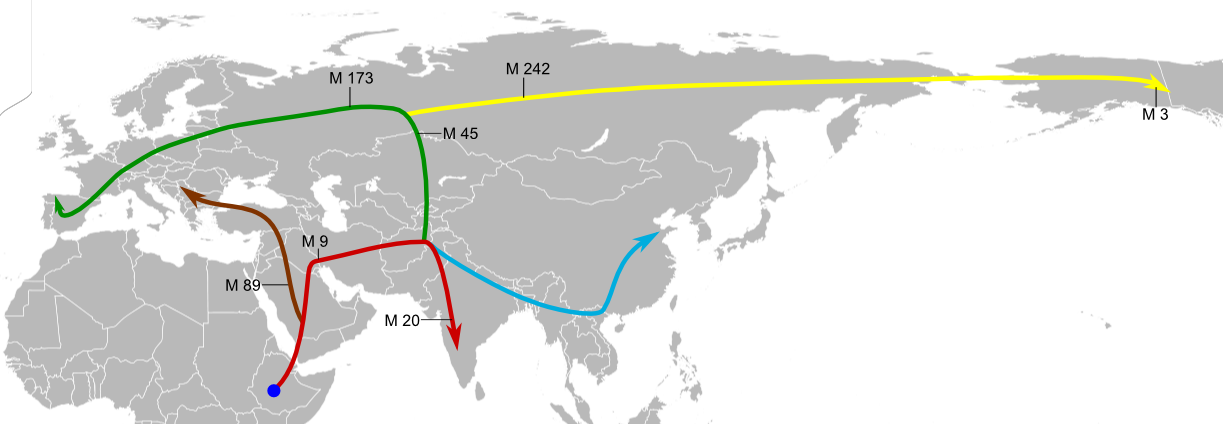
M9 ist nach gängiger Forschung der “out of Africa” Marker, siehe Wikipedia
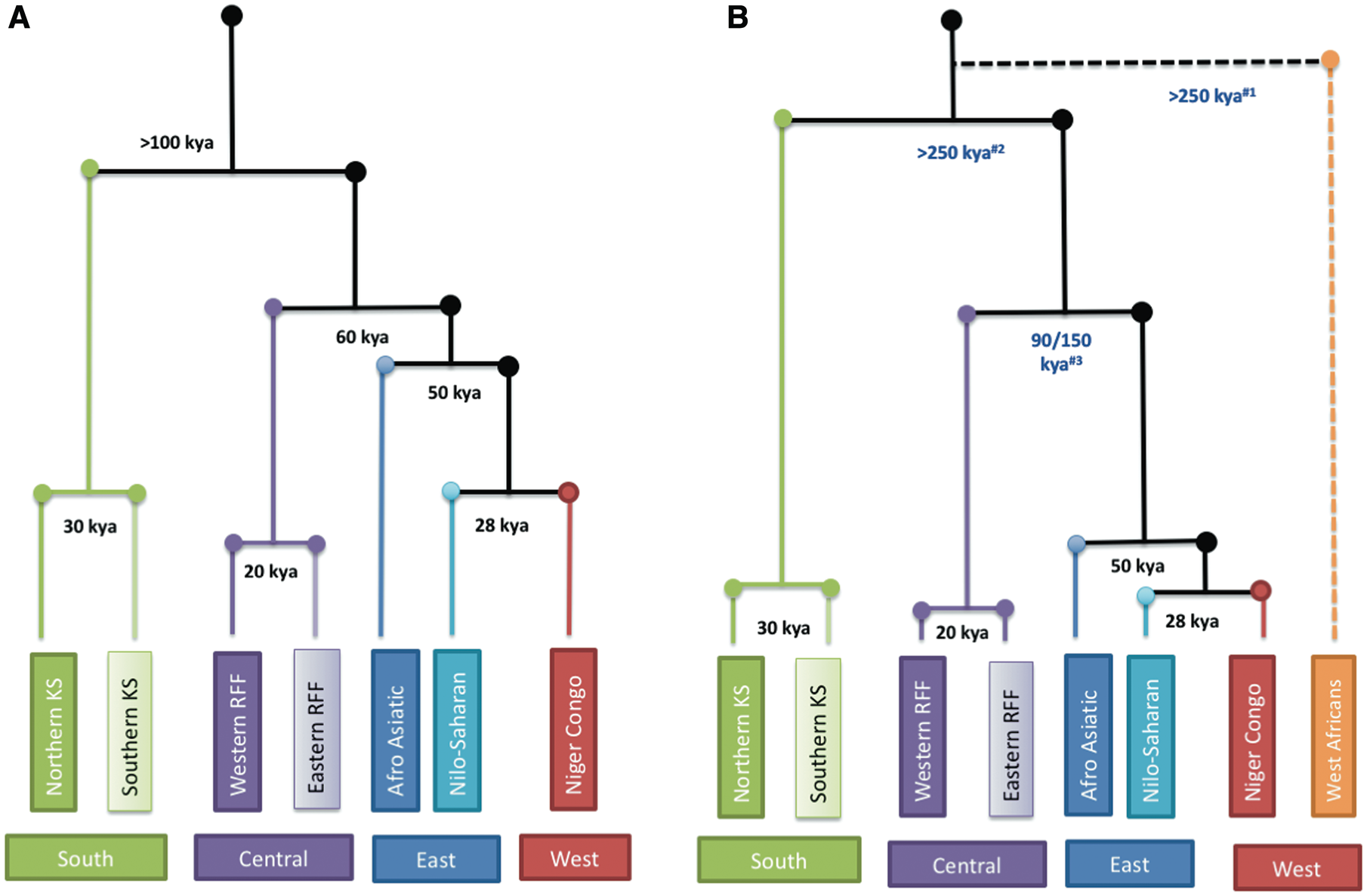
Die Erklärung sagt schliesslich auch, dass Europäer näher verwandt sind mit Ostafrikanern, als Ostafrikaner mit Südafrikanern. Wie ist aber eine solche Aussage möglich sein, wenn man keine populationsspezifische Marker dafür hätte?
Für Abstammungstheorien wird oft die Kombination von SNP (Single Point) Marker verwandt. Mit Hilfe etwa der Hauptkomponentenanalyse (PCA) wurde zum Beispiel der ursprüngliche afrikanische Stammbaum im letzten Jahr revidiert.
Was also die ethnischen Unterschiede ausmacht? Es sind arbiträre biologische und statistische Kennziffern, die oft in unterschiedlichen Ausmass mit soziologischen Kennzeichen korrelieren.
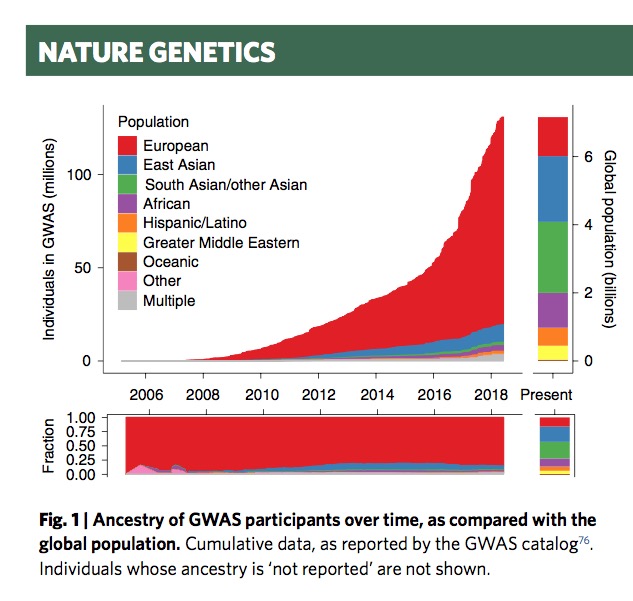
Extensive set of African ancestry-informative markers (AIMs) to study ancestry and population health. .. we generated a final set of 46,737 African ancestry-informative markers (AIMs).
AIMs sind nicht zuletzt wichtig, da die Unterschiede auch zu unterschiedlichen Krankheiten führen, Stichwort „precision medicine“.
Und das ominöse Vitamin D? Helle Hautfarbe = bessere Vitamin D Konversion bei Niedrigversorgung im Norden, bekannt auch als Loomis Hypothese, ist als evolutionärer Faktor zwar naheliegend, aber reine Spekulation. Ohne die Literatur zur Pigmentierung der Haut zu rekapitulieren – der Zweck der Pigmentierung ist Schutz der Basalzellschicht vor UV Strahlung und nicht die Limitierung der Vitamin D Produktion.
By contrast, deeper skin tones with more melanin filters at least twice as muchTrusted Source UV light. Researchers believe this is why skin cancer rates are lower in People of Color. However, a 2020 articleTrusted Source also highlights that a lack of diversity in trials and studies, and a shortage of people of color in the field of dermatology, means that scientists may not accurately understand how common skin cancer is in skin of color.
Die Vitamin D Konversion ist auch ohne starke Hautpigmentierung selbst limitierend. Sie setzt allenfalls früher ein, nämlich bei heller Haut ca 20 Minuten nach Bestrahlung anstatt nach 40 Minuten bei dunkler Haut. Das ist Lehrbuchwissen aus Feldman und Pike. Nach aktuellem Kenntnisstand stimmt es wohl auch nicht, dass dunkle Hautfarbe die ursprüngliche Hautfarbe von H. sapiens in Afrika ist und Europäer mit heller Hautfarbe Mutanten sind. Ich vermute eher, daß helle und dunkle Hautfarbe die Extreme einer ansonsten mittleren Helligkeit sind (zur Diskussion dieser Hypothese siehe Scholar).
Der letzte Stand nach meiner Kenntnis steht in dem Science 2017 Paper von Sarah Tishkoff
Examining ethnically diverse African genomes, we identify variants in or near SLC24A5, MFSD12, DDB1, TMEM138, OCA2, and HERC2 that are significantly associated with skin pigmentation. … Functional analyses indicate that MFSD12 encodes a lysosomal protein that affects melanogenesis in zebrafish and mice, and that mutations in melanocyte-specific regulatory regions near DDB1/TMEM138 correlate with expression of ultraviolet response genes under selection in Eurasians.
In dieser Liste steht jedenfalls kein einziges Vitamin D Gen, so dass die Jenaer Erklärung auch hier nicht dem Wissenstand entspricht auch wenn sie gut gemeint ist.
20.9.2024
Journalisten werden allerdings auch weiterhin nicht müde, zu dem Thema zu fabulieren, leider auch wieder in einem neuen Video.
Die Gleichsetzung Hirn gleich Hardware oder Geist gleich Software habe ich bewusst in dem letzten Beitrag vermieden. Interessanterweise geht Dirnagl gerade im LJ darauf ein. Er schreibt über das Nonsense Papier “Brain Machine Interface” im LJ
… Zumal das Gehirn Programmierung und Codes auch gar nicht nötig hat. Gefühle, Gedanken, Absichten und so weiter sind die koordinierte Aktivität von Milliarden von Nervenzellen und Fantastillionen von Verbindungen zwischen ihnen – man kann auch sagen, Kognition ist „verkörpert“ (embodied). Der Gedanke an einen Baum ist die elektrische Aktivität und neuronale Konnektivität wie sie beim Betrachten dieses Baumes auftritt. Und die Erinnerung an diesen Baum ist die Wiederherstellung dieses elektrochemischen Zustandes.
Dabei kann das Gehirn durchaus mit Codes umgehen. Nicht nur extern beim Programmieren, auch intern beim Sprechen und Schreiben. Sprache ist nämlich ein Code, also symbolische Repräsentation. Aber Sprache braucht man nicht für Fühlen, Denken, Handeln – sie ist nur ein Mittel dazu. Da Kognition sich folglich keines Codes oder Programms bedient, gibt es auch nichts auszulesen oder einzuspielen ins Gehirn.
Man könnte zwar versuchen, etwa beim Blick auf einen Baum, die Aktivität jeder einzelnen der 80 Milliarden Nervenzellen gleichzeitig zu messen – und dazu den Zustand der Hunderte von Trillionen Verbindungen zwischen ihnen. Aber dann wäre man immer noch nicht weiter. Denn dann hätte man zwar ein Abbild des elektrischen Gewitters dieses Gehirns beim Blick auf den Baum. Aber die Nervenzellen eines anderen Menschen erzeugen andere Verbindungen und andere Aktivitäten beim Blick auf denselben Baum. Auch weil verschiedene Gehirne eine über viele Jahre zurückreichende unterschiedliche Geschichte haben, die jeweils wiederum zu dieser spezifischen Konnektivität und Aktivität beim Blick auf den Baum beigetragen hat. Diese Geschichte müsste man kennen, um aus dem Gewitter Sinn zu machen, also den Inhalt „Baum“ dekodieren zu können.
Das kann man nach aktuellem Wissensstand nicht besser sagen.
In Abwandlung von Descartes “sum quod cogito” ist Denken ein Zustand und zwar der parallelen Aktivität von Milliarden von Nervenzellen, die auch dann aktiv sind, wenn die Verbindung zur Aussenwelt (Thalamus etc) gestört ist.
Two major checkpoints of development in cerebral cortex are the acquisition of continuous spontaneous activity and the modulation of this activity by behavioral state. Despite the critical importance of these functions, the circuit mechanisms of their development remain unknown. Here we use the rodent visual system as a model to test the hypothesis that the locus of circuit change responsible for the developmental acquisition of continuity and state dependence measured in sensory cortex is relay thalamus, rather than the local cortical circuitry or the interconnectivity of the two structures. … Together our results indicate that cellular or circuit changes in relay thalamus are critical drivers for the maturation of background activity, which occurs around term in humans.
Wie aber passt nun das Konzept einer “Beseelung” des Menschen zu Beginn seiner Existenz? Einer bei Null startenden neuronalen Aktivität?
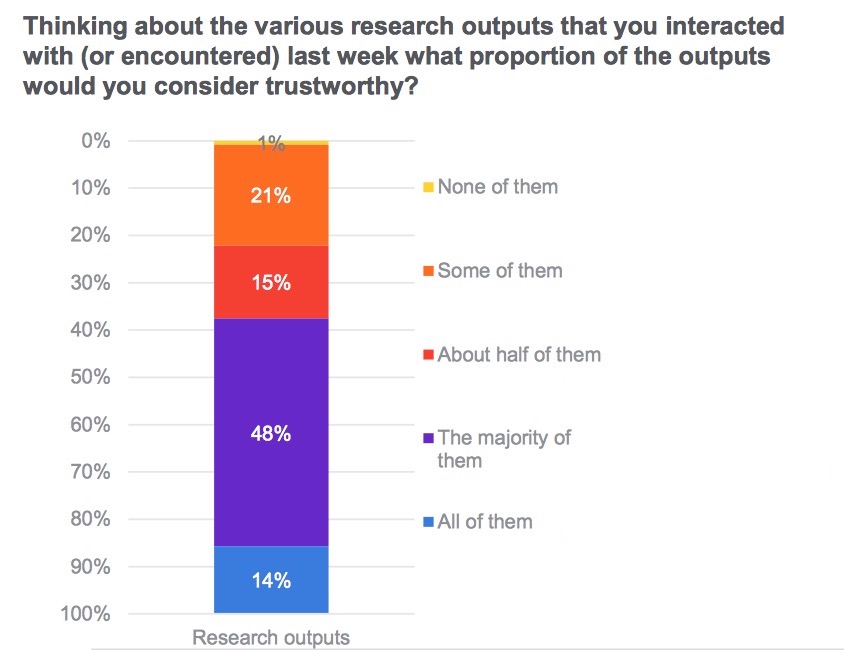
Method: Co-branded (Elsevier and Sense About Science) online survey in English, 15 minutes to complete. Fieldwork took place in May 2019 while the results are now at the Elsevier site.
Result: 3,133 researchers responded to a survey of 98,160 individuals selected from database of 3.6 million researchers (3.2 % response rate).
37% of researchers do not trust anymore in published research.
It is one of the minor papers in a minor journal but nevertheless has some big impact: “A phenome-wide Mendelian-randomization study of genetically determined vitamin D on multiple health outcomes using the UK Biobank” in Int J Epidemiol. 2019 Sep 13
Existing studies suggest that a low vitamin D level is associated with more than 130 outcomes. … We then implemented a Mendelian Randomization-Phenome Wide Association Study (MR-PheWAS) analysis on data from 339 256 individuals of White British origin from UK Biobank. We first ran a PheWAS analysis to test the associations between a 25(OH)D polygenic risk score and 920 disease outcomes…The PheWAS analysis did not identify any health outcome associated with the 25(OH)D polygenic risk score.
“Die Werbeaussage, wonach jeder Mensch eine Extraportion Vitamine oder Mineralstoffe zur Aufrechterhaltung der Leistungsfähigkeit und Gesundheit braucht, ist schlicht und einfach falsch“, sagte Jürgen Schölmerich, Facharzt für Gastroenterologie und ehemaliger ärztlicher Direktor und Vorstandsvorsitzender des Universitätsklinikums Frankfurt am Main. Nur für wenige Personengruppen, etwa Schwangere oder Veganer, seien bestimmte Nahrungsergänzungsmittel-Präparate tatsächlich empfohlen.
I think it is quite reasonable that childhood skin care practices is involved in the increase in atopic dermatis (AD) according to a recent review.
Kelleher and colleagues found skin barrier dysfunction precedes AD development. Thus, soaps and detergents may aggravate preexisting tendencies to skin barrier dysfunction and promote skin inflammation and initiate AD in susceptible individuals. Whether skin care practices have changed over time to explain the increase in AD incidence remains unknown, but high bathing frequency and the use of fragranced lotions are commonplace in US children, two practices potentially harmful to the skin barrier. Protecting the skin barrier early in life with emollients appears to reduce the risk of AD development.
I am now analyzing here the 3.200 most recent tweets using a computational pipeline created already some years ago using the following packages
# -- based on https://www.r-bloggers.com/analyzing-the-us-election-using-twitter-and-meta-data-in-r and http://juliasilge.com/blog/Joy-to-the-World/
list.of.packages <- c("twitteR","ggplot2","httr","rjson","tm","gridExtra","lubridate","wordcloud","devtools","syuzhet","SnowballC","scales","reshape2","dplyr","stringr")
lapply(list.of.packages, require, character.only = TRUE)
The choice of words isn’t unexpected – just what is already known – with “great”, “president”, “will” and “trump” being the most frequently used words.
wordcloud
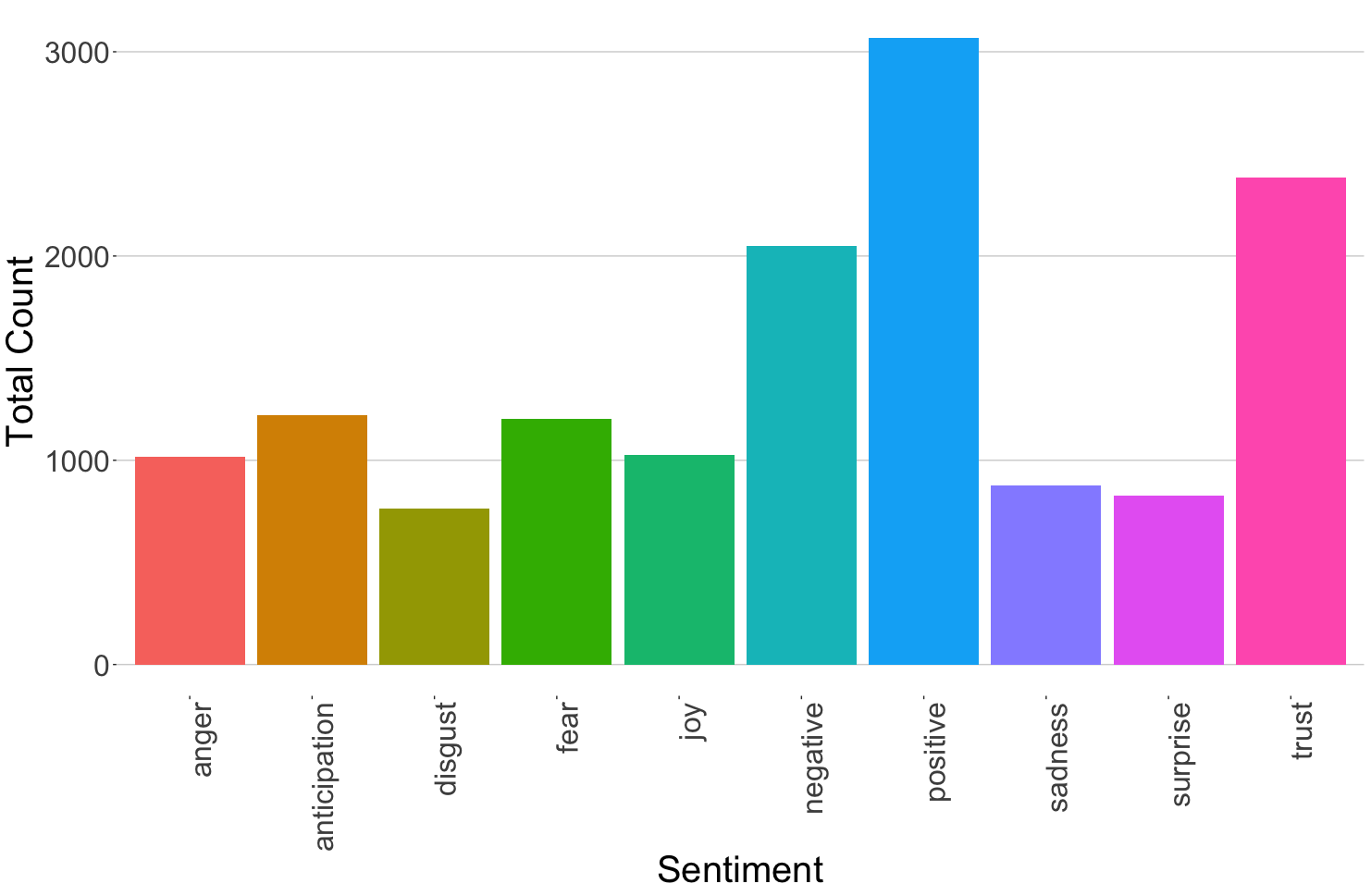
All tweets can be classified by sentiment scores of the words used. If we look at the total counts, three categories are being used excessively: “positive”, “negative” and “trust”.
sentiment scores
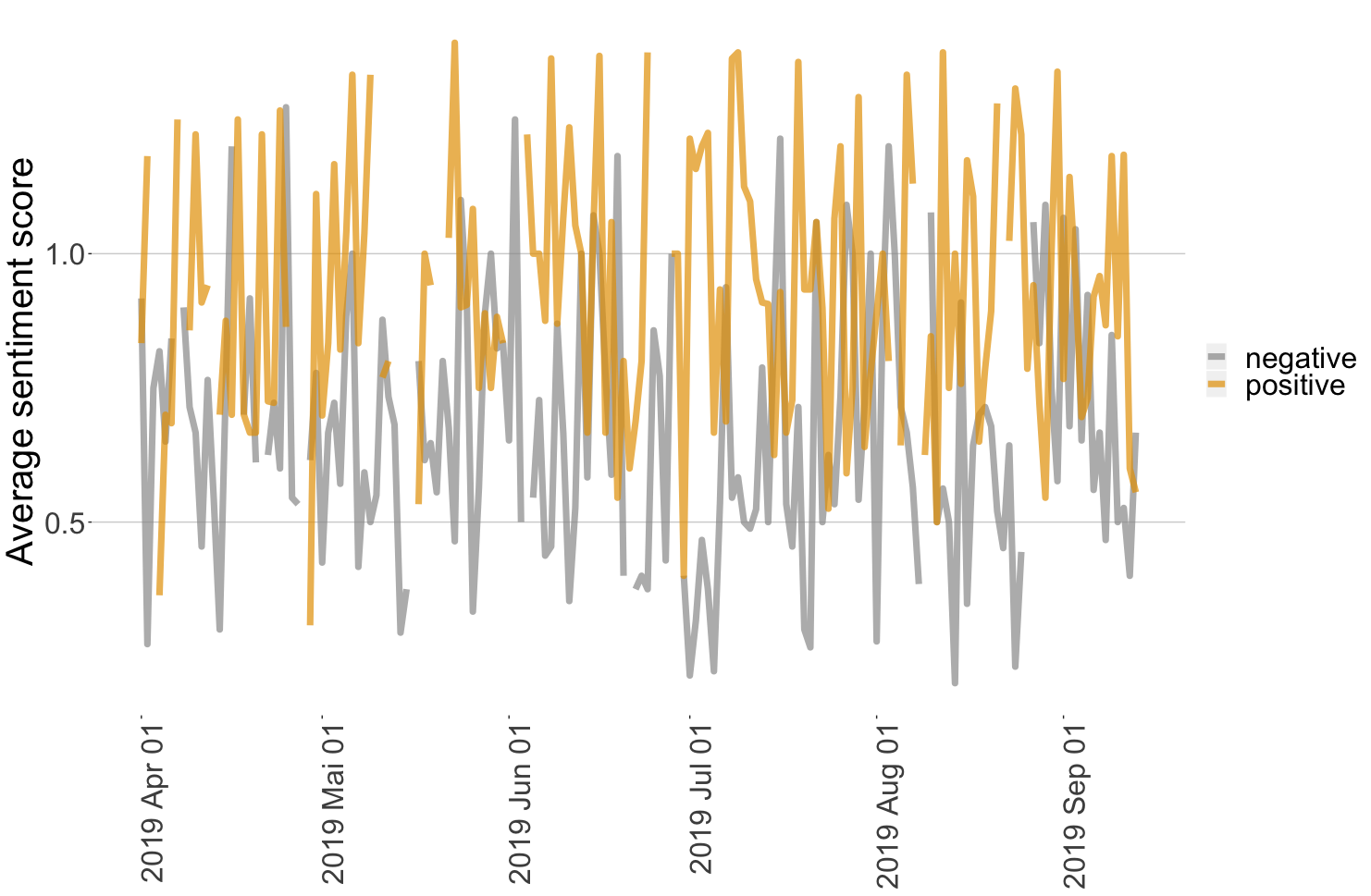
Trust seems to be used not so much in the context of personal relationship but in the context of economics of “deal”. As it has been speculated that he suffers of cyclothymia ( 0.4% to 1% of the U.S. population has cyclothymia) we can look also the time course of sentiments.
time series on a daily basistime series using 3 day intervalstime series weekly basis
Variation (dispersion) is high, in particular on a daily basis, while in the absence of any normal values it is difficult to make any definite conclusions. Positive and negative emotions are not always in parallel, there are “converging situations” nearly every month where negative emotions go up and positive emotions go down indicating a more profound mood swing.
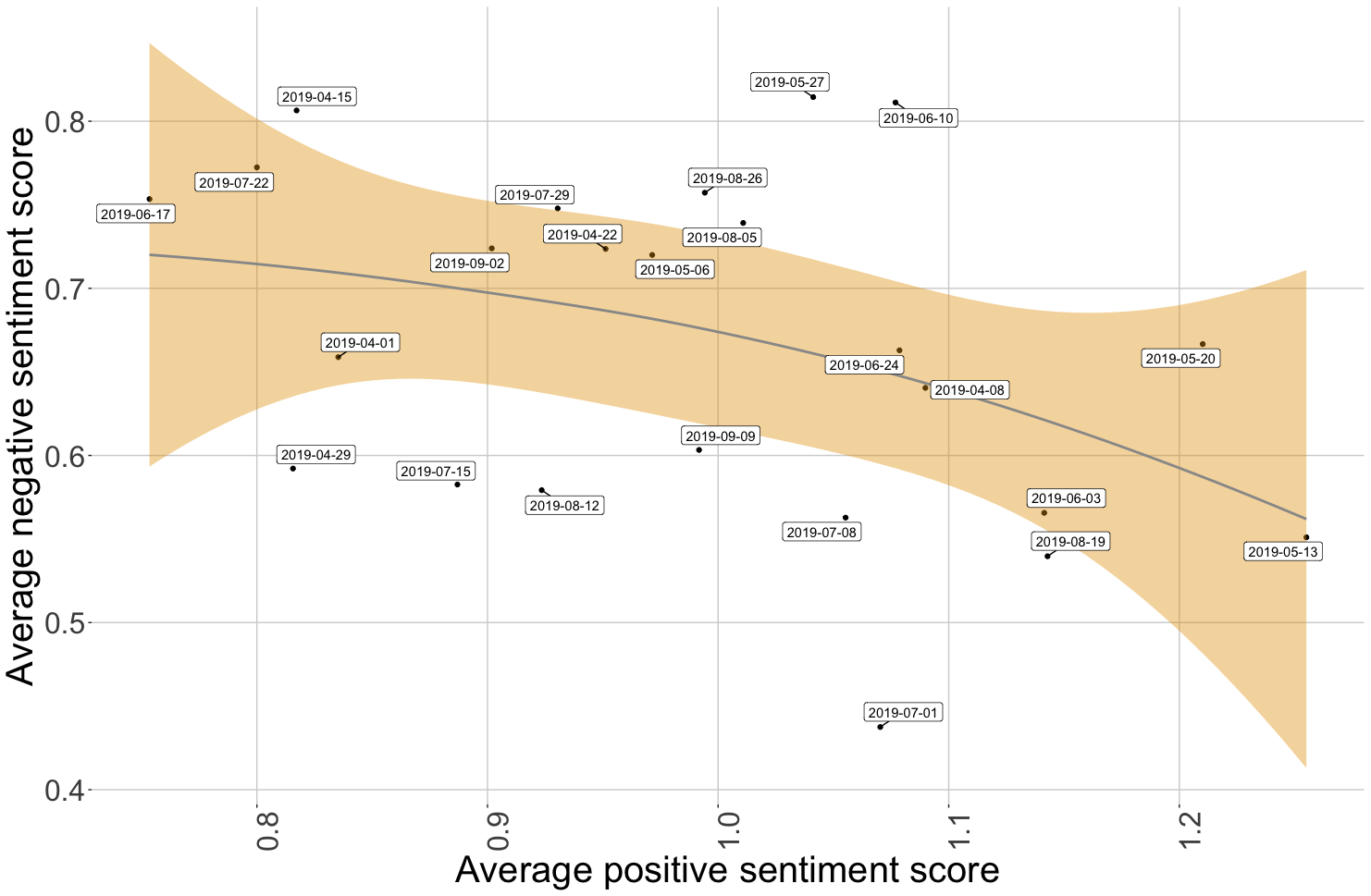
The correlation plot shows the expected decline of negative scores with increasing positive scores. Many values are outside of the 95% confidence bounds, making the sentiment score (and even the personality) largely unpredictable.
correlation plot
An extended analysis including more reference accounts would be necessary for further conclusion. Nevertheless, there is evidence of mental instability as noticed already by various expert testimonials.
There is first the emergency situation his mental instability poses as a result of the power that he holds and the weapons he has at his disposal…There is first the emergency situation his mental instability poses as a result of the power that he holds and the weapons he has at his disposal. But there are also the effects on public health through his fomenting of violence. Hate crimes have seen unprecedented spikes, bullying is widespread, and white supremacist killings have doubled. There are also statistics on the rise of stress levels that are nationally worse than during World War II, the Vietnam War, the Cuban Missile Crisis, and September 11 terrorist attacks. He is also destabilizing the global scene by alienating allies, emboldening dictators, reigniting nuclear proliferation, and launching a trade war in ways that are predictable from his mental impairments. These are not just matters of policy but arise out of a troubled relationship with reality, a propensity to attack if questioned or even slightly criticized, and dangerous behavioral patterns that need to be spoken about.
There is not so much to add to man who believes in his “great and unmatched wisdom”. Frank Zappa once said “Politics is the entertainment branch of industry”.