The title says it all – the link goes to to the add-ons page, a very handy template Continue reading Consort study diagrams available with Omnigraffle
CC-BY-NC Science Surf , accessed 28.08.2026
The title says it all – the link goes to to the add-ons page, a very handy template Continue reading Consort study diagrams available with Omnigraffle
If you are writing some kind of online diary your mood is already surveilled by wefeelfine.
However, if you are an allergic patient, you may be interested in a new project of the German Pollenstiftung that runs an online pollen diary. We have pollen counts for a long time but we do not know so much about thresholds and individual variation.
Continue reading We feel good
NI has an editorial on hyping research
Although these attention-grabbing headlines might help sell papers and increase traffic to newspaper websites, such reporting is irresponsible to the public and to science in general. Even if the article itself is more balanced, it must be remembered that many readers never get much beyond the headline. The net result is the public comes away with much misinformation.
Continue reading Attention grabbing headlines
Dr. Zamel, one of the PIs of the Tristan da Cunha study pointed me today to the interesting 30 min BBC documentation online at Allergy Canada
Allergy Island is an exclusive documentary on the history of asthma in Tristan da Cunha and the discovery of the gene related to asthma in that highly inbred community by the expedition that I did in 1993. I went in May 2008 to Tristan da Cunha with the BBC crew to film both parts for the entire month.
There is a new review on vitamin D and allergy.
Reading that piece carefully, I fear that expertise in one area does not guarantee Continue reading More heat than light
Yes, we know “slow virus is good for your lab as it keeps your lab running” with similiar mechanisms are being found in many research areas. Best of all – declare everybody as diseased (or at least at risk) like seen Continue reading Pandemy of vitamin D deficiency
was an earlier title of a BBC documentation about gene methylation. While running today an analysis of segregating methylation marks, I have major difficulties to find out the status of the human epigenome map. The Sanger site seems to be down for a long time, there aren’t any updates of the AHEAD consortium, the site of the Epigenetics Society is largely uniformative, methDB gives me “information about the research situation in France and why French scientists are in conflict with the current government”, an EU network excellence has only a fashionable website while another EU project is even not fashionable. Or do I miss something??
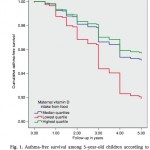 A new study of 5 year old children relates their current allergy symptoms to LOW maternal intake of vitamin D from food (which is strange within the context of current cohort studies that show a INCREASED risk by vitamin D supplement use).
As this is a diabetes study, the sample is highly biased Continue reading Neverending story – vitamin D in pregnancy
Life after GWAS comments
Allen Roses, director of the Deane Drug Discovery Institute at Duke University, noted that GWAS has “largely disappointed its most enthusiastic proponents Continue reading Forget about genes V
I have just finished the revision of a paper describing the history of allergy development. While a temporal coincidence (introduction of vitamin D) will not provide any proof, the absence of such a coincidence (like key features of the hygiene hypothesis) is a rather strong argument Continue reading Pasteur and the hygiene hypothesis
Here is another opinion from a widely read German magazine (Spiegel online, 25. Mai 2009, Jörg Blech, Wahrsager im Labor) about our too great expectations in genetics:
Während die einen noch mehr und noch größere Vergleichsstudien fordern, halten Skeptiker wie Goldstein dies für reine Zeitverschwendung: “Wenn man 30.000 Patienten mit Diabetes Typ 2 untersucht hat, dann halte ich es für sinnlos, die Zahl auf 60.000 oder 100.000 zu erhöhen.”
good bye to the “common variant hypothesis”!
Here comes the link to a case report of surfer’s asthma (could not resist)
… We present the case of a 42-year-old man with a 2-year history of wheezing, chest tightness, and upper respiratory symptoms that were associated with surfing. Continue reading Surfer’s asthma
We will probably submit our IL-17 paper next week – so it was of interest to read a new paper in NJ that
demonstrate a protective function for IL-17 and identify T cells as not only the source but also a target of IL-17 in vivo
for inflammatory bowel disease. Asthma may, however, present a different situation.
or briefly vitamin D3. There seems to be another vitamin D /allergy abstract at the forthcoming EAACI congress from the KOALA study. The authors find
Risk for AD was highest for children in the fourth quintile of maternal 25(OH)D level [adjusted odds ratio (aOR) 2.08; 95%CI 1.07-4.03] compared to those in the third quintile; P for trend over the quintiles 0.03]. Continue reading (1S,3Z)-3-[(2E)-2-[(1R,3aR,7aR)-7a-methyl-1-[(2R)-6-methylheptan-2-yl]-2,3,3a,5,6,7-hexahydro-1H-inden-4-ylidene]ethylidene]-4-methylidene-cyclohexan-1-ol
SPQR (is not necessary to be remembered) but certainly TSLP – at least if you are interested in allergy research (see the discussion here 2 years ago) when we knew from a PNAS paper that topical vitamin D3 induces thymic stromal lymphopoietin and triggers atopic dermatitis (in mice). Now there is an update – TSLP even mediates the progression to experimental asthma
vitamin D3 … not only triggers AD as we previously reported but also aggravates experimental allergic asthma induced by ovalbumin sensitization and challenge. Our study, which provides a mouse model to study human “atopic march
will be continued after Continue reading T_S_L_P