Früher hätte man es nicht mitbekommen, wenn man in irgendeiner Dissertation an irgendeiner Stelle falsch zitiert wird. Heute bekommt man es von Google Alert per Mail geschickt. Der letzte Fall im März 2019 war
Aus der Klinik für Dermatologie, Venerologie und Allergologie der Medizinischen Fakultät Charité –Universitätsmedizin Berlin
Direktor: Prof. Dr. med. Kamran Ghoreschi
Berichterstatterin: Prof. Dr. Margitta Worm
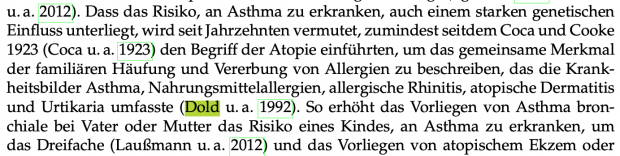
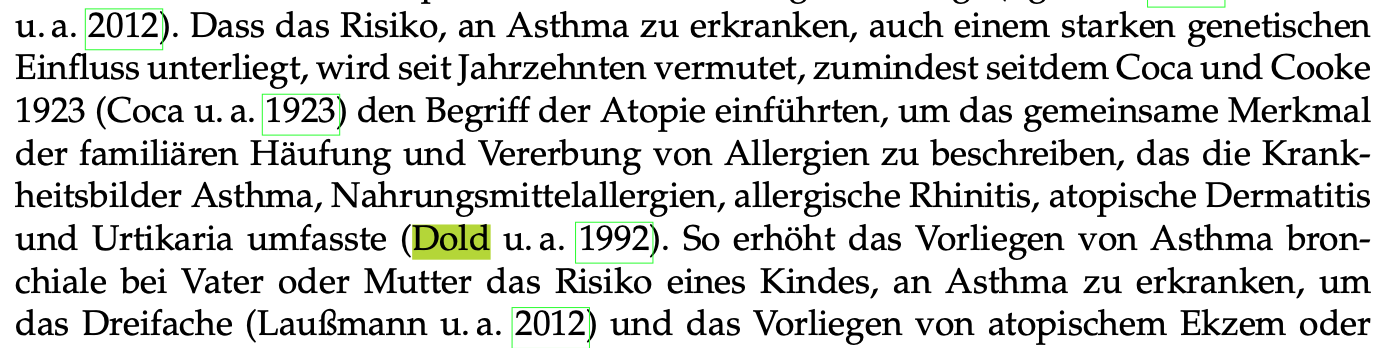
Da schreibt die Doktorandin

leider das genaue Gegenteil, von dem was ich immer gesagt habe. Who cares?
Gestern bekomme ich dann diese Dissertation
Julian Klingbeil – 2019 ORM-like protein (ORMDL) – Annäherung an die Funktion über die Interaktion
Aus der Kinderklinik und Kinderpoliklinik im Dr. von Haunerschen Kinderspital der Ludwig–Maximilians–Universität München
Direktor: Prof. Dr. med. Dr. sci. nat. C. Klein Berichterstatterin: Prof. Dr. Ania Muntau
Abgesehen von dem etwas verschraubten Titel und der Tatsache, dass ich mich mit Protein-Protein Interaktion nicht auskenne, werde ich in der Arbeit sechs Mal zitiert. Und jedesmal falsch.

Ich habe nie einen Polymorphismus in ORMDL3 untersucht. Im Gegenteil, ich stand nur einmal bei einer Genexpressionsstudie mit in der Mannschaft. Dazu habe ich habe Zweifel an der Art und Weise, wie die Nature Arbeit zustande kam.

Sorry, nein, die Populationen waren durchweg gut charakterisiert mit eher zu vielen Readouts. Linkage und GWAS Studien hatten eher keine a priori Hypothesen, es war allein die Heterogenie, die in das Nirwana führte und nicht der heterogener Phänotyp der bronchialen Obstruktion (wie es Prof von Wichert in seiner Hauptvorlesung einmal sagte “was soll die Lunge schon tun ausser zu verstopfen“).
Es ist nicht einfach, hier einen Überblick zu bekommen.
Jedenfalls sollte man von Qualität der Wettervorhersagen (die für die nächsten 24 Stunden von 75% auf über 90% in den letzten 20 Jahren gestiegen ist), nicht auf die Qualität der Klimavorhersagen schliessen.
Die Geschichte der Klimaforschung kann jedenfalls in vier Beiträgen lückenlos nachgelesen werden:
Oder doch nicht, wenn man sich “chasing ice” auf Youtube ansieht?
Urs Bruderer hat diese Frage in einem wunderbaren Essay über “Die große Überforderung” thematisiert
Ich habe die Klimakatastrophe viele Jahre kaum beachtet. Und hielt das für die klügste Entscheidung.
Seit Menschen denken können, warnen sie vor ihrem Ende.
…
Ob der Atomkrieg, das Waldsterben oder das Auslaufen des Maya-Kalenders im Dezember 2012, ob im Cern produzierte schwarze Löcher, Milleniumsbug oder Vogelgrippe – im Rückblick bewies jedes Weltuntergangsszenario nur, dass wir eine Lust an der Angst vor dem Ende haben.
…
Der Weltklimarat hat inzwischen unzählige Berichte und Sonderberichte veröentlicht. Die Warnungen wurden immer genauer und bedrohlicher. Und ich wurde immer besser darin, sie zu überhören.
Einen Artikel, den man vollständig gelesen haben muss.
Air pollution and climate change are potential drivers for the increasing burden of allergic diseases. The molecular mechanisms by which air pollutants and climate parameters may influence allergic diseases, however, are complex and elusive.
There is no causal effect of allergens on human allergy, as allergens have been always abundant even without allergy. Nevertheless allergens are drivers aggravating symptoms in allergy-prone patients by basically four factors
Stability effects; influencing the accumulation and degradation of allergenic proteins, the duration of exposure times to cellular receptors, and the process of antigen presentation via major histocompatibility complex (MHC) class II
Epitope effects, i.e., generation of new epitopes or modification of existing epitopes, changing the binding properties of antibodies and receptors, by direct chemical modification or as a result of conformational changes
Adjuvant effects, i.e., generation of new adjuvant functions or modification of existing adjuvant functions such as lipid-binding capacities due to modified ligand binding sites
Agglomeration effects, i.e., multiplication or shielding of epitopes or adjuvant functions by cross-linking (oligomerization) of allergenic proteins, which may enhance the cross-linking
A new paper by a British-Kazakhstan-Armenian group nicely summarizes why we need good hypothesis papers.
As a deterring example they use the hygiene hypothesis
the hygiene hypothesis that was originally proposed by David Strachan in 1989. David Strachan studied the epidemiology of hay fever in a cohort of 17,414 British children and concluded that declining family size and improved personal hygiene had reduced the chances of cross infections in families, resulting in epidemics of atopic disease in post-industrial Britain. Over the past four decades, several related hypotheses have been proposed to expand the potential role of symbiotic microorganisms and parasites in the development of human physiological immune responses early in life and protection from allergic and autoimmune diseases later on.
I agree with the description although David never claimed to be the first author writing about the hygiene hypothesis. When I spoke to him the last time London he wasn’t even happy with this popularity.
The chain certainly started also much earlier than 1989 with “continuing activity of an immune system made redundant by man’s cleanliness” (Godfrey, 1975) continued with Gerrard 1976, Frick 1986, Busse, 1989 until David Barker argued in 1985 that there is a “decreased incidence of infection among children, especially in wealthier families, that changed their pattern of immunity”.
The harm inducted by the hygiene hypothesis is described as
The misunderstanding of the hygiene hypothesis that primarily aimed to shed light on the role of the microbiome in allergic and autoimmune diseases resulted in decline of public confidence in hygiene with dire societal implications, forcing some experts to abandon the original idea. Although that hypothesis is unrelated to the issue of vaccinations, the public misunderstanding has resulted in decline of vaccinations at a time of upsurge of old and new infections.
I fear the authors are right – some people may have been harmed by the hygiene hypothesis leading them back in the pre-Semmelweis era.
The slide builders at the plugin page are quite useless except for slides.com which is, however, too expensive.
I therefore design everything in Keynote, export as jpg and loop over all jpgs to write the section tags.
The best option would certainly be if Apple would directly support reveal.js and not some fancy own HTML formats
Sci Immunol today shows an incomplete genetic reconstitution of B cell pools after measles infection.
Using B cell receptor (BCR) sequencing of human peripheral blood lymphocytes before and after MeV infection, we identified two immunological con- sequences from measles underlying immunosuppression: (i) incomplete reconstitution of the naïve B cell pool leading to immunological immaturity and (ii) compromised immune memory to previously encountered pathogens due to depletion of previously expanded B memory clones.
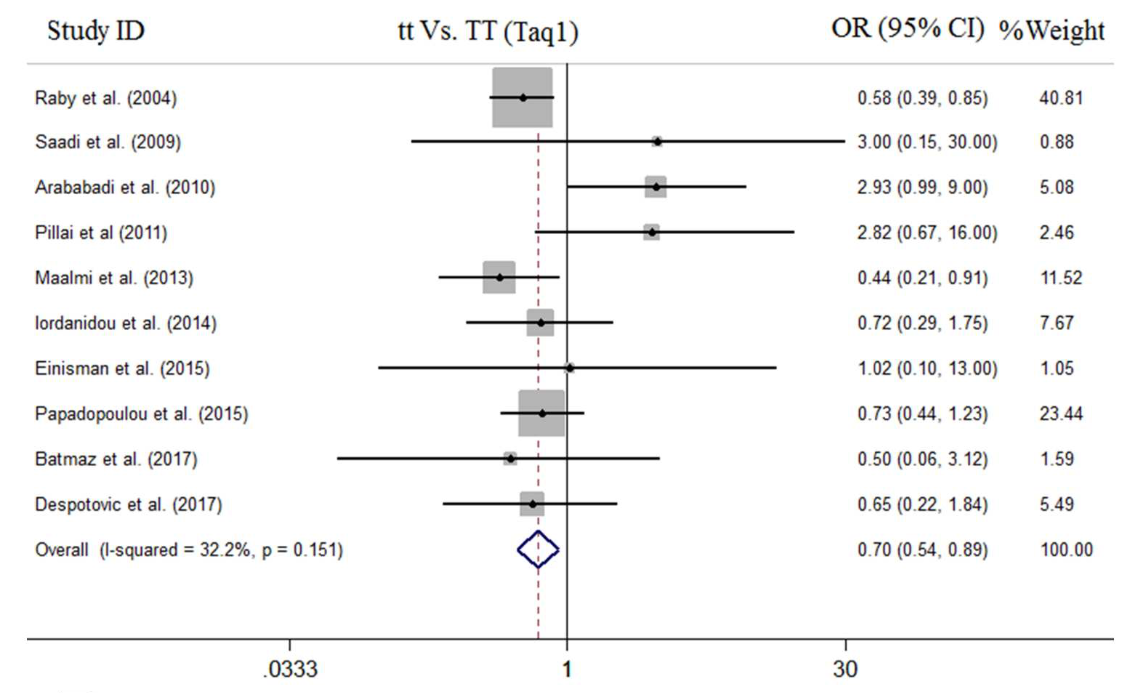
Pooled odds ratio (OR) and 95% confidence interval of individual studies and pooled data for the association between TaqI polymorphism and asthma risk in overall populations and B for tt vs. TTof the TaqI variant.
We are in line #1…
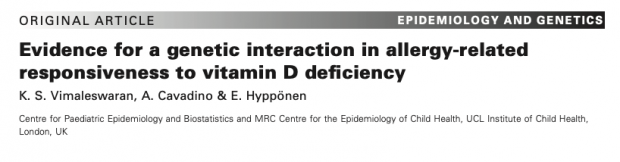
Another nice paper on a genetic interaction is Vimaleswaran et al.
Note to self – here is a list of the vitamin D / allergy related clinical trials following the first case report was
0. Moneret-Vautrin DA, Hatahet R, Kanny G, Ait-Djafer Z. Allergenic peanut oil in milk formulas. The Lancet 1991; 338: 1149. doi: 10.1016/0140-6736(91)92008-p.
1. De Montis G, Gendrel D, Chemillier-Truong M, Dupont C. Sensitisation to peanut and vitamin D oily preparations. The Lancet 1993; 341: 1411. doi: 10.1016/0140-6736(93)90976-N.
2. De Montis G, Gendrel D, Chemillier-Truong M, Dupont C. [Peanut sensitization and oily solution vitamin preparations]. Arch Pediatr 1995;2(1):25-8. doi: 10.1016/0929-693x(96)89804-6.
3. Norizoe C, Akiyama N, Segawa T, et al.. Increased food allergy and vitamin D: randomized, double-blind, placebo-controlled trial. Pediatr Int 2014 Feb;56(1):6-12. doi: 10.1111/ped.12207
4. Rueter K, Jones AP, Siafarikas A, Lim EM, Bear N, Noakes PS, et al. Direct infant UV light exposure is associated with eczema and immune development. J Allergy Clin Immunol 2018; in press, doi: 10.1016/j.jaci.2018.08.037.
5. Rosendahl J, Pelkonen AS, Helve O, et al. High-Dose Vitamin D Supplementation Does Not Prevent Allergic Sensitization of Infants. J Pediatr. 2019 Jun;209:139-145.e1. doi: 10.1016/j.jpeds.2019.02.021
6. Urashima M, Mezawa H, Okuyama, M et al. Primary Prevention of Cow’s Milk Sensitization and Food Allergy by Avoiding Supplementation With Cow’s Milk Formula at Birth. A Randomized Clinical Trial. JAMA Pediatr 2019;173;(12):1137-1145 10.1001/jamapediatrics.2019.3544
This new study by Urashima et al. shows that sensitization to cow’s milk and food allergy, including CMA and anaphylaxis, is preventable by avoiding CMF (cow milk formula) supplementation for at least the first few days of life. Although examined only indirectly in this study, vitamin D supplementation seems to be involved in the sensitization process. The Urashima study is accompanied by a valuable editorial of George du Toit and Kari Nadeau
There is currently a lack of consensus among national allergy societies .. Although the EAACI3 and American Academy of Allergy, Asthma and Immunology (AAAI) currently recommend the use of hypoallergenic formulas in infants at high risk of allergy, the Australian Society of Clinical Immunology and Allergy does not. The EAACI and the AAAI are likely to reconsider their guidelines because results of more re- cent studies have been contradictory. … Guidelines in the United States and United Kingdom recommend routine vitamin D supplementation in all breastfed infants, whereas guidelines in Australia recommend supplementation only in breastfed infants at high risk of vitamin D insufficiency.
Vitamine sind die am häufigsten verschriebene Pharmaka, wobei unklar ist, warum in machen Regionen 74% und in andern nur 5% Vitamine verschreiben. Wenn es generall notwendig wäre, warum dann nicht 100%? Und wenn es nicht notwendig ist, warum dann nicht 0%?
Together with many other colleagues I was astonished about the Nestle booth at EAACI / PAAM 2019 conference in Florence.
The advertisement of Nestle for the NAN HA formula (“state-of-the-art routine infant formula“, „proven to reduce the risk of atopic dermatitis“, „long term effects up to 15 years of age“) along with other milk marketing violates recommendations of the WHO and other medical organisations about breast-feeding. None of the claims made is justified from a scientific viewpoint.
Having paid 650 € entry fee for a 3 day conference, it is also not acceptable that Dr Antonella Muraro (Padua) explains in Symposium 9 “Special products for cow’s milk allergy“ that if Nestle would not be sponsoring the event, the congress fees would be even higher.
At present, there is no generally accepted benefit of any baby food on long-term allergy prevention while also the therapeutic benefit is questionable. Commercial baby food may even increase later allergy by including supplements that are itself allergenic.
We therefore recommend a review of the EAACI ethics guidelines of industry sponsorship, and an immediate action against further participation of Nestle at future EAACI allergy congresses.