All posts by admin

Klimaschutz

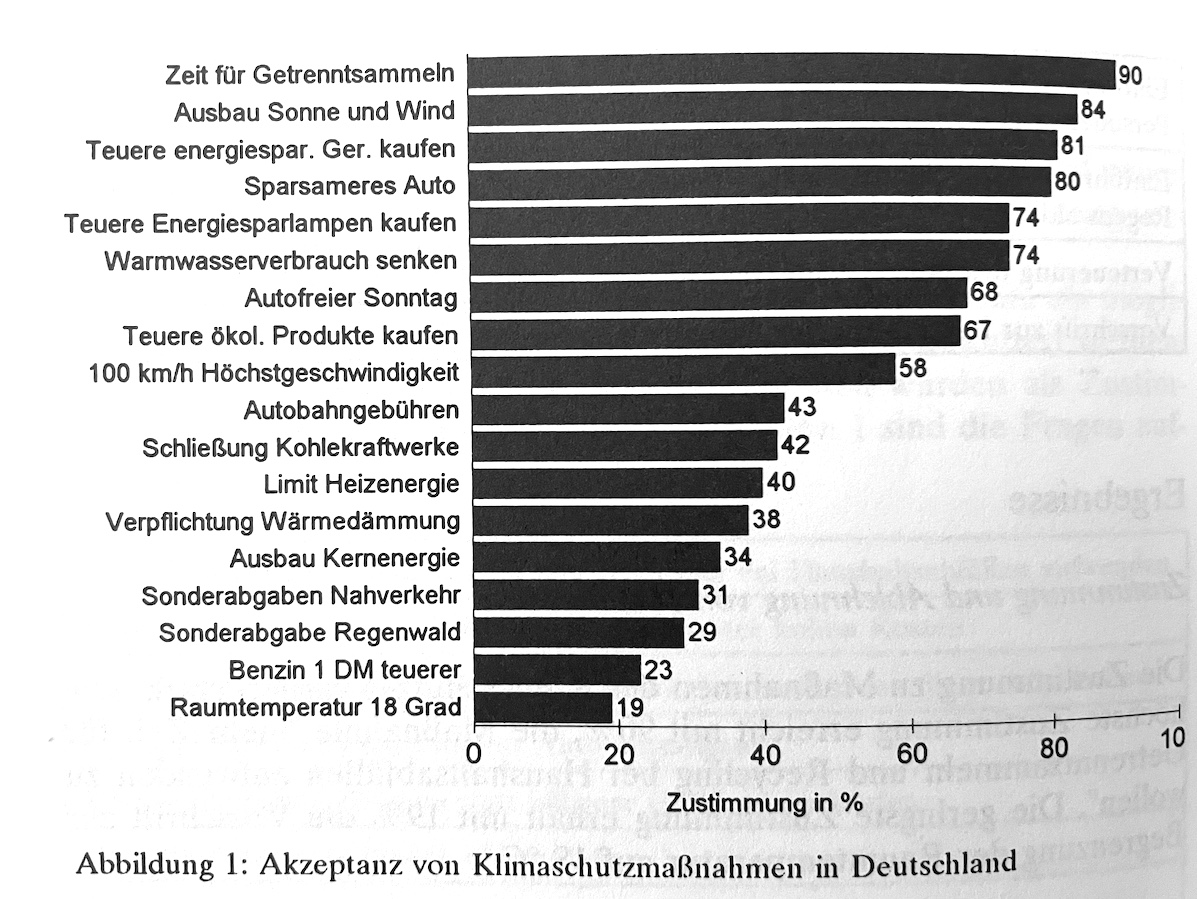
Bereits 1991 gab es eine Mehrheit in der Bundesrepublik für 100 km/h Höchstgeschwindigkeit und gegen Ausbau der Kernenergie.

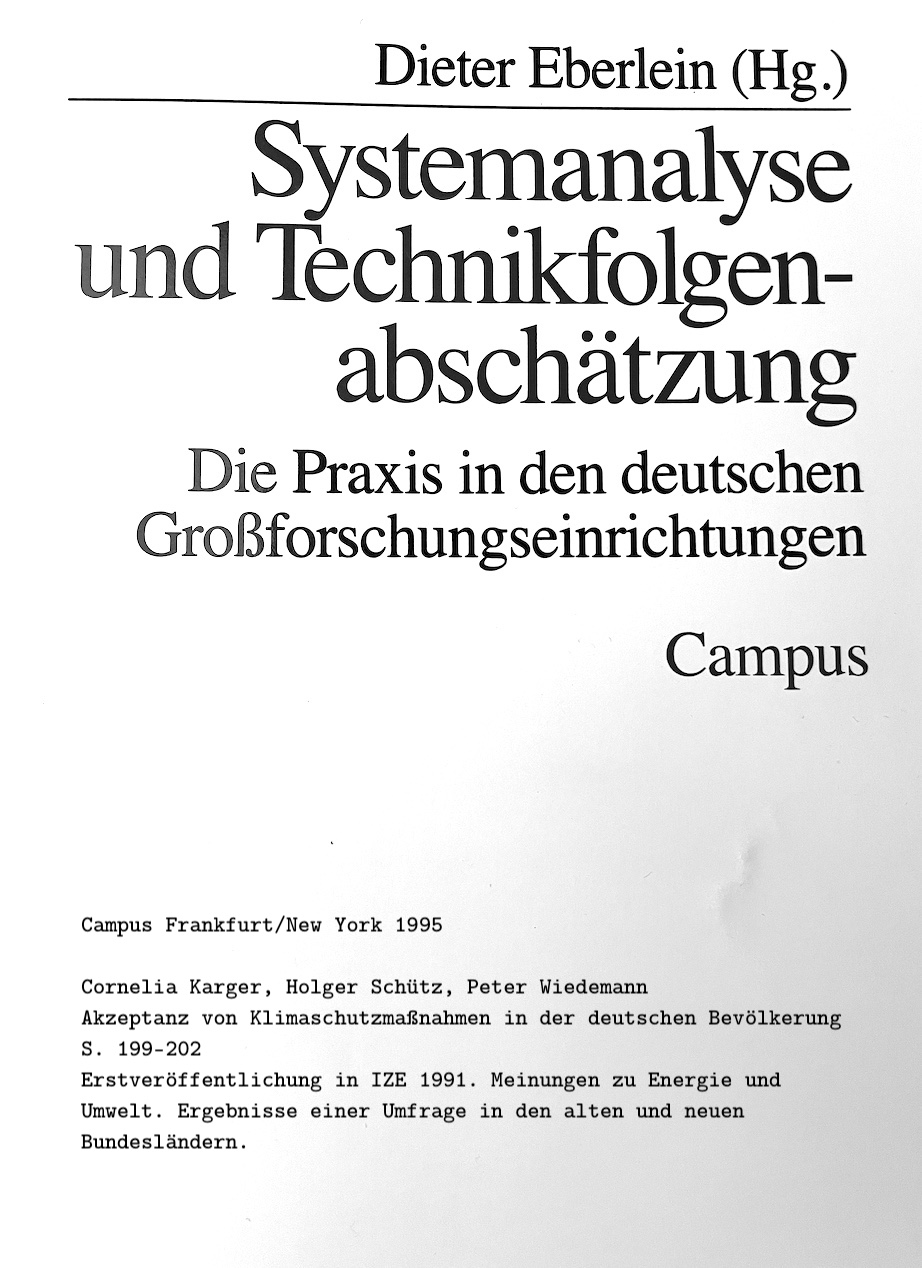
Scan Umschlag – Die Informationszentrale der Elektrizitätswirtschaft IZE war eine Einrichtung der deutschen Elektrizitätswirtschaft mit Sitz in Frankfurt wurde im Jahr 2000 aufgelöst und ging im Verband der Elektrizitätswirtschaft auf. Diese Art von Studien waren schliesslich auch kontraproduktiv zu den Zielen des VDEW. Der VDEW ging dann 2007 im Bundesverband der Energie- und Wasserwirtschaft auf.
Scan S. 202

Bonuslink Earth for All das heute erscheint.


CC-BY-NC Science Surf , accessed 28.07.2026

WordPress displaying Jupyter notebook

I could not find any plugin but a step-by-step guide at a blog commentary

1. Download your notebook as .ipynb file
2. Upload to https://jsvine.github.io/nbpreview/
3. Open your browser dev tools and copy the element id="notebook-holder" from the DOM
4. Paste it in your WordPress post as raw text
5. Grab CSS from https://jsvine.github.io/nbpreview/css/vendor/notebook.css

Maybe a true notebook in an iframe is a better solution?


CC-BY-NC Science Surf , accessed 28.07.2026

Please do not try to tell a story but report your results

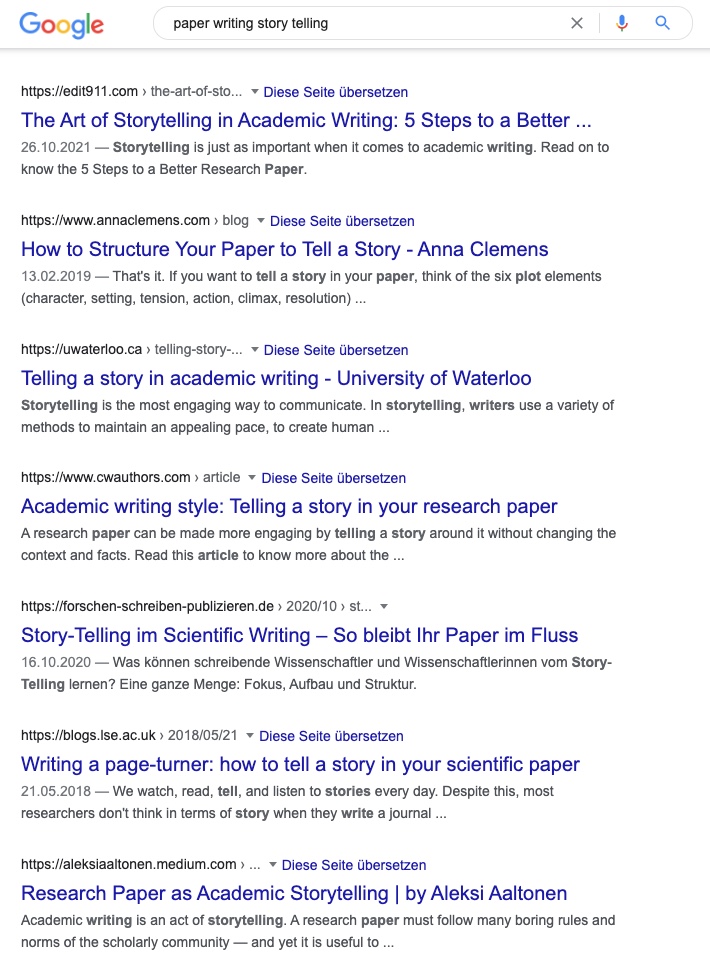
When I prepared a lecture last year on scientific paper writing I have found countless advices how to tell a story – it made it even into elife.

Don’t do that – there are lies and damned lies (Disraeli) while you are easily running into a trap when trying to “tell a story”. Preregister your study plan, tell the world what you did right from the beginning, what did not work, why you repeated an experiment or why changed your opinion.

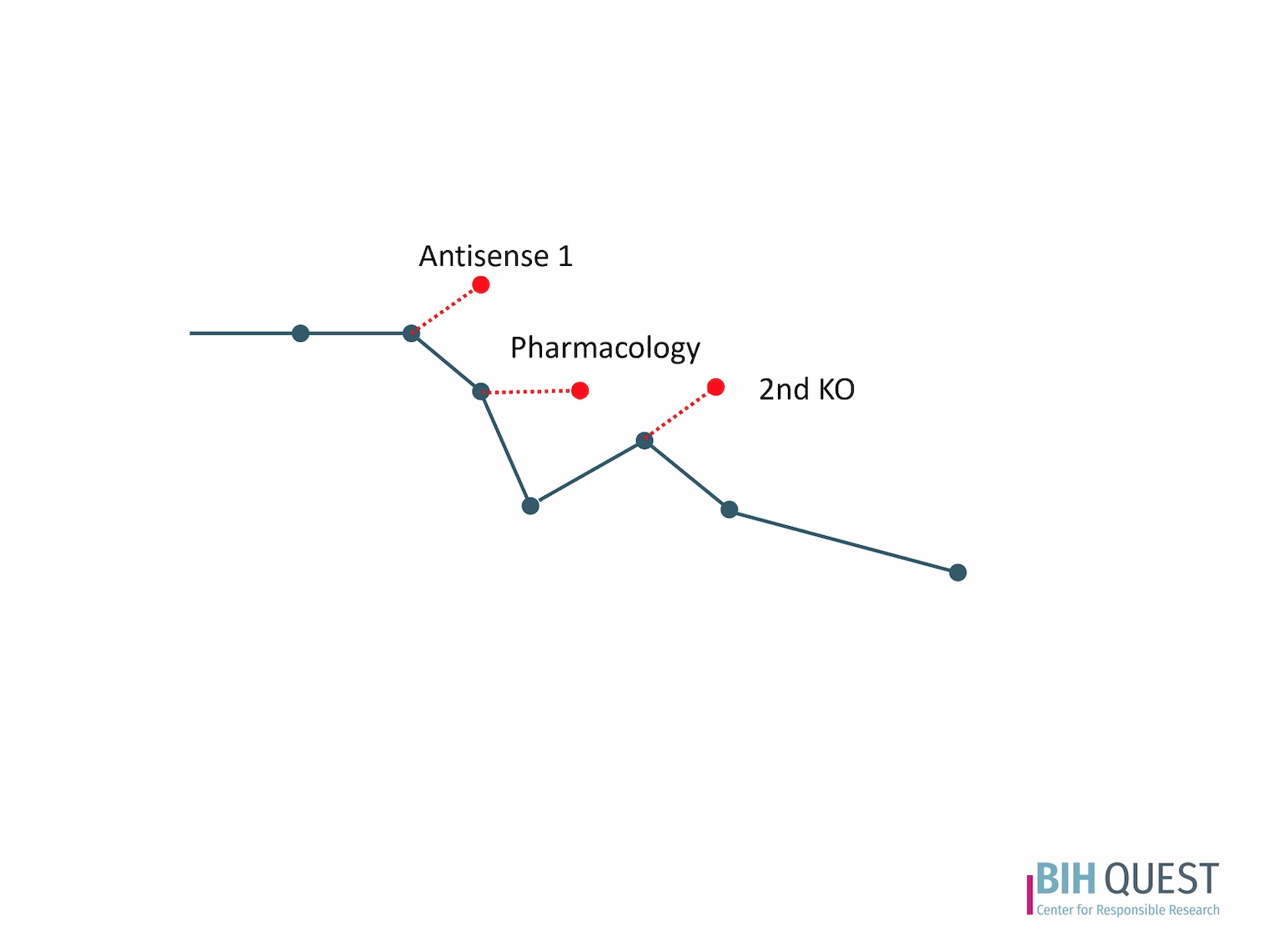
Writing a story from the backend distorts the proportions and misdirects attention. Ulrich Dirnagl highlighted this problem in an earlier talk here in March using the following two slides.

How we present results in a basically linear way – story telling. By NIH QUEST/Dirnagl.
How it would be fair to tell the story with numerous inputs, non working assay (primer, antibody, other samples), new literature and conference talks, where we constantly change our opinion that could have led to alternate papers. By NIH QUEST/Dirnagl


CC-BY-NC Science Surf , accessed 28.07.2026

So many asthma papers under fire

As an avid PubPeer reader, I found a new entry by Elisabeth Bik recently about Andreas Pahl of Heidelberg Pharma who has already one retracted and several more papers under scrutiny.

Unfortunately there are now also many asthma trash papers from paper mills. Another example was identified by @gcabanac, distributed by @deevybee and published at Pubpeer.

In total there are 386 asthma entries at PubPeer. What is really happening in this field? When I started the field there was just one misconduct case – Ranjit Kumar Chandra. That’s an increase from 1 to 386…

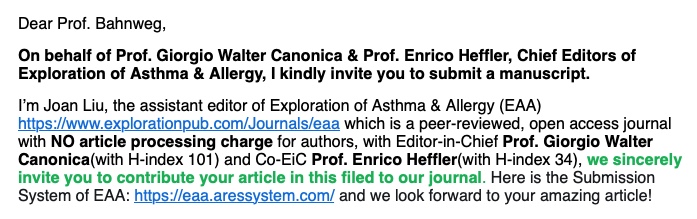
What makes it even more complicated that there is no border anymore to predatory journals if also respected scientists drop their names at predatory journals. Only recently I received an email addressed to one of my former technical assistants as “professor” inviting her to send a paper…


CC-BY-NC Science Surf , accessed 28.07.2026

The amyloid Western blot: Schrag vs Lesné

The amyloid analysis published in Nature has been commented at PubPeer and also earned a commentary of Charles Piller in Science. His “Blots on a field” news story is leading now even to an expression of concern by Nature.

The editors of Nature have been alerted to concerns regarding some of the figures in this paper. Nature is investigating these concerns, and a further editorial response will follow as soon as possible.

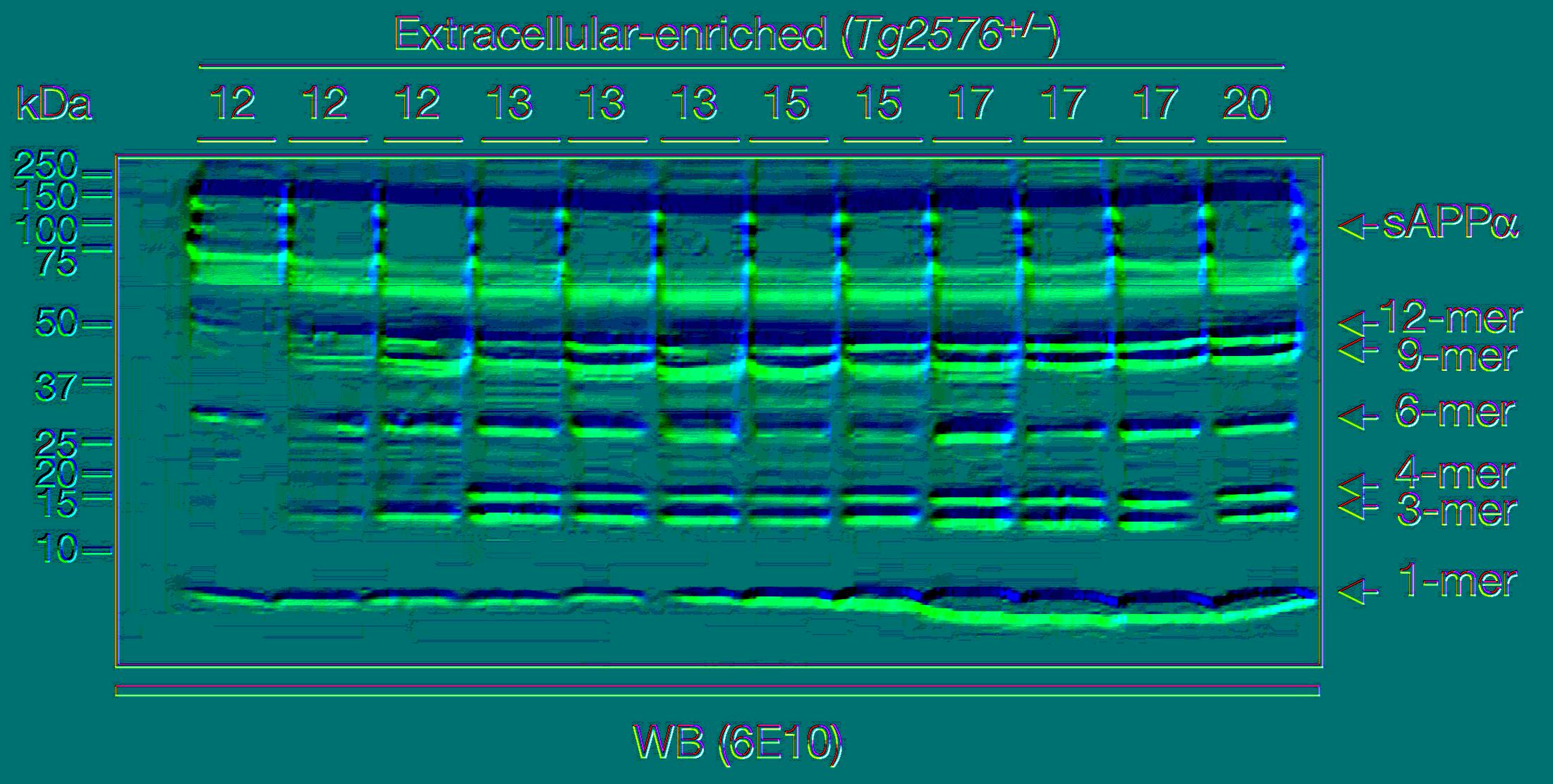
IMHO there are many artifacts including horizontal lines in Fig 2 when converting the image to false color display. I can not attribute the lines to any splice mark and sorry – this is a 16 year old gel image.

Basically an eternity has passed in terms of my own camera history with 5 generations from the Nikon D2x to the Z9.

So don’t expect any final conclusion here as long as we cannot get the original images.

false color display of Fig 2 a “the presence of 8 M urea did not alter the electrophoretic pattern of Aß oligomers in extracellular-enriched extracts from 12- to 20-month-oldbrains ofTg2576þ/2mice that were probed with 6E10 antibodies.”


CC-BY-NC Science Surf , accessed 28.07.2026

Initial data analysis

Here is my favorite R list of packages

library(DataExplorer)
plot_str(iris)
plot_bar(iris)
plot_density(iris)
plot_correlation(iris)
plot_prcomp(iris)

see also

devtools::install_github('https://github.com/paulvanderlaken/ppsr')
score(iris, x = 'Sepal.Length', y = 'Petal.Length', algorithm = 'glm')[['pps']]

while for robustness of models I use

devtools::install_github("chiragjp/quantvoe")
library(quantvoe)

Python versions come here or here.


CC-BY-NC Science Surf , accessed 28.07.2026

Overfitting and model degradation

My beginner experience here isn’t exhilarating – maybe others are suffering as well from poor models but never report it?

During the training phase the model tries to learn the patterns in data based on algorithms that deduce the probability of an event from the presence and absence of certain data. What if the model is learning from noisy, useless or wrong information? Test data may be too small, not representative and models too complex. As shown in the article linked above, increasing the depth of the classifier tree increases after a certain cut point only the training accuracy but not the test accuracy – overfitting! So this needs a lot of experience to avoid under- and overfitting.

What is model degradation or concept drift? It means that that the statistical property of the predicted variable changes over time in an unforeseen way. While the true world changes – maybe political or by climate or whatsoever – this influences also the data used for prediction making it less accurate. The computer model is static representing the time point when the algorithm has been developed. Empirical data are however dynamic. Model fit need to be reviewed in regular intervals and again this needs a lot of experience.


CC-BY-NC Science Surf , accessed 28.07.2026

“How come the Muggles don't hear the bus?”

This is a quote from Harry Potter book about the Knight Bus

The Knight Bus is a triple-decker, purple AEC Regent III RT that assists stranded individuals of the wizarding community through public transportation. It operates at a very fast speed and obstacles will jump out of its way. To hail the bus, a witch or wizard must stick their wand hand in the air in the same manner that a Muggle might do to hail a taxi. The Knight Bus’ conductor is Stan Shunpike, who greets passengers and handles baggage. It is driven by Ernie Prang.

How come the Muggles don't hear the bus? Because they don’t look for it. Nobody looks for a bus moving at the speed that the Night Bus moves at.

U.S. science is moving at Night Bus speed when the White House issued a new policy yesterday that will require, by 2026, all federally-funded research results to be freely available to the public without delay.

This research, which changes our lives and transforms our world, is made possible by American tax dollars. And yet, these advancements are behind a paywall and out of reach for too many Americans. In too many cases, discrimination and structural inequalities - such as funding disadvantages experienced by minority-serving colleges and institutions - prevent some communities from reaping the rewards of the scientific and technological advancements they have helped to fund. Factors including race, age, disability status, geography, economic background, and gender have historically and systemically excluded some Americans from the accessing the full benefits of scientific research. To tackle this injustice, and building on the Biden-Harris Administration's efforts to advance policy that benefits all of America, the White House Office of Science and Technology Policy (OSTP) released new policy guidance today to ensure more equitable access to federally funded research.

What about the German muggles BMBF, DFG, the major German academies, research and ethics organizations? How come that muggles don't hear the bus? Because they don’t look for it. Nobody looks for a bus moving at the speed that the Night Bus moves at.


CC-BY-NC Science Surf , accessed 28.07.2026

Human capital flight

There is an interesting paper on brain drain Why does the U.S. have the best research universities? Incentives, resources, and virtuous circles?

A demand for denominational sorting drove the creation of the nine American colonial colleges. For example, Massachusetts Puritans created Harvard to produce what they saw as a theologically sound education … Connecticut-based Puritans created Yale because they perceived that the Harvard of Massachusetts-based Puritans was too physically distant (in addition to too religiously liberal)

The authors attribute the following U.S. success to “reforms that began after the Civil War and enhanced the incentives and resources the system directs at research” which may be true. Maybe the overall strategy of the paper is questionable, looking at biographies of Nobel prize winners only- nevertheless the trend is clear that German impact is decreasing already in 1920 – while I always thought of an exodus of scientists only after 1933.

The U.S. does not spread so much money to various non-university based “Großforschung” organisations and there is much more private sponsoring of U.S. universities, so monies are more concentrated.

Higher salaries, lower teaching, and enhanced laboratory space illustrate some ways in which professors’ compensation began to reflect research performance. Furthermore, this period saw the emergence of tenure, a salient reward for performance.

The emergence of tenure seems to be important if you can make your living from your work and do not need to start campaigning like #IchbinHanna in Germany.


CC-BY-NC Science Surf , accessed 28.07.2026