Not an academic project, not an industry project, but still earn money with knowledge? Innocentive posted the request #4470259 for an ALS biomarker. Deadline is Nov 06, 2008 and you will get $1,000,000 USD for problem solving. Yea, yea.
firstmonday has an interesting article about the limits of self-organization and “laws of quality”. Given 52 million tracks in the Gracenote database, 1 million entries in Wikipedia and 17,000 books in project Gutenberg, Paul Duguid throughly examines the two laws of quality
Although more professionalized, similar principles operate in science. With these large genetic studies, I have the feeling that most errors occur at the interfaces, during hand-shaking of disciplines. There are certainly only a few people that can design a study, examine a patient, go to the laboratory, analyze and annotate the data and publish them. This means that even many eyeballs can not look around the corner and that it will take many years for the “good stuff to spread”. Yea, yea.
Certainly one of the best web resources for pharmacogenetics is the PharmGkB database that collects all kind of data about the relationships among drugs, diseases and genes. Of course you could sequence your genome or run expression profiling on a liver sample. However, you are probably here to find out what (serious!?) pharmacogenetic tests are already on the market.
Much can be said about the usefulness of such tests; I have doubts if there will ever be such personalized treatment as I can foresee some logistic problems to validate it ;-) More likely are group based therapies, maybe restricted to geographic ancestry. Here is a (first and very) preliminary collection of commercially available pharmacogenetic tests:
Needless to say that I have excluded here specific HIV mutations that may induce resistance to particular drugs (as I learned last week on a bioinformatics meeting here by Thomas Lengauer). I have also excluded all kind of sex-specific marker (e.g. SRY testing) and the whole nutrigenomics stuff.
Who knows more, for example about lansoprazole effectiveness, UGT1A9 and mycophenolic acid, UGT1A1 and irinotecan, COMT genotype and amphetamine response, pharmacogenetics of COX-2 inhibitors, and GRP78 responsiveness to chemotherapy? Is there any commercial test available for these genes? It seems that somebody should start a wiki on that, yea, yea.
Here is another gene list; only 6 tests have been approved by the FDA; Nature reports about Oncotype DX and Prostate Px as well as MammaPrint. See also an UK based paper
HLA-B*5701 was most commonly tested to identify those at risk of abacavir hypersensitivity among patients with HIV. A number of barriers to testing were identified, including lack of clinician knowledge and a lack of scientific evidence.
I am detailing in a forthcoming paper in “Allergy”, that the contradicting results found with ADAM33 (the first positionally cloned asthma gene) probably results from a rather poor design of all follow-up studies.
It does not make so much sense to repeat over and over the same few SNP marker; instead a full resquencing of the linkage region would be necessary. From the analysis of public LD maps it is even possible that neighboring genes may be responsible for the observed associations.
I have also doubts if the SNP-centric view is always leading to success. BTW there is a new database of over 400,000 non-reduandt indels of which 280,000 are validated by comparison with other human or chimpanzee genomes (see Mills et al., the indels are available in dbSNP under the “Devine_lab” handle).
Finally, linkage and association data can be used together after downloading new software using genotype inference.
It reduces the number of genotyping reactions and increases the power of genome-wide association studies. Our method combines sparse marker data from a linkage scan and high-resolution SNP genotypes for several individuals to infer genotypes for related individuals.
Sure, we
but this seems to be the best recycling for our old fashioned linkage data. Yea, yea.
The Geo IP database is available at Maxmind and allows to trace your home city from IP addresses. Here is a quick and dirty script to upload the Geo IP data into MySQL:
|wj_geo.cmd|
I would also put an index on loc_id. Finally the database should be available as
SELECT city
FROM GeoLiteCity INNER JOIN GeoLiteCityBlocks ON GeoLiteCity.locID = GeoLiteCityBlocks.locID
WHERE $myIP >= startIpNum AND $myIP <= endIpNum;
where $myIP is calculated as
substr($_SERVER['REMOTE_ADDR'],0,3) * 16777216 +
substr($_SERVER['REMOTE_ADDR'],4,3) * 65536 +
substr($_SERVER['REMOTE_ADDR'],8,3) * 256 +
substr($_SERVER['REMOTE_ADDR'],12,3)
Getting a scientific paper on your harddisk is quite simple. I am using a Fujitsu Scan Snap that can process a single page in a few seconds. The resulting PDF needs to be further tweaked by OCR recognition like ABBY FineReader (I couldn’t find any good open source alternative). FR will leave your PDF intact while adding recognized text as an overlay (or “underlay”). Unfortunately FR does not support batch processing but your OS will do by using a windows scripting engine like CLRscript. We also need a tool to extract a text file from the modified PDF. A good choice is pdftotext — look at the sourcecode and the DRM discussion before compiling it with a compiler like Cygwin. The following perl script doesn´t do anything than traversing your target directory and creating a batch file. As filenames offered by publishers are rather strange, I would first start to create some clean file names by replacing all spaces and brackets with something innocent like underscores.
perl.exe ocr.pl rename h:\pdf\2008\*.*
Now we create text files from the PDFs (usually done better by XPDF than directly by GDS).
perl.exe ocr.pl extract h:\pdf\2008\*.pdf
The resulting textfiles may be inspected: very small file sizes usually indicate no valid extraction and should be deleted before starting the OCR step as OCR is only done when text files are missing.
perl.exe ocr.pl ocr h:\pdf\2008\*.pdf
In the last step you may want to repeat the extract step.
ocr.zip
|wj_ocr.txt|
Microchimerism is an interesting phenomenon that describes the hosting of foreign cells in an individuum – the prefix micro relates to the rather low counts of foreign cells (see the self discussion).
It is believed (but unproven) that most cases of microchimerism relate to the persistence of fetal cells in the maternal organism. The background of microchimerism is extremely complicated as highlighted in a recent review about the immunology of placentation in mammals. This paper has some nice cartoons about the types of placentation (epitheliochorial, endothelichorial and haemochorial) where the invasive potential of fetal trophoblast cells is the culprit of reciprocal (?) cell traffic between mother and fetus. The highest risk is found in women with induced abortion; cell count is ranging from 0 to 21 male cells per 100,000 female cells in peripheral blood; transfer may occur from mother <-> child, twin <-> twin, or sib <-> mother <-> sib.
Microchimerism has been examined in transplantation medicine (where the recipient replaces the outer donor organ epithelium), in blood transfusion and HCT, as well as in some autoimmune diseases (systemic sclerosis, SLE, thyroiditis, PBC). A clinical review reports that fetal cells have been found to persist for many years, probably for a lifetime.
I have doubts if that is true as I am not aware of any quantitative long-term study. Nearly all studies identified only male cells in women although now genomic studies of single cells are possible allowing a much better identification of foreign cells. If you are looking for a PhD thesis, microchimerism could be your field!
I already wondered if microchimerism could lead to genotyping errors, a question that can now easily be tested on the garbage of genotyping labs: We usually have genotyping errors in the 1-10 o/oo range; sometimes we see also triallelic SNPs. As far as I can renember, microchimerism has never been analyzed in the allergy field, although allergy can transplanted as well as asthma. Yea, yea.
Jonathan Keller is taking a picture every day since Oktober 1998. As seen on Youtube – with more series on the web. “Sie haben sich gar nicht verändert”. “Oh!”, sagte Herr Keuner und erbleichte (Bert Brecht).
I found an apparent paradox between two studies. John Whitfield did a twin study in Australia and concluded that shared environmental effects decreased with age (from about 50% to 10%) while additive genetic effects increased. The new Sardinian> study found higher heritabilities among younger individuals and explained that by an increase of environmental insults with age. Nice said, but who is right?
I have read many useful (and also some less useful) comments how to squeeze WordPress to work as a CMS.
I did not want to make any major changes to scripts that would be lost after an upgrade. I did not want to have extra plugins to change home (for example by creating an overriding home.cfm). I did not want to have any new categories. I did not want to change permalink structure. I still need my directory plugin to work, I still need the blog (some redirects even loose the blog address!) and I wanted to keep the RSS feed.
After several hours I came up with an very simple solution: Take a standard page and rename its title and slug to “Home” – assign a special “Home” template – redirect htaccess to this page. The only trick is to make the “Home” template work: it is basically a copy of the index.cfm in your WordPress theme directory where the line calling loop.php is being replaced with a slightly modifed loop code.
myblog.php
|wj_myblog.php|
Hsien Hsien Lei has a good comment on gene names approved by Human Genome Organisation (HUGO) Gene Nomenclature Committee which are nevertheless offending . Some of the inappropriate names are LFNG – lunatic fringe homolog (Drosophila), MFNG manic fringe homolog (Drosophila) as well as SHH sonic hedgehog homolog (Drosophila). There are many more names that arise only from a particular culture (like death executioner Bcl-2); it seems also a particular kind of humour to call a deaf mouse Beethoven. Yea, yea.
There are many ways to do this – for example by reconfiguring your Apache installation. The fastest procedure, however, is to download DeleGate for your platform and create this batch file
rundelegate.cmd
|wj_rundelegate.cmd|
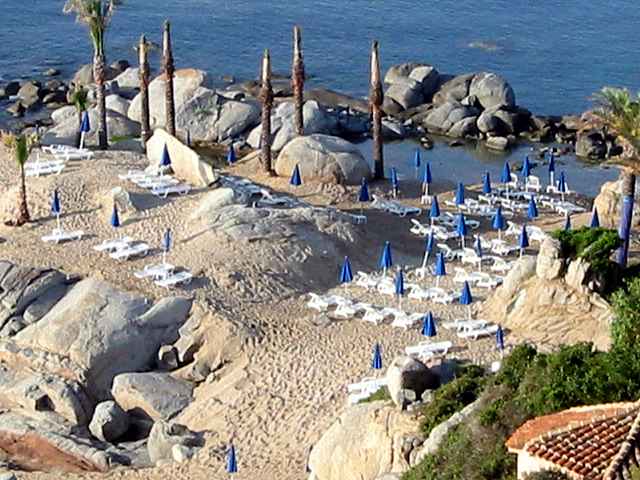
I renember a nice meeting in South Sardinia in 2002 (see my figure below) where a lot of famous people gathered for interesting talks in a wonderful surrounding.
A spin off from this Ogliastra Genetics Park – as the authors called it – is now a paper in PLOS Genetics that examines the heritability of 98 quantitative cardiovascular traits in 6,148 Sardinians.
Although the authors did not measure hematocrit, RBC related counts had an extremely high heritability (MCV 0.76, MCH 0.78). Hemoglobin was somewhat lower (0.47) which might in part be attributable due to some local selection factors. This result comes largely unexpected, as the high heritability of the MCV was not known so far.
In the absence of any assay for exogeneous EPO, hematocrit is used as an indirect parameter for testing athletes. I already wondered why cyclists are having such high values (if we exclude illegal drug use). This seems to be a genetically trait by self-selection – an anemic cyclist will not participate in the Tour de France. Yea, yea.
Here is an answer to the question what makes a champion ;-)
If I would ever find the time, I would write a book on the “self”. Inspired by the Eccles/Popper book that I bought as a student, I always wondered how different the self is being defined in sociology, psychology/psychiatry, philosophy and theology.
As my current focus is more on genetics and immunology, I found a paper by Francisco Borrego on the “missing self” quite interesting as it highlights the genetic self is determined mainly by MHC class I molecules, where only NK cells transfected with H-2Dd were able to confer resistance for being self-attacked. It would be nice if other disciplines could also provide such simple answers, yea, yea.
I have another suggestion: Zfp608 protects mouse mothers against immune-mediated attack by fetal cells.
Is there also a “digiself“?
Our identity has, for many years, existed quite independent of our physical incarnation in government, financial and other institutional databases. We are not real to the bank or other authorities unless we can produce something that links our physical self to our “real identity” in their database. We have many versions of this digital identity – or digiSelf, as I like to call it – spread among many databases, each with its unique characteristics, and inferred behaviours. Each one is more real to the institution – and ironically, to the people in that institution – than our physical self, what we consider to be our real self.