Category Archives: Software

WordPress: Multiline site title instead of tagline

I found it hard to change the layout of the tagline in my WordPress Twentyfourteen child theme as the element sits in a different hierarchy. But fortunately we can add text also from the CSS stylesheet (which is not visible in the sourceode!) using the content tag. It does not accept standard HTML while the special formatting is shown on stackoverflow.

.site-title :after {
	font-size: 25px;
    content: "\00000aBut let your communication be Yea, yea;\00000aNay, nay: for whatsoever is more than these cometh of evil";
    white-space: pre;
}

The reason for that? Just a quick fix.


CC-BY-NC Science Surf , accessed 24.08.2026

Wissenschaftsbetrug und soziale Akzeptanz

Mag sein, daß es immer mehr Wissenschaftsbetrug gibt. Es kann aber auch sein, daß nur das Bewusstsein geschärft ist. Es würde mich jedenfalls nicht wundern, daß der erhöhte Leistungsdruck statt zu weiteren Höchstleistungen zu noch mehr Betrug führt.
Aus einem ganz anderen Gebiet kommt nun eine Erklärung, warum es mit der Moral bei uns doch nicht so weit her ist.

Steuerhinterziehung gilt vielen in Deutschland als Kavaliersdelikt … “Die Steuerpflicht ist keine Norm, die man verinnerlicht hätte. Man trifft erst im Erwachsenenalter auf sie”, sagt Carsten Ullrich … Erstens lässt sich eine Norm wie diese relativ angstfrei missachten … Zweitens ist eine solche Norm, die sich nur intellektuell nachvollziehen lässt, “schwer zu verstehen” … In den neunziger Jahren ordnete ein soziologisches Standardwerk noch 18 Prozent der Bevölkerung dem Milieu der “Konventionalisten” zu, denen Pflicht und Akzeptanz am wichtigsten sind.

Die wissenschaftlichen Normen des exakten Messens und des vourteilsfreien Berichtes kann man nicht angstfrei missachten. Bei aufgeflogenem Betrug ist das Karriereende sicher.
Aber es stimmt natürlich, daß wissenschaftliche Redlichkeit eine relativ spät erfahrbare Norm ist, die sich nur intellektuell nachvollziehen lässt.
Der DHV will Wissenschaftsbetrug strafbar machen während Milos Vec in der FAZ davon nicht recht überzeugt ist und auf die Probleme einer strafrechtlichen Verfolgung hinweist.


CC-BY-NC Science Surf , accessed 24.08.2026

We cannot dispense with palliative measures (Freud)

Life, as we find it, is too hard for us; it brings us too many pains, disappointments and impossible tasks. In order to bear it we cannot dispense with palliative measures. ‘We cannot do without auxiliary constructions’, as Theodor Fontane tells us in his novel Effi Briest.

Sigmund Freud Religion as a mass delusion. Civilization and its Discontents (1931). The photo was taken in Vienna 1985, Burggasse not Berggasse…

Continue reading We cannot dispense with palliative measures (Freud)


CC-BY-NC Science Surf , accessed 24.08.2026

Forcing two divs in one row

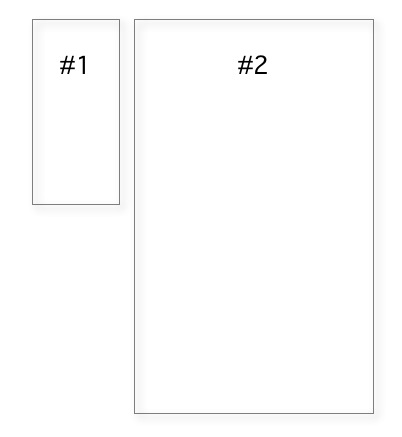
In my picture gallery I show two divs side by side. Div1 is variable and needed only on a few pages. Div2 is large, complicated and takes quite some time to load as there are numerous pictures and jquery actions.
div
Rather simple setup, isn’t it? The rendering should be smooth (both divs loading at final position and not jumping around at the end of page loading) and fluid (working on smaller devices as well) and without any dynamic stylesheet language.
This simple task turned out to be complicated. Continue reading Forcing two divs in one row


CC-BY-NC Science Surf , accessed 24.08.2026

Der Ramstetter Faktor 10,0613083

Jahrelang mussten sich das die ADAC Motorwelt Leser antun, jeden Monat neu, 15 Jahre lang, den einseitigen Autolobbyismus des Michael Ramstetter. Und jetzt ist sie auch quasi amtlich

die Zahl, mit der der mittlerweile ausgeschiedene ADAC-Pressechef Ramstetter die tatsächlich abgegebenen Stimmen bei der ADAC-Wahl zum “Gelben Engel” aufgepimpt hat

Der Spiegel hat wohl etwas gerundet in seinem Artikel, Continue reading Der Ramstetter Faktor 10,0613083


CC-BY-NC Science Surf , accessed 24.08.2026

How browsers render elements

This is a bit of mystery for me but fortunately there is some information out there, mainly the article “How browsers work” by Tali Garsiel.
I was a bit annoyed by the current Twentyfourteen WordPress Template that renders first some lines before getting towards the final layout. I am experimenting therefore with keyframe encapsulating as I did not find any better method. Continue reading How browsers render elements


CC-BY-NC Science Surf , accessed 24.08.2026

Filtered net, self-censored opinion, what can we belief?

This piece is about filtering

and this about censoring

Rupert Sheldrake is a fascinating member of the scientific world. His TED talk named "The Science Delusion" was controversially censored by the TED community after being aired. Rupert shares that humanity has become stuck in turning science into another belief or dogma vs. allowing the method to be what it is. Rupert Sheldrake outlines 10 dogmas he has found to exist within mainstream science today. He states that when you look at each of these scientifically, you see that they are not actually true.

Some views are strange of course, while others are not (replace for example “morphogenetic fields” with “DNA methylation”). Even with a few interacting factors, a causal proof is nearly impossible. More at SFGATE or The Guardian.


CC-BY-NC Science Surf , accessed 24.08.2026

Bad news are good news

e! Science News reports a new study in EPJ Data Science by Marcel Salathé showing that anti-vaccination sentiments spread more easily than pro-vaccination sentiments.

We find that the effects of neighborhood size and exposure intensity are qualitatively very different depending on the type of sentiment. Generally, we find that larger numbers of opinionated neighbors inhibit the expression of sentiments. We also find that exposure to negative sentiment is contagious

Read the full paper for the tricky design – at least the results fully underpin daily life experience. It’s certainly much easier to do Twitter than Facebook studies on the other hand these rather short messages are certainly not the main channel of many great “opinionated” people.


CC-BY-NC Science Surf , accessed 24.08.2026

Add geolocation barcodes to travel guides, conference leaflets, etc please

There are so cute little files while I am constantly looking up addresses in travel guides, madly identifying them at google earth before transferring location bookmarks to my mobile devices.

Why can’t publishers produce just some small geo.kml or geo.rdf files, deposit them somewhere on their web server and link them with barcodes that are printed each time a geolocation is referred too (example link Groebenzell)?

The iPhone needs a slightly different form (without kml) as well as an app like i-nigma that is pointed by this barcode

QRCode

to maps://?geocode=&q=gr%C3%B6benzell&ie=UTF8&client=safari&oe=UTF-8&hnear=Gr%C3%B6benzell,+Oberbayern,+Bayern&gl=de&t=m&z=14">Groebenzell.


CC-BY-NC Science Surf , accessed 24.08.2026

A broken contract

Erika Check Hayden ( who asked me by email before she wrote that piece ) has a new article about “A broken contract – as researchers find more uses for data, informed consent has become a source of confusion. Something has to change“. While I largely agree with her analysis of the current situation, her points for change are somewhat weakly described ( BTW that paper already generated a heated discussion at The Mermaid’s Tale: “Informed consent — who’s it supposed to protect, anyway?” ). Continue reading A broken contract


CC-BY-NC Science Surf , accessed 24.08.2026