Payback for referees

There is a recent letter at Nature saying

I have discovered a negative correlation between the number of papers that a scientist publishes per year and the number of times that that scientist is willing to accept manuscripts for review  … I therefore suggest that journals should ask senior authors to provide evidence of their contribution to peer review as a condition for considering their manuscripts.

While I agree with the overall observation, Continue reading Payback for referees


CC-BY-NC Science Surf , accessed 20.04.2026
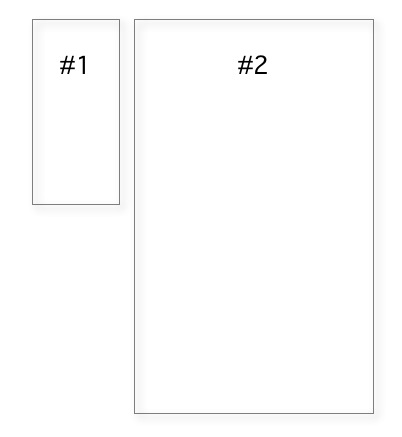
Forcing two divs in one row

In my picture gallery I show two divs side by side. Div1 is variable and needed only on a few pages. Div2 is large, complicated and takes quite some time to load as there are numerous pictures and jquery actions.
div
Rather simple setup, isn’t it? The rendering should be smooth (both divs loading at final position and not jumping around at the end of page loading) and fluid (working on smaller devices as well) and without any dynamic stylesheet language.
This simple task turned out to be complicated. Continue reading Forcing two divs in one row


CC-BY-NC Science Surf , accessed 20.04.2026

Der Ramstetter Faktor 10,0613083

Jahrelang mussten sich das die ADAC Motorwelt Leser antun, jeden Monat neu, 15 Jahre lang, den einseitigen Autolobbyismus des Michael Ramstetter. Und jetzt ist sie auch quasi amtlich

die Zahl, mit der der mittlerweile ausgeschiedene ADAC-Pressechef Ramstetter die tatsächlich abgegebenen Stimmen bei der ADAC-Wahl zum “Gelben Engel” aufgepimpt hat

Der Spiegel hat wohl etwas gerundet in seinem Artikel, Continue reading Der Ramstetter Faktor 10,0613083


CC-BY-NC Science Surf , accessed 20.04.2026

A Science career should not be like a Mastermind game

You do an experiment or a clinical study and you are the code braker not knowing the peg positions and colors ( set by a code maker ).

The codebreaker tries to guess the pattern, in both order and color, within twelve (or ten, or eight) turns. Each guess is made by placing a row of code pegs on the decoding board. Once placed, the codemaker provides feedback by placing from zero to four key pegs in the small holes of the row with the guess. Continue reading A Science career should not be like a Mastermind game


CC-BY-NC Science Surf , accessed 20.04.2026

How browsers render elements

This is a bit of mystery for me but fortunately there is some information out there, mainly the article “How browsers work” by Tali Garsiel.
I was a bit annoyed by the current Twentyfourteen WordPress Template that renders first some lines before getting towards the final layout. I am experimenting therefore with keyframe encapsulating as I did not find any better method. Continue reading How browsers render elements


CC-BY-NC Science Surf , accessed 20.04.2026

Value replicability not journal impact

There is an excellent comment on research misconduct at the brand new Pubmed Commons site by Dorothy Bishop:


Instead of valuing papers in top journals, we should be valuing research replicability. This would entail a massive change in our culture, but a start has already been made in my discipline of psychology (see http://www.nature.com). Continue reading Value replicability not journal impact


CC-BY-NC Science Surf , accessed 20.04.2026

Filtered net, self-censored opinion, what can we belief?

This piece is about filtering

and this about censoring

Rupert Sheldrake is a fascinating member of the scientific world. His TED talk named “The Science Delusion” was controversially censored by the TED community after being aired. Rupert shares that humanity has become stuck in turning science into another belief or dogma vs. allowing the method to be what it is. Rupert Sheldrake outlines 10 dogmas he has found to exist within mainstream science today. He states that when you look at each of these scientifically, you see that they are not actually true.

Some views are strange of course, while others are not (replace for example “morphogenetic fields” with “DNA methylation”). Even with a few interacting factors, a causal proof is nearly impossible. More at SFGATE or The Guardian.


CC-BY-NC Science Surf , accessed 20.04.2026

Giants in Medicine

The JCI has a nice series of video interviews with Marc Feldmann, Thomas Südhof, John T Potts, Aaron Ciechanover, Bruce Beutler, Jon Oates, Christine Seidman, Stephen O’Rahilly, Bruce Spiegelman, Paul Greencard, Jeffrey Friedman, Eugene Braunwald, Thomas Starzl, Francis Collins, Paul Marks, Joan Wilson, Donald Seldin, Tadataka Tachi Yamada, Llloyd Hollingsworth Smith, Robert Lefkowitz, Joseph Goldstein, Michael Brown, Harold E. Varmus.
The next generation is at the WALS board.


CC-BY-NC Science Surf , accessed 20.04.2026

The best vitamin D paper in 2013

I have probably two candidates here. The first one is by the Cantorna group in October 2013 and provides for the first time a link between between the gut microbiome and oral vitamin D exposure. We all thought that vitamin D has no influence on bacteria as they cannot utilize it. But that doesn’t seem to be true as the composition of the microbiome may change.

Mice that cannot produce 1,25(OH)2D3 [Cyp27b1 (Cyp) knockout (KO)], VDR KO as well as their wild-type littermates were used. Cyp KO and VDR KO mice had more bacteria from the Bacteroidetes and Proteobacteria phyla and fewer bacteria from the Firmicutes and Deferribacteres phyla in the feces compared with wild-type. In particular, there were more beneficial bacteria, including the Lactobacillaceae and Lachnospiraceae families, in feces from Cyp KO and VDR KO mice than in feces from wild-type … Our data demonstrate that vitamin D regulates the gut microbiome and that 1,25(OH)2D3 or VDR deficiency results in dysbiosis, leading to greater susceptibility to injury in the gut.

So while I always thought, oral vitamin D supplementation may have a direct effect on the gut mucosal system, this paper opens a completely new avenue. Continue reading The best vitamin D paper in 2013


CC-BY-NC Science Surf , accessed 20.04.2026

On risk taking

Here is a recent interview transcript of Bruce Beutler

JCI: Would you advise any of your trainees to have the same drive and motivation you did to go after one singular problem with the same kind of tenacity that you had?
Beutler: I was often told by people, including by my father, that I was putting all of my eggs in one basket. But I must say in retrospect, if we hadn’t been focused and committed to one problem, we probably wouldn’t have got there. It was risky but I would counsel people to undertake high-risk projects and do them serially, rather than to work in parallel with a number of low-risk projects.


CC-BY-NC Science Surf , accessed 20.04.2026

Should we boycott top science journals?

Maybe it is easier to answer that question if you are a noble winner. The Guardian is reporting two days ago

Leading academic journals are distorting the scientific process and represent a “tyranny” that must be broken, according to a Nobel prize winner who has declared a boycott on the publications…
Randy Schekman, a US biologist who won the Nobel prize in physiology or medicine this year and receives his prize in Stockholm on Tuesday, said his lab would no longer send research papers to the top-tier journals, Nature, Cell and Science.

With the large distribution factor of the internet, I think there is nothing to loose by sending a paper to PLoS or some of the BMC journals. Quality will survive, yea, yea.


CC-BY-NC Science Surf , accessed 20.04.2026

Reference values should be based on reference populations and not on politics

For a long time this has been a general rule. Just take the mean and substract two standard deviations and you get some useful reference values. Or whatever algorithm you like. This changed considerably where commercial or any other personal interests come into play. The cholesterin discussion settled only by studies showing that people with a history of cardiovascular disease may derive benefit from statins irrespective of their cholesterol levels.
I see some analogy in the vitamin D field. There is a German dermatologist who believes that 60% of all Germans are vitamin D deficient (the comments following the interview highlight this as an epiphany “totale Erleuchtung”). And a more recent paper showed that “89.9%” of all healthy newborns being insufficient. Really looks like a mix-up of some basic concepts in clinical medicine, yea, yea.


CC-BY-NC Science Surf , accessed 20.04.2026