Responsibility for algorithms

Excellent paper  at towardsdatascience.com about the responsibility for algorithms including a

broad framework for involving citizens to enable the responsible design, development, and deployment of algorithmic decision-making systems. This framework aims to challenge the current status quo where civil society is in the dark about risky ADS.

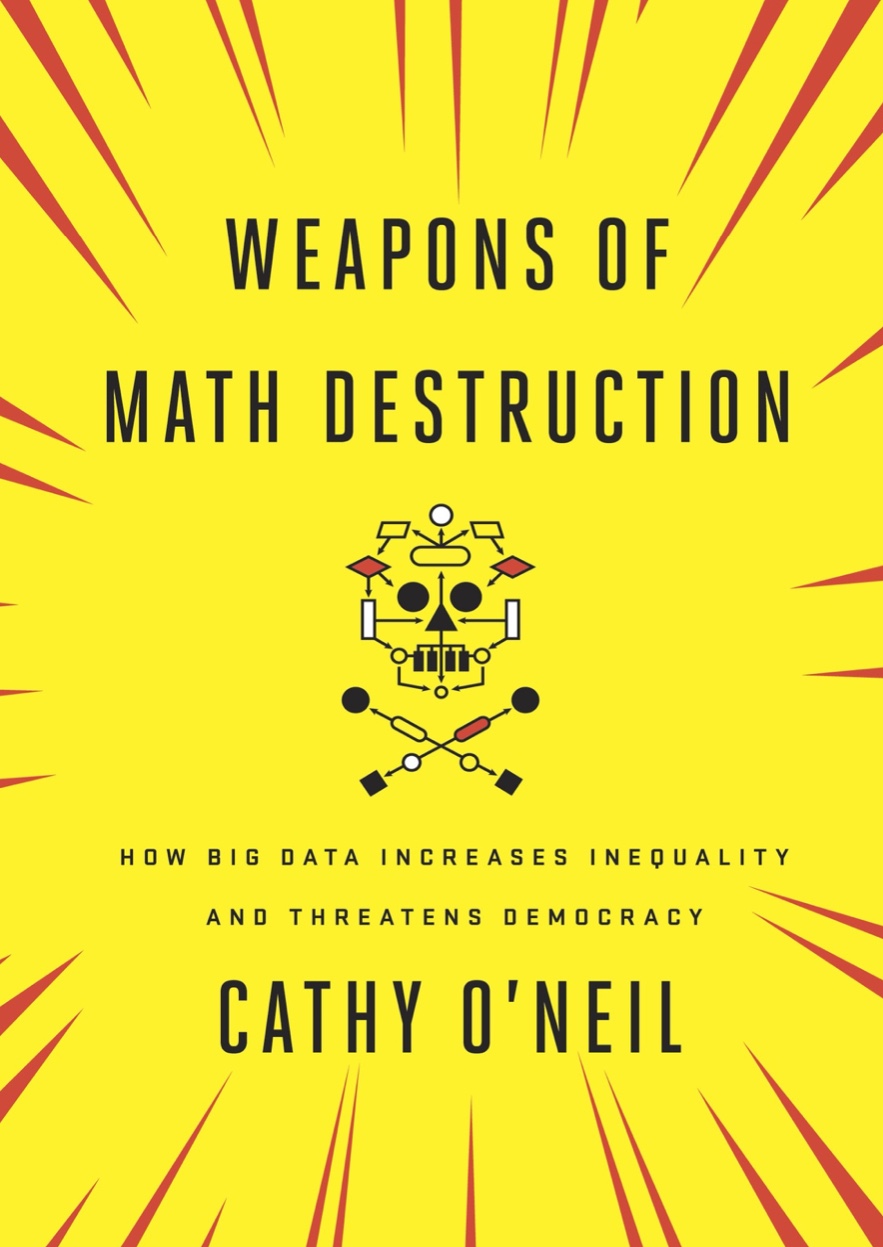
I think that the responsiblity is not primarily with the developer but with the user and the social and political framework ( SPON has a warning about the numerous crazy errors when letting AI decide about human behaviour while I can also recommend here the “Weapons of Math Destruction” ).

Being now in the 3rd wave of machine learning, the question is now already discussed (Economist & Washington Post) if AI has an own personality.


The dialogue sounds slightly better than ELIZA but again way off.

We clearly need to regulate that gold rush to avoid further car crashes like this one in China and this one in France.


CC-BY-NC Science Surf accessed 17.01.2026

Frieden ist kein Zustand sondern ein Prozess

Frieden ist kein Zustand, sondern ein Prozess – so das neue Ethik-Evangelisch Lexikon

Zentral sind vielmehr auch Aspekte wie soziale Gerechtigkeit, Rechtsstaatlichkeit, Achtung der Menschenrechte und Sicherheit für alle Menschen. Dennoch bleibt die Frage nach der Anwendung von Waffengewalt auch für den gerechten Frieden zu diskutieren, gilt diese nach wie vor als äußerste Option.

Lesetipp dazu der frühere Eintrag zu Antje Schrupp “Der Pazifismus ist nicht gescheitert”.

Oder noch besser Christoph Schneider-Harpprecht  “Revision der evangelischen Friedensethik?”

Für die evangelische Friedensethik gilt der Primat der friedlichen Konfliktlösung … Gerade angesichts eines eskalierenden und sich auf Dauer stellenden Krieges wie in der Ukraine weist die Friedensethik der Kirche ihre Aufgabe zu: stets für den Primat des Schutzes des Lebens einzutreten, für den Frieden zu beten, den Opfern humanitäre Hilfe zu leisten, ein Ende der Gewalt zu fordern, zivilen Widerstand zu fördern, ein Schweigen der Waffen und Lösungen am Verhandlungstisch zu fordern.


CC-BY-NC Science Surf accessed 17.01.2026

PubPeer Pearls I

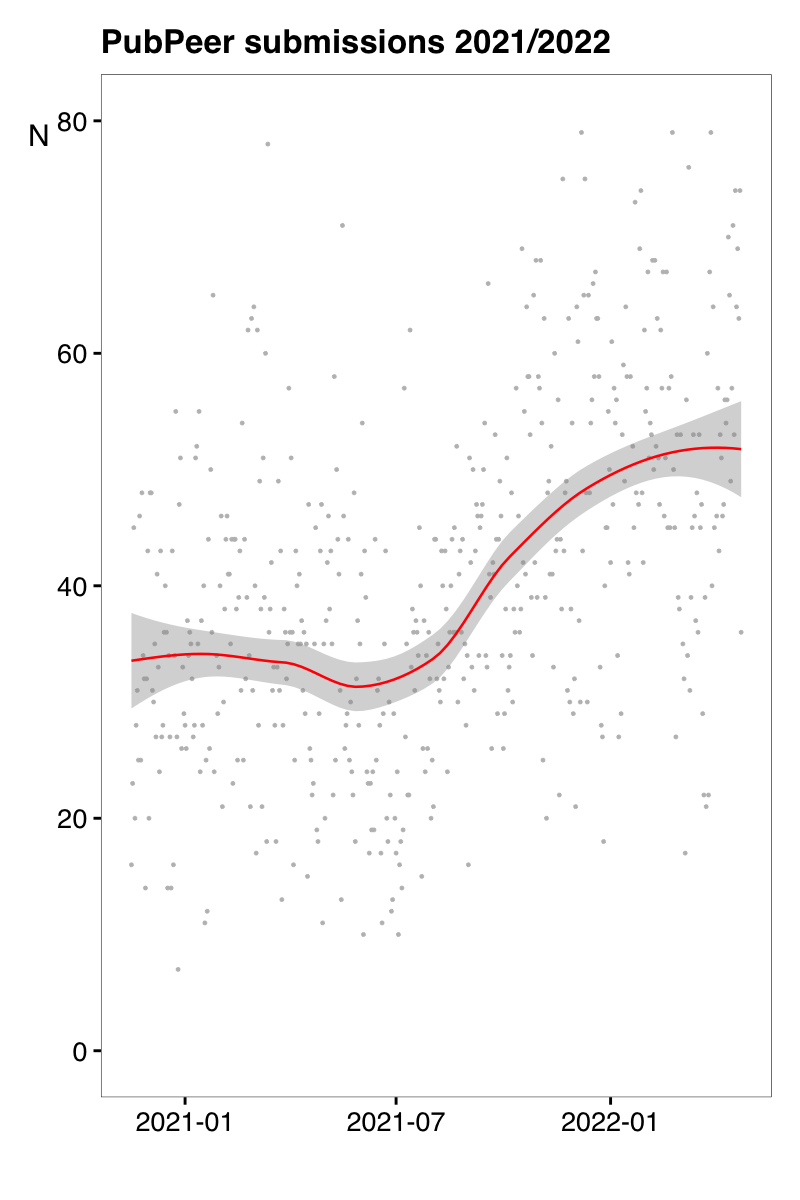
It’s always interesting if we can find a discussion under a PubPeer article with more than 3 comments. Elisabeth Bik collected some of these interesting #PubPeer Pearls at Twitter while I am starting a new collection here.

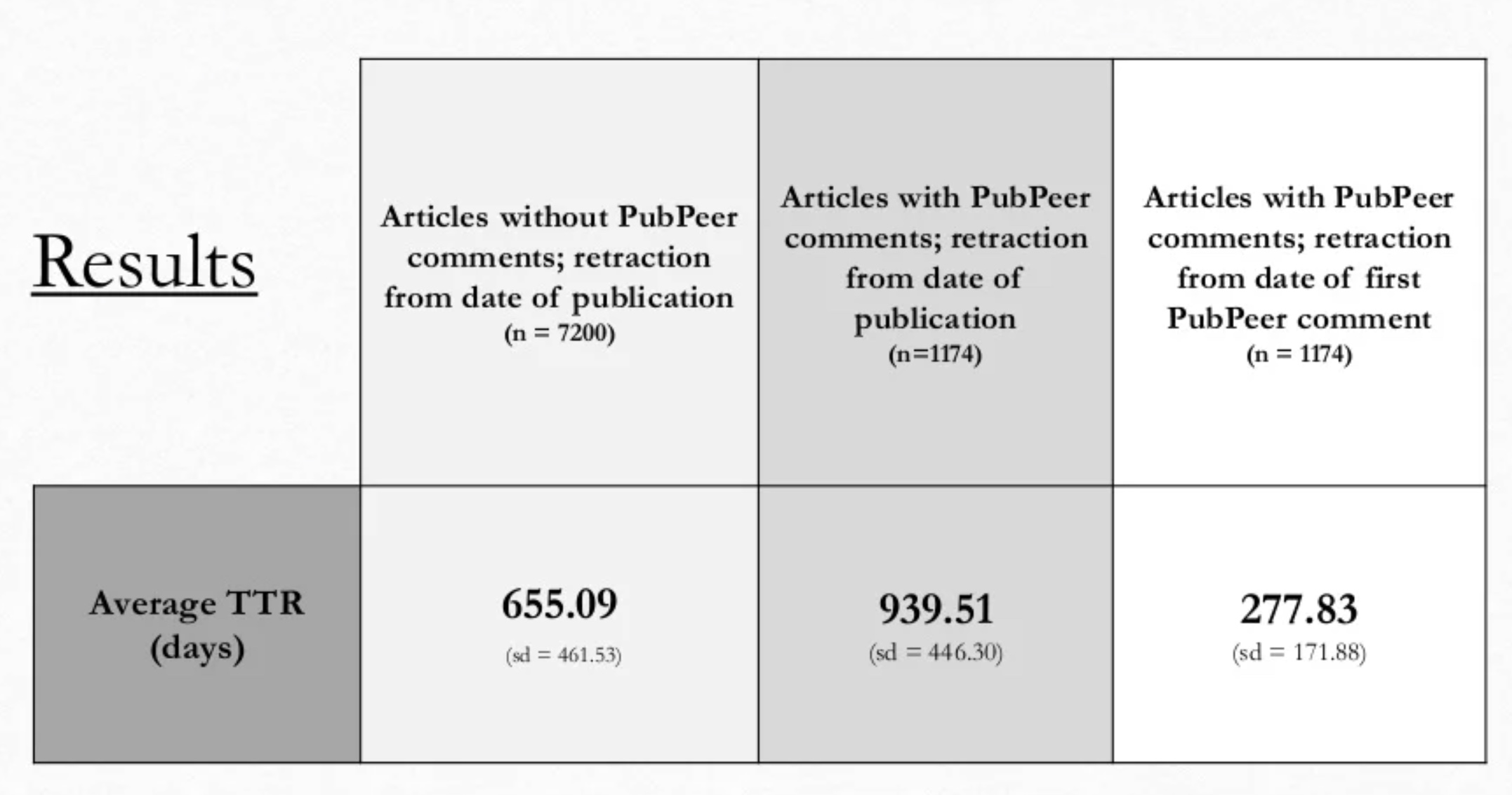
The longest thread that I remember is this one with 290 comments around a retracted article while my most appreciated PubPeer author Continue reading PubPeer Pearls I


CC-BY-NC Science Surf accessed 17.01.2026

Ghost authors

We all know that there are animal co-authors in the scientific literature like the dog of Polly Matzinger. Here is another example, see a further nice story of Sophie Fessl …

https://medium.com/@brainosoph/the-ghost-of-stronzo-bestiale-and-other-fake-scientific-authors-b4e1c6b5f424


CC-BY-NC Science Surf accessed 17.01.2026

About the ‘failed scientist’ trauma

Three journalists writing about science journalism, administration & support jobs

In recent years, we have seen ‘support’ jobs become more important at research organizations, including roles such as data stewards, research software engineers, scientific community managers and program managers. We have seen how a diversity of roles and contributions drives progress and success in research and innovation. We have come to see the sharp distinction between ‘academics’ and ‘support staff’ as a barrier to effective research because it discourages a culture of collaboration and appreciation of a diversity of roles and contributions. As professionals, we make a significant contribution alongside conventional academics….We work in partnership with researchers, contributing unique expertise and skills.

I think this is much more a trauma from the inside of journalists, department managers et al. than from “active scientists” aka academics who plan, analyse, publish and teach a continuous stream of new ideas. Without standing on the shoulders of others, also the most prolific scientist would fail immediately.


CC-BY-NC Science Surf accessed 17.01.2026

The Lancet and scientific integrity

We have learned in the past that the Lancet published editorials that clearly separated the journal from the publisher Elsevier

Reed Elsevier’s response is that the sale of military equipment is legal, government supported, and tightly regulated. However, The Lancet‘s collaborations in child survival and health-systems strengthening, for example, risk being tainted by Reed Elsevier’s promotion of the “selling process” of arms.

Of course you can’t sell weapons and distance yourself from selling weapons at the same time…


CC-BY-NC Science Surf accessed 17.01.2026

Ein Fahrrad Abstandswarner

Nach Stromzähler und Gasuhr kommt hier nun mein drittes Raspberry Pi Zero Projekt: ein Abstandswarner für vorbeifahrende Fahrzeuge. Das erste Mal habe ich davon in einem wissenschaftlichen Artikel gelesen, dann gab es den Radmesser in Berlin (das Projekt war toll aber die Kiste dann doch etwas sperrig).

Auch auf Kickstarter stand mal was und dann gibt es auch noch den 200€ Varia Radar von Garmin – allerdings hatte keines der bisherigen Projekte eine Kamera eingebaut.

Laser und ToF hatte es mir immer schon angetan, dann probieren wir das auch mal hier.

Continue reading Ein Fahrrad Abstandswarner


CC-BY-NC Science Surf accessed 17.01.2026

Es irrt der Mensch solange er lebt

Es irrt der Mensch solang er lebt, weil er so gern nach dem Falschen strebt (Uhlenbrock). Nach längerem Tiefflug nun wieder mal ein Fischer Höhenflug über Irrtum und Schuld

Der Mensch ist nicht allwissend. Sagen wir: Er könnte alles wissen, weiß es aber nicht. Was ihn auszeichnet, ist sein Zwang zur Kausalität. Der Hering nimmt die Welt, wie sie kommt. Der Schimpanse zweifelt. Der Mensch ist sicher, dass alles im Universum eine Ursache hat. Wenn er sie nicht kennt, ändert er diese Ansicht nicht: Er kennt die Ursachen dann eben »noch« nicht. Wenn alle Wissenschaft vollbracht ist, werden wir alle Ursachen und Folgen des Kosmos kennen. Wer das nicht glaubt, kann immer noch an Gott glauben. Nur wer die Welt für ursachenlos hält, ist verrückt.


CC-BY-NC Science Surf accessed 17.01.2026

Bürokraten

Wolf Lotter im Standard

Alle halten sich für kreativ. Doch unsere Kultur produziert Verwalter am laufenden Band.
Die Realität ist ein Witz, den man ernst nehmen muss. Auf einem Foto, das im Web kursiert, sieht man elf Männer auf einer Baustelle. Jeder von ihnen hat eine Bildlegende, in der steht, wofür sie zuständig sind. Der Erste sitzt entspannt. Das ist der Human-Resources-Manager.
Rechts neben ihm steht, die Hände locker in die Hüften gestemmt, der Marketing-Manager, daneben der Logistik- und der Communication-Manager, die sich dem Internal Supervisor zuwenden, der sich erschöpft auf einer Schaufel abstützt. Dahinter checkt der Security-Manager seine Mails, das macht auch der IT-Manager gleich nebenan, und der Project-Manager rechts von den beiden unterhält sich mit dem Product-Development-Manager, der seinen Fuß cool auf einem Erdhaufen abstützt. Den hat einer ausgehoben, der von all den anderen umringt wird, er steht in einem Loch und schaufelt und schwitzt.


CC-BY-NC Science Surf accessed 17.01.2026

My CV

Chris Woolston writes about a new type of CV in science career

CVs have long been part of the currency of scientific promotion. Scientists seeking a position or a grant often feel obliged to list every publication, presentation and award in a single document intended to sway committees through its sheer length and volume. The typical CV follows a time-worn template, says Robert Morrell, an education researcher and former director of the New Generation of Academics Programme at the University of Cape Town in South Africa. “ ‘I was born, I went to school here, I had these publications, these are the students I graduated.’ People who write CVs like that are missing the boat.”

The UKRI is not alone in seeking to rethink the CV in response to a renewed focus on team science and equity, diversity and inclusion (EDI). It modelled its new CV format on ‘Résumé for Researchers’, introduced in 2019 by the Royal Society in London. Similar initiatives have been unveiled by research councils in the Netherlands and Luxembourg.

I wish this initiative would have come 10 or 20 years earlier…

The Royal Society template has only 4  blocks. I could fill that template in 20 minutes while for a conventional CV it would take me 2 days.

  1. Personal details: Provide your personal details, your education, key qualifications and relevant positions you have held.
  2. How have you contributed to the generation of knowledge?
  3. How have you contributed to the development of individuals?
  4. How have you contributed to broader society?


CC-BY-NC Science Surf accessed 17.01.2026