All posts by admin

Dealing with noise

Public Rambling discusses post-publication journals:

These ideas of sorting based on measures of usage is already being tested by the new Frontiers journals. These are a series of open access journals published by an international not-for-profit foundation based in Switzerland. As PLoS ONE, these journals aim to separate the peer-review process of quality and scientific soundness from the more subjective impact evaluation. In practice they are doing this by publishing research in a tiered system with articles submitted to a set of specialty journals.

I am already in favor Continue reading Dealing with noise


CC-BY-NC Science Surf accessed 16.01.2026

The logic of science?

Edge has a wonderful article about statistics:

… statistical and applied probabilistic knowledge is the core of knowledge; statistics is what tells you if something is true, false, or merely anecdotal; it is the “logic of science”; it is the instrument of risk-taking; it is the applied tools of epistemology [and epidemiology Continue reading The logic of science?


CC-BY-NC Science Surf accessed 16.01.2026

Try to stay away from rants and comparisons

for living then longer … This might be a good rule for private life (and even for a scientific career) but not so much for the progress of science.
There is another allergy gene paper on FCER1A and RAD50. FCER1A has some tragedy as the authors believed for many years in FCER1B (and others in FCER2).
Another tragedy comes with the second gene – Continue reading Try to stay away from rants and comparisons


CC-BY-NC Science Surf accessed 16.01.2026

If a thought arises, take note of it and then dismiss it

Can we really control our thoughts? A PLoS ONE paper is looking into neural correlates of distraction by comparing 12 Zen meditators and 12 control subjects that were offered a “real English word” or “not a real English word” while resting in a 3 Tesla Siemens Magnetom. Outcome has been the time of refocusing attention to the breathing. The results are quite convincing (and not really unexpected) that the Zen meditators showed a reduced duration of their neural response to distraction probably by cutting down emotional self-reflectance and other associations coming up. I would be happy to participate also in a trial where somebody could record my EEG while driving on the of these new 185 kW Tesla roadsters.


CC-BY-NC Science Surf accessed 16.01.2026

ORMDL3 – more inconsistencies in the Nature paper

It seems that CEA just published my rather critical view of the recent ORMDL3 association paper. My letter had been first submitted to “Nature” but rejected after review.
A rebuttal seemed to be necessary as the authors repeatedly highlight ORMDL3 as a new asthma gene – in the printed Nature paper, in the Nature podcast and in the accompanying press releases. They even continue with reviews saying that

Completion of the human genome sequence and the advent of genome-wide association studies have resulted in the identification of two novel asthma susceptibility genes, ORMDL3 and CHI3L1, in the past year.

Continue reading ORMDL3 – more inconsistencies in the Nature paper


CC-BY-NC Science Surf accessed 16.01.2026

The largest experiment of the world

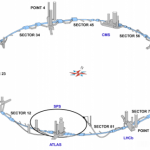
Physics gets now a lot of attention with the largest experiment ever done with the LHC (pictures+data).
* largest machine (26.659 m diameter)
* largest freezer (60 tons helium)
* fastest runaway (99,99999 % speed of light)
* highest energy consumption (7 TeV)
* most lonely place – vaccum (10^-13 at)
* hottest place 100.000-fold temperature of the sun
* coldest place onearth (-271,3°C)
* largest supercomputer

Gratulations from the biomedical field that produced much less records in this week.


CC-BY-NC Science Surf accessed 16.01.2026

The end of the hygiene hypothesis

The authors put a question mark at the end of the above statement while I would not hesitate to put an exclamation mark there. Writing this as a comment to a new study in the IJE they summarize the evidence that the “epidemics” of asthma in Western countries has begun to decline – as hygiene standards are not declining this might indicate the end of the hygiene hypothesis. Continue reading The end of the hygiene hypothesis


CC-BY-NC Science Surf accessed 16.01.2026

Dissent over descent

Having a free copy of the Lancet at the moment, I found a nice book review about “Dissent over Descent” by Steven Rose.

[He] takes a pleasure, which in part I share, in puncturing the often hyperbolic claims of natural scientists to be unimpeachable purveyors of absolute truth Continue reading Dissent over descent


CC-BY-NC Science Surf accessed 16.01.2026

The pointillism GWA plot


The experts in the field will immediately notice what I am suggesting here – an improved GWA plot that does not take into account p values alone but also effect sizes. I was experimenting some time with smile plots but finally ended with this bubble plot. Bubble size for 0.5<OR>2 is set to a minimum while all other ORs get increasing bubbles (BTW use for OR<1 a 1/OR transformation beforehand). Chromosomal colors are from a self defined palette using the colorRampPalette function in R which makes it look like pointillism art. The real question: Did the previous GWA p value screening miss some important effects? For example the important dot at x=4 and y=4?


CC-BY-NC Science Surf accessed 16.01.2026

Common disease + common variant = common misunderstanding?

Three large studies on schizophrenia now all agree that rare structural variants (CNVs) have a causal role in disease causation – probably by affecting large regions at 1q21 and 15q11 that contain all some “neuro”-genes (Harvard, Decode, Seattle). There are two major points that let me wonder if these papers even mark a turning point in our understanding of genetic causes of human diseases that is largely influenced by the Chakravarti hypothesis of common disease and common variants (CDVC). The Seattle paper had the most clever comment on that

We propose an alternative model: that some mutations predisposing to schizophrenia are highly penetrant, individually rare, and of recent origin, even specific to single cases or families.

Continue reading Common disease + common variant = common misunderstanding?


CC-BY-NC Science Surf accessed 16.01.2026