This is basically an update of my 2017 Allergy paper where I asked about sequelae of early vitamin D supplementation.
Two extensively examined hypotheses are the hygiene hypothesis (lack of protective bacterial exposure which leads to subsequent allergy) and the vitamin D hypothesis (early vitamin D supplementation sensitizes newborns against allergens) … The interesting question is: Are these concepts exclusive? … There is some preliminary evidence that - like many other environmental factors -vitamin D may modify the human microbiome.
Only yesterday a paper popped up during a presentation of Amelie Baud about the influence of social partners and the gut microbiome. This 2018 study tested gut microbial composition from 16S rRNA sequencing during the first year of life and subsequent risk of asthma in 690 participants
1-year-old children with an immature microbial composition have an increased risk of asthma at age 5 year … the microbial composition was not affected by maternal asthma status suggests that only susceptible children, exposed to inappropriate microbial stimulation during the first year of life, may express their inherited asthma risk …. The five most discriminating indicator OTUs for each cluster were identified for PAM cluster 1 as Enterobacteriaceae, Staphylococcus, Streptococcus, Bifidobacterium and Enterococcus, and for PAM cluster 2 as Faecalibacterium, Bacteroides(x3), and Anaerostipes … the risk of developing persistent asthma was increased (adjusted hazard ratio (aHR) 2.87 (1.25-6.55), P = 0.013) if the microbiome remained in PAM cluster 1 at age 1.
IMHO this doesn’t look very much like direct microbiome effects but some colliding factor. The authors discuss cesarean section-birth and antibiotics as relevant factors while I wonder why the last author (who is a known pro vitamin D lobbyist ) doesn’t take into account vitamin D here?
there was a significant association between community composition and vitamin D supplementation at the genus level. The vitamin D group had a higher abundance of genus Lachnospira, and lower abundance of genus Blautia (linear discriminate analysis >3.0). Moreover, individuals with 25(OH)D >75 nmol/L had a higher abundance of genus Coprococcus and lower abundance of genus Ruminococcus compared to those with 25(OH)D <50 nmol/L.
Vitamin D supplementation significantly increased gut microbial diversity. Specifically, the Bacteroidetes to Firmicutes ratio increased, along with the abundance of the health-promoting probiotic taxa Akkermansia and Bifidobacterium. Significant variations in the two-dominant genera, Bacteroides and Prevotella, indicated a variation in enterotypes following supplementation.
So is the microbiome just an indicator of vitamin D exposure in genetic susceptible children?
Piller minimizes the rationale used to select the placebo-controlled trial design and suggests that there is agreement that such a design is unethical… The News story notes that the majority of children in the trial were Black and states that this constitutes overrepresentation… Rather than being criticized, this trial should be commended for inclusion of appropriate trial participants…. Piller writes that participants were at increased risk of fractures and that the nine bone fractures experienced by study participants were more than anticipated, without specifying the magnitude of any increased risk or the anticipated number of fractures. However, there is no consensus that any increased risk exists…
as well as the response of Dr. Celedon in the same issue
Piller misrepresents the Vitamin D Kids Asthma Study ("Vit-D-Kids" or "VDKA") . He reports concerns about the study's design, participant safety and selection, consent forms, and report trans-parency. These doubts are unfounded. VDKA ethically investigated a potentially important treatment for childhood asthma.
Please read also the new Medium article by Dr Berg and the medRxiv article by Dr Celedon.
For whatever reason the story surfaced again yesterday at Bluesky. For posteriority here is an unrolled thread with some interesting new details by Dr. Berg.
Unfortunately some Twitter links expired recently but the links to the printed Science paper are still correct.
This is one of the most unfair attacks of a dubious science journalist on a reputable scientist.
I know Dr Celedon for several decades and although I never agreed on his opinion on high vitamin D demand in newborns, this discussion was always fair and on a high academic level.
The motivation of Piller is unclear. Most likely and as we found with other stories he wants to establish himself as an investigative “Woodward-Bernstein style” reporter on the cost of his victims.
The so called “ethics” experts of Piller missed the biological facts of vitamin D metabolism.
Erfolg gegen irreführende Werbung bei Nahrung für Kleinkinder: Das Landgericht München I hat einer Klage des Verbraucherzentrale Bundesverbands (vzbv) gegen die Hipp GmbH & Co. Vertrieb KG Recht gegeben. Demnach sind mehrdeutige Werbeaussagen zum angeblichen Vitamin D- und Calciumbedarf von Kindern bei Milchersatzprodukten untersagt. "Verbraucherinnen und Verbraucher müssen bei Lebensmitteln für Kleinkinder darauf vertrauen können, dass die Unternehmen besonders verantwortungsbewusst handeln. Dazu gehören klare und deutliche Informationen über Vitamine und Nährstoffe", sagt Susanne Einsiedler, Rechtsreferentin beim vzbv. "Eltern sollten nicht den Eindruck bekommen, dass bestimmte Produkte nötig sind, damit ihr Kind ausreichend versorgt wird. Kinder über einem Jahr brauchen in der Regel keine speziellen Lebensmittel".
Auch wenn das Urteil noch nicht rechtskräftig ist, gehe ich noch einen Schritt weiter, es braucht überhaupt keinen Vitamin D Zusatz in der Säuglingsmilch, auch nicht in der Anfangsmilch, es wird längst zuviel direkt supplementiert.
Hipp Werbung zu Vitamin D, die erst am 14.7.2020 von https://shop.hipp.de/hipp-kindermilch-combiotikr-1-600g-2588.html gelöscht wurde
Der Vitamin D Hype schadet mehr, als dass er nützt. Orales Vitamin D kann zu späteren Allergien führen, auch wenn Fachgesellschaften die Vitamin D Supplementierung aus Tradition weiterhin unkritisch sehen.
Nichts Neues also unter der Sonne – ich erinnere mich an Aktenberge im Bundesarchiv Berlin, in denen sich einschlägige Geschäftemacher schon vor 80 Jahren einen jahrelangen Streit mit den Behörden lieferten.
I remember an old vitamin D book – I believe it was Feldman’s Vitamin D – that argues that if we are going down the Transsahara Route (Algier-Lagos) human skin color gets always darker towards Tamanrasset due to increased solar power- also known known as the Loomis hypothesis (Science 1967).
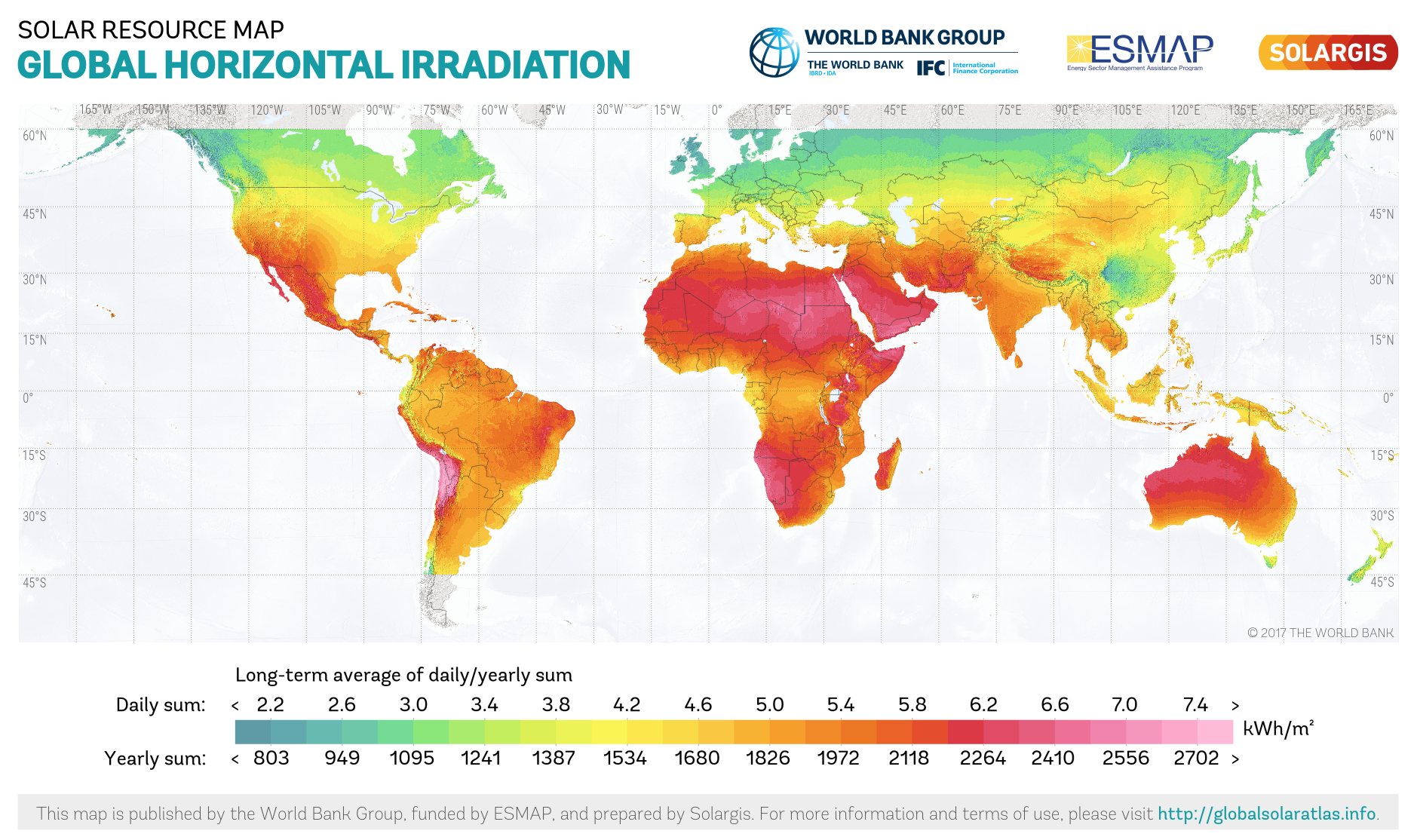
So , let’s have a look at three maps. Solar power first.
1. Solar power. Source: https://upload.wikimedia.org/wikipedia/commons/1/1e/Global_Map_of_Global_Horizontal_Radiation.png
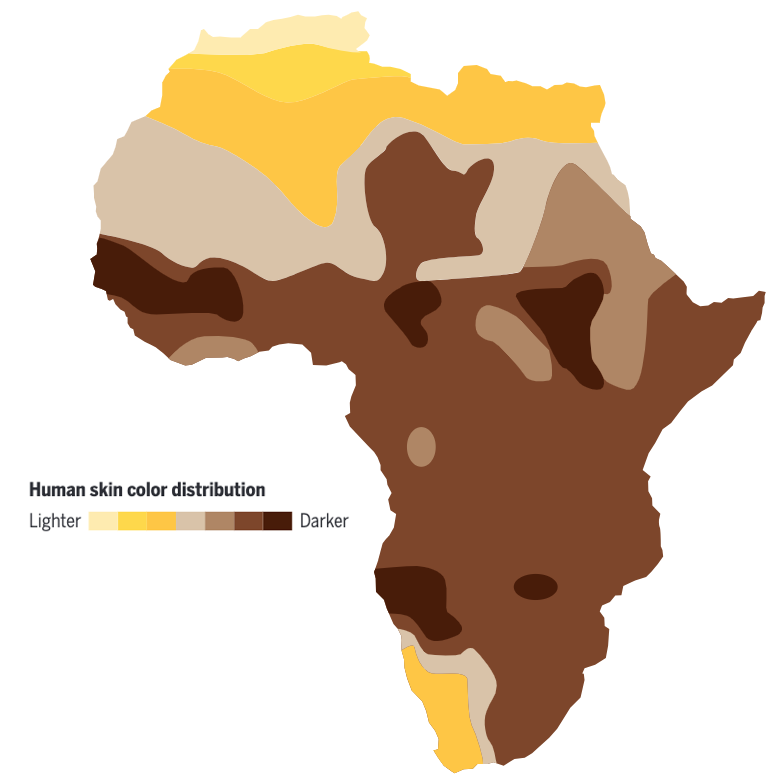
Second, skin tones – the Tamanrasset observation is correct but the overall picture does not match the Loomis hypothesis.
2. Skin tone. Source https://science.sciencemag.org/content/358/6365/867.full For full details see the original paper
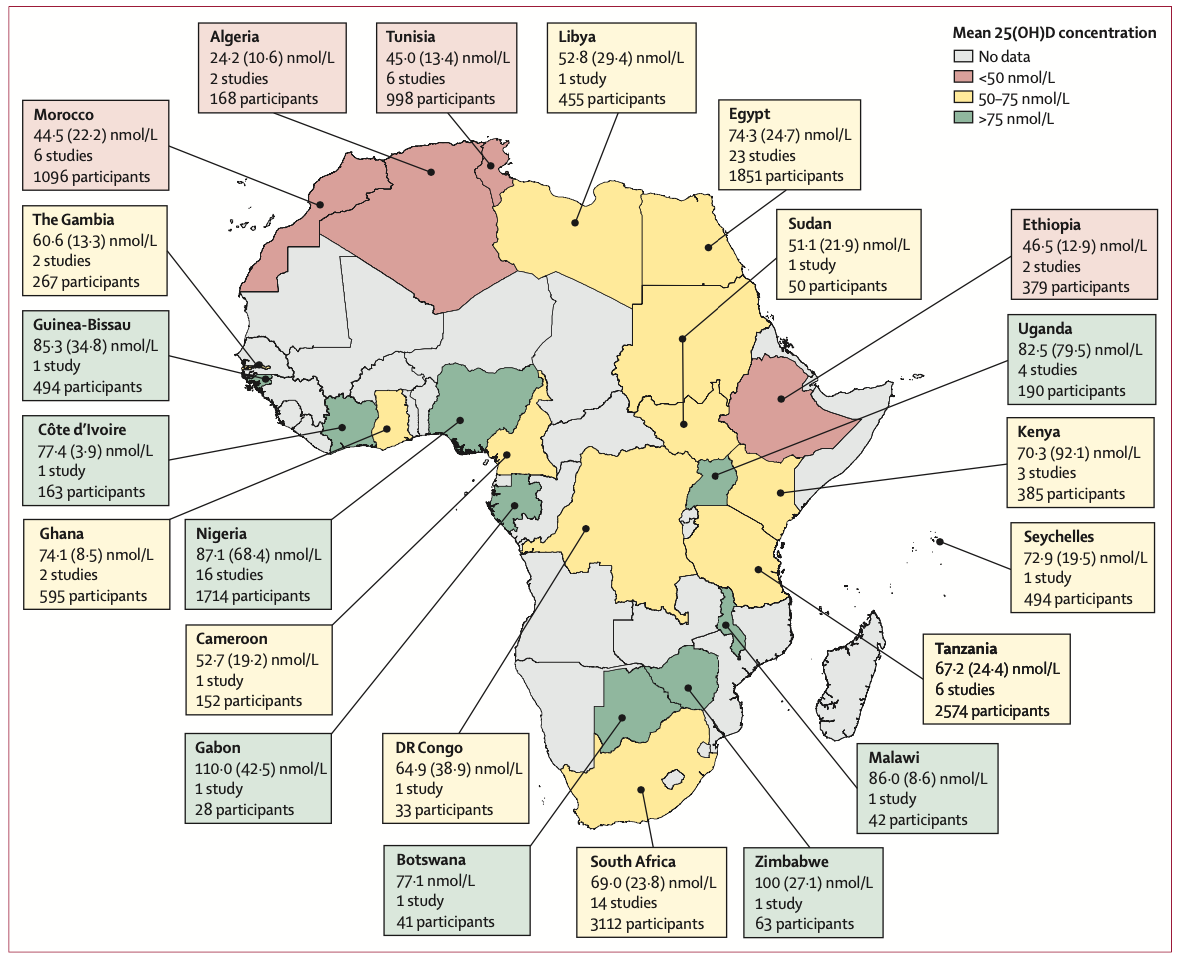
Neither does the new vitamin D map published last week in the Lancet.
3. Vitamin D map. Source: https://linkinghub.elsevier.com/retrieve/pii/S2214109X19304577 For full details see the original paper
No need to calculate any formal correlation coefficient. – maps are patchy but let me conclude that either the vitamin D data or the Loomis hypothesis is wrong.
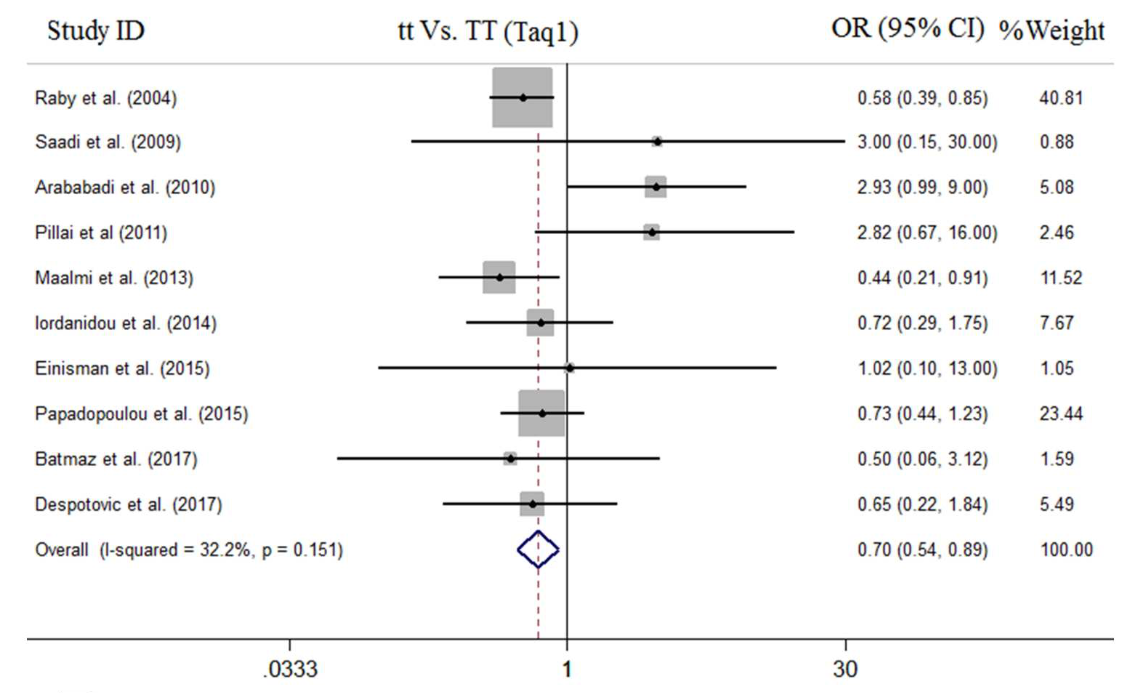
Pooled odds ratio (OR) and 95% confidence interval of individual studies and pooled data for the association between TaqI polymorphism and asthma risk in overall populations and B for tt vs. TTof the TaqI variant.
We are in line #1…
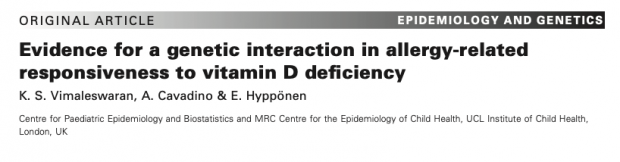
Another nice paper on a genetic interaction is Vimaleswaran et al.
Note to self – here is a list of the vitamin D / allergy related clinical trials following the first case report was
0. Moneret-Vautrin DA, Hatahet R, Kanny G, Ait-Djafer Z. Allergenic peanut oil in milk formulas. The Lancet 1991; 338: 1149. doi: 10.1016/0140-6736(91)92008-p.
1. De Montis G, Gendrel D, Chemillier-Truong M, Dupont C. Sensitisation to peanut and vitamin D oily preparations. The Lancet 1993; 341: 1411. doi: 10.1016/0140-6736(93)90976-N.
2. De Montis G, Gendrel D, Chemillier-Truong M, Dupont C. [Peanut sensitization and oily solution vitamin preparations]. Arch Pediatr 1995;2(1):25-8. doi: 10.1016/0929-693x(96)89804-6.
3. Norizoe C, Akiyama N, Segawa T, et al.. Increased food allergy and vitamin D: randomized, double-blind, placebo-controlled trial. Pediatr Int 2014 Feb;56(1):6-12. doi: 10.1111/ped.12207
4. Rueter K, Jones AP, Siafarikas A, Lim EM, Bear N, Noakes PS, et al. Direct infant UV light exposure is associated with eczema and immune development. J Allergy Clin Immunol 2018; in press, doi: 10.1016/j.jaci.2018.08.037.
5. Rosendahl J, Pelkonen AS, Helve O, et al. High-Dose Vitamin D Supplementation Does Not Prevent Allergic Sensitization of Infants. J Pediatr. 2019 Jun;209:139-145.e1. doi: 10.1016/j.jpeds.2019.02.021
6. Urashima M, Mezawa H, Okuyama, M et al. Primary Prevention of Cow's Milk Sensitization and Food Allergy by Avoiding Supplementation With Cow's Milk Formula at Birth. A Randomized Clinical Trial. JAMA Pediatr 2019;173;(12):1137-1145 10.1001/jamapediatrics.2019.3544
This new study by Urashima et al. shows that sensitization to cow's milk and food allergy, including CMA and anaphylaxis, is preventable by avoiding CMF (cow milk formula) supplementation for at least the first few days of life. Although examined only indirectly in this study, vitamin D supplementation seems to be involved in the sensitization process. The Urashima study is accompanied by a valuable editorial of George du Toit and Kari Nadeau
There is currently a lack of consensus among national allergy societies .. Although the EAACI3 and American Academy of Allergy, Asthma and Immunology (AAAI) currently recommend the use of hypoallergenic formulas in infants at high risk of allergy, the Australian Society of Clinical Immunology and Allergy does not. The EAACI and the AAAI are likely to reconsider their guidelines because results of more re- cent studies have been contradictory. … Guidelines in the United States and United Kingdom recommend routine vitamin D supplementation in all breastfed infants, whereas guidelines in Australia recommend supplementation only in breastfed infants at high risk of vitamin D insufficiency.
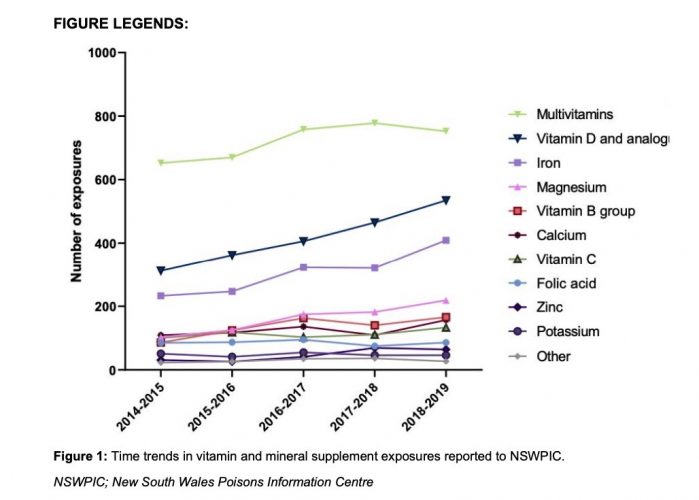
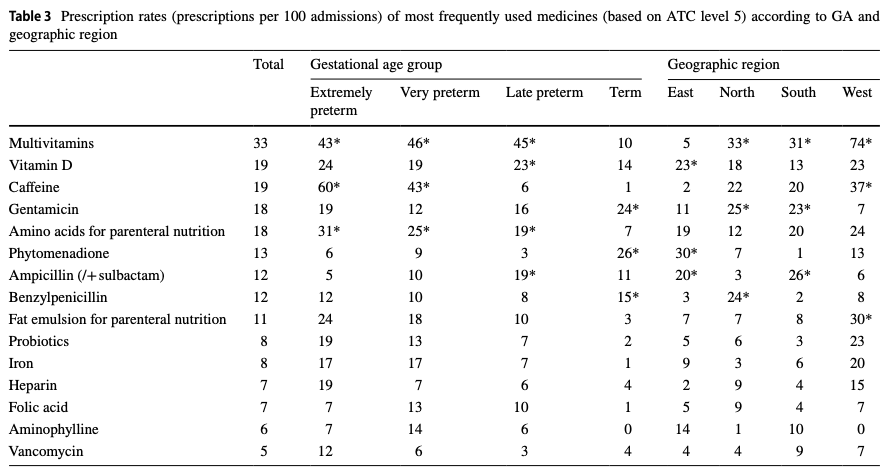
Vitamine sind die am häufigsten verschriebene Pharmaka, wobei unklar ist, warum in machen Regionen 74% und in andern nur 5% Vitamine verschreiben. Wenn es generall notwendig wäre, warum dann nicht 100%? Und wenn es nicht notwendig ist, warum dann nicht 0%?
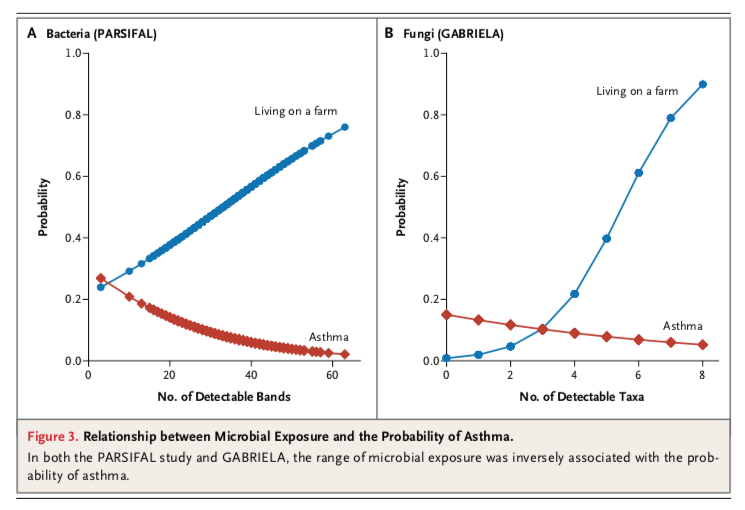
Third, in PARSIFAL dust from children’s mattresses were collected by vacuuming — it is not very likely that many helminthic eggs were transported from stable to bedroom. In GABRIELA, only airborne dust samples were collected which again may miss helminth eggs although being certainly present in stable dust.
Fourth, more microbial exposure and more fungal taxa on farms are a trivial finding.
The inverse associations of the diversity scores with asthma were not confounded by status with respect to living on a farm because adjustment did not change the respective point estimates for asthma (Table 2), although the associations became nonsignificant.
Small sample size, borderline p-values even after a long fishing expedition?
What do these strange “probability” plots really show – the probability of asthma or the probability to live on a farm?
N Engl J Med 2011;364:701-9 Figure 3 Does it refute any general effect of diversity?
The plots are misleading if adjustment for farm living does not change the parameter estimates for bacterial/fungal diversity.
Sixth – even many years later, the main findings of this study have not been independently replicated. There is not any single study that shows listeriosis (Listeria) or diphtheria (Corynebacterium) to be protective.
Es gibt keine Menschenrassen, von Rassen spricht man nur noch im Zusammenhang mit der Tierzucht, wo bestimmte Gruppeneigenschaften gezüchtet werden.
Trotzdem habe ich Probleme mit der Jenaer Erklärung (zitiert nach hpd.de) von Johannes Krause
Aus genetischer Sicht gebe es im Genom des Menschen “keinen einzigen fixierten Unterschied, der zum Beispiel Afrikaner von Nicht-Afrikanern trennt. Es gibt - um es explizit zu sagen - somit nicht nur kein einziges Gen, welches ‘rassische’ Unterschiede begründet, sondern noch nicht mal ein einziges Basenpaar”. Äußere Merkmale, an denen Rassisten ihre Abwertung von bestimmten Menschengruppen festmachen, seien oberflächliche und biologisch leicht wandelbare Anpassungen an geographische Gegebenheiten. Bis vor 8000 Jahren seien die Menschen in Europa noch “stark pigmentiert” gewesen. Erst durch die Einwanderung von Menschen mit hellerer Hautfarbe aus Anatolien und dem damit einsetzenden Beginn der Landwirtschaft habe sich dies geändert, da es sich bei einer stark pflanzenbasierten Kost im dunklen Winter Europas als evolutionärer Vorteil erwies, hellere Haut zu haben und damit genügend Vitamin D produzieren zu können.
“Die helle Hautfarbe der Menschen im nördlichen Europa ist jünger als 5000 Jahre”, hält die Jenaer Erklärung fest. “Die Verknüpfung von Merkmalen wie der Hautfarbe mit Eigenschaften oder gar angeblich genetisch fixierten Persönlichkeitsmerkmalen und Verhaltensweisen, wie sie in der Blütezeit des anthropologischen Rassismus verwendet wurden, ist inzwischen eindeutig widerlegt. Diese Argumentation heute noch als angeblich wissenschaftlich zu verwenden, ist falsch und niederträchtig. Es gibt auch keinen wissenschaftlich nachgewiesenen Zusammenhang zwischen Intelligenz und geographischer Herkunft, aber einen deutlichen mit sozialer Herkunft.”
Die Erklärung hat recht, insofern der Rassebegriff nur noch von Rassisten verwendet wird.
Sie hat auch recht daß es kein einziges Gen gibt, welches ethnische Unterschiede begründet – allerdings hat das auch niemand behauptet. Dagegen gibt es aber durchaus fixierte phänotypische und genetische Unterschiede in geographischen Regionen – einzelnen Volksgruppen, Populationen oder auch Ethnien.
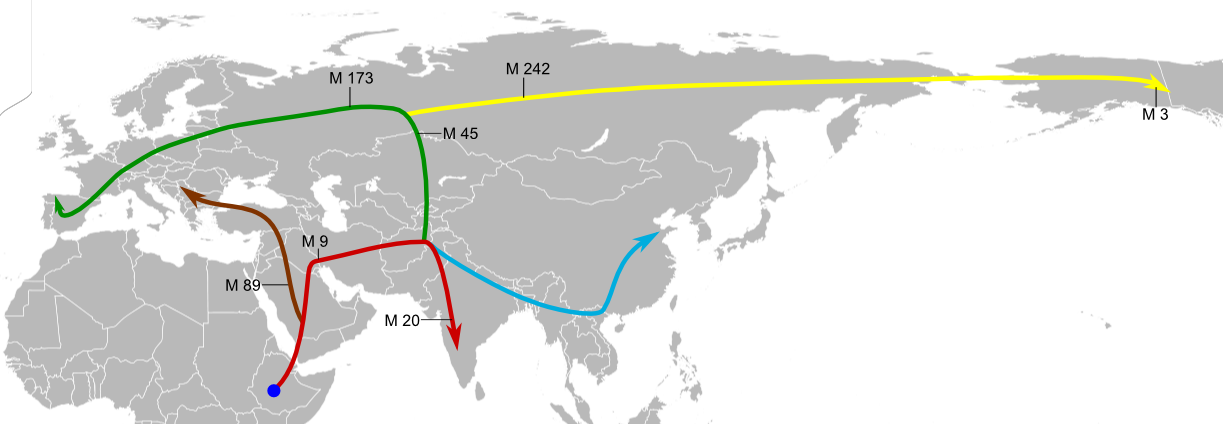
M9 ist nach gängiger Forschung der “out of Africa” Marker, siehe Wikipedia
Die Erklärung sagt schliesslich auch, dass Europäer näher verwandt sind mit Ostafrikanern, als Ostafrikaner mit Südafrikanern. Wie ist aber eine solche Aussage möglich sein, wenn man keine populationsspezifische Marker dafür hätte?
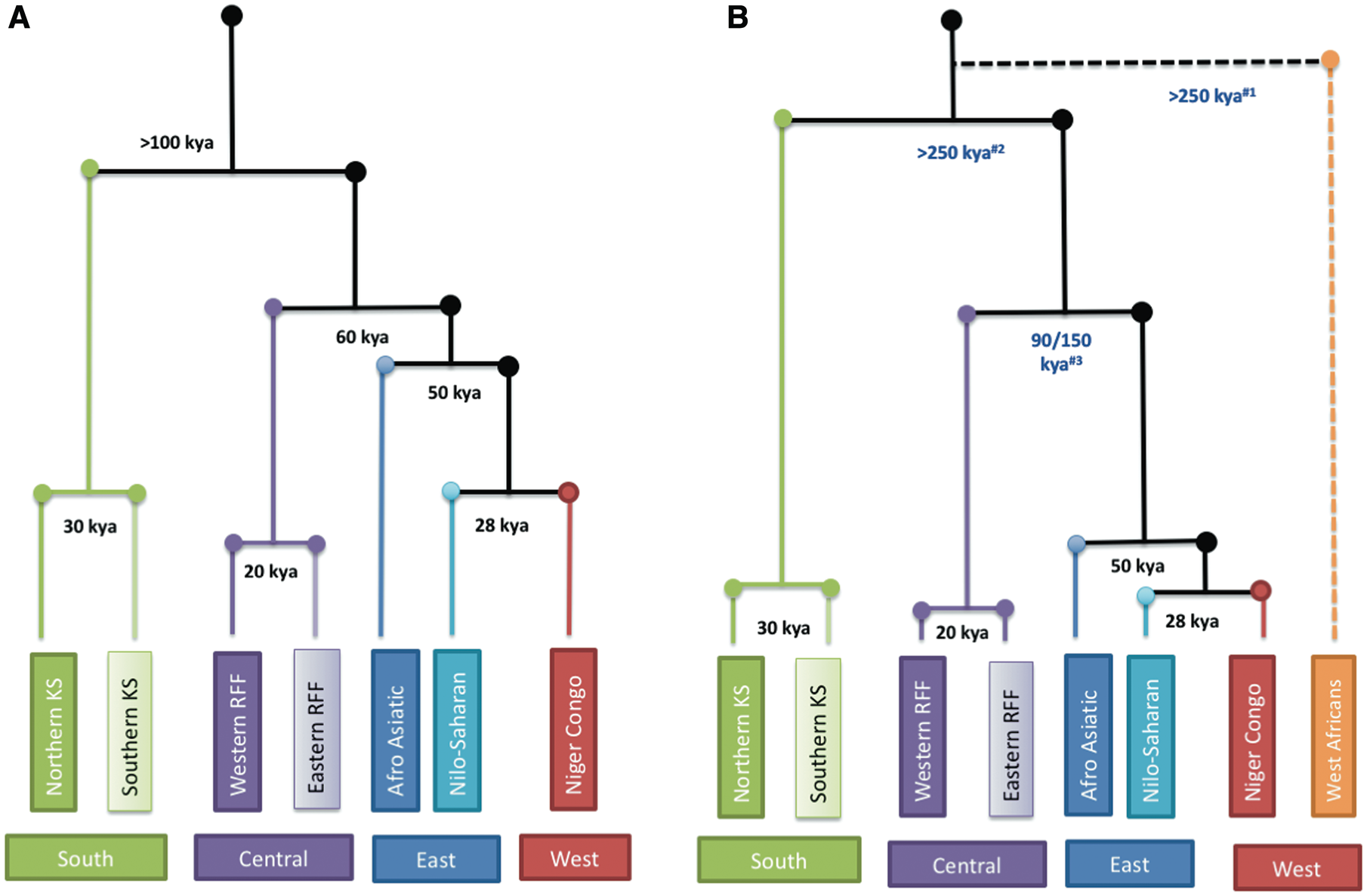
Für Abstammungstheorien wird oft die Kombination von SNP (Single Point) Marker verwandt. Mit Hilfe etwa der Hauptkomponentenanalyse (PCA) wurde zum Beispiel der ursprüngliche afrikanische Stammbaum im letzten Jahr revidiert.
Was also die ethnischen Unterschiede ausmacht? Es sind arbiträre biologische und statistische Kennziffern, die oft in unterschiedlichen Ausmass mit soziologischen Kennzeichen korrelieren.
Extensive set of African ancestry-informative markers (AIMs) to study ancestry and population health. .. we generated a final set of 46,737 African ancestry-informative markers (AIMs).
AIMs sind nicht zuletzt wichtig, da die Unterschiede auch zu unterschiedlichen Krankheiten führen, Stichwort "precision medicine".
Und das ominöse Vitamin D? Helle Hautfarbe = bessere Vitamin D Konversion bei Niedrigversorgung im Norden, bekannt auch als Loomis Hypothese, ist als evolutionärer Faktor zwar naheliegend, aber reine Spekulation. Ohne die Literatur zur Pigmentierung der Haut zu rekapitulieren – der Zweck der Pigmentierung ist Schutz der Basalzellschicht vor UV Strahlung und nicht die Limitierung der Vitamin D Produktion.
By contrast, deeper skin tones with more melanin filters at least twice as muchTrusted Source UV light. Researchers believe this is why skin cancer rates are lower in People of Color. However, a 2020 articleTrusted Source also highlights that a lack of diversity in trials and studies, and a shortage of people of color in the field of dermatology, means that scientists may not accurately understand how common skin cancer is in skin of color.
Die Vitamin D Konversion ist auch ohne starke Hautpigmentierung selbst limitierend. Sie setzt allenfalls früher ein, nämlich bei heller Haut ca 20 Minuten nach Bestrahlung anstatt nach 40 Minuten bei dunkler Haut. Das ist Lehrbuchwissen aus Feldman und Pike. Nach aktuellem Kenntnisstand stimmt es wohl auch nicht, dass dunkle Hautfarbe die ursprüngliche Hautfarbe von H. sapiens in Afrika ist und Europäer mit heller Hautfarbe Mutanten sind. Ich vermute eher, daß helle und dunkle Hautfarbe die Extreme einer ansonsten mittleren Helligkeit sind (zur Diskussion dieser Hypothese siehe Scholar).
Der letzte Stand nach meiner Kenntnis steht in dem Science 2017 Paper von Sarah Tishkoff
Examining ethnically diverse African genomes, we identify variants in or near SLC24A5, MFSD12, DDB1, TMEM138, OCA2, and HERC2 that are significantly associated with skin pigmentation. … Functional analyses indicate that MFSD12 encodes a lysosomal protein that affects melanogenesis in zebrafish and mice, and that mutations in melanocyte-specific regulatory regions near DDB1/TMEM138 correlate with expression of ultraviolet response genes under selection in Eurasians.
In dieser Liste steht jedenfalls kein einziges Vitamin D Gen, so dass die Jenaer Erklärung auch hier nicht dem Wissenstand entspricht auch wenn sie gut gemeint ist.
20.9.2024
Journalisten werden allerdings auch weiterhin nicht müde, zu dem Thema zu fabulieren, leider auch wieder in einem neuen Video.
Most recently, a NEJM paper “Vitamin D Deficiency - Is There Really a Pandemic?” by Manson, Brannon, Rosen, and Taylor explains the big misunderstandings that let some authors conclude that whole populations are being vitamin D deficient. Just to recall, the IOM recommended in 2010 serum concentrations of vitamin D (i.e., 25-hydroxyvitamin D [25(OH)D]) above 20 ng per milliliter (or 50 nmol per liter) as appropriate level and supplementation with 600 to 800 IU per day as Recommended Dietary Allowance (RDA). And here are the 8 facts: Continue reading The end of the vitamin D deficiency debate? 8 facts→
in three independent birth cohorts (N=60, N=30, N=28) DNA methylation at the SMAD3 promoter was selectively increased in asthmatic children of asthmatic mothers and was associated with risk of childhood asthma.
and argues
although associations between SMAD3 variants rs17228058, rs744910, rs17294280 and asthma have been reported in GWAS, asthma-related SMAD3 methylation differences were unlikely to be influenced by SMAD3 genotype
If a SNP interferes with or alters a TF binding site, it could potentially affect both DNA methylation and gene expression independently.
So this possibility needs to be excluded before drawing any conclusions. BTW, SMAD3 is a well know vitamin D target…
1,25-dihydroxyvitamin D3-bound [1,25(OH)2D3-bound] vitamin D receptor (VDR) specifically inhibits TGF-β-SMAD signal transduction through direct interaction with SMAD3.
Finally, the Copenhagen and Boston clinical trials of vitamin D supplementation in pregnancy have been published in JAMA today. There is no protection against asthma or wheezing when comparing 4400 IU or 2800 IU vitamin D vs 400 IU vitamin D.
From basic pharmacology and immunology, this is an expected result: the only interesting point would have been to compare vitamin vs placebo. Even the editorial missed the most important point – what happens to the newborn immune system when being supplemented with vitamin D?
… association between serum 25-hydroxyvitamin D3 (25[OH]D3) levels and food allergy at age 1 year (338 challenge-proven food-allergic and 269 control participants) and age 2 years (55 participants with persistent and 50 participants with resolved food allergy)… Analyses were stratified by genotype at rs7041 as a proxy marker of DBP levels… Low serum 25(OH)D3 level (<50 nM/L) at age 1 years was associated with food allergy, particularly among infants with the GG genotype (odds ratio [OR], 6.0; 95% CI, 0.9-38.9) … Maternal antenatal vitamin D supplementation was associated with less food allergy, particularly in infants with the GT/TT genotype (OR, 0.10; 95% CI, 0.03-0.41)… This increases the biological plausibility of a role for vitamin D in the development of food allergy.
Maybe it would be helpful to have also “real” DBP levels for estimating bioavailability (and even data of supplement use) but already the reported results are another strong argument for the vitamin D – allergy axis. This is also largely in line with what I predicted back in 2012
Both vitamin D insufficiency and vitamin D supplementation have been linked to allergy and asthma. This apparent paradox is explained by epigenetic programming in pregnancy by low vitamin D levels and the excessive high supplementation in the newborn period.
Maybe I should have emphasized that genetic variants in the vitamin D pathway are also important for biological effects.