Digitalisierung und Arbeitswelt
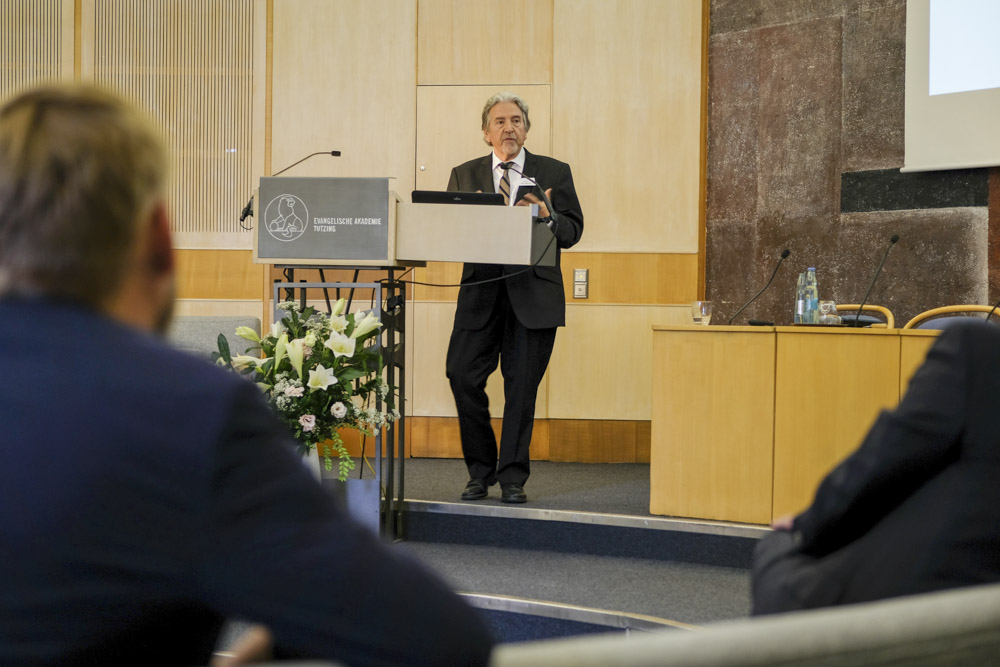
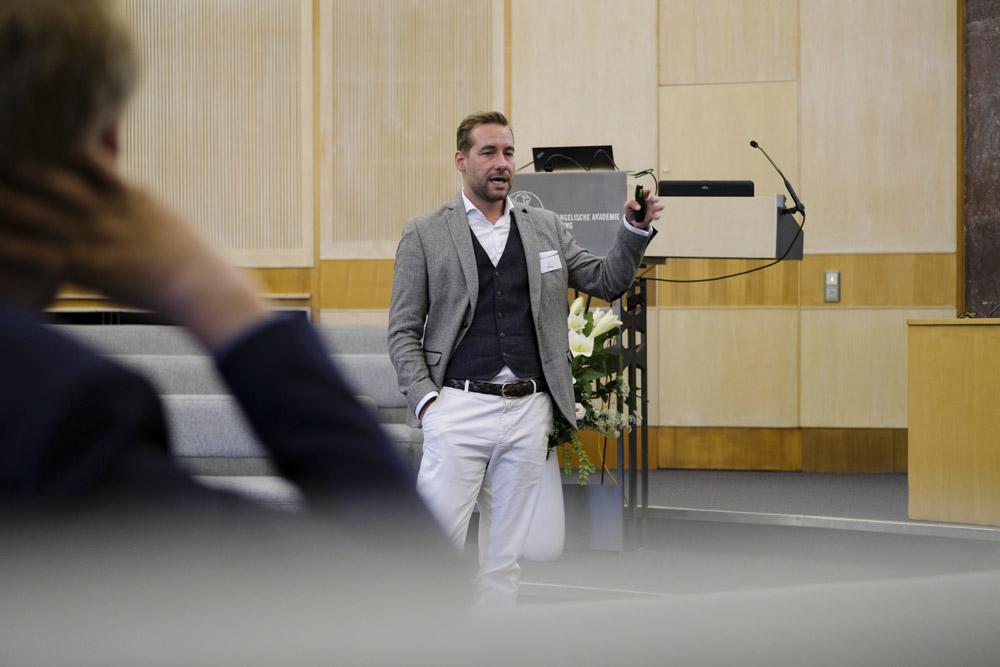
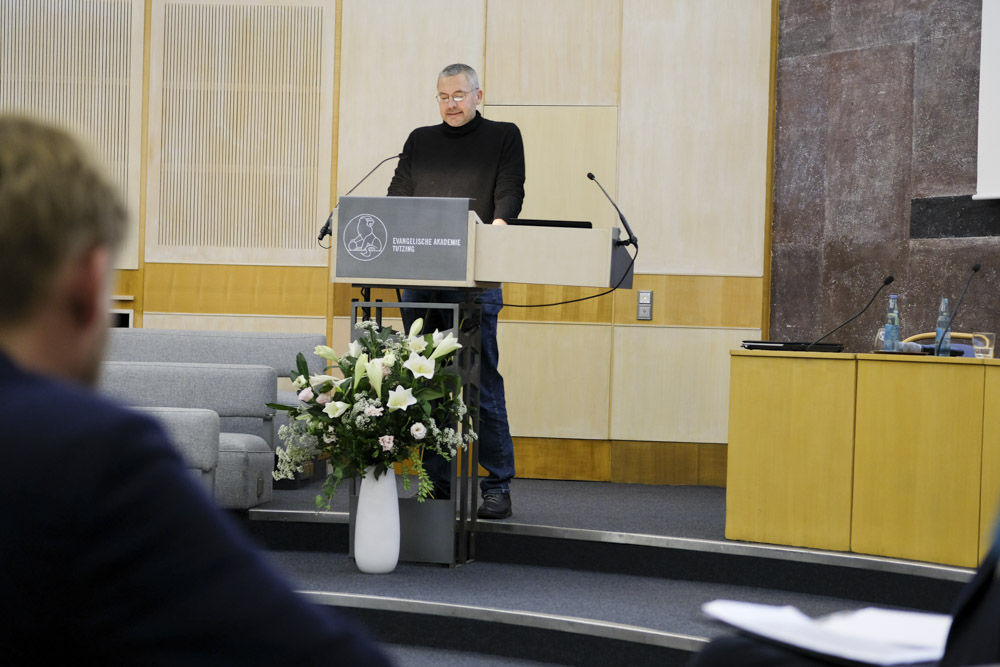
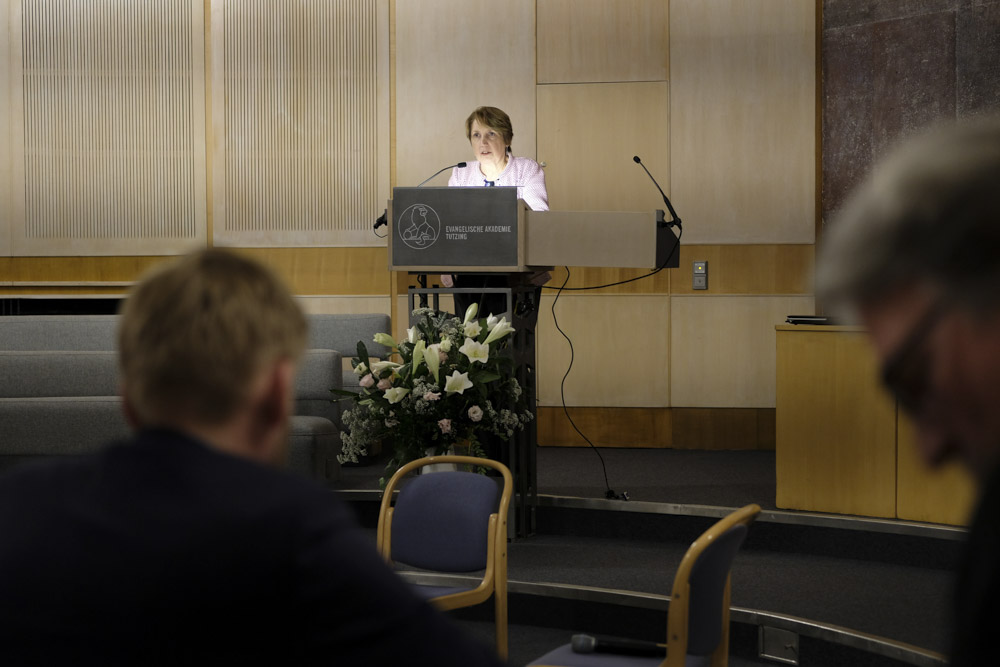
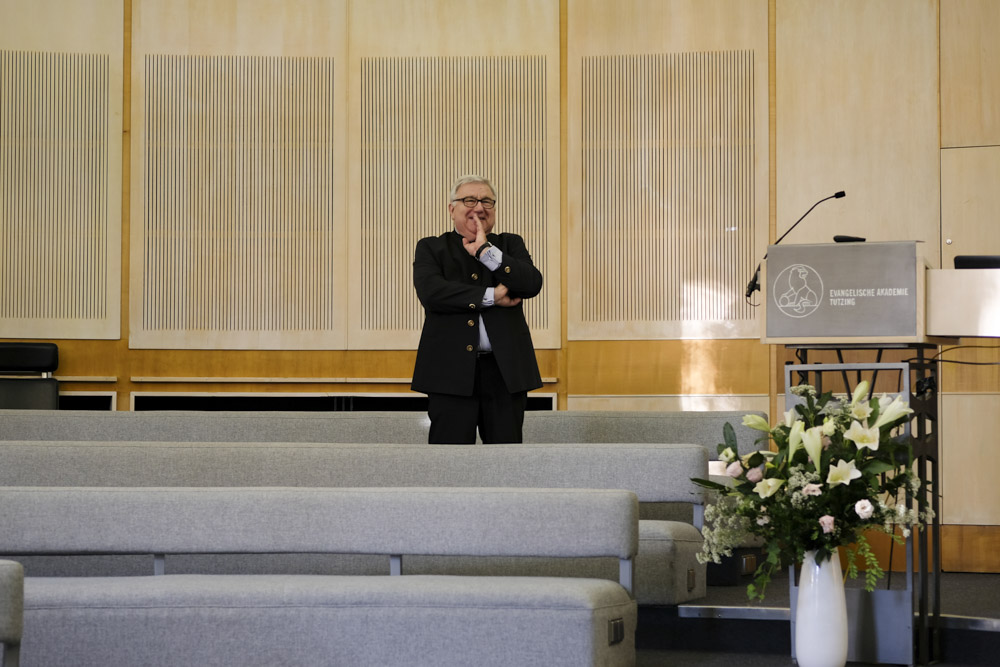
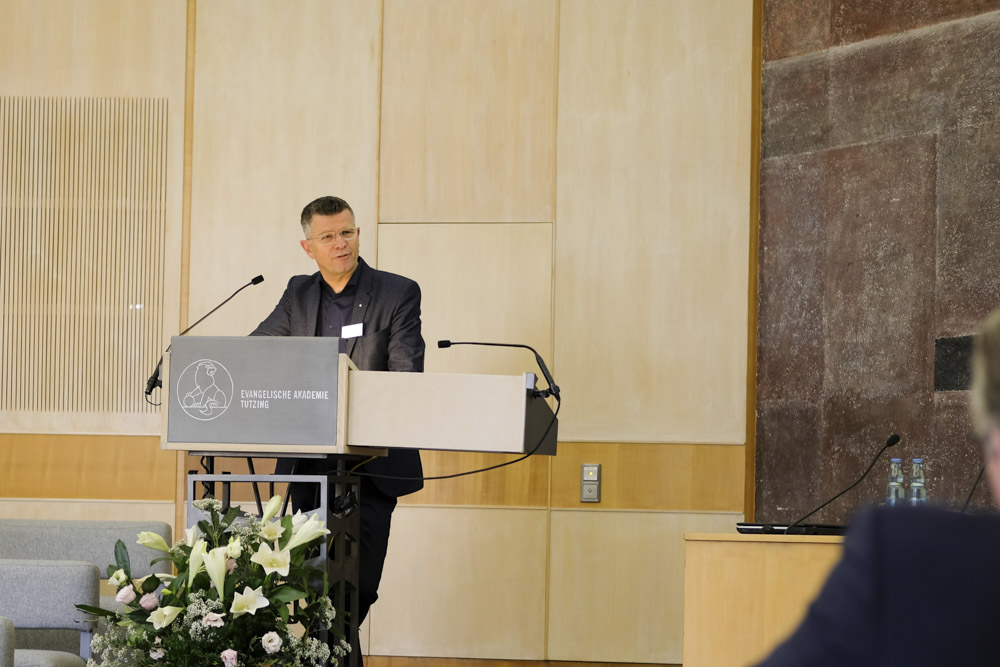
Vom 12. bis 13. November 2018 fand in der Dialogreihe „Innovation und Verantwortung“ eine gemeinsame Veranstaltung “Digitalisierung und Arbeitswelt” statt, die gemeinsam von TTN, acatech und evangelische Akademie Tutzing organisiert wurde.
Für TTN übernahm Stephan Schleissing, für die acatech Marc-Denis Weitze die Moderation.
Digitalisierung – Revolution oder Gestaltungsauftrag?
Prof. Dr. Klaus Kornwachs, Büro für Kultur und Technik, ehem. Lehrstuhl für Technikphilosophie, Brandenburgische Technische Universität Cottbus

Mit Digitalisierung den kulturellen Wandel im Unternehmen gestalten.
Jan Pfeifer, Detecon International GmbH

Ironie der Digitalisierung: Weswegen Steuerungsphantasien zu kurz greifen.
Prof. Dr. Stefan Kühl, Professur für Organisationssoziologie, Universität Bielefeld und Finn- Rasmus Bull, Metaplan

Digitalisierung, Bildung und die Arbeitswelt: Politische Herausforderungen im Gespräch mit Annette Karl, MdL

Arbeit in der digitalen Transformation.
Prof. Dr.-Ing. Dieter Spath, Präsident acatech

Verantwortung in der digitalen Transformation.
Prof. Dr. Peter Dabrock, Lehrstuhl für Systematische Theologie (Ethik), Universität Erlangen- Nürnberg

Textor & Renz
Can you fake my paper?
Annals of Internal Medicine has a disturbing article from a sample of US sample of 522 American Statistical Association members.
The 4 most frequently reported inappropriate requests … by at least 20% of the respondents were …
* removing or altering some data records to better support the research hypothesis
* interpreting the statistical findings on the basis of expectation, not actual results
* not reporting the presence of key missing data that might bias the results
* and ignoring violations of assumptions that would change results from positive to negative.
Korrekte Aussprache
The usefulness of useless research
Harpers Magazine long ago (1939) 179:544 but still up to date
Finally in 1887 and 1888 the scientific problem [radio/wireless] still remaining- the detection and demonstration of the electromagnetic waves which are the carriers of wireless signals -was solved by Heinrich Hertz, a worker in Helmholtz’s laboratory in Berlin. Neither Maxwell nor Hertz had any concern about the utility of their work; no such thought ever entered their minds. They had no practical objective. The inventor in the legal sense was of course Marconi, but what did Marconi invent? Merely the last technical detail, mainly the now obsolete receiving device called coherer, almost universally discarded.”
Stilles bescheidenes Leben gibt mehr Glück als erfolgreiches Streben verbunden mit beständiger Unruhe
www.nzz.ch 25.10.2017
Ein handschriftlicher Sinnspruch des Physik-Genies Albert Einstein ist für mehr als 1,5 Millionen Dollar versteigert worden. Ein Europäer erstand den Zettel am Dienstag bei der Auktion in Jerusalem, wie das Auktionshaus Winner’s mitteilte. Einstein hatte das Blatt Papier einem Dienstboten in Japan vor fast 100 Jahren zugesteckt, möglicherweise als eine Art Trinkgeld.
Ich bin nur dann für technische Neuerungen, wenn sie im Einklang mit sozialen Werten stehen
Heast as net
Fanaticism consists in redoubling your efforts when you have forgotten your aim
by
No eternal life
Seven years ago we published a 15% heritability of life span from data in South Tyrol. The heritability of longevity increased from 0.20 to 0.35 as the longevity threshold increased.
A new study now finds that we have been exaggerating
true heritability of human longevity for birth cohorts across the 1800s and early 1900s was well below 10%, and that it has been generally overestimated due to the effect of assortative mating. … Spouse life spans correlate as much or more than those of genetic relatives, raising the possibility that correlated environments and/or assortative mating have confounded those estimates.
I think there is a misunderstanding of assortative mating (AM). AM is a form of sexual selection in which individuals with similar phenotypes mate with one another more frequently than would be expected under chance conditions. BUT the phenotype longevity is not known to anyone at mating. Instead there seems to be a simple “environmental” interaction: We know that elderly couples frequently die together, also known as broken hearts phenomenon.
Adjusting any regression model for any AM will therefore seriously reduces the heritability of longevity, which is exactly what the authors describe in their new paper.
Spousal correlation is expected on two grounds: shared-household environment during adulthood and/or assortative mating. The two can be distinguished by definition: the effects of shared-household environment are nontransferable through inheritance, whereas the factors correlated by assortative mating are transferable, allowing them to also generate correlations with family members of the spouse
This is not very convincing as A) shared-household environment can be transmitted by epigenetic factors and B) it is a myth there is any AM for lifespan.
Did we trade rickets with allergy?
I have written on that before but find it striking again when reading another historical perspective.
The first insight into the possible relationship between the industrialization of Northern Europe and rickets was made by Sniadecki in 1822 when he concluded that children who lived in the inner city of Warsaw had a high incidence of rickets because of their lack of sun exposure. This was based on his clinical observations that children living in rural areas outside of Warsaw did not suffer from rickets while children born and raised in Warsaw were plagued with the disease.
Now we are supplementing vitamin D to nearly all inner city children who have a high allergy prevalence but not so much in rural areas where we see less allergy – everywhere, not only in Warsaw.
Did we trade rickets with allergy?
I can see you with my eyes closed
Today I cam across extraocular photoreceptors which make up a fascinating story, explained by Wikipedia
A third class of mammalian photoreceptor cell was discovered during the 1990s: the photosensitive ganglion cells. These cells do not contribute to sight directly, but are thought to support circadian rhythms and pupillary reflex.
A paper (“seeing without eyes”) at theconversation.com has the details
“extraocular photoreceptors” are usually found in the central nervous system or in the skin, but also frequently in internal organs. … All the visual cells identified in animals detect light using a single family of proteins, called the opsins. These proteins grab a light-sensitive molecule – derived from vitamin A – that changes its structure when exposed to light. The opsin in turn changes its own shape and turns on signaling pathways in photoreceptor cells … The skin is where we see most other light receptors, particularly in active color-changing cells or skin organs called chromatophores.
I tried but could not find any link between chromatophores, vitamin D production and skin tanning in humans although such a link would make a lot of sense. While changing the search strategy to opsin expression in the skin, I found something interesting
Here we show that four opsins—OPN1‐SW, OPN2, OPN3 and OPN5—are expressed in the two major human epidermal cell types, melanocytes and keratinocytes, and the mRNA expression profile of these opsins does not change in response to physiological UVR doses. … Notably, OPN2 and OPN3 mRNA were significantly more abundant than other opsins and encoded full‐length proteins. Our results demonstrate that opsins are expressed in epidermal skin cells and suggest that they might initiate light–induced signaling pathways, possibly contributing to UVR phototransduction.
It seems that the effect is mainly by OPN5
Human OPN5 also had an absorption maximum at 380 nm with spectral properties similar to mouse OPN5, revealing that OPN5 is the first and hitherto unknown human opsin with peak sensitivity in the UV region. OPN5 was capable of activating heterotrimeric G protein Gi in a UV-dependent manner.
which came into life by just a single mutation. As far as I understand it, UVR exposure is not leading to any opsin expression. Maybe it is just a very low threshold trigger for TYR et al ?
We investigated the effects of UV on human skin of various races before and at different times after a single 1 minimal erythemal dose UV exposure. … The expression of melanocyte-specific proteins (including TYR (tyrosinase), TYRP1 (tyrosinase-related protein 1), DCT (tyrosinase-related protein 2), MART1 (melanoma antigens recognized by T-cells) gp100 (Pmel17/silver), and MITF (micropthalmia transcription factor)) increased from 0 to 7 d after UV exposure, but the melanin content of the skin increased only slightly. The most significant change, however, was a change in the distribution of melanin from the lower layer upwards to the middle layer of the skin
A recent review in Current Biology pointed out that vitamin A-based chromophores were initially used in harvesting light energy, but have then become the most widely used light sensor.
Unfortunately many research questions have not been answered yet. We can only speculate about the function of extraocular photoreceptors in humans. In the mammalian retina it is probably part of a self-defense mechanism of the eye to avoid UVR induced destruction. There could be similar functions in the human skin including circadian entrainment, DNA protection and repair. Vitamin D production in the skin after UVR exposure is an independent process as ergosterol itself can efficiently absorb UVB radiation.
Finally here is a speculation about the pathophysiology: Extraocular photoreceptors could be key structures in photophobia, phototoxic and photo allergic reactions.
Fearless – the story of Alex Honnold
The NYT has a disturbing story about Alex Honnold. What if he falls?
Alex Honnold, 33, is the world’s foremost free soloist. To “free solo” means to climb without ropes or any safety gear. Mr. Honnold began climbing without ropes as a teenager. As he got better at climbing on his own, his aspirations and goals grew bigger. For years, he had his eye on free soloing the 3,000-foot peak of Yosemite’s El Capitan. In 2017, he decided to go for it, a superhuman accomplishment that makes up the arc of our new feature film, “Free Solo.”
How free solo looks like
and Honnold’s comments
What is the difference between the average attention seeker and Honnold? nautil.us/issue/39/ has an answer showing results of a MRI scan
Purl scrolls down, down, through the Rorschach topography of Honnold’s brain, until, with the suddenness of a photo bomb, a pair of almond-shaped nodes materialize out of the morass. “He has one!” says Joseph, and Purl laughs. […]
Inside the tube, Honnold is looking at a series of about 200 images that flick past at the speed of channel surfing. The photographs are meant to disturb or excite. “At least in non-Alex people, these would evoke a strong response in the amygdala,” says Joseph. “I can’t bear to look at some of them, to be honest.” […] “Nowhere, at a decent threshold, was there amygdala activation”
After having watched nowthe excellent National Geographic documentary, I do not believe so much in an anatomical curiosity. As his father was suffering to Asperger (according to his mother in the movie) I think the key is more with some unsual development combined with some excellent extrapyramidal reactions.
Citizen Science: Feinstaubmessung in Eigenregie
Das Stuttgarter Messprojekt ist ausführlich auf https://luftdaten.info/ erklärt, die Feinstaub Theorie auf ruhrmobil-e.de/.
Dahinter steckt der Laser Staub Sensor SDS011.
Nova Fitness SDS011 is a professional laser dust sensor. Fan mounted on sensor automatically sucks air. Sensor uses laser light scattering principle to measure value of dust particles suspended in the air. Sensor provides high precision and reliable readings of PM2.5 and PM10 values. Any change in environment can be observed almost instantaneously – short respond time below 10 seconds. Sensor in standard mode reports reading with 1 second interval.
Measured values: PM2.5, PM10
Range: 0 – 999.9 μg /m³
Resolution: 0.3μg/m3
Work environment:-10 ~ +50°C
Counting yield: 70%@0.3μm, 98%@0.5μm
Relative error: Maximum of ± 15%, ±10μg/m3 25°C, 50%RH
Cycle: 1004ms±1%
Service life: up to 8000 hours
according http://www.segor.de/dokumente/sds011_pm2.5_v1.3.pdf
Mit 70mA Stromverbrauch kann der Sensor damit auch mobil mit einer gängigen Powerbank (zB 3.500 mAh) 50 Stunden lang betrieben werden, am besten parallel zu einem alten Mobilfunkgerät, das nicht nur einen GPS Track aufzeichnet, sondern auch per Wifi gleich die Daten speichert. Mehr zur Evaluation des Sensors auf luftdaten.info bzw lubw.baden-wuerttemberg.de Zusammengefasst
* zufriedenstellende Korrelation an Tagen mit mittlerer Luftfeuchtigkeit (50 – 70 % r. F.) und Konzentrationen kleiner 20 μg/m3
* deutliche Abweichungen bei Schwankungen der klimatischen Bedingungen (Luftfeuchte, Luftdruck, Lufttemperatur)
* Sensoren aus unterschiedlichen Chargen weisen unterschiedliche Messergebnisse auf
* undefinierter Probengasstrom durch ungeregelten Lüfter führt zu starken Schwankungen des Messvolumens